
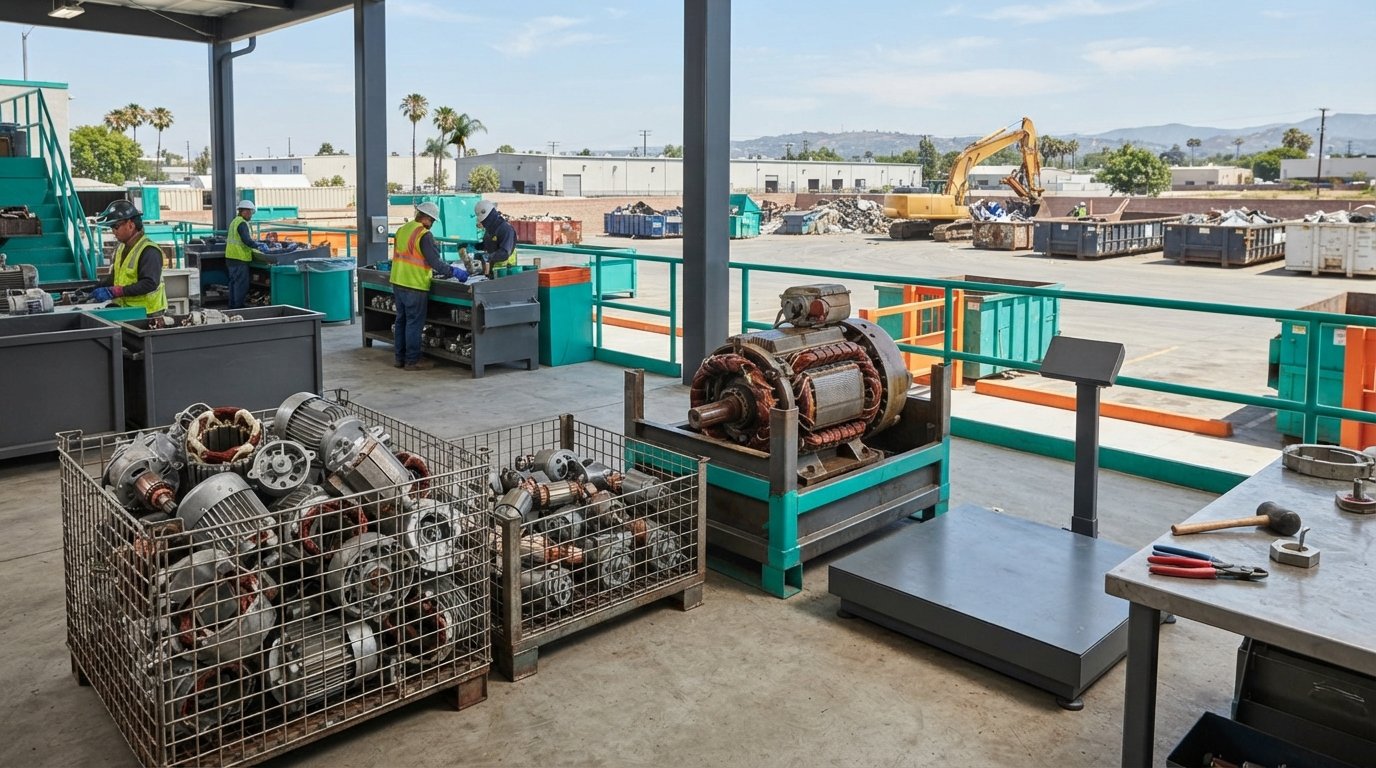
An electric motor can still be recycled when it no longer works. If you’re looking for where to recycle electric motors in Anaheim, scrap-metal recycling is the route to consider: AC, DC, and industrial motors contain recoverable metals. Any payment depends on the motor’s weight and metal content; pickup or extra handling may involve a charge.
It’s reasonable to want a clear answer before hauling a heavy motor anywhere. This article explains what affects potential payment or fees and why the motor’s type and metal content matter. You’ll also learn how AC, DC, and industrial motors fit into recycling, what to keep in mind when preparing one, and how to find a practical local option for turning unwanted equipment into recovered materials.
Key Takeaways
- Estimate a motor’s scrap potential by considering its total weight and recoverable metals, not copper content alone.
- AC and DC motors contain different typical amounts of copper, which can affect how their material value is assessed.
- Industrial motors can be recycled for metal, but their size and attached components affect handling and preparation.
- Separate questions about oily or otherwise potentially hazardous material from ordinary scrap-metal recycling before choosing a drop-off route.
- Review the article’s Anaheim recycling options to find the right next step for your motor and its condition.
Payment and possible recycling fees
Payment for a scrap electric motor depends on the material a recycler can recover, not its original purchase price. Copper, steel, and aluminum contribute value, while attached parts and handling needs can affect the assessment. The motor’s weight, recoverable metal content, condition, and processing requirements all matter, so there is no single price for every motor.
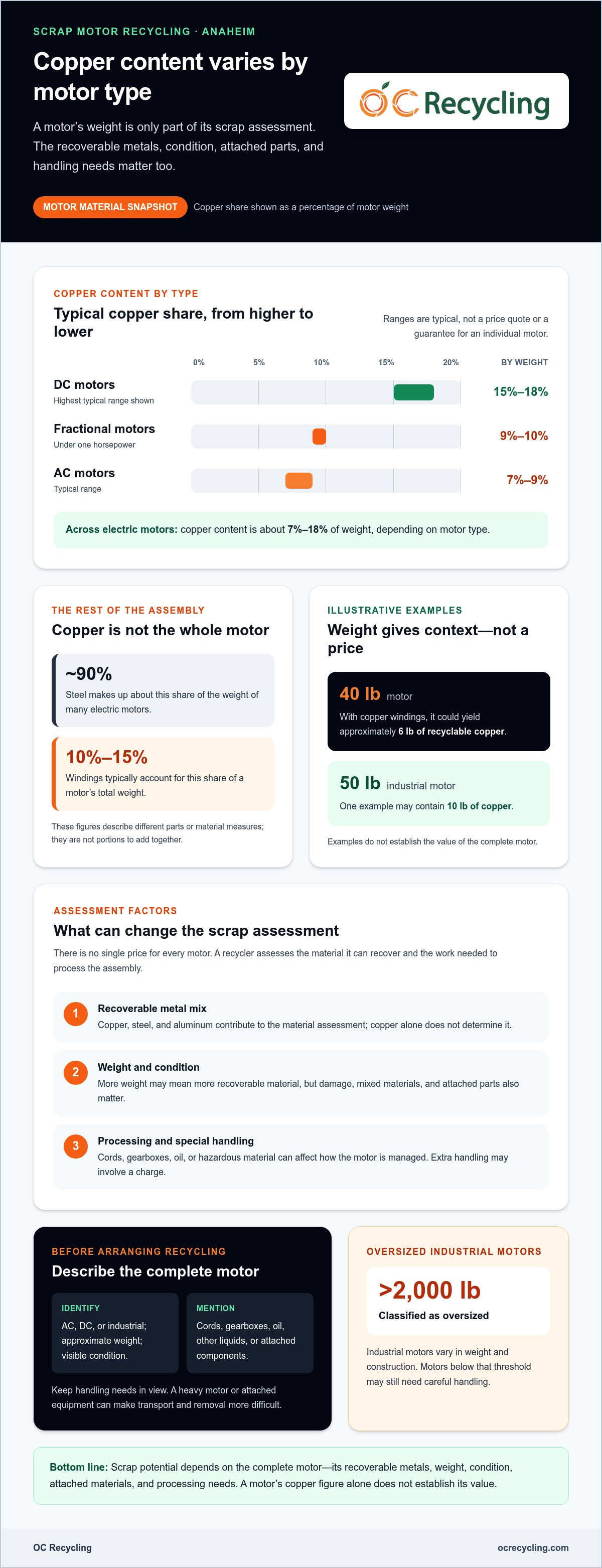
Copper content helps explain why two motors of similar size may receive different evaluations. Electric motors contain about 7% to 18% copper by weight, depending on motor type. Fractional motors under one horsepower typically contain 9% to 10% copper by weight. Windings typically represent about 10% to 15% of a motor’s total weight, but the rest of the assembly also matters.
Consider two motors that weigh the same. One may have intact copper windings and a mostly metal housing; the other may be damaged, include more nonmetal parts, or be harder to process. Their weights match, but their recoverable materials and handling needs differ. A recycler assesses those factors rather than treating every motor as identical.
Possible charges are a separate consideration. Electric motor recycling may involve small fees when hazardous waste requires extra handling. Oil or other attached materials can change how a motor must be managed, so they may affect whether ordinary scrap-metal processing is suitable. A motor’s condition and contents matter alongside its metal value.
- Weight: A heavier motor may contain more recoverable material, but weight alone does not determine its value.
- Metal mix: Copper windings and steel components contribute differently to the material assessment.
- Condition: Damage, attached parts, or mixed materials can affect processing and handling.
- Special handling: Oil or hazardous material may lead to additional handling needs or a fee.
For a useful estimate, identify the motor’s type, approximate weight, visible condition, and attached components before arranging a quote. Don’t remove windings or other parts just to increase the copper portion without understanding the work involved. A 40-pound motor with copper windings could yield approximately 6 pounds of recyclable copper, but that material figure alone doesn’t establish the value of the complete motor.
Describe the motor as a whole, including its attached components and any handling considerations. This helps clarify how its recoverable scrap may be assessed. Mention oil or other liquids when arranging recycling, since they may require separate handling.
Recyclable AC, DC, and industrial motors
A working electric motor may be reused if it remains functional and suits another equipment need. Removing and transporting one can involve electrical, lifting, and pinch hazards, especially if it is still connected or has awkward weight distribution.
Motor type helps explain what materials a recycler may recover. AC, DC, and industrial motors contain recyclable metals, but their construction and size differ.
Motors with Cords, Gearboxes, or Oil
Cords, gearboxes, and oil are attached components or materials that can affect how a motor is handled. They matter because a motor is not always a bare metal assembly ready for straightforward processing.
A gearbox adds material beyond the motor itself, while attached cords contain wire and insulation. Oil also changes the material mix and may require separate handling. Describe these components when arranging recycling rather than assuming the unit is equivalent to a stripped motor. Electric motors can contain copper, aluminum, steel, wire, and plastic, so their contents shape processing.
Recycling Centers and Pickup Options
Choose a recycler that handles motor assemblies and their metal components. For Anaheim residents, consider how you will transport the motor, especially if it is heavy or still attached to equipment. OC Recycling purchases scrap metal at its Orange County locations.
Acceptance depends on the motor and its attached materials, so describe whether it is AC, DC, or industrial, and mention cords, gearboxes, or oil. The available facts don’t identify a specific Anaheim center or establish curbside or bulk pickup. Avoid treating household hazardous-waste collection as a default destination for an intact scrap motor. For a metal-recycling option, explore recycling options for metal components.
How AC, DC, and Industrial Motors Differ
AC motors typically contain 7% to 9% copper by weight, while DC motors typically contain 15% to 18%. That difference can influence the recoverable material mix, but copper is only part of each motor’s composition.
Steel components make up about 90% of the weight of many electric motors. The assembly may also include aluminum, wire, and plastic, so recyclers evaluate the full motor rather than copper alone. Electric motors are described as 100% recyclable because most components are metallic; that doesn’t mean every attached component belongs in the same processing stream.
What Industrial Motor Size Means
Industrial motors vary widely in weight and construction, making their transport and material assessment different from smaller units. Motors weighing more than 2,000 pounds are classified as oversized, while motors weighing less than that may still require careful handling.
For example, a 50-pound industrial motor may contain 10 pounds of copper. That example illustrates why copper quantity can inform material value, but it doesn’t represent the entire motor’s recoverable content. Steel, other metals, attached parts, and handling needs also shape how the assembly is processed.
Before moving a motor, identify its type, approximate weight, and attached components. Keep it disconnected from equipment, and don’t attempt removal if the electrical connection or lifting task is beyond your capability. A functional unit may have reuse potential; a worn or damaged one can still contribute recoverable metal through recycling.
Which Anaheim recycling centers accept electric motors?
For an intact electric motor, look for a scrap-metal recycler that handles motor assemblies. Anaheim’s household hazardous waste collection center serves a different disposal need, so don’t treat it as a scrap-motor drop-off. Consider the motor’s metal value separately from any oil or other household hazardous material attached to it.
Scrap-metal drop-off for a complete motor
A scrap-metal facility processes recoverable materials such as steel and copper from discarded equipment. Before transporting an AC, DC, or industrial motor, identify its type, approximate weight, and attached parts. These details help clarify whether the motor fits the facility’s intake process and whether special handling may apply.
For example, a motor with a gearbox or attached wiring is a different load from a bare motor housing. A large industrial unit may also need a different unloading arrangement than a small household motor. Keep those details together when describing the item, and distinguish a complete motor from loose copper, steel, or other separated scrap.
Anaheim’s household hazardous waste center
Anaheim’s Household Hazardous Waste Collection Center is at 1071 N. Blue Gum Street, Anaheim, CA 92806. Orange County Household Hazardous Waste Collection Centers operate from 9 a.m. to 3 p.m., Tuesday through Saturday, and close on major holidays and during rainy weather.
These centers provide a route for household hazardous waste, not a general destination for intact metal equipment. If a motor has oil or another material requiring hazardous-waste handling, keep that issue separate from the motor’s scrap-metal recycling. Orange County residents may bring no more than 15 gallons or 125 pounds of household hazardous waste per vehicle per trip. Containers larger than five gallons aren’t accepted.
Separate hazardous material from scrap
Orange County residents can dispose of household hazardous waste for free at any of the county’s four collection centers. Keep materials in their original containers, except motor oil, fuels, and antifreeze. Containers must have lids, be sturdy, non-leaking, labeled, and protected from breakage. Don’t combine different types of waste for delivery.
Those requirements apply to household hazardous waste, not to the metal-recycling assessment of a complete motor. A motor with oil attached may involve two distinct considerations: recovering its metal and handling the oil appropriately. Don’t assume one drop-off route covers both.
Choose the destination according to the material. A complete motor belongs in a scrap-metal recycling conversation; separate household hazardous waste follows Orange County’s collection-center rules. Keeping those categories distinct helps avoid an unsuitable drop-off and gives each material a clearer route.
What are Anaheim’s rules for recycling motors with attached cords, gearboxes, or oil?
A motor with a cord, gearbox, or oil combines different materials, so distinguish scrap-metal recycling from hazardous-waste handling. Orange County’s household hazardous waste rules provide a route for those materials, but they do not make an intact motor an automatic household hazardous-waste drop-off.
Keep attached cords and gearboxes with the motor details
A cord contains wire and insulation, while a gearbox adds another component to the assembly. Describe both when arranging a motor recycling drop-off, and distinguish an attached cord from loose wire. This gives the facility a clearer picture of the load and its processing needs.
Don’t assume you must dismantle either part. A gearbox may contain metal while still attached to the motor, and removing it creates a separate handling task. If the motor is installed in equipment, treat removal as a separate job from recycling. Keep small loose pieces with the motor rather than mixing them with unrelated waste.
Handle oil as a separate material concern
Oil changes the decision because Orange County collection centers accept household hazardous waste under specific preparation rules. The centers are open from 9 a.m. to 3 p.m., Tuesday through Saturday, and close on major holidays and during rainy weather. Orange County residents may transport no more than 15 gallons or 125 pounds of household hazardous waste per vehicle per trip.
For a motor with oil, identify whether the oil remains inside the assembly or has been collected separately. Don’t pour oil into another waste type or combine it with other materials. Orange County guidance says collection-center materials should stay in their original containers, except motor oil, fuels, and antifreeze. That exception does not mean an oil-filled motor is the same as a prepared container of used oil.
Prepare household hazardous waste correctly
Containers delivered to Orange County’s centers must have lids, be sturdy, non-leaking, labeled, and protected from breakage. The centers don’t accept containers larger than five gallons. Keep different waste types separate, and don’t use a container that could leak during transport.
Anaheim’s Household Hazardous Waste Collection Center is at 1071 N. Blue Gum Street, Anaheim, CA 92806. Orange County residents can dispose of household hazardous waste for free at any of the county’s four collection centers. For collection-center information, call 714-834-4000.
Before transporting a motor, note its cord, gearbox, and oil condition separately. Keep the motor assembly apart from any collected household hazardous waste, and follow the container rules for that waste. This distinction helps prevent confusion between metal recycling and hazardous-waste delivery, especially when a load includes both a motor and oil.
How should I prepare an electric motor for recycling in Anaheim?
A clear description helps a recycler assess an electric motor before it arrives. Note its type, approximate weight, condition, and attached parts, such as cords or gearboxes. Also identify oil or other liquids, since they can affect handling and may require a separate disposal route.
Use this preparation checklist before moving the motor:
- Identify it: Record whether it’s an AC, DC, or industrial motor, and note its equipment source if known.
- Describe its condition: Say whether it’s intact, damaged, or still attached to equipment.
- List attachments: Include cords, gearboxes, and any other parts that remain connected.
- Separate loose material: Keep unrelated scrap and household hazardous waste apart from the motor.
- Plan the load: Consider the motor’s shape and weight before lifting or securing it for transport.
Don’t dismantle a motor just to separate copper or remove a gearbox. Disassembly can create loose parts and make the load harder to handle. A complete unit also gives the recycler a clearer view of its materials. If the motor is hardwired, remains connected to equipment, or is too heavy to move safely, arrange proper disconnection and handling before transport.
Oil needs particular attention. Keep an oil-containing motor separate from other materials, and don’t combine oil with unrelated waste. Orange County’s household hazardous waste centers require containers to be sturdy, labeled, non-leaking, and protected from breakage. Those container rules apply to hazardous waste delivered to the centers, not automatically to an intact motor. Anaheim’s center is at 1071 N. Blue Gum Street, Anaheim, CA 92806.
Secure the load so the motor won’t shift during transport. Keep cords and loose parts contained, and prevent oil or residue from leaking onto other items. Avoid lifting a large industrial motor without suitable equipment or help. Motors over 2,000 pounds are classified as oversized, so their transport requires more planning than a compact household unit.
When describing the load, give the recycler the motor type, approximate weight, visible condition, and details about oil or attachments. This information helps distinguish a straightforward metal-recycling item from one needing separate handling. If the motor is primarily a metal assembly, explore ferrous metal recycling as a practical next step.
Orange County collection centers require different waste types to be kept separate for delivery, so keep separate waste streams apart when preparing the load.
OC Recycling: CRV Redemption
OC Recycling offers Scrap Metal Purchasing for unwanted electric motors. Its Ferrous Metal Recycling service provides a route for ferrous materials, while Electronics Recycling can help with separate electronic items from a larger equipment cleanout. CRV Redemption is for eligible beverage containers, not motor recycling.
Sort the motor from unrelated materials and describe its condition, weight, and attached components when arranging scrap-metal recycling. If your cleanout also includes electronics or CRV containers, keep them separate so you can choose the right service for each item.
For help with your recycling needs, contact OC Recycling or visit ocrecycling.com.
Make Your Next Recycling Decision Count
Choosing where to recycle electric motors in Anaheim can be the start of a more thoughtful equipment cleanout. Give each item a clear destination instead of treating a mixed load as one material stream. This helps you plan responsibly and keep recoverable materials moving toward reuse or recycling.
OC Recycling offers Scrap Metal Purchasing for motor metal, alongside Electronics Recycling and CRV Redemption for separate items in your cleanout. These services address different materials, so sorting them before arranging recycling can clarify your next steps. Bring your motor’s details and recycling questions to the team.
Contact OC Recycling about motor recycling to discuss a practical next step. A well-sorted load is a strong start, and choosing a suitable recycling route helps turn unwanted equipment into useful recovered material.
Frequently Asked Questions
Where can I recycle electric motors in Anaheim, California?
For motor recycling near Anaheim, OC Recycling’s Scrap Metal Purchasing is a local option. Its Orange location is at 8642 N. Olive Ave, Orange, CA 92865. Separate reusable equipment from scrap motors before planning a drop-off, and identify any attached electronics or oil. That helps keep the motor’s metal-recycling needs distinct from materials requiring a different recycling or handling route.
Do Anaheim scrap metal yards buy electric motors, and what are current prices?
Scrap-metal recyclers purchase electric motors for recoverable metal, and the motor’s value depends on its weight, metal mix, condition, and processing needs. There isn’t one price that applies to every motor. Copper content can influence an assessment, but steel and other materials also matter. OC Recycling offers Scrap Metal Purchasing, with payment based on the material assessed rather than a universal motor rate.
Are there fees or minimum quantities for dropping off electric motors near Anaheim?
Possible charges depend on the material and any extra handling required, such as handling associated with hazardous material. A motor with oil or mixed attachments can require different processing from a clean, metal-only unit. The quantity and type of material also affect how a load is assessed. Separate motors from unrelated items and describe the load clearly so its handling and recycling needs are understood.
Where can businesses recycle electric motors in Anaheim, and are there special requirements?
Businesses can use OC Recycling’s Scrap Metal Purchasing for motor-related metal recycling. Commercial accounts can also consider Commercial Bin Placement for broader recycling needs. OC Recycling serves businesses in Anaheim and nearby Santa Ana, Costa Mesa, Huntington Beach, Orange, Irvine, Garden Grove, Westminster, Fountain Valley, and Tustin. For a mixed equipment cleanout, keep motors distinct from electronics and describe the load’s contents and condition when arranging recycling.
