
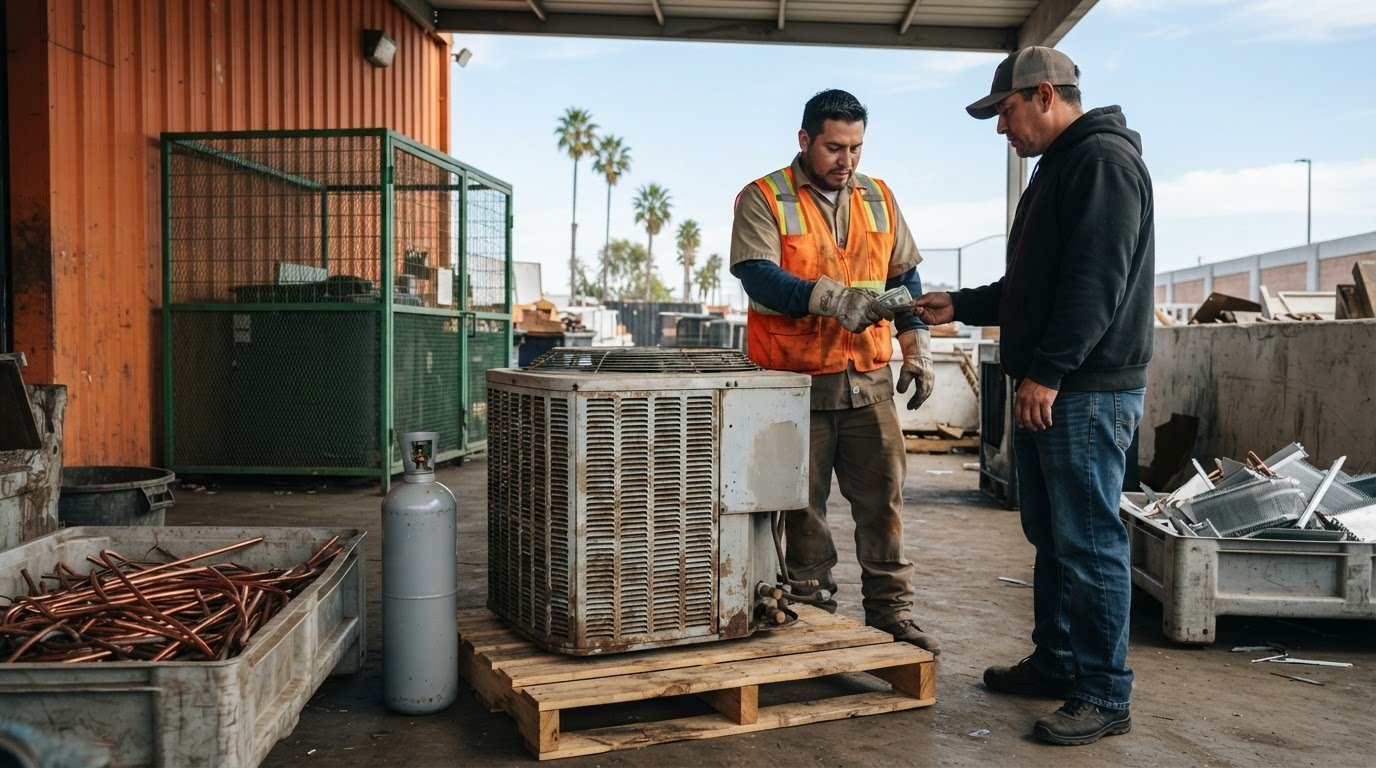
An AC unit isn’t ready for scrap just because it’s disconnected. Refrigerant recovery is regulated under Section 608 of the Clean Air Act, and according to the U.S. Environmental Protection Agency, technicians who recover refrigerant generally need Section 608 certification. If you’re looking for cash for scrap AC units in Anaheim, the refrigerant and the unit’s recoverable metal both matter.
An old air conditioner can have scrap value, but the amount depends on the materials that can be recovered and the unit’s condition. Refrigerant handling also affects how it can be processed, so plan for that before arranging disposal.
This article explains what affects cash for scrap AC units in Anaheim, how pickup and disposal costs can factor in, and what refrigerant recovery rules apply. It also compares residential and commercial equipment to help you plan the recycling process.
Key Takeaways
- Learn which recoverable metals and equipment conditions can influence an old AC unit’s scrap value.
- Understand why refrigerant recovery matters before an air conditioner enters the scrap stream.
- See how residential and commercial systems can differ in handling and scrap considerations.
- Find out what to consider when arranging scrap metal purchasing and the next step for recycling an AC unit in Anaheim.
What Makes Old HVAC Equipment Valuable?
An old HVAC system’s recycling value depends on its recoverable materials, type, and condition. In Orange County, refrigerant recovery and material sorting are separate parts of responsible disposal.
Qualifying HVAC Equipment and Materials
Central air conditioners, outdoor condensers, and commercial HVAC systems can contain copper tubing, aluminum coils, steel cabinets, motors, and wiring. The unit’s size and the amount of metal that can be separated help determine what is suitable for recycling. For example, a condenser with intact copper components differs from one with missing or damaged parts.
Older equipment can have a material difference: units built before the mid-2000s tend to use heavier-gauge copper tubing than newer, more efficient models. Residential systems may involve a single home unit, while industrial and commercial sites can have multiple pieces of equipment to sort. HVAC contractors handling a building replacement can group condensers and central units for commercial recycling review.
Factors Affecting Recycling Value
Material type, recoverable quantity, condition, and sorting needs all affect a scrap assessment. Equipment with accessible metal components may be simpler to process than an incomplete unit mixed with other materials. Age can also matter, since older systems may contain heavier-gauge copper tubing.
Refrigerant handling is a separate step from metal recovery. Air-conditioner refrigerant recovery is regulated under Section 608 of the Clean Air Act, according to the U.S. Environmental Protection Agency. Technicians recovering refrigerant generally need EPA Section 608 technician certification, which requires passing an EPA-approved test tied to the equipment type, according to the U.S. Environmental Protection Agency. This requirement matters for contractors coordinating HVAC disposal and recycling in Orange County: metal value does not remove the need to handle refrigerant appropriately.
Residential and commercial air conditioners, condensers, and HVAC systems
Residential units, commercial condensers, and larger HVAC systems differ in size, access, and recoverable metal. In Anaheim, these details affect pickup planning and the recycler’s assessment.
Payout Factors for AC Units
Size matters: a large central system may contain more material than a compact residential unit. But the type and amount of recoverable metal count, too. A condenser with accessible copper and aluminum differs from a damaged unit with missing parts. The unit’s condition and the amount that can be sorted help determine its scrap assessment.
Preparing Units for Professional Pickup
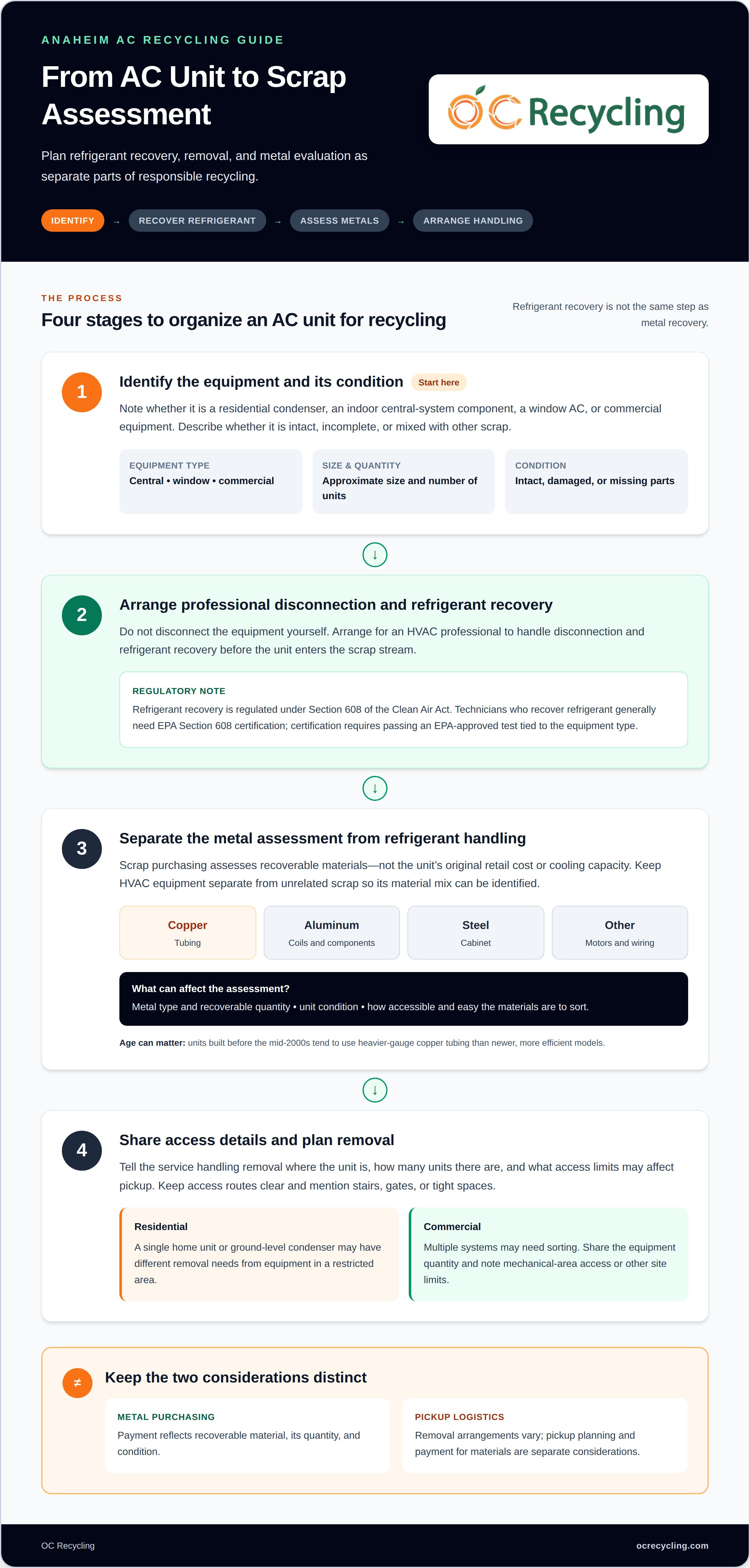
Before pickup, share the unit type, approximate size, condition, and location with the service handling removal. Specify whether it is a residential condenser, an indoor central-system component, or commercial equipment. Keep access routes clear and mention stairs, gates, or tight spaces. Don’t disconnect the equipment yourself. Arrange for an HVAC professional to handle disconnection and refrigerant recovery.
Anaheim Pickup and Removal
Pickup planning in Anaheim depends on where the equipment sits and how it can be accessed. A ground-level residential condenser has different removal needs from a commercial unit inside a mechanical area. Tell the pickup team about the unit’s location, access limits, and quantity. For separated metal from HVAC equipment, scrap metal purchasing can be a relevant next step.
Cash Through Recyclers or Pickup Services
Anaheim residents can receive payment when a recycler purchases an old AC unit for its recoverable metals. Payment for the materials and pickup logistics are separate considerations: pickup arrangements vary. The assessment can reflect metal type, quantity, and unit condition. For example, an intact condenser and a partly dismantled unit may be evaluated differently.
Scrap metal purchasing in Anaheim
In Anaheim, scrap metal purchasing values an air conditioner for its materials, not for reuse or disposal. A unit may contain copper, aluminum, and steel, but these metals are assessed separately. Identify the equipment and its material mix before considering its scrap value.
A central-system condenser, window air conditioner, and commercial HVAC assembly differ in size and construction. Copper tubing and aluminum components are common recoverable metals; steel cabinets and other attached materials may also be present. The amount and condition of each metal, and how readily it can be sorted, affect the assessment. A complete unit and a partly dismantled one can therefore have different material profiles.
For a clearer material assessment, identify the unit type and whether it is intact, incomplete, or mixed with other scrap. Keep HVAC equipment separate from unrelated metal, such as steel framing or copper pipe from a building project. This helps distinguish the materials being evaluated instead of treating every load as identical.
Orange County contractors replacing equipment can organize removed condensers and HVAC components by project or site. A commercial load may include several equipment types, while a residential replacement may involve a single system. Clear identification helps distinguish AC components from other California scrap materials and supports a more orderly handoff for recycling.
Scrap purchasing is not the same as paying for a working appliance. The assessment focuses on recoverable material, not the unit’s original retail cost or cooling capacity. Refrigerant handling and equipment removal are separate from metal purchasing. Describe the AC unit, its condition, and its materials, and arrange for refrigerant recovery and removal before it enters the scrap stream.
Which Anaheim scrap yards accept whole air conditioners?
In Anaheim, acceptance depends on whether a recycler handles intact air conditioners or only separated scrap metal. A whole central-system condenser still includes its cabinet, coil, wiring, and other components. The unit’s refrigerant status and the material-handling process also affect whether it can be received as delivered.
Before arranging a drop-off, identify the equipment as a window unit, residential condenser, or commercial HVAC component. Establish whether refrigerant recovery is complete and whether the unit will arrive intact. A scrap-metal buyer may assess separated copper, aluminum, and steel differently from a complete appliance. A scrap-metal transaction does not automatically include disconnection or refrigerant recovery.
If equipment enters the waste stream with refrigerant still inside, the final disposer must obtain a signed statement identifying who recovered it and the recovery date. Keep this record with the disposal details. A commercial contractor removing several condensers can organize the information by site; a resident with one window unit can clearly describe that appliance.
Plan the handoff in sequence: identify the unit, arrange professional disconnection and refrigerant recovery, then route the equipment or resulting metals for appropriate handling. Don’t assume every Anaheim recycler accepts whole AC units simply because it buys scrap. Acceptance of whole units and pickup are separate from purchasing sorted metal, so plan around the form of material being delivered.
For an Anaheim project focused on recoverable metal, start a scrap-metal recycling inquiry to explore the next step. Provide the equipment type and whether it is intact or separated; those details help frame the material-handling request.
OC Recycling: Scrap Metal Purchasing
OC Recycling purchases recyclable scrap metal from people and businesses with HVAC project materials. Once an air conditioner has been handled appropriately and its scrap is ready, Scrap Metal Purchasing can be a practical next step. Describe the unit’s condition and materials clearly, since copper, aluminum, and steel are assessed as different materials. OC Recycling also offers CRV Redemption, Electronics Recycling, and Certified Product Destruction. Choose the service that matches the material or item, rather than treating every discarded appliance as scrap metal. For recyclable metal from an AC project, contact OC Recycling about Scrap Metal Purchasing.
Plan the Next Step for Your Old AC
Include end-of-life handling when planning an AC replacement. Coordinating removal timing, site access, and material routing can keep the transition organized and avoid last-minute decisions. This helps homeowners and facility teams make recycling part of a planned upgrade rather than a separate cleanup task. Start by deciding who will coordinate removal and how the recovered materials will be handled.
If you’re arranging cash for scrap AC units in Anaheim, treat payment as one part of the equipment transition. OC Recycling offers Scrap Metal Purchasing for recyclable metals, as well as CRV Redemption and Electronics Recycling. Routing each material to the appropriate service helps keep HVAC scrap separate from electronics and beverage containers.
Contact OC Recycling about your AC unit to take the next step. A clear plan can turn an outdated system into a more orderly transition toward its replacement.
Frequently Asked Questions
Can a professional scrap an AC unit without recovering the refrigerant?
No. Refrigerant must be recovered before an air conditioner is disposed of as scrap. If equipment enters the waste stream with refrigerant inside, the final disposer must obtain a signed statement identifying who recovered it and the recovery date. Keep this record to document the handling step. The professional workflow should address refrigerant recovery before the unit is treated as scrap metal.
How does professional recycling of an old AC unit or chiller get started?
Start by identifying the equipment and arranging professional handling. Share whether it’s a residential AC unit, commercial system, or chiller, and describe its location and condition. Plan for disconnection, refrigerant recovery, removal, and material processing. For a site replacement, organizing equipment by type helps separate HVAC scrap from other construction or facility materials.
Where can I sell scrap AC units for cash in Anaheim, CA?
For cash for scrap AC units in Anaheim, OC Recycling’s Scrap Metal Purchasing is a local option for recyclable metal. Describe whether you have a complete unit or separated scrap, since materials and condition shape the assessment. An AC unit may require professional disconnection and refrigerant recovery before its metal is ready for recycling. This helps you plan the right route for the equipment.
How much do scrap yards in Anaheim pay for AC units by type or weight?
Cash for scrap AC units in Anaheim depends on recoverable materials, their quantity, and the unit’s condition; there is no universal amount for every type or weight. Copper, aluminum, and steel make up different material profiles, and a complete unit differs from sorted scrap. OC Recycling pays cash the same day for metals; the amount depends on the materials being sold.
Do scrap yards pay more for copper AC coils, compressors, or aluminum parts?
No single component always ranks highest in every transaction. A buyer assesses material type, quantity, condition, and how the load is presented. Copper coils, compressor components, and aluminum parts are different materials, so separating them can make the contents clearer. Compare the value assigned to the recoverable metal in your actual load, not the component’s original function.
Does California require AC refrigerant to be recovered before scrapping a unit?
Yes. Air-conditioner refrigerant recovery is regulated under Section 608 of the Clean Air Act, according to the U.S. Environmental Protection Agency. That federal requirement applies in California as well. Technicians recovering refrigerant generally need EPA Section 608 technician certification, which requires passing an EPA-approved test tied to the equipment type. Recovery documentation also matters when equipment enters the waste stream.
