
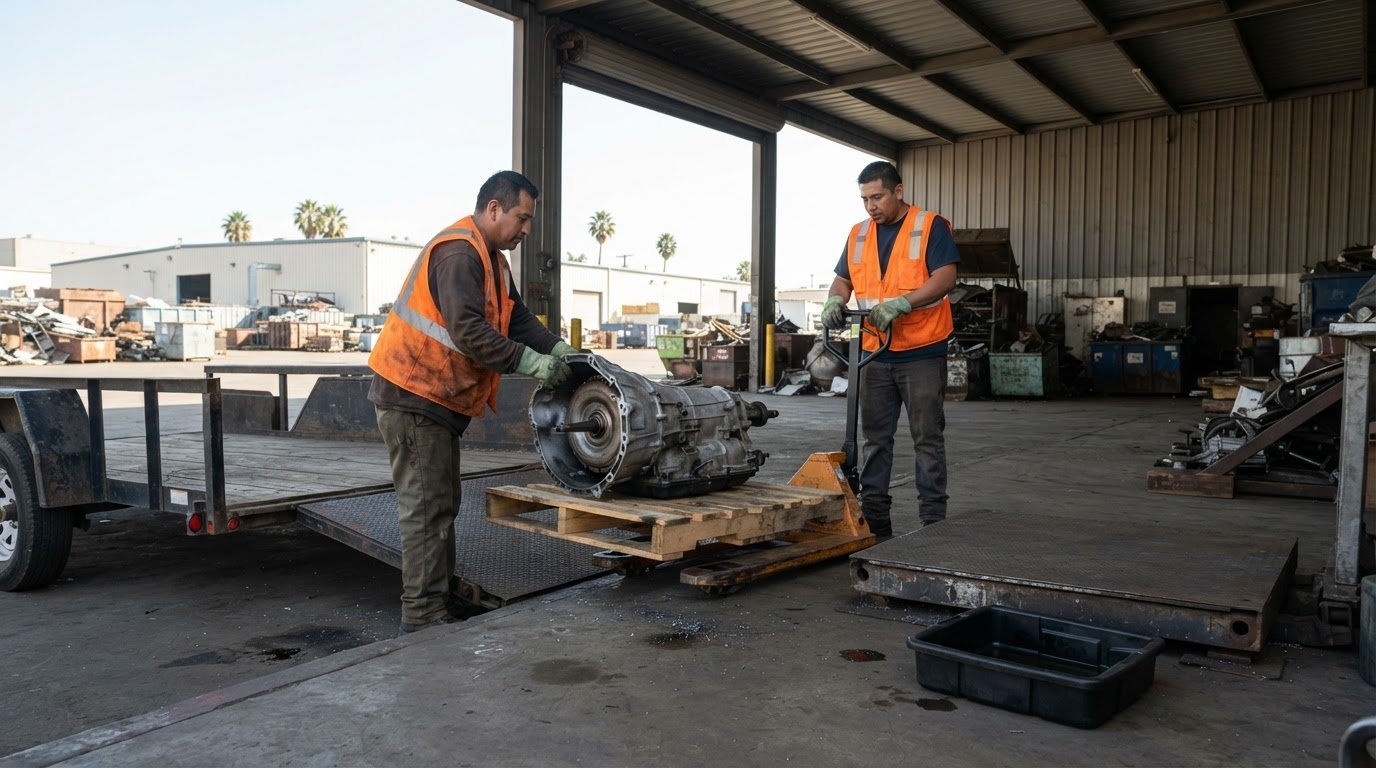
A wrecked car can still contain recyclable material, even when the transmission is the part you want assessed. A scrap yard that buys transmissions in Tustin may evaluate the unit based on details such as the vehicle’s make, model, year, and the transmission’s condition, then explain the requirements for ownership paperwork, drop-off or pickup, and payment.
It’s reasonable to want a clear offer before arranging transport, especially if the vehicle is damaged or no longer drivable. The information you provide helps the yard identify the transmission and assess how its condition may affect the offer.
This guide covers what information to prepare, how ownership paperwork fits into the process, and what to consider when arranging delivery or pickup. It also explains how a recycling business can handle other scrap metal from the same project, helping you choose a practical next step.
Key Takeaways
- Learn which transmission and vehicle details help a yard assess inventory and prepare an offer.
- Understand how proof of ownership supports a smoother sale and what to do if the title is missing.
- See how drop-off or pickup arrangements and payment are handled, including what affects the process.
- Know what to consider when evaluating a yard’s transmission-buying policies and when scrap-metal purchasing may suit your needs.
How a Tustin scrap yard checks transmission inventory and prepares an offer
The offer depends on the specific item and is provided after a quote request. Factors can include the vehicle details, transmission type, condition, and completeness. Salvage yards assess each unit individually to determine whether it meets their buying criteria.
How Tustin Scrap Yards Compare Used Transmission Offers
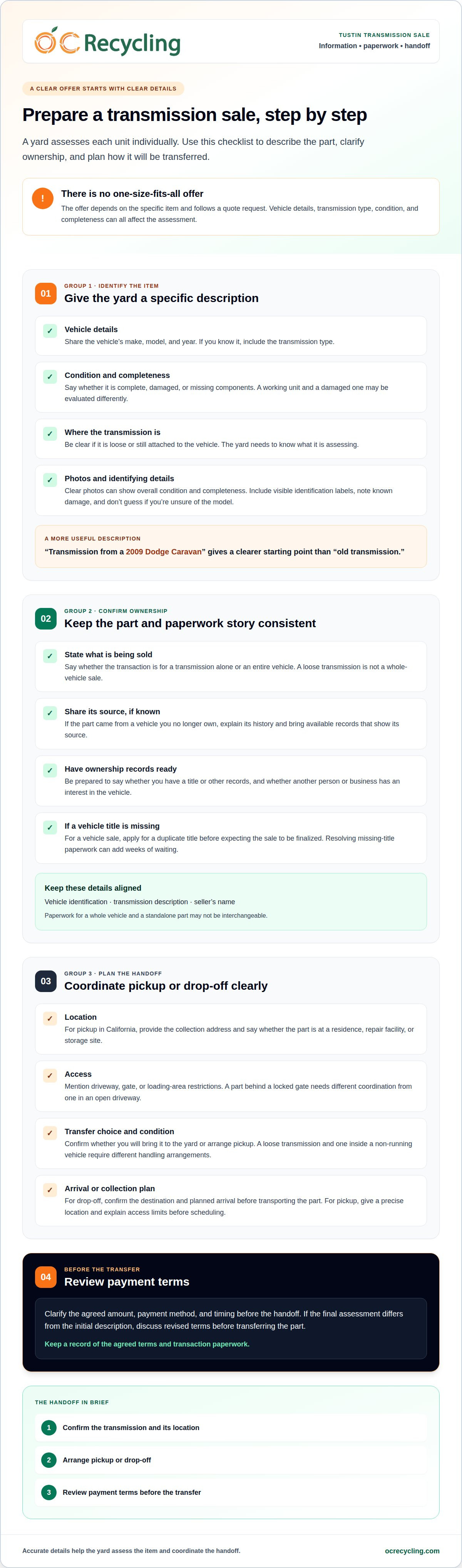
A scrap yard that buys transmissions in Tustin needs enough information to identify the unit before preparing an offer. Provide the vehicle’s make, model, and year, and the transmission type if you know it. Say whether it is complete, damaged, or still attached to the vehicle. These details help distinguish one assembly from another and clarify what the yard is assessing.
Accepted Transmission Types and Conditions
Acceptance criteria vary by yard. The assessment may consider the transmission’s identifying details, completeness, and condition. A working unit and a damaged one may receive different evaluations, so describe its state accurately. If it is still in the vehicle, mention that, since the yard will have different information to assess.
Keep the description specific. For example, “transmission from a 2009 Dodge Caravan” gives a clearer starting point than “old transmission.” A 2009 Dodge Caravan listed in Tustin was recorded as being without a transmission on October 14, 2026. That example shows why vehicle inventory details matter: a vehicle listing may not include the component being assessed.
Photos can help show the transmission’s overall condition and whether it appears complete. Include clear views of visible identification labels, if available, and note known damage or missing components. If you’re unsure of the model, don’t guess. Accurate details help avoid confusion about the vehicle and the part being considered.
For a smoother assessment, gather the vehicle details and transmission condition before requesting an offer. If you don’t know the transmission type, provide the make, model, and year instead. This gives the yard a clearer picture of the item and helps it explain the next step.
Paperwork and proof of ownership
For a transmission sale, clear paperwork helps establish what is being transferred and who has authority to sell it. If the vehicle title is lost, resolving the paperwork may be necessary before a vehicle sale can be finalized. The process can add weeks of waiting.
A transmission removed from a vehicle and a complete junk car are different transactions. State clearly which one you’re selling and share any related ownership paperwork. If the part came from a vehicle you no longer own, explain its history and bring available records that show its source. Don’t present a loose transmission as a whole-vehicle sale.
Before arranging a transaction, gather your paperwork and keep the details consistent. The vehicle identification, transmission description, and seller’s name should tell a clear, coherent story. If the title is missing for a vehicle sale, apply for a duplicate before expecting the sale to be finalized. A document delay can affect scheduling even if the transmission is ready.
For a straightforward review, be prepared to explain:
- Whether the sale is for a transmission alone or an entire vehicle.
- Which vehicle the transmission came from, if known.
- Whether you have a title or other ownership records available.
- Whether another person or business has an interest in the vehicle.
These details help distinguish a paperwork issue from an inventory question. For example, a junk car with a missing title cannot be sold as a vehicle until the seller applies for a duplicate. If you’re selling only a removed transmission, describe it accurately and provide relevant records. Paperwork for a whole vehicle and a standalone part may not be interchangeable.
For other recyclable metal, scrap metal purchasing offers a separate route from selling a vehicle with its title paperwork.
Pickup and payment arrangements
To arrange pickup or drop-off, a scrap yard needs to confirm the part, its location, and the transfer plan. For a pickup in California, provide the collection address and say clearly whether the transmission is loose or still in the vehicle.
Before setting a time, the yard can use these details to coordinate the handoff:
- Part location: State whether it is at a residence, repair facility, or storage site.
- Access: Describe driveway, gate, or loading-area restrictions that affect vehicle access.
- Condition: Explain whether the transmission is detached, damaged, or attached to a vehicle.
- Transfer choice: Confirm whether you plan to bring it to the yard or arrange pickup.
For drop-off, confirm the destination and planned arrival with the yard before transporting the part. A loose transmission and one inside a non-running vehicle require different handling arrangements. Sharing that distinction early helps the yard plan for the material it will receive.
For pickup, give a precise location and explain any access limits before scheduling collection. A transmission behind a locked gate, for example, requires different coordination from one in an open driveway. Keep the part description consistent with the details provided for its assessment.
Payment should match the agreed offer and transaction details. Before the handoff, clarify the amount, payment method, and timing. If the final assessment differs from the initial description, discuss any revised terms before transferring the part. Keep a record of the agreed terms and transaction paperwork.
A clear handoff follows a simple sequence: confirm the transmission and its location, arrange pickup or drop-off, then review payment terms before the transfer. If the part is still attached to a vehicle, say so early. That affects whether the arrangement covers one component or a larger vehicle load.
Tustin auto salvage yards transmission buying policies
A transmission buying policy explains how a salvage yard evaluates a part and completes the purchase. In Tustin, compare the acceptance criteria, offer terms, and handoff process before deciding how to proceed.
Start by reviewing the policy’s description of eligible items. It should distinguish a standalone transmission from one attached to a vehicle, and explain how completeness and visible damage affect evaluation. A unit missing components, for example, needs a different description from a complete assembly. Clear categories help ensure the initial description matches the item presented.
Offer terms matter, too. A useful policy explains which details support an assessment and what could change the amount after inspection. Vehicle identification, transmission type, and condition provide context. If the description doesn’t match the actual part, the final assessment may change. Treat an initial estimate as based on the details provided, not as a fixed amount if those details change.
Review how the policy handles the transaction itself. The terms should make the handoff, final evaluation, and payment sequence clear. They should also distinguish pickup from customer drop-off, since each involves different logistics. A written explanation of the steps makes it easier to plan transportation and understand when the transaction is complete.
Use this short comparison when reviewing a yard’s stated process:
- Acceptance: Does it explain which transmission conditions it evaluates?
- Assessment: Does it identify the information used to prepare an offer?
- Changes: Does it explain how differences in condition affect the assessment?
- Handoff: Does it describe pickup or drop-off and the payment sequence?
For instance, a policy that addresses a complete transmission and a damaged, incomplete unit gives clearer expectations than one that treats every part alike. Keep your description consistent through the offer and handoff. If you’re ready to discuss recyclable metal, start a scrap metal inquiry.
OC Recycling: Scrap Metal Purchasing
OC Recycling offers Scrap Metal Purchasing for people and businesses looking to recycle metal responsibly. If your transmission sale also involves other scrap metal, this service may be a practical option for that material. Scrap metal purchasing is distinct from selling a used transmission as an auto part.
For example, a repair facility clearing metal from a project can use Scrap Metal Purchasing for recyclable scrap while keeping vehicle-part paperwork and transmission arrangements separate. OC Recycling also offers CRV Redemption, Electronics Recycling, and Certified Product Destruction for those specific recycling needs.
Contact OC Recycling to discuss Scrap Metal Purchasing for your recyclable metal.
Choose the right next step for your materials
A scrap yard that buys transmissions in Tustin may assess a vehicle component, while other recyclable metal may fit a separate purchasing process. Keep these materials distinct as you plan what happens next. Separating a transmission, general scrap metal, and other recyclables helps direct each item to the appropriate service.
OC Recycling offers Scrap Metal Purchasing for recyclable metal, along with CRV Redemption and Electronics Recycling for those specific materials. These services can help when your project involves more than an auto component. Identify the material you need to recycle, then choose the service that fits.
For a next step involving recyclable metal or another listed material, Contact OC Recycling today. A clear plan helps you move forward with confidence.
Frequently Asked Questions
How Can a Tustin Scrap Yard Help Scrap a Wrecked Car?
A Tustin salvage yard can assess whether a wrecked vehicle or its recyclable metal meets its purchasing criteria. A vehicle with a missing transmission differs from one offered with the part, so describe the car’s condition and what remains. If you’re selling the complete vehicle, ownership paperwork matters too. Separating a vehicle transaction from a transmission-only sale clarifies what is being assessed.
How Can a Tustin Scrap Yard Help Sell a Junk Car in California?
A salvage yard can evaluate a junk car as a vehicle, while scrap-metal purchasing concerns recyclable metal. In California, if the vehicle title is lost, the seller must apply for a duplicate before the sale can be finalized, and the process adds weeks of waiting. That timing can shape whether you arrange a sale now or first complete the title process.
Where Can I Find Scrap Yards Near Tustin, CA, That Buy Used Transmissions?
A scrap yard that buys transmissions in Tustin may assess a unit as scrap, while a reusable transmission is an auto part. Be clear about which transaction you need. OC Recycling offers Scrap Metal Purchasing in Orange County communities including Tustin, Santa Ana, Anaheim, Costa Mesa, Huntington Beach, Orange, Irvine, Garden Grove, Westminster, and Fountain Valley.
Do Scrap Yards Buy Transmissions Without a Vehicle Title in California?
A detached transmission and a complete vehicle are different sales, so the vehicle-title rule does not apply to every part sale. If you’re selling the whole vehicle and its title is lost, you may need to resolve the paperwork before the sale can be completed. The replacement process can add weeks and affect the transaction timing.
What Documents Are Required to Sell a Used Transmission to a Scrap Yard in California?
For a transmission sold separately, provide the vehicle’s make, model, and year when known, along with an accurate description of its condition. These details help identify the part. If you’re selling the entire vehicle, have its title available. If the title is lost, confirm what paperwork is needed before finalizing a vehicle sale.
Do Tustin Scrap Yards Offer Transmission Pickup, and Is It Free?
Pickup terms vary, and recycling pickup may involve a charge based on material type and quantity. This does not establish whether a particular yard collects transmissions or whether collection is free. When discussing pickup, distinguish a detached part from a larger vehicle load, since the material and quantity affect the logistics and applicable terms.
