
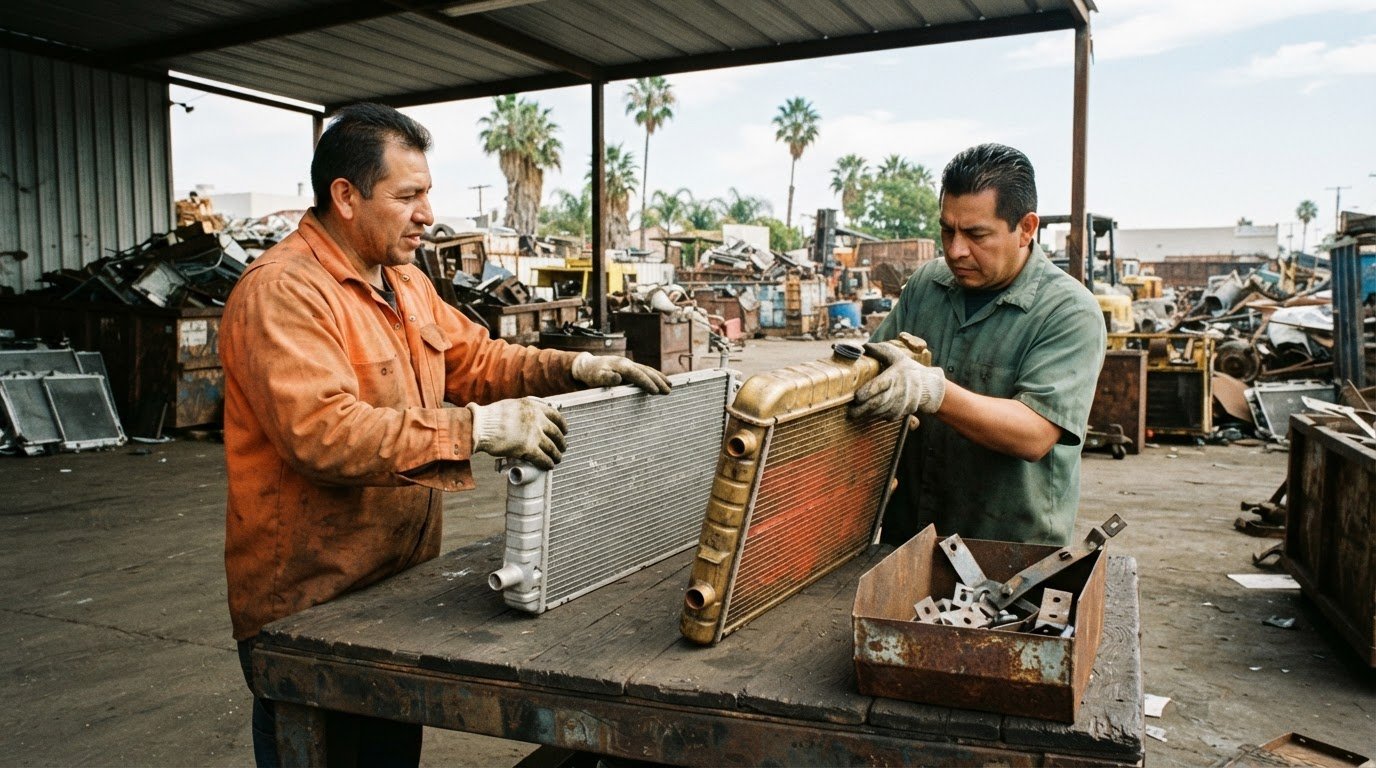
A radiator’s size alone won’t tell you its scrap value. If you’re looking for where to sell scrap radiators in Anaheim, choose a scrap metal buyer that grades materials separately: aluminum, copper-brass, and steel radiators are not the same grade. Keep aluminum radiators separate from copper-brass radiators and aluminum-copper AC coils.
It’s easy to assume all radiators are worth about the same, but the metal inside and any attached steel can affect how a load is sorted. Aluminum units are often silver-gray and lighter than brass or copper units of a similar size, which can help you identify the material.
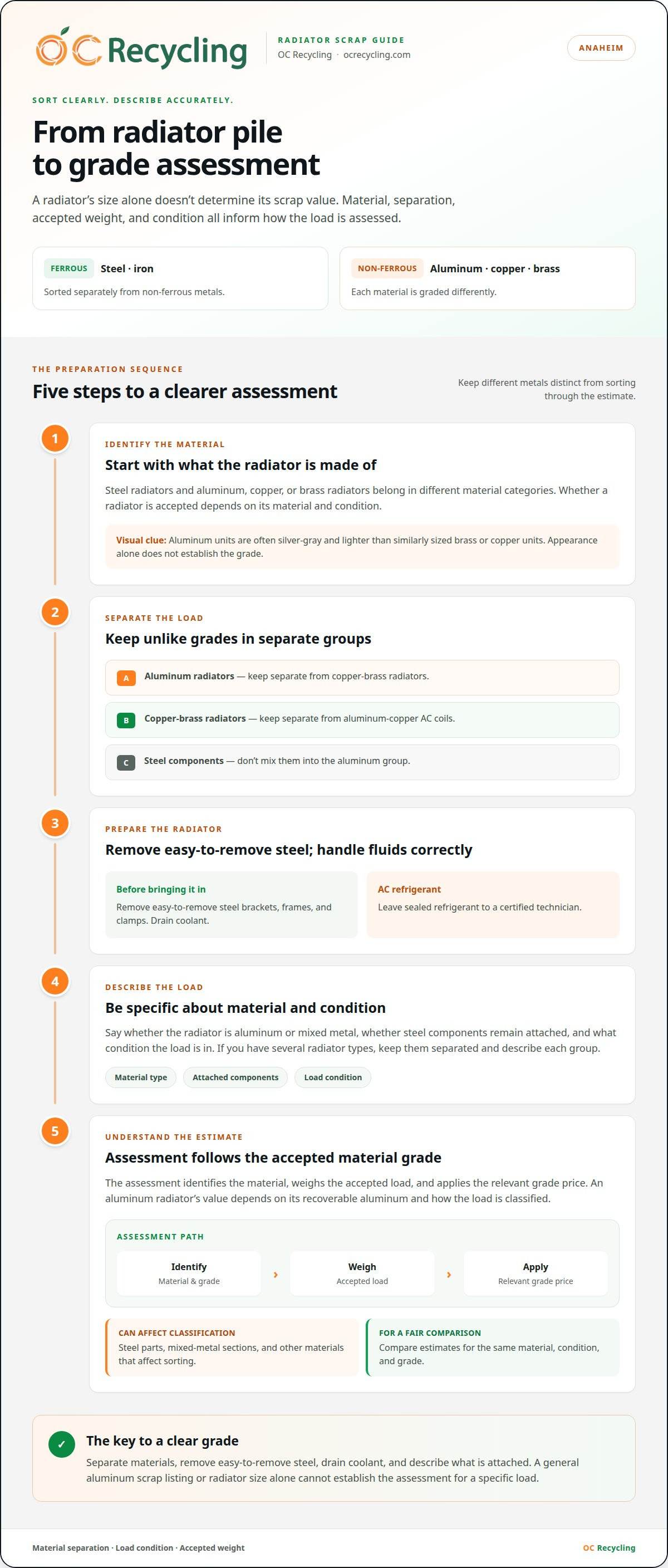
This guide explains how radiator metals compare, what affects an aluminum radiator assessment, and how to prepare your load. Separating materials and removing easy-to-remove steel brackets, frames, and clamps can help keep steel from being mixed with aluminum. Drain coolant before bringing radiators in, and leave sealed AC refrigerant to a certified technician.
Key Takeaways
- Learn how scrap yards classify ferrous and non-ferrous metals, and why that can affect how a radiator is assessed.
- Find practical guidance for locating Anaheim scrap-metal yard details and planning your next step.
- See which factors influence an aluminum radiator estimate, without relying on a one-size-fits-all price.
- Compare the relative value of copper, brass, aluminum, and steel, then learn how OC Recycling’s Scrap Metal Purchasing fits your needs.
Accepted ferrous and non-ferrous metals
Scrap radiators can contain ferrous metals, such as steel, or non-ferrous metals, including aluminum, copper, and brass. Scrap-metal facilities sort these categories separately because each is graded differently. A steel radiator and an aluminum radiator therefore belong in different piles, even if they came from similar vehicles. Whether a radiator is accepted depends on its material and condition.
Common scrap-metal categories include steel, iron, aluminum, copper, and brass. Steel brackets attached to an aluminum radiator, for example, can affect how the load is sorted. Separate recognizable materials before delivery instead of mixing every metal together. This makes the load easier to identify and grade.
California identification and paperwork requirements can depend on the transaction. Bring government-issued photo identification and ownership details, and be prepared to describe the material you’re selling. For example, specify whether your load contains aluminum radiators, copper-brass radiators, or steel components.
Don’t assume a radiator sale has a particular waiting period or payment method. Applicable California requirements and the facility’s transaction process affect timing and payment. Ask about the process before arranging transportation, especially if you need to plan around a specific payment method.
Drain coolant before adding radiators to your load, and leave sealed AC refrigerant to a certified technician. Keep aluminum radiators separate from copper-brass radiators and aluminum-copper AC coils, since they are graded differently. Removing easy-to-remove steel brackets, frames, and clamps can also keep steel from being mixed with aluminum.
A location alone doesn’t show whether a nearby city pays more than Anaheim. A radiator’s material, separation, and grade affect its value more directly than the city name. When comparing facilities, ask how each classifies the same material and load condition. Clear service can make the process easier to understand, but the metal grade remains central to the assessment.
Anaheim scrap-metal yard location and contact information
If you’re deciding where to sell scrap radiators in Anaheim, choose a scrap-metal yard that accepts radiator material. Use its Anaheim street address and contact details to plan the trip.
Anaheim Yard Location
For a nearby recycling location, identify the yard by its street address in Anaheim, not only by a business name or map label. This matters when you’re transporting bulky radiator scrap from a vehicle repair, construction, or demolition project. Enter the address as your destination and consider whether your vehicle can carry the radiator securely without blocking access to other cargo.
A radiator load can include separate materials from the same job. An automotive radiator may come with removed brackets, while a building project may produce other scrap metal. Keep the materials organized so the recycling team can identify the radiator load. A clear destination and sorted cargo make the trip easier to plan.
Directions and Contact Information
Use the recycling location’s address for directions, and keep its contact information with your route details. Before setting out, describe the load accurately, such as aluminum radiators or a copper-brass unit. A clear description helps distinguish radiator scrap from appliances or unrelated demolition material.
When deciding where to sell scrap radiators in Anaheim, plan around three details: the destination, a route suitable for your vehicle, and a clear description of the scrap. Secure loose parts so they don’t shift during transport, and keep radiator materials accessible for unloading. If the load includes different metals, group them separately before departure.
These practical details help you reach the intended Anaheim recycling location and arrive prepared. For a convenient trip, save the address and contact information together, then use the directions that match your starting point and vehicle. A well-planned route and organized load make it easier to complete the scrap-metal drop-off.
Current estimated aluminum radiator price
An aluminum radiator’s scrap value depends on its grade, weight, and condition. One figure cannot describe every radiator: a clean, mostly aluminum unit differs from one with attached steel or mixed materials. The assessment is based on the accepted weight in the aluminum grade, not just the vehicle model.
Scrap value is determined by identifying the material, weighing the accepted load, and applying the relevant grade price. An aluminum radiator’s value depends on how much recoverable aluminum it contains. Steel parts, mixed-metal sections, and other materials that affect sorting can change how much is classified as aluminum. If you’re bringing several radiators, keep different types separate for a clearer assessment.
A radiator’s price depends on the load and is provided after a quote request. Relevant factors include aluminum content, accepted weight, attached materials, and the facility’s current grading. To compare estimates meaningfully, describe the same material and condition each time rather than comparing figures for different grades.
For an accurate description, note whether the unit is aluminum or mixed metal and whether steel components remain attached. Aluminum radiators are often lighter than similarly sized brass or copper radiators, but appearance alone doesn’t establish the grade. The buyer’s assessment determines how the material is classified. Base the estimate on the actual radiator load, not a general aluminum scrap listing.
- Identify the radiator’s material and separate mixed-metal items.
- Describe attached components and the load’s condition accurately.
- Compare estimates only when they cover the same material and grade.
These steps help explain how a buyer assesses a load, without relying on a universal aluminum price. Getting the best value starts with accurate sorting and a clear description of the material being weighed. For vehicle repairs, contractor work, or cleanouts, consistent grading makes estimates easier to compare.
Relative value of copper, brass, aluminum, and steel radiators
There isn’t one dependable value ranking for every copper, brass, aluminum, and steel radiator. Scrap buyers grade each material separately, and the recoverable metal content affects the assessment. Size alone can mislead: a heavier unit may contain steel parts or mixed materials, not just more valuable metal.
Copper-brass radiators should be assessed as their own material category, just like aluminum and steel units. Their relative value depends on the grade and the amount of each metal that can be recovered. A mixed radiator may be assessed differently from a unit made mostly of one identifiable metal. Don’t assume copper always pays more.
Use this comparison to organize your load before pickup or a trip to a California metal recycling facility:
- Copper: Keep copper radiator material separate for its own grade assessment.
- Brass: Identify brass components rather than grouping them with aluminum or steel.
- Aluminum: Separate aluminum units and keep attached steel from blending into the load.
- Steel: Sort steel radiators and parts as ferrous material.
For a fair comparison, describe the same material and condition to each buyer. A clean, separated aluminum radiator and a mixed aluminum-steel unit are different loads. Ask how the grade is determined, what material weight is accepted, and whether attached parts change the classification. These details help you assess competitive offers without assuming one metal always pays the most.
The practical takeaway is simple: identify the radiator’s main metal, separate distinct components, and compare like with like. A repair shop’s copper-brass unit, for example, shouldn’t be weighed against an aluminum radiator as though both shared one grade. For help with separated radiator scrap, take the next step with your metal load.
OC Recycling: Scrap Metal Purchasing
OC Recycling offers Scrap Metal Purchasing for people and businesses with radiator scrap. Once you’ve sorted the metals and identified the radiator material, this service is a practical way to recycle the load.
When discussing your load, note whether it includes aluminum, copper-brass, or steel radiators, along with any separated metal components. Clear descriptions keep the conversation focused on the scrap you’re selling, whether it comes from vehicle repairs, a contractor cleanup, or another project. OC Recycling also handles separate recycling needs, including Electronics Recycling and CRV Redemption.
Ready to discuss radiator scrap? Contact OC Recycling.
Make your next recycling step count
Make a radiator cleanout part of an organized recycling plan. Before your next trip, list the materials you have and separate unrelated items, such as electronics or CRV containers, so each can go to the appropriate recycling service. A clear inventory also helps you describe your radiator load when discussing its assessment.
If you’re deciding where to sell scrap radiators in Anaheim, OC Recycling’s Scrap Metal Purchasing is a relevant next step. The company also offers Electronics Recycling and CRV Redemption for separate materials. Radiator pricing depends on the load and its material grade. Contact OC Recycling to discuss your radiator scrap and request pricing.
Contact OC Recycling about radiator pricing and take the next step with confidence.
Frequently Asked Questions
Which radiators are worth the most?
No radiator material is always worth the most, because buyers grade copper, brass, aluminum, and steel separately. A radiator with clearly identifiable, recoverable metal may be easier to classify than a mixed unit. Compare a copper-brass radiator and an aluminum radiator as separate grades, not by size or vehicle type alone. Ask for an assessment based on the actual material.
Do radiators with steel frames or plastic sides still count?
Yes, a radiator can contain recyclable metal even if it has a steel frame or plastic sides. Those non-aluminum parts don’t count as aluminum, so the mix can affect the grade. A plastic-sided radiator, for example, may have aluminum fins or tubes alongside nonmetal components. Describe its construction accurately so the materials aren’t mistaken for one grade.
Do you take automotive and HVAC radiators?
How do you price radiators?
Radiators are priced according to their accepted metal grade and weight. A mixed unit may be classified differently from one made mostly of a single metal, so a model name alone doesn’t establish its value. Two radiators from similar vehicles, for example, may differ in composition or attached components. OC Recycling provides pricing after a quote request, based on the specific load and its assessment.
Should I drain the radiator first?
Yes, drain coolant from scrap radiators before adding them to your load. Coolant can spill during handling or transport, so drain the unit carefully before loading it. Sealed AC refrigerant is different: leave it to a certified technician rather than trying to release it yourself. These steps keep the load separate from fluids and ready for recycling assessment.
Should I remove steel or plastic from an aluminum radiator before selling?
Remove easy-to-remove steel brackets, frames, and clamps when preparing an aluminum radiator. Keeping these parts separate prevents non-aluminum metal from being mixed with the aluminum. Plastic sides aren’t aluminum, but don’t force parts off if doing so could damage the radiator or create loose debris. Keep separated components grouped by material, and describe any parts that remain attached.
