
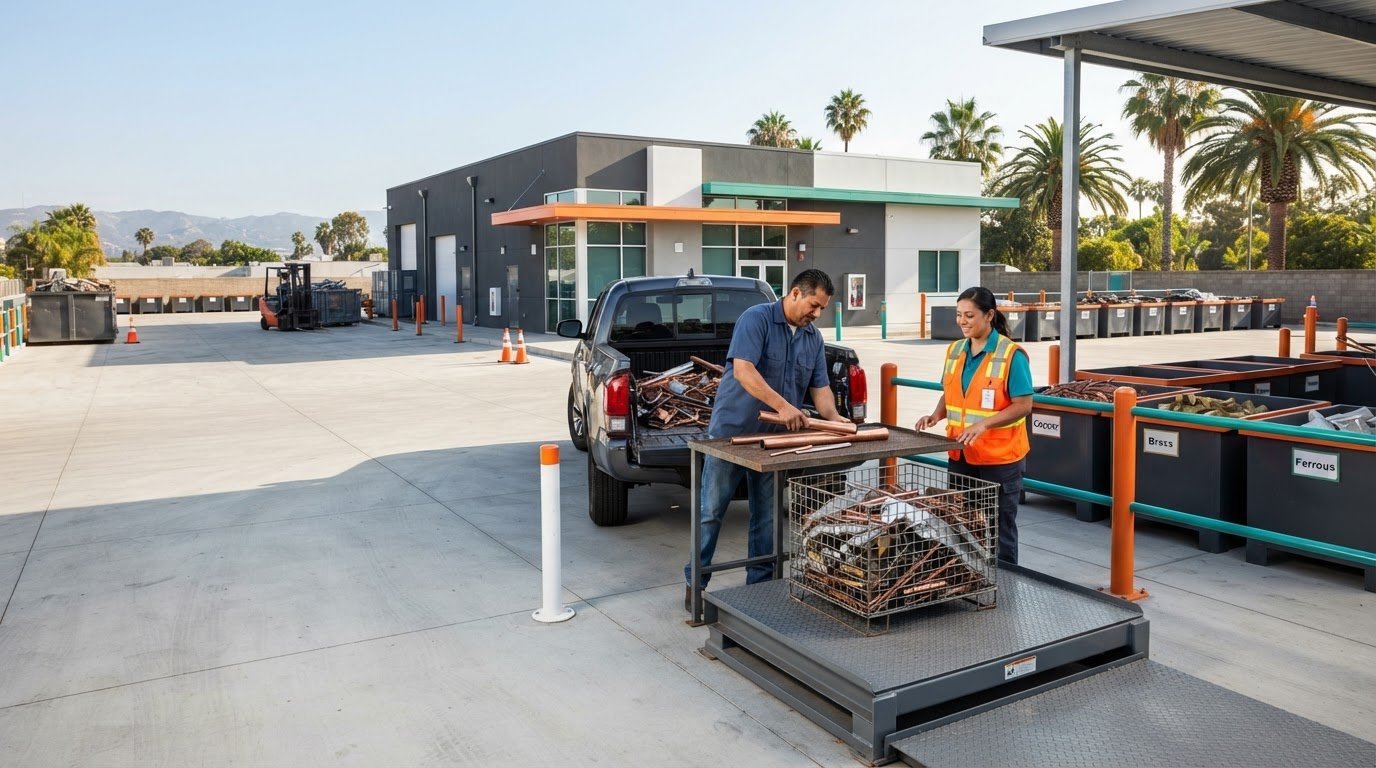
A scrap-metal drop-off lets you recycle unwanted metal and get paid for accepted material. For same day cash for scrap metal in Fountain Valley, bring your load to OC Recycling, where metals are assessed and weighed before payment. The material type and accepted weight determine the transaction.
It helps to know what to bring and how drop-off works before loading your vehicle. Sorting the metal in advance makes it easier to present your materials and understand what is being assessed.
This guide explains how scrap-metal drop-off and payment work, and how to prepare your load. OC Recycling purchases metals such as copper, aluminum, brass, iron, and steel at its Orange County locations, including Santa Ana, Costa Mesa, Orange, and Huntington Beach.
Key Takeaways
- Find out where members of the public can bring scrap metal for recycling in Orange County.
- Learn how to plan your drop-off around business hours and prepare your materials before you go.
- See what to expect as scrap metal is assessed, weighed, and processed for payment.
- Discover how sorting metals before selling can make it easier to present your load.
Where can I recycle scrap metal in Orange County?
In Orange County, bring scrap metal to a recycling facility that accepts public drop-offs. Before loading your vehicle, separate metal from unrelated materials and group recognizable metal types.
Public Scrap Acceptance
OC Recycling accepts scrap metal from the public, so individuals can bring their own materials to a drop-off location. Staff assess and weigh accepted metal as part of the purchasing process. This is a practical option for residents in Fountain Valley and nearby communities, including Santa Ana, Anaheim, Costa Mesa, Huntington Beach, Orange, Irvine, Garden Grove, Westminster, and Tustin.
Keep ownership clear: bring metal you’re entitled to recycle, such as an old steel shelf from your home. Separate loose pieces from other items so the metal can be identified and handled more easily. Scrap metal recycling supports material recovery, while recycled metals can cost less to use than forging new metals.
Transporting scrap has practical safety risks. Sharp edges can cut, heavy pieces can strain your back, and loose loads can shift during a trip. Wear sturdy gloves, secure the load, and avoid lifting pieces beyond your capacity.
Accepted and Excluded Metal Types
Metal recyclers commonly sort material by type, including ferrous metals such as iron and steel, and nonferrous metals such as aluminum and copper. These examples help you organize a load, but they don’t mean every facility accepts every item or form of metal. Separate each recognizable type rather than mixing everything together.
Facilities set their own acceptance criteria for scrap, so the relevant question is whether an item fits the receiving facility’s categories. An aluminum frame, steel pipe, and copper wire are distinct examples to identify. Metal attached to substantial nonmetal parts may need different handling from clean, separated scrap.
Keep obvious nonmetal items out of a metal load. Household trash, liquids, and electronic devices aren’t ordinary scrap metal; electronics belong in an appropriate recycling stream. Don’t treat batteries, sealed containers, or unknown substances as scrap. Separating materials helps staff assess the load and prevents unrelated items from entering the metal stream.
A simple preparation sequence makes sorting clearer:
- Group iron and steel separately from aluminum and copper.
- Remove loose packaging and unrelated household items.
- Keep electronics and other nonmetal materials apart from scrap.
- Set aside pieces with sharp edges or awkward shapes for careful loading.
Scrap metal recycling is part of a multi-billion-dollar industry, and millions upon millions of soft drink cans are created each day. Sorting your own metal gives the receiving facility a clearer view of the material and its type.
Business hours
Check the facility’s business hours before planning a scrap-metal drop-off. Allow time for unloading, sorting, and weighing, not just the drive. A load of aluminum cans takes different handling from bulky metal pieces, so plan for the full visit.
Plan around the facility’s posted schedule
Choose a visit window that fits your transport and load. The work involved after arrival matters as much as opening and closing times. A vehicle carrying mixed metal may need more unloading and sorting than one carrying a single, separated material.
Build in time to find the receiving area, follow directions, and present your scrap for assessment. Arriving close to closing leaves less time for these steps. Plan your visit within the posted hours so you can unload carefully and complete the drop-off without rushing.
Prepare before you leave
Organize your load at home or at the collection point. Keep aluminum apart from steel and copper when you can identify each material. Remove unrelated items, secure loose pieces, and position heavier scrap so it can be unloaded safely. These steps help make the visit more orderly once you reach the facility.
Before departure, use this simple schedule-focused checklist:
- Review the facility’s posted opening and closing times.
- Allow travel time and enough time for unloading and assessment.
- Separate recognizable metal types, such as aluminum and steel.
- Secure the load so pieces won’t shift during transport.
- Bring any details you need to identify the material or its source.
Your arrival time can affect how smoothly the visit fits into your day. A large or mixed load may need more attention than a small, sorted one. If you’re bringing scrap from a home cleanout, organize the metal before loading. If you’re transporting a single item, make sure it’s accessible for unloading.
Keep the schedule in view throughout the trip. Traffic, loading delays, or a last-minute change to your route can affect arrival. Planning with a comfortable margin helps you reach the receiving area during the facility’s stated hours and gives you time to follow its drop-off process.
Business hours are only one part of planning a visit. The metal type, load size, and unloading effort also affect how long a stop takes. Preparing these details before departure helps you use the facility’s operating hours efficiently and handle scrap with care.
Scrap metal drop-off and on-the-spot payment
If you’re searching for “same day cash for scrap metal Fountain Valley,” OC Recycling purchases metals and pays cash the same day. Accepted material must be assessed and weighed before payment, so allow time to complete the process during your visit.
Identification and Payment Requirements
Bring photo identification and be ready to explain what you’re selling and where it came from. These details can help the buyer document the seller and transaction. Keep relevant ownership records handy for equipment or metal removed during a renovation.
Before unloading, separate distinct materials and keep the load accessible. Accepted scrap must be identified and weighed before payment is calculated. Sorting also makes it easier to distinguish metal from attached nonmetal parts.
Same-Day Cash Eligibility
Same-day cash is relevant when a facility accepts your material, completes its assessment and weighing, and processes payment during your visit. For “same day cash for scrap metal Fountain Valley,” choose a drop-off option where the sale can be assessed and completed on the same day.
There’s no universal minimum quantity, fee, or appointment rule for nearby yards. Those details depend on each facility’s intake process and the material being brought in. A small sorted load and bulky equipment may require different handling, so plan for the load you have.
Available Same-Day Payment Methods
OC Recycling pays cash the same day for metals. The amount depends on the accepted material and weight, and there is no fixed per-pound amount stated here. Have your metal assessed before completing the sale.
Once staff finish assessing and weighing the accepted metal, review the transaction details before accepting payment. Confirm that the material and weight match what was evaluated, and keep any transaction record with your paperwork.
Cash Payment Restrictions
California rules can restrict cash payments for certain scrap-metal sales, so not every transaction should be assumed eligible for cash. The material and transaction determine which payment process applies; the buyer must process the sale accordingly.
In practice, expect the facility to document the seller, material, and sale before payment. Bring identification, keep ownership details available, and understand that the permitted payment method may differ by transaction. These steps help set clear expectations for an on-the-spot sale.
For a smoother drop-off, sort the material, make it accessible for weighing, and allow time for the facility’s intake steps. OC Recycling pays cash the same day for metals after assessment and weighing, so plan to complete the process during the same visit.
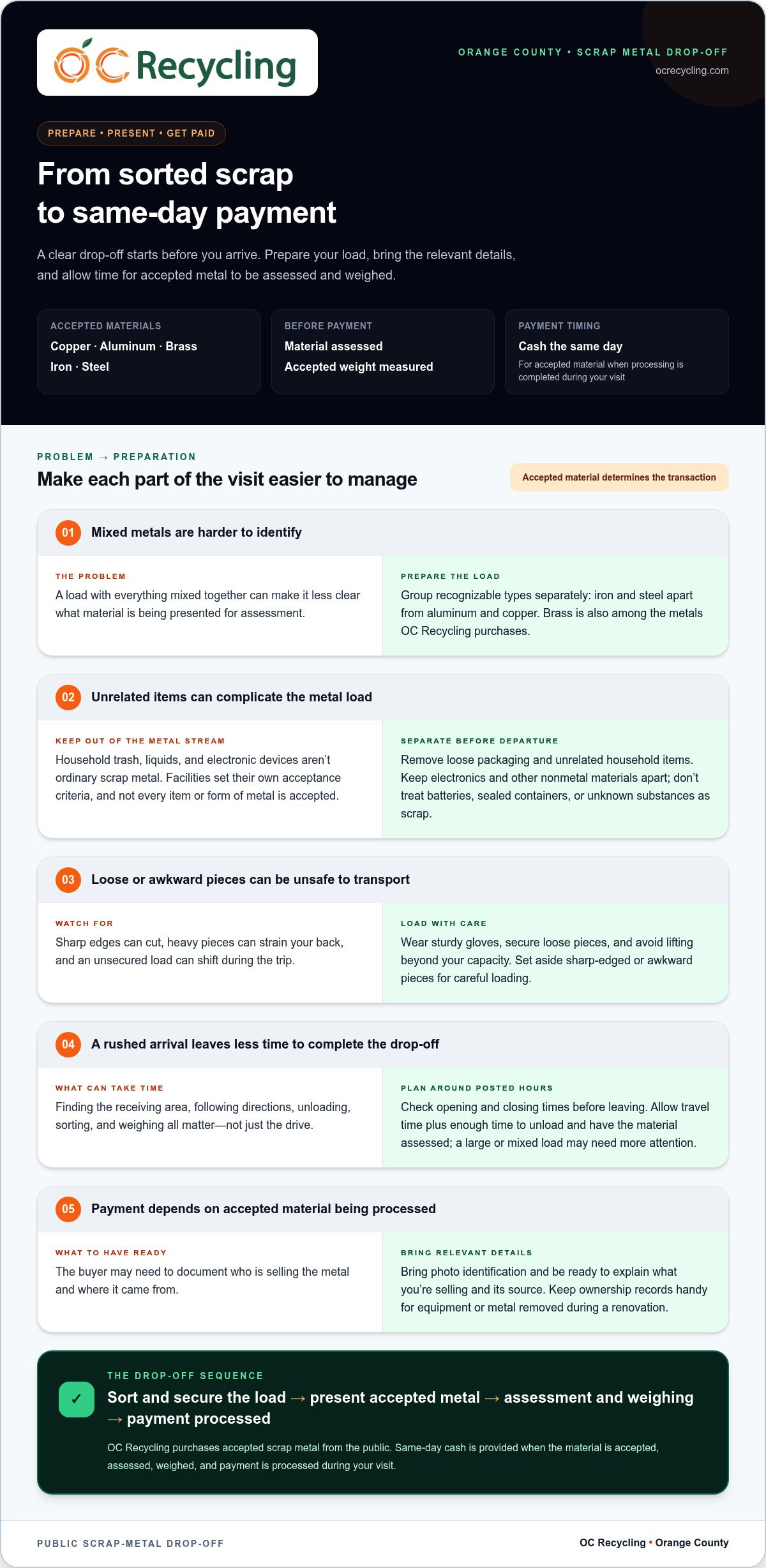
Earning money by selling scrap metal
Selling scrap can turn unwanted metal into income, but the amount depends on what you bring. Sorting each material before sale helps staff assess it clearly and weigh accepted scrap separately.
Earnings from Scrap Sales
Your earnings reflect the accepted metal’s type, condition, and weight. A clean, separated load of copper and steel is easier to assess than mixed scrap with attached nonmetal parts. The receiving facility evaluates the material and applies its current buying terms to the accepted weight.
Before loading, group similar materials and remove unrelated items. For example, keep steel shelving apart from aluminum pieces instead of presenting one mixed pile. This gives the buyer a clearer view of each category and helps you understand how the transaction is calculated.
Consider the effort involved, too. A small quantity may be easy to transport yourself, while bulky equipment can take more time to load and unload. OC Recycling offers business pickup, which may incur a charge depending on material type and quantity. For a drop-off, consider the transport effort and whether the metal is sorted and accessible.
Metal recycling also recovers material for reuse. Recycled metals can cost less to use than forging new metals, which gives sorted scrap value beyond simply clearing space. Prepare your load so reusable metal is easy to distinguish from waste and other materials.
Per-Pound Scrap Prices
There isn’t one current per-pound price that applies to every scrap metal sale near Fountain Valley. The dollar amount depends on the metal category, its condition, and the weight the buyer accepts. Aluminum, copper, and steel are assessed as distinct materials, rather than priced as one undifferentiated load.
Ask how your material is classified and how its accepted weight informs the offer. A clean piece and one attached to nonmetal components may be treated differently. Payment is based on the material accepted, not the total weight of everything in your vehicle.
To prepare, sort the load, identify each metal category, and remove obvious nonmetal attachments when safe and practical. Keep notes on the items you’re bringing. When staff explain the material classification and scale reading, you can follow how the transaction relates to your scrap.
Scrap values can change, so an older per-pound figure may not reflect a current transaction. The buyer assesses the actual material and weight on the day of sale. If your load contains several metals, keep each group separate rather than assuming one rate applies to everything.
Scrap metal drop-off and weighing process
Prepare your load so each metal type is easy to identify, handle, and weigh. Sorting copper separately from steel helps keep the assessment clear and the drop-off organized.
Sorting and Preparing Scrap
Start by separating recognizable metals, such as copper, aluminum, and steel. Keep different types in distinct containers or sections of your vehicle instead of mixing them into one pile. Remove loose packaging and unrelated items so the material being evaluated is clear.
Condition and cleanliness can affect how a load is assessed. Separate metal from attached nonmetal parts when this can be done safely and easily. Don’t risk injury trying to dismantle equipment; sharp edges, awkward shapes, and heavy pieces can make handling hazardous.
For transport, place small pieces in sturdy containers and secure larger items against shifting. Wear suitable gloves while handling sharp scrap, and avoid lifting a load beyond your capacity. A sorted, stable load is easier to unload and present for assessment.
- Keep copper, aluminum, and steel in separate groups.
- Remove unrelated items and loose packaging.
- Secure metal so it cannot slide during transport.
- Set aside sharp or awkward pieces for careful handling.
Drop-Off and Weighing
At the facility, follow the receiving area’s directions and present each sorted category for assessment. Staff identify accepted material and weigh it to determine the amount being purchased. Ask about the recorded weight for each group, especially if your load contains several metal types.
Pay attention to what the scale reading represents. If material arrives in a container or alongside other items, ask how those weights are handled in the calculation. Understanding whether the recorded figure reflects the scrap alone helps you follow the transaction.
Before accepting the final assessment, compare the material categories with what you brought. For example, check that a separate copper group hasn’t been combined with steel in the explanation of the load. Clear sorting makes these distinctions easier to follow.
After weighing, review the accepted material and transaction details before completing the sale. Keep any receipt or record with your paperwork. If your load has multiple categories, note each weight separately so you can understand how the total was calculated.
The best preparation is careful sorting, safe transport, and attention to each weight recorded. Prepare your sorted scrap for drop-off so the receiving process can focus on identifying and weighing the metal you’re bringing.
OC Recycling: CRV Redemption
OC Recycling offers Scrap Metal Purchasing alongside CRV Redemption for eligible beverage containers. If your drop-off includes electronics rather than scrap, Electronics Recycling provides a separate route for those materials. Keeping each category separate helps match it with the right service.
For products that need secure destruction, OC Recycling also offers Certified Product Destruction. Choose the service that fits the material instead of placing unrelated items in one scrap load. This helps clarify the next step, whether you’re redeeming eligible CRV containers or bringing metal for assessment.
Visit ocrecycling.com to learn more or contact OC Recycling.
Make Your Next Drop-Off Count
Treat each material as its own recycling stream rather than turning a cleanup into one mixed load. This makes it easier to decide what to bring for scrap assessment and what belongs in a different process. If your goal is same-day cash for scrap metal in Fountain Valley, prepare the metal for a clear, straightforward transaction.
OC Recycling offers Scrap Metal Purchasing for scrap, Electronics Recycling for unwanted devices, and CRV Redemption for eligible containers. Choosing the right route for each item helps you move forward with a practical plan instead of postponing the whole cleanup.
Reach out to OC Recycling with your scrap metal needs and take the next step toward clearing usable material responsibly. Contact OC Recycling about scrap metal.
A little preparation can turn unwanted materials into an organized, purposeful drop-off.
Frequently Asked Questions
BRINGING STEEL OR IRON?
Yes. Steel and iron are ferrous metals, and OC Recycling offers Ferrous Metal Recycling. Keep them separate from copper, aluminum, and brass so the categories are clear. For example, group steel shelving together and keep iron apart from electronics and other unrelated items. This makes it easier to present the metal as a distinct scrap load.
Do you offer free pickup of scrap metal in Fountain Valley, CA?
Pickup isn’t automatically free. A charge may depend on the material type and quantity, so don’t plan around a complimentary collection. You can bring scrap metal to an OC Recycling drop-off location instead. Business customers arranging pickup should consider the load details when planning. A sorted, accessible load also makes it easier to describe what needs to be collected.
What are the addresses, phone numbers, and hours of nearby scrap metal buyers?
OC Recycling’s locations are 1601 E Edinger Ave, Santa Ana, CA 92705; 8642 N Olive Ave, Orange, CA 92865; 2701 Fairview Rd, Costa Mesa, CA 92626; and 7632 Slater Ave, Huntington Beach, CA 92647. Call 714-RECYCLE (732-9253). Listed Orange County hours are Monday-Friday, 8:00 am-4:15 pm, closed 11:45 am-12:30 pm; Saturday, 8:00 am-3:45 pm; Sunday, 10:00 am-3:45 pm.
Which types of scrap metal do Fountain Valley scrap yards accept?
OC Recycling purchases scrap metals including copper, aluminum, brass, and other metals, and handles ferrous metals such as iron and steel. Sort these categories separately before bringing them in. Computers and televisions belong in the electronics recycling stream, not mixed into a metal load. Residents in Fountain Valley, Santa Ana, Anaheim, Costa Mesa, Huntington Beach, Orange, Irvine, Garden Grove, Westminster, and Tustin can use these categories to organize materials.
Do local scrap yards pay cash immediately, or use checks or electronic payment?
OC Recycling pays cash the same day for metals. The company’s stated payment information covers cash for metal recycling; it doesn’t establish that checks or electronic payments are available. Bring your metal for assessment and weighing, then follow the payment process for the sale. If you’re transporting several categories, keep the metals separate so the transaction can distinguish them clearly.
What ID, paperwork, or proof of ownership is required to sell scrap metal in California?
Bring government-issued photo identification and paperwork that helps show the material’s source or your right to sell it. Examples include a purchase receipt, work order, or bill of sale for equipment or metal removed during a project. Keep those records with your load details. These are practical preparation steps, not a claim that every scrap sale has identical paperwork requirements.
Are there alternatives near Fountain Valley for same-day scrap metal pickup or payment?
A direct alternative to arranging pickup is taking sorted scrap to an OC Recycling drop-off location for assessment. OC Recycling purchases scrap metal and pays cash the same day for metals. Business pickup may involve a charge based on material type and quantity. Residents in Fountain Valley, Westminster, Garden Grove, Irvine, Tustin, Santa Ana, Anaheim, Costa Mesa, Huntington Beach, and Orange can plan a drop-off around their load.
