
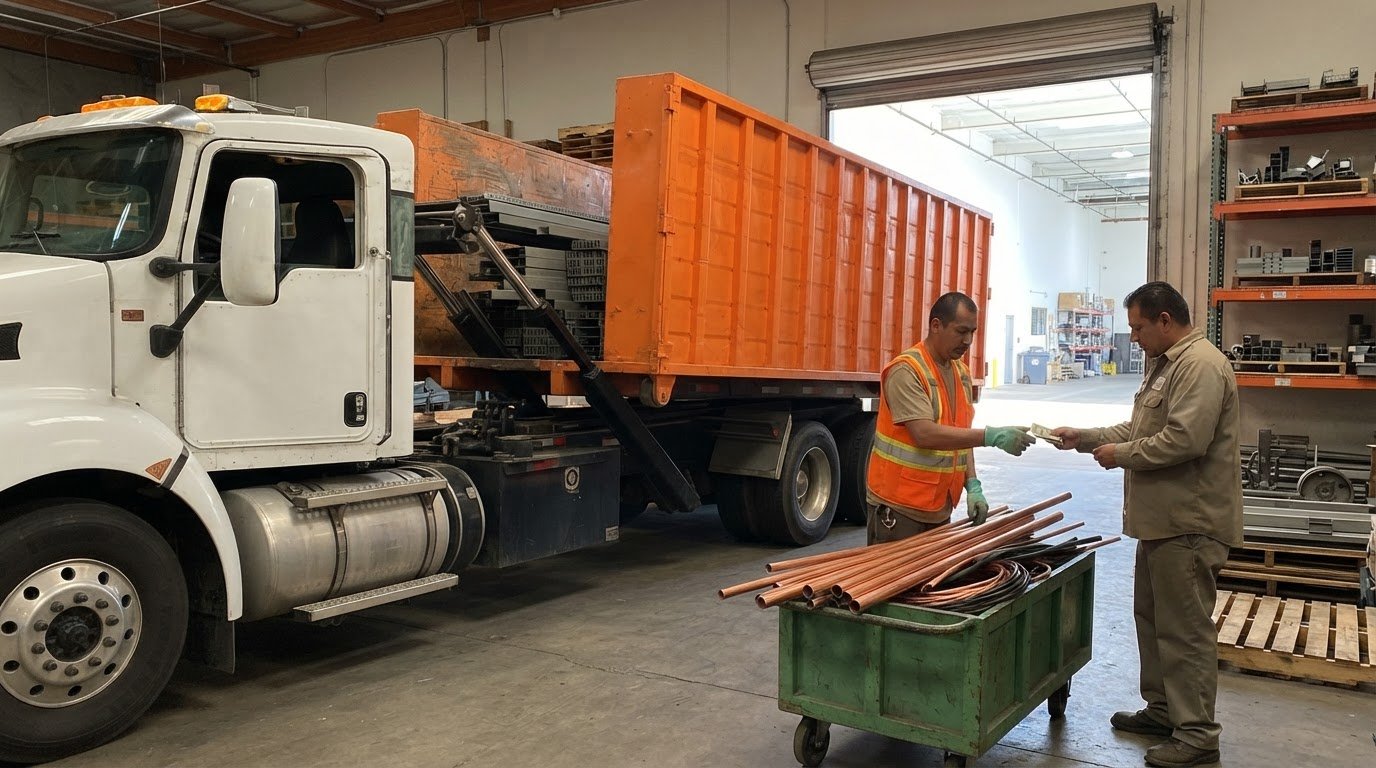
A warehouse’s scrap-metal payout depends on what the load contains, not simply how much material is cleared. For warehouse scrap metal recycling in Garden Grove, payment reflects the accepted metal’s type, condition, and quantity after assessment. Separating identifiable materials can make a commercial load easier to evaluate, while mixed or lower-quality material may be valued differently.
For warehouse and industrial teams, it helps to understand how scrap is assessed and paid for without disrupting operations. This article explains how commercial metal recycling works, how material type and condition affect value, and what to consider when planning a local handoff. OC Recycling purchases scrap metal and serves businesses in Garden Grove and across Orange County, including Santa Ana, Anaheim, Costa Mesa, Huntington Beach, Orange, Irvine, Garden Grove, Westminster, Fountain Valley, and Tustin.
Key Takeaways
- Understand how metal type, condition, and quantity shape a warehouse scrap payment.
- Identify the kinds of commercial and industrial scrap that may be suitable for recycling.
- See how Garden Grove and Orange County service coverage can fit your operation’s needs.
- Learn what to consider when evaluating pickup or roll-off container options for warehouse scrap.
How Do Businesses Get Paid for Warehouse Scrap Metal?
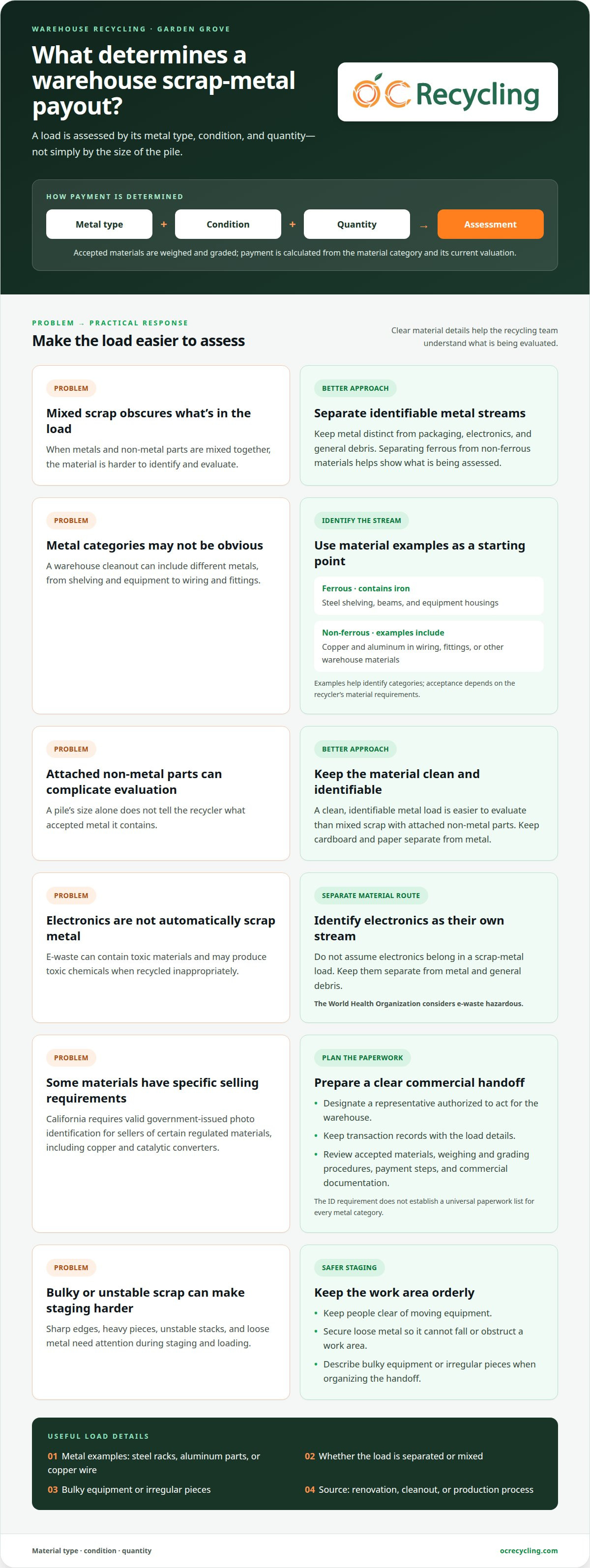
Businesses are paid after a recycler evaluates a metal load’s type, condition, and quantity. Separating ferrous from non-ferrous materials helps make clear what is being assessed.
Ferrous and Non-Ferrous Metals
Ferrous metals contain iron. Steel shelving, beams, and equipment housings are examples. Non-ferrous metals include copper and aluminum, which may be found in wiring, fittings, or other warehouse materials. These examples help identify a load’s categories, though acceptance depends on the recycler’s material requirements.
Payment reflects the assessed material, not simply the size of the pile. A clean, identifiable metal load is easier to evaluate than mixed scrap with attached non-metal parts. The recycler weighs and grades accepted materials, then calculates payment based on the material category and its current valuation.
California Selling Rules and Paperwork
California law requires scrap metal sellers to present valid government-issued photo identification for certain regulated materials, including copper and catalytic converters. This matters if a warehouse load includes those items. The requirement does not establish a universal paperwork list for every metal category.
For a commercial sale, designate a representative authorized to act for the warehouse and keep transaction records with the load details. When comparing recyclers serving Garden Grove, review accepted materials, weighing and grading procedures, payment steps, and commercial documentation. These criteria help show whether the process fits your operation.
Some materials need a separate recycling route. The World Health Organization considers e-waste hazardous because it contains toxic materials and can produce toxic chemicals when recycled inappropriately. Don’t assume electronics belong in a scrap-metal load; identify them as a separate material stream.
Warehouse teams should also account for sharp edges, heavy pieces, and unstable stacks during staging and loading. Keep people clear of moving equipment, and secure loose metal so it cannot fall or obstruct a work area. These practical controls help make a commercial scrap transfer more orderly.
Commercial and industrial scrap metal recycling
For warehouse scrap metal recycling in Garden Grove, a clear material plan can help keep a commercial project organized. Warehouses generate metal during equipment replacement, renovations, and facility cleanouts. Examples include steel shelving, aluminum frames, copper wiring, and fabrication offcuts. Identifying these streams before collection keeps them distinct from packaging, electronics, and general debris.
Industrial scrap can also come from production changes, machinery upgrades, or demolition work. Metal housings, structural pieces, and manufacturing remnants may vary in size, coating, and composition, affecting how a recycler assesses and processes each load. Describing the source and material mix gives the recycling team useful context for planning the handoff.
For a smooth commercial handoff, organize project details such as:
- Examples of the metal, such as steel racks, aluminum parts, or copper wire.
- Whether the load is separated or contains mixed materials.
- Bulky equipment or irregular pieces that may affect handling.
- Whether the material comes from a renovation, cleanout, or production process.
These details help match the recycling approach to the warehouse’s operating needs. For instance, a facility replacing shelving can keep removed steel separate from cardboard packaging. A manufacturer clearing production remnants can identify metal offcuts as a distinct stream. In both cases, sorting materials at the source makes the load easier to assess.
Commercial projects may involve several recyclable streams. Keep cardboard and paper from packaging separate from metal, and identify electronics as their own category. This helps each material follow an appropriate recycling route instead of being treated as scrap metal.
For warehouse scrap metal recycling serving Garden Grove facilities, a concise summary of material types and project context gives the process a practical starting point. Commercial scrap metal recycling can help businesses plan around the materials generated by their operations.
Garden Grove and Orange County service area
Garden Grove is within OC Recycling’s Orange County service area for commercial recycling. The company operates four locations in Santa Ana, Costa Mesa, Orange, and Huntington Beach, providing local options for recycling planning. A warehouse’s next step is to identify where the material is stored and what types of metal the project will generate.
For a Garden Grove facility, the site address helps shape a commercial recycling plan. A one-time warehouse cleanout differs from recurring material generated during normal operations. The location, load size, and metal types all help determine a practical way to handle recyclable materials.
Orange County operations may involve several buildings or worksites. A business with facilities in different parts of the county can list each site separately, then group scrap by location and material stream. For example, one warehouse may have steel fixtures, while another has aluminum parts from equipment replacement.
- Identify each Garden Grove or Orange County site contributing material.
- Describe whether scrap comes from a cleanout, renovation, or ongoing operations.
- Separate details for each location when materials or access conditions differ.
- Note whether the project involves one facility or several county sites.
This information helps align recycling with a business’s geography and operating schedule. A single-site warehouse can plan around one staging area. A company managing several Orange County locations can keep site records distinct, making it easier to track which materials came from each facility.
Service-area planning is different from assuming every recycling option includes transportation. Warehouse teams should clarify the material handoff, whether they plan to bring scrap to a location or arrange collection. For a Garden Grove project, clear site details and a concise material summary help establish the right operational path. OC Recycling offers business pickup, which may incur a charge depending on the materials and quantity.
Separately, Garden Grove’s automated refuse collection service collects the black, green, and brown containers on the same day each week. Warehouse teams can keep that routine in view while documenting commercial metal separately, including the facility, material stream, and planned handoff. The refuse collection schedule does not describe how a commercial scrap load will be handled, so keep the recycling arrangements clear.
Garden Grove Scrap Yard Pickup & Roll-off Containers
Pickup and container arrangements depend on the service model. A Garden Grove warehouse should distinguish between transporting scrap to a recycler and having material collected onsite. A container can suit a cleanout that generates metal over several days, while direct delivery may work for a smaller, ready-to-move load.
Container planning starts with the site and the material. Steel shelving removed during a renovation may need a different setup from mixed machinery scrap. Access matters too: loading areas, vehicle clearance, and active warehouse traffic can affect where a container fits and how crews move materials safely.
Before choosing a handling plan, organize these project details:
- Describe the scrap, such as steel fixtures, aluminum parts, or mixed metal.
- Explain whether material arrives from one cleanout or ongoing work.
- Identify the loading area and any access limits at the Garden Grove site.
- Estimate whether the scrap is ready at once or will accumulate over time.
Those details help determine whether a container-based approach suits the job. For example, a warehouse clearing equipment in stages may benefit from a planned collection point. A business with one compact batch may prefer a different transfer arrangement. Separating metal from cardboard, electronics, and general debris also keeps the container focused on its intended materials.
Pickup should not be assumed to be part of every scrap transaction. The location, load composition, loading conditions, and agreed handling arrangement all matter. Describing these details clearly helps avoid confusion about who moves the material and how it reaches the recycler.
For a Garden Grove warehouse preparing scrap for purchase, discuss your warehouse scrap load and its handling needs. A concise summary of the material and site access gives the conversation a useful starting point.
OC Recycling: Scrap Metal Purchasing
OC Recycling helps Garden Grove businesses recycle eligible warehouse metal through its Scrap Metal Purchasing service. This is a practical option for facilities clearing steel fixtures, equipment parts, or other recyclable metal, whether the project is a cleanout or part of ongoing operations.
Share the material types and identify any separate streams. If a warehouse cleanout also includes electronics, OC Recycling offers Electronics Recycling as a distinct service. Keeping these materials separate helps direct each stream appropriately.
For commercial scrap metal purchasing in Garden Grove, contact OC Recycling to discuss your warehouse materials.
Make Your Next Warehouse Cleanout Count
Make scrap planning a repeatable part of warehouse operations. Assign a team member to coordinate material streams during equipment changes or facility cleanouts. Clear ownership helps connect recycling decisions to the project instead of leaving them until space becomes limited.
For warehouse scrap metal recycling in Garden Grove, prepare a brief project summary identifying the site, the work involved, and the expected materials. This gives the conversation a practical starting point and helps connect your operation with an appropriate recycling route.
OC Recycling offers Scrap Metal Purchasing, CRV Redemption, and Electronics Recycling. These services help businesses direct recyclable materials into separate streams as projects change.
Contact OC Recycling to discuss your scrap and take the next step toward a more organized warehouse recycling plan.
Frequently Asked Questions
Does Garden Grove have scrap metal recycling facilities that accept commercial warehouse loads?
Yes, commercial businesses can recycle warehouse scrap through OC Recycling’s Scrap Metal Purchasing service. Describe the load as part of a facility cleanout, equipment change, or ongoing operations. For example, a warehouse replacing metal fixtures can identify that material separately from packaging or electronics. This gives the recycling team a clearer view of the project and its commercial requirements.
What types of warehouse scrap metal do Garden Grove recyclers accept?
Warehouse metal streams can include copper, aluminum, brass, and ferrous metals. Examples include copper wire, aluminum components, brass fittings, and metal appliances. OC Recycling purchases scrap metal, while electronics go through its separate Electronics Recycling service. Identifying material categories helps route each item appropriately. A warehouse load may contain several metal types, so describing the separate streams gives a clearer starting point.
How Do Professionals Sort and Prepare Warehouse Scrap Metal for Recycling?
Commercial scrap is sorted by material type, then suitable items are cleaned and prepared for industrial reuse. For example, a warehouse load containing steel components, aluminum parts, and copper can be organized into distinct streams. This processing helps keep different commodities identifiable as they move through recycling. Electronics are handled separately through Electronics Recycling, not as ordinary metal scrap.
