
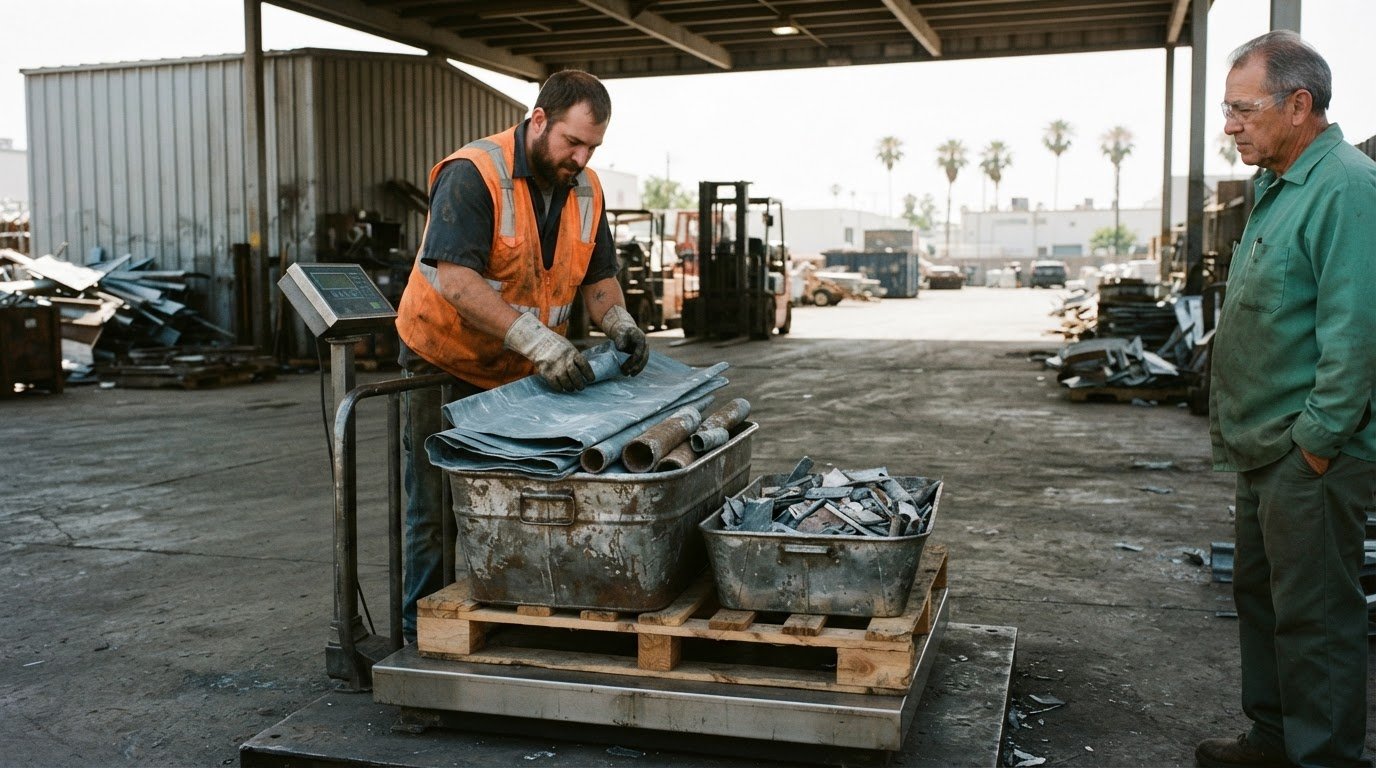
Scrap pickup in Fountain Valley isn’t automatically free. Pickup charges may depend on the material and quantity. If you’re looking for cash for lead scrap in Fountain Valley, keep the material’s value separate from the cost of arranging pickup or transport.
It’s reasonable to want clear answers before arranging a scrap transaction, especially when lead scrap comes from a business or a contractor’s job site. This guide explains what can affect pickup fees, how commercial scrap recycling works, and what photo identification you’ll need for a transaction.
The amount and condition of the material, along with access to the load, can shape a pickup plan. For businesses and contractors, sorting and clearly describing scrap before moving it makes it easier to plan the next step with a recycling center.
Key Takeaways
- Learn which load and access details matter when arranging scrap pickup and understanding possible fees.
- See how businesses and contractors can plan scrap recycling around the materials from a job or project.
- Explore how clean lead, batteries, wheel weights, and mixed lead may be assessed differently.
- Find out what photo identification to bring and when a scrap metal purchasing service may fit your needs.
Pickup fees and free-pickup availability
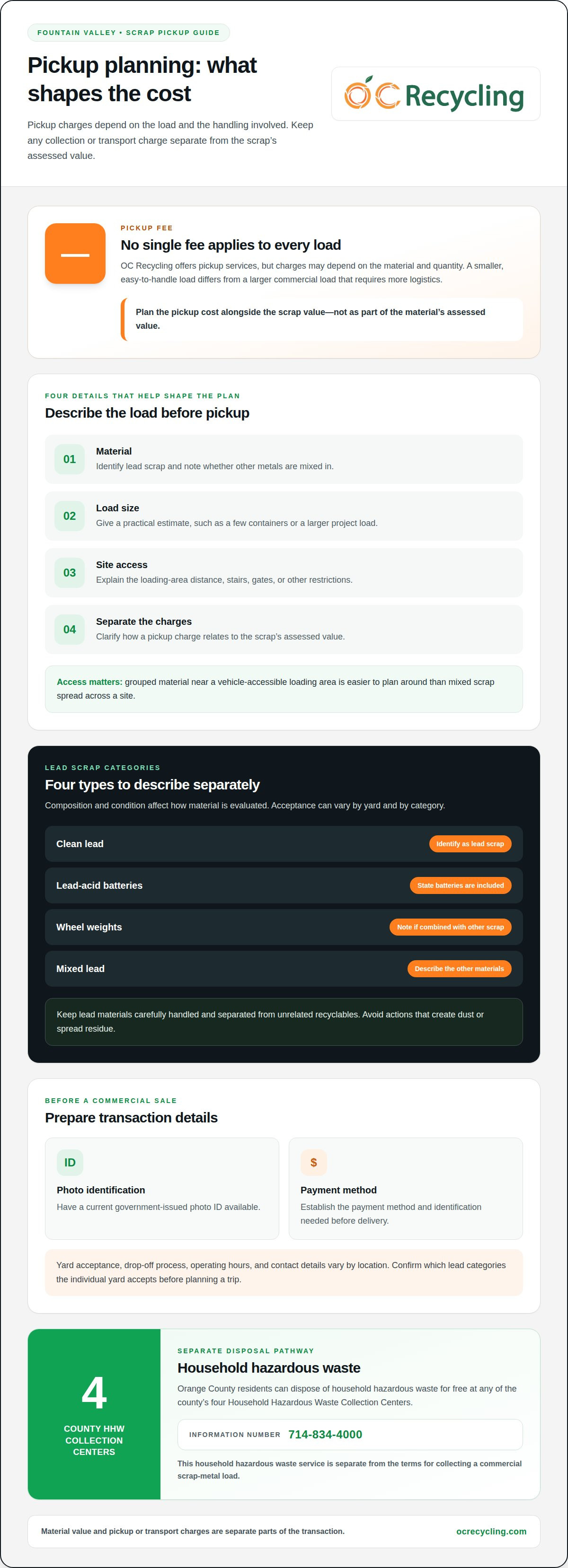
There is no single pickup fee for every scrap-metal load. OC Recycling offers pickup services, and charges may depend on the material and quantity. A smaller load that is easy to handle differs from a larger commercial load requiring more logistics. Factor pickup into your plan alongside the scrap’s value.
The amount and type of scrap affect how it can be evaluated, while the collection location and access affect handling. Neatly grouped material near a vehicle-accessible loading area is easier to plan around than mixed scrap spread across a site. Give a clear description of the material and its location when discussing pickup.
- Describe the load: Identify lead scrap and note whether other metals are mixed in.
- Estimate its size: Give a practical description, such as a few containers or a larger project load.
- Explain access: Mention loading-area distance, stairs, gates, or other site restrictions.
- Separate the transaction: Clarify how any pickup charge relates to the scrap’s assessed value.
Household hazardous waste is a separate issue from scrap-metal purchasing. Orange County residents can dispose of household hazardous waste for free at any of the county’s four Household Hazardous Waste Collection Centers. The information number for disposal is 714-834-4000. These centers address household hazardous waste, not the terms for collecting a commercial scrap-metal load.
For a business or contractor, the useful next step is to provide the load details and site access information when arranging a quote. That lets the pickup plan account for the material and the handling required. Keep any scrap valuation separate from a transportation or collection charge, and get the agreed terms in writing before the load moves.
Scrap recycling for businesses and contractors
Project scrap can include distinct lead categories, mixed metals, and battery materials. Describe each category separately when arranging a commercial sale.
Before the material is delivered, establish the payment method and any identification needed for the transaction. Have a current government-issued photo ID available when preparing for a scrap sale.
Pricing by Lead Type
Describe lead scrap by category rather than treating every load as interchangeable. Clean lead, lead-acid batteries, wheel weights, and mixed lead have different compositions and conditions, which affect how the material is evaluated. Tell the recycler which categories are present, including any mixed items.
Nearby Yard Acceptance and Contacts
Scrap-metal buyers may purchase lead, but acceptance can vary by category. Describe whether the load contains clean lead, batteries, wheel weights, or mixed material when discussing a drop-off. There isn’t one shared schedule or contact number for nearby yards. Use the individual yard’s current phone listing and posted hours before planning a trip, and establish which categories it accepts.
Professional Sorting and Preparation of Lead Scrap
At intake, a yard assesses the material’s category, condition, and separation. Clear information helps distinguish clean lead from batteries, wheel weights, or mixed scrap, which can affect acceptance and valuation. Share the source of the load, its categories, and any visible contamination. Keep lead materials handled carefully and separated from unrelated recyclables; avoid actions that create dust or spread residue. For commercial metal loads, Scrap Metal Purchasing is a relevant service to consider.
Which scrap yards near Fountain Valley buy lead, and what types of lead do they accept?
Many recycling centers pay for scrap metal, but lead acceptance depends on the yard and material category. For a Fountain Valley load, the relevant buyer is a scrap-metal recycler that purchases lead-bearing material, not simply any recycling drop-off location. Clean lead, lead-acid batteries, wheel weights, and mixed lead are distinct categories. A yard’s acceptance rules can differ for each.
Give the material a clear description. Clean lead is different from a battery, while wheel weights may be mixed with other metals or debris. A mixed load may contain several lead types or other materials. These distinctions help clarify what is being offered for recycling.
- Clean lead: Identify it as lead scrap rather than grouping it with mixed metal.
- Lead-acid batteries: State that batteries are included, since they are a distinct material category.
- Wheel weights: Describe whether they are separate or combined with other scrap.
- Mixed lead: Explain which lead forms and other materials are in the load.
For example, a contractor clearing a renovation site can describe a container of clean lead separately from a batch of wheel weights. Keeping the categories distinct makes the load easier to discuss. A mixed container should be described as mixed rather than as one uniform material.
Before planning delivery, establish the yard’s accepted categories, drop-off process, operating hours, and contact method. These details are specific to each location, so they shape whether a trip suits the load. Share the material types and general condition in the initial discussion. With that information, a nearby scrap-metal buyer can explain how its process applies to the lead being offered.
Look for a nearby scrap-metal recycler that purchases lead-bearing material. Ask whether it accepts clean lead, lead-acid batteries, wheel weights, or mixed lead, since acceptance may differ by material category.
How do scrap yards price clean lead versus lead-acid batteries, wheel weights, or mixed lead?
The condition and composition of lead scrap matter when describing a load for recycling. Clean, identifiable lead differs from mixed material containing other metals or debris. Lead-acid batteries and wheel weights are distinct categories, so describe each separately rather than assuming they will be evaluated like clean lead.
For a useful discussion, give a clear breakdown instead of describing everything as “lead scrap.” Separating the categories in your description helps explain what the load contains and how it is grouped. Keep these distinctions in mind:
- Clean lead: Its separation from other materials makes its category clearer during assessment.
- Lead-acid batteries: Identify batteries separately from loose lead because they are a different material category.
- Wheel weights: Note whether weights are kept apart or mixed with other scrap.
- Mixed lead: Describe the different lead forms and any other materials in the load.
Condition matters, too. A load with visible non-lead material or residue is not the same as separated, identifiable lead. For example, a contractor offering clean lead alongside a separate batch of wheel weights gives the buyer a clearer basis for evaluating both. If the materials arrive combined, the buyer must assess the mixed contents rather than treating the whole load as one clean grade.
Before finalizing a sale, ask how the buyer classifies each category and whether the assessment accounts for separation and condition. A quote request should describe the material types and how they are grouped; the final valuation depends on those details and the buyer’s assessment. This keeps expectations grounded without relying on a single assumed rate for every form of lead.
For a lead-scrap assessment tied to a commercial metal load, request scrap metal purchasing information.
OC Recycling: Scrap Metal Purchasing
OC Recycling offers Scrap Metal Purchasing for people and businesses recycling metal. If you have lead scrap from a contractor project or commercial operation, start by identifying the material categories and describing how they are grouped.
Describe the load clearly, including whether it contains clean lead, batteries, wheel weights, or mixed material. Keeping these categories distinct makes the discussion specific to the scrap you want to recycle. OC Recycling also offers CRV Redemption, Electronics Recycling, and Certified Product Destruction.
Contact OC Recycling to discuss your scrap metal recycling needs.
Make the Next Scrap Decision with Confidence
Build a consistent scrap-handling process into your next project. A simple material record can help your team track what leaves the site, keep categories clear, and plan recycling alongside other closeout tasks. For cash for lead scrap in Fountain Valley, this preparation gives contractors and business teams a clearer starting point.
OC Recycling offers Scrap Metal Purchasing for recyclable metal, as well as CRV Redemption and Electronics Recycling. Keeping these material streams separate can help your team organize recycling instead of treating every recoverable item alike.
As you prepare a load, focus on clear material descriptions and a practical transportation plan. These details provide a useful starting point for arranging recycling.
Contact OC Recycling about scrap pickup to discuss your material and next steps. A well-organized plan can help you move forward with clarity.
Frequently Asked Questions
Do you offer free pickup of scrap metal in Fountain Valley, CA?
Pickup is not universally free. OC Recycling may charge for pickup depending on the material and quantity. When planning cash for lead scrap in Fountain Valley, distinguish pickup from drop-off. A business with a large project load may need collection, while a smaller load may be practical to transport to a recycling location.
Where can I recycle scrap metal in Orange County?
OC Recycling accepts scrap metal at four locations: Santa Ana, Orange, Costa Mesa, and Huntington Beach. They serve communities across Orange County, including Fountain Valley, Anaheim, Irvine, Garden Grove, Westminster, and Tustin. Choose a location that suits your trip and consider whether the load is practical to transport.
Where can I sell lead scrap near Fountain Valley, California?
For cash for lead scrap in Fountain Valley, OC Recycling’s Scrap Metal Purchasing service is a local option for recyclable metal. The service is for the general public and commercial accounts, including households and contractors with project material. Describe where the material came from and identify its categories when discussing the load.
What identification and paperwork are required to sell scrap lead in California?
Have a current government-issued photo ID available when preparing for a scrap sale. If the material comes from a business or job site, bring paperwork that connects the load to the company or project, such as a work record or transfer document. These records can help explain the material’s origin and who is presenting it for recycling.
