
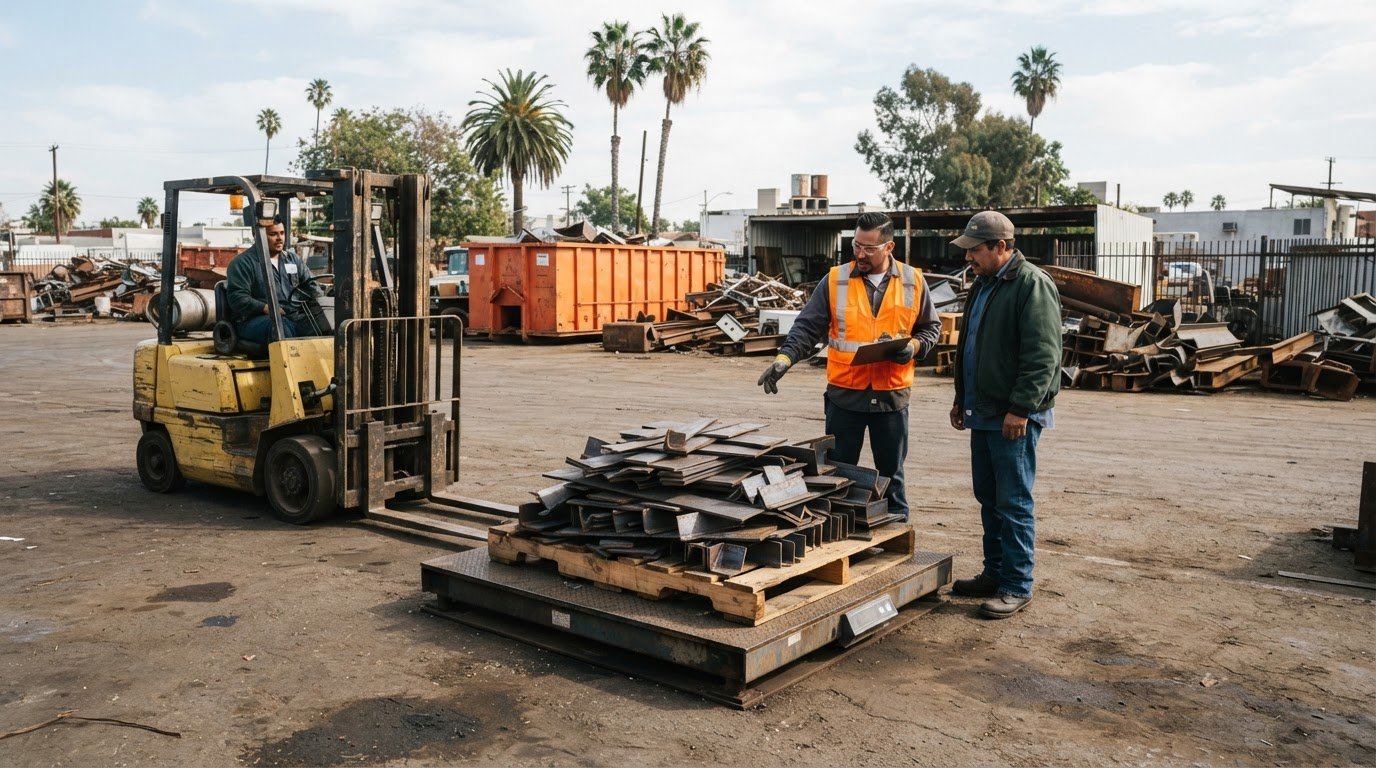
Scrap metal can be more than a disposal problem: it can be a recoverable business resource. The benefits of scrap metal recycling for businesses include potential revenue from reusable metal, less material in general waste, and reclaimed space for work or storage. A consistent recycling process can also make scrap easier to manage and support responsible resource use.
Look beyond the immediate task of clearing metal waste. Separating recyclable material from general waste can turn an ongoing burden into a more efficient process, while keeping valuable metals in circulation instead of sending them to landfill. Returns depend on the material and its condition, so recycling works best as part of a broader waste-management plan.
This article explains how scrap recycling can affect business costs, sustainability, day-to-day operations, and workplace safety. You’ll also learn what to consider when organizing metal scrap and how a commercial recycling partner can fit into the process.
Key Takeaways
- Separate reusable metal from general waste to see where potential resale value and lower disposal needs can support your budget.
- Build scrap sorting into routine operations so metal is easier to manage and less likely to take up useful workspace.
- Recycling keeps metal in circulation and can help demonstrate your business’s commitment to responsible resource use.
- When your business has scrap metal to sell, OC Recycling’s Scrap Metal Purchasing offers a practical next step.
What are the Economic Benefits of Recycling Scrap Metal?
For Orange County businesses, scrap metal such as copper, aluminum, and steel can become a recoverable asset. Its value depends on the metal type, grade, and condition.
Revenue from Selling Business Scrap
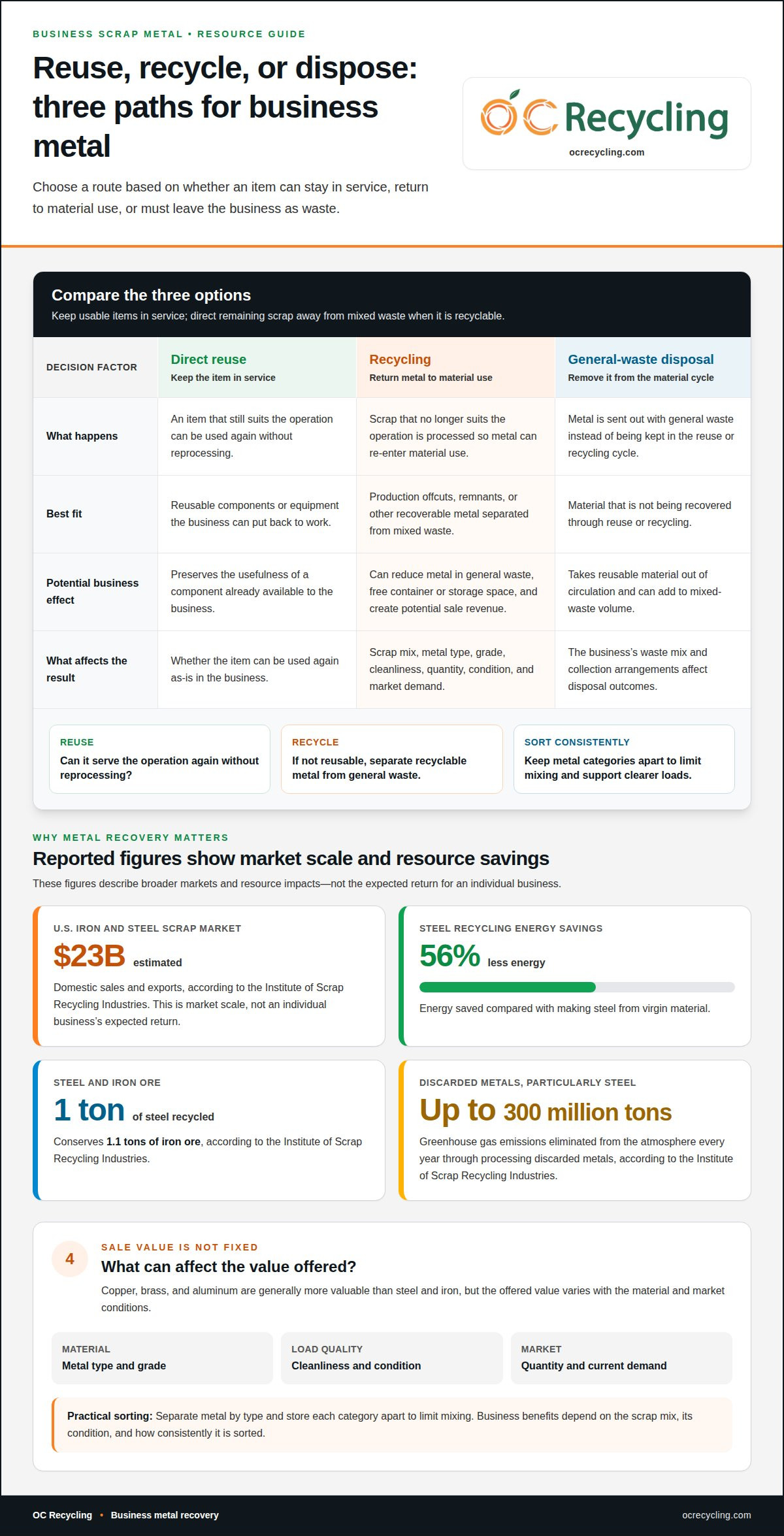
Revenue from selling business scrap is income recovered from metal left over after production, construction, or equipment replacement. Sorting copper, brass, aluminum, and steel by type helps businesses present cleaner, more identifiable loads for sale. The return can supplement operating income, turning an ongoing material stream into a potential revenue stream. According to the Institute of Scrap Recycling Industries, iron and steel scrap generated an estimated $23 billion in domestic sales and exports in the U.S. That figure shows the scale of commercial scrap markets, not an individual business’s expected return.
Cost Savings from Scrap Recycling
Scrap recycling can generate sales revenue while reducing the amount of metal sent for general-waste disposal. Separating metal from mixed waste may also free container capacity and storage space. For example, a manufacturer can collect usable offcuts in a dedicated metal stream rather than placing them with ordinary waste. The benefit depends on the scrap mix, its condition, and how consistently the business sorts it.
Recycling also conserves resources used in metal production. According to the Institute of Scrap Recycling Industries, recycling one ton of steel conserves 1.1 tons of iron ore. That resource benefit complements the potential financial return from selling sorted steel scrap.
Applicable commercial recycling requirements depend on the material and the location. Businesses should follow the rules governing their waste handling and recycling rather than assume one rule covers every scrap stream.
There is no single per-pound amount for common scrap metals. Copper, brass, and aluminum are generally more valuable than steel and iron, but grade, cleanliness, quantity, and market conditions can affect the value offered.
Scrap values fluctuate with market conditions, and there is no fixed schedule for changes. Metal type, grade, cleanliness, quantity, and current demand can all affect the offered value.
To prepare scrap for sale, separate metal by type and store each category apart to limit mixing. Choose a recycler that clearly explains accepted materials, weighing, and transaction records.
Reducing waste disposal costs
For Orange County manufacturers, separating metal can reduce mixed-waste volume and keep reusable materials in circulation. Recovering suitable production scrap may also reduce reliance on newly produced metal.
Reducing Landfill Disposal Costs
Recycling scrap metal can reduce landfill disposal costs by diverting it from general waste. This can matter when offcuts take up space in mixed-waste containers or need separate handling. For example, a manufacturer can collect steel remnants apart from ordinary refuse, reducing the volume sent for disposal and leaving more container capacity for other materials. The result depends on the business’s waste mix and collection arrangements.
Recycling Compared with Disposal and Reuse
Recycling returns metal to material use, while landfill disposal takes it out of that cycle. Direct reuse may be practical when a business can use an item again without reprocessing it. Reusable components can stay in service, while scrap that no longer suits the operation can go for recycling. Choosing between reuse and recycling helps businesses manage waste while preserving material value.
Manufacturers can lower raw-material needs by recovering suitable scrap from production. A fabrication operation, for instance, can keep metal remnants separate for recycling rather than treating them as unusable waste. Recycled metal may re-enter manufacturing, reducing reliance on newly extracted inputs. This can support lower production costs and a more sustainable use of materials. Copper and aluminum are examples of metals that can be recycled, while the business’s own processes determine whether recovered material can be reused directly.
Recycling also reduces the need to extract virgin materials, which can lower the energy demand and environmental impact associated with producing new metal. According to the Institute of Scrap Recycling Industries, processing discarded metals, particularly steel, eliminates as much as 300 million tons of greenhouse gas emissions from the atmosphere every year.
To make the process more efficient, separate scrap from general refuse at the point it is generated. A clear collection routine can help teams keep recoverable metal out of landfill-bound loads. Businesses handling recurring scrap can explore scrap metal purchasing as part of their disposal and material-recovery plan.
Sustainable business practices and corporate social responsibility
Recycling metal can make sustainability goals part of everyday operations. For Orange County businesses, keeping scrap in circulation supports more responsible resource use.
Sustainable Business Practices and Goals
Business sustainability practices are operational choices that reduce resource use and environmental impact. A company can make scrap recycling part of a broader goal to reduce landfill waste and reliance on newly extracted raw materials. For example, a manufacturer can track the metal it diverts and use that information to assess progress. Recycling steel saves 56% of the energy used to make it from virgin material, supporting a more resource-efficient economy.
Sustainability Reporting and Reputation
Sustainability reporting describes a company’s environmental actions and progress for stakeholders. Recording scrap types and recycling activity can give businesses concrete details to include in internal reviews or external communications. Clear, consistent reporting helps customers and business partners understand how sustainability goals connect to operations. Partnering with a recycling service can also support a competitive reputation when responsible materials management matters to customers.
Metal recycling reduces demand for virgin materials and can help lower the environmental impact of extraction and production. Recycling aluminum saves up to 95% of the energy needed to produce aluminum from bauxite ore. These material-specific benefits give businesses practical examples for sustainability plans, rather than relying only on broad commitments.
Tax incentives and reporting requirements depend on applicable rules and business circumstances. Some states and municipalities offer tax benefits for sustainable practices, including metal recycling. Accurate transaction records can help document scrap activity, but do not by themselves establish eligibility for an incentive.
Environmental rules for waste disposal and recycling vary by industry and location. Businesses can support their compliance efforts by organizing scrap streams, recording recycling activity, and incorporating these practices into sustainability plans. Specific obligations depend on the rules that apply to each business.
Scrap metal recycling demonstrates businesses’ commitment to sustainability and corporate social responsibility; LEED and ISO 14001 can enhance reputation and marketability. Metal recycling may cut greenhouse gas emissions by 300 million to 500 million tons.
Operational efficiency and workplace safety
A defined scrap stream helps businesses keep metal waste from disrupting daily operations. In a factory, designated collection areas can keep loose offcuts away from walkways and workstations.
Accumulated industrial scrap can create trip, fall, and laceration hazards. Sharp edges, unstable piles, and obstructed paths make handling and movement riskier. Train employees on how to separate scrap, where each material belongs, and how to keep access routes clear. For example, workers can place steel offcuts in a designated area instead of leaving them beside a machine.
Good workplace practices also make scrap management more organized. Separate containers for different metal types help prevent mixing, while clear labels and consistent placement make the process easier to follow across shifts. Managers can include scrap-area checks in routine housekeeping so accumulated metal is moved before it takes up useful facility space.
Space management supports efficient operations. A fabrication shop that clears accumulated scrap can reclaim floor area for equipment, materials, or production tasks. Keeping collection points away from busy routes also helps staff move through the facility without navigating around metal piles. Review scrap volumes regularly to ensure internal storage suits the material stream.
Lead is recyclable, but its toxicity calls for careful handling. Make clear that lead-containing scrap requires caution and should not be treated like ordinary offcuts. Organized separation also helps businesses maintain records of recycling activity and disposal practices. Follow the procedures and requirements that apply to the material and business.
For businesses with recurring metal scrap, a consistent purchasing and recycling process can support a cleaner, more orderly work area. Arrange scrap metal purchasing to give recoverable metal a defined next step instead of letting it accumulate in operational spaces.
OC Recycling: Scrap Metal Purchasing
OC Recycling purchases scrap metal from businesses with recyclable material to manage or sell. It’s a practical next step when production, renovation, or equipment-replacement scrap has been sorted and is ready to leave your facility. OC Recycling recycles more types of material than any other local center, helping businesses route recoverable metals into recycling.
Businesses can make scrap handling part of a broader materials plan, with separate streams for metal, electronics, cardboard, and paper. This organization helps teams keep work areas orderly and makes each material easier to manage. OC Recycling also offers Electronics Recycling, Certified Product Destruction, and CRV Redemption for businesses handling those materials. For CRV deposits, check the applicable redemption options before deciding where to take the materials.
If your business has scrap metal ready for recycling, contact OC Recycling to discuss Scrap Metal Purchasing and arrange the next step.
Make Scrap Management Part of Your Next Business Plan
Use your next materials-handling review to set a clear direction. Decide who oversees scrap separation, where each material stream is stored, and how often your team reviews the process. A simple, consistent routine connects daily decisions with wider operational and sustainability priorities.
The benefits of scrap metal recycling for businesses are easier to achieve when recycling has a defined place in business planning. OC Recycling offers Scrap Metal Purchasing, CRV Redemption, and Electronics Recycling, giving businesses options for managing these distinct recyclable materials.
Choose a practical next step that suits your operation, whether that means organizing an existing scrap stream or discussing material ready for recycling. Contact OC Recycling to discuss your scrap and move forward with a clear plan for your business.
Frequently Asked Questions
What are the financial benefits of scrap metal recycling for businesses?
Scrap recycling can improve finances through material-sale revenue and lower waste-handling needs. The practical gain depends on the scrap’s type, grade, cleanliness, and quantity. For a Santa Ana fabrication shop, recording each load by metal type helps distinguish sale proceeds from avoided disposal spending. Reviewing both figures together gives managers a clearer view of how recycling affects the operation’s bottom line.
How does scrap recycling reduce business waste disposal costs?
It can lower disposal costs by keeping recyclable metal out of mixed-waste loads, reducing the volume sent to landfill and the need for collections. For example, an Anaheim workshop can place production offcuts in a clearly marked metal stream instead of its general refuse container. Reviewing container use over time helps staff see whether separation is reducing waste volume and freeing capacity for other operations.
