
A demolition load isn’t fully handled when it leaves the jobsite. Recycling solutions for contractors in Fountain Valley also need to address how debris is classified and how diversion is documented. If the city requires a Construction Waste Management Plan, submit it before building permits are issued.
Removing scrap efficiently helps keep a project moving, but clear records matter too. Fountain Valley project owners and contractors must retain weight tickets for the duration of the project. C&D tickets must identify the facility, tonnage, and Fountain Valley as the waste source or origin.
This guide explains how to separate demolition materials for recycling, what information to retain for diversion records, and how commercial or industrial scrap metal pickup can fit into a project. It also covers how to plan a practical recycling process around your materials and site needs, keeping scrap handling organized from the worksite to its next destination.
Key Takeaways
- Have demolition loads processed as Construction & Demolition debris, and review each ticket before leaving the facility.
- Plan metal staging and site access around the material being collected to make commercial scrap handling more organized.
- Separate recyclable metals, electronics, and paper from materials that need a different disposal route.
- Load requirements depend on the material, the facility’s handling process, and the container setup, so build these factors into project logistics.
Demolition scrap recycling for contractors
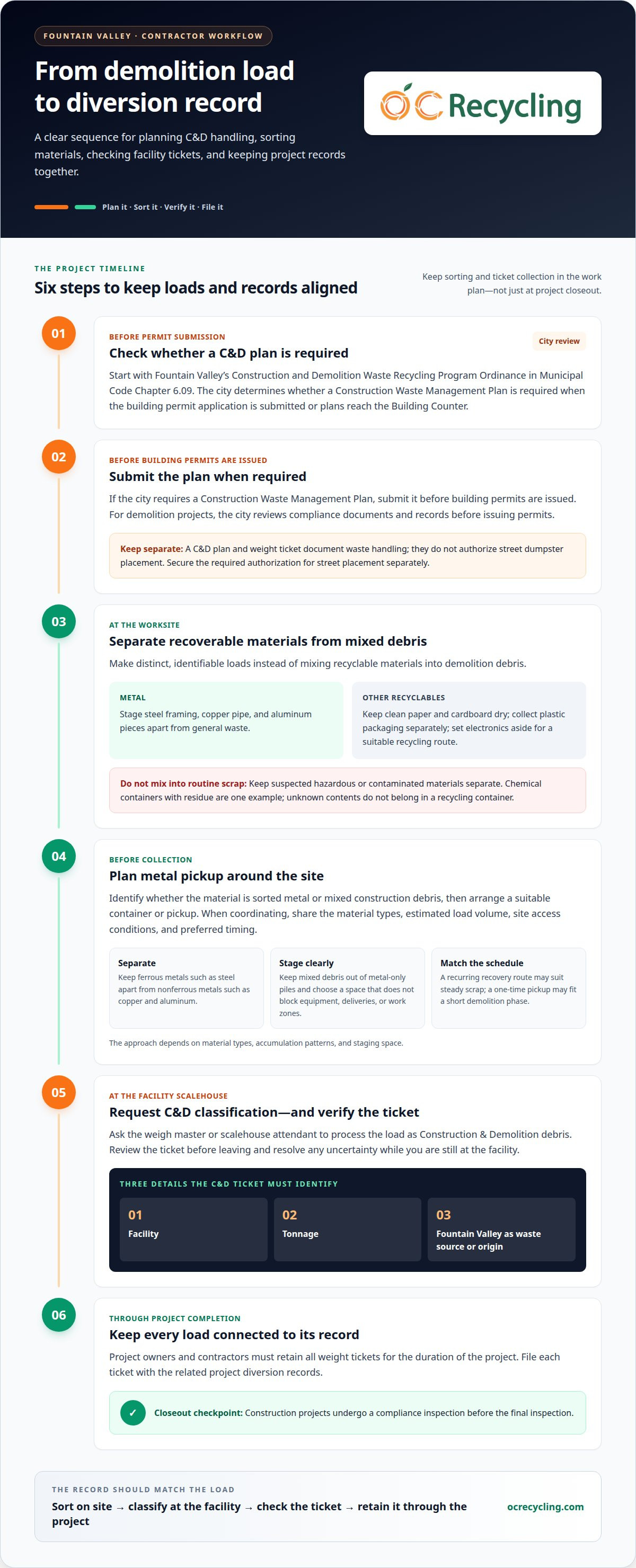
For recycling solutions for contractors in Fountain Valley, begin with the city’s Construction and Demolition Waste Recycling Program Ordinance, in Municipal Code Chapter 6.09. The city determines whether a Construction Waste Management Plan is required when a building permit application is submitted or plans reach the Building Counter. If required, submit the plan before building permits are issued.
For demolition projects, the city reviews compliance documents and records before issuing building permits. Construction projects also undergo a compliance inspection before the final inspection. Plan sorting and ticket collection alongside demolition work, rather than leaving them until closeout.
At the facility, ask the weigh master or scalehouse attendant to process the load as Construction & Demolition debris. Review the ticket before leaving. It must identify the facility, tonnage, and Fountain Valley as the waste source or origin. Project owners and contractors must retain all weight tickets for the project’s duration. These recycling solutions for contractors in Fountain Valley rely on keeping each load connected to its record.
Street dumpster placement is separate from waste diversion. A C&D plan and weight ticket document waste handling, not a container’s location. Arrange street placement only after securing the required authorization.
Keep suspected hazardous or contaminated materials separate from ordinary scrap. Chemical containers with residue are one example. They need an appropriate handling route, not routine scrap processing.
Use a traceable workflow:
- Separate recoverable metal from mixed demolition debris at the worksite.
- Keep distinct loads identifiable during transport and facility processing.
- Request C&D classification at the scalehouse and review the ticket before departure.
- File tickets with project records through completion.
This process helps keep diversion records organized and loads correctly categorized.
Before weighing, make the C&D classification request explicit during the handoff. Fountain Valley contractors or owners must ask the facility’s weigh master or scalehouse attendant to process the waste as Construction & Demolition debris, then check the tickets before leaving. Pause at the scalehouse to confirm that the paperwork is clear and reflects the requested processing. Resolve any uncertainty before departing so the load and its record stay aligned.
Commercial and industrial scrap metal pickup
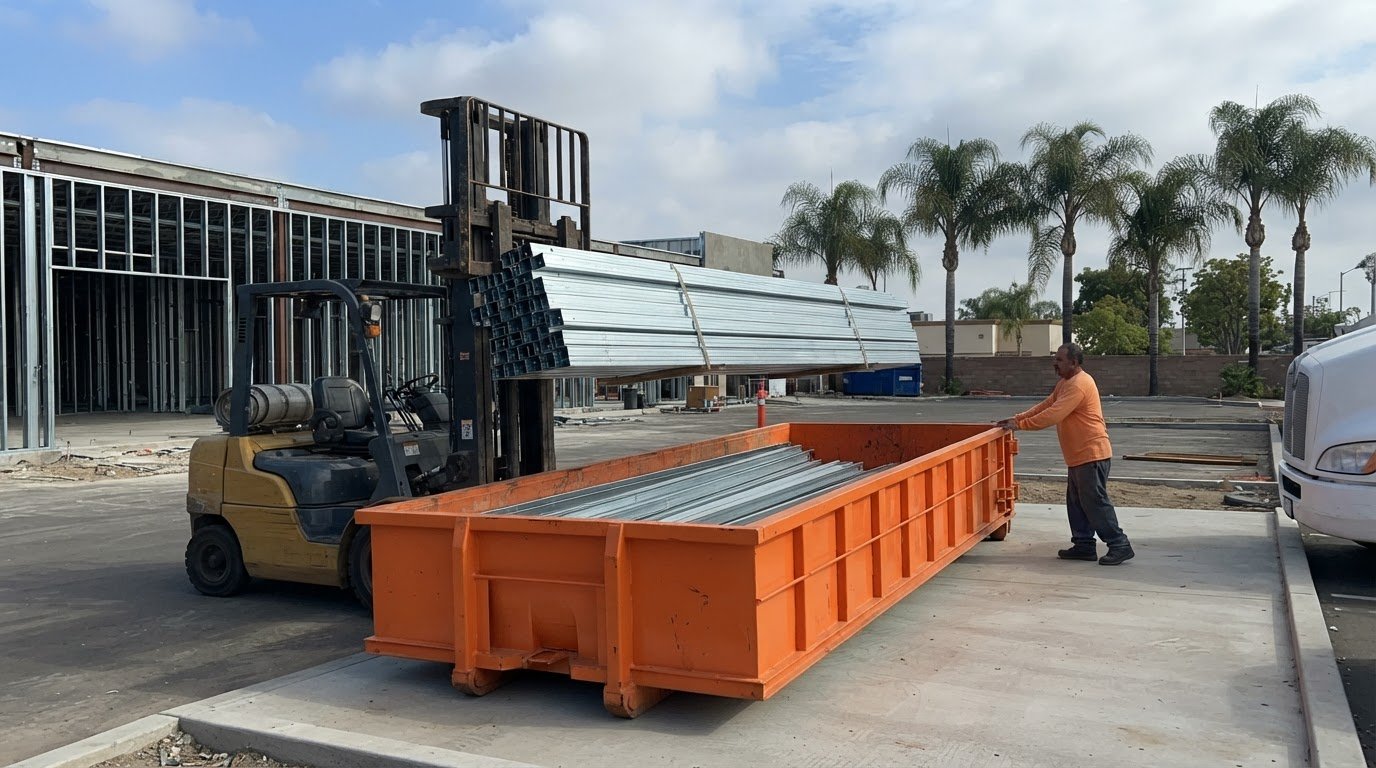
For recycling solutions for contractors in Fountain Valley, plan metal collection around material type, storage space, and work sequence. Keep clean, recoverable scrap separate from mixed construction debris so each load has a clear destination. Steel framing, copper pipe, and aluminum pieces are examples of metals that can be staged apart from general waste.
Contractors can plan for roll-off dumpsters or debris pickup by identifying whether they have sorted metal or mixed construction debris, then arranging a suitable container or pickup for the site. When coordinating collection, share the material types, estimated load volume, site access conditions, and preferred timing.
Site logistics shape an effective pickup plan. Choose a staging area where crews can add scrap without blocking equipment, deliveries, or work zones. For example, a renovation producing copper pipe and steel studs can keep them in separate, clearly identified piles. This makes sorting part of the construction schedule and reduces extra handling.
Before collection, organize the load to support efficient handling:
- Separate ferrous metals, such as steel, from nonferrous metals, such as copper and aluminum.
- Keep mixed debris out of metal-only piles to support appropriate processing.
- Leave vehicle access clear and maintain an orderly staging area.
- Record the pickup with its related weight ticket in project diversion files.
A recurring commercial metal recovery route may suit a site with steady scrap, while a one-time pickup may fit a short demolition phase. The best approach depends on material types, accumulation patterns, and staging space. These recycling solutions for contractors in Fountain Valley can be planned around the worksite’s actual flow, rather than the project label alone. For recoverable metals, arrange commercial scrap metal handling as part of your site plan.
What materials can contractors recycle, and what materials require special disposal?
Fountain Valley recycling services cover plastics, metals, and paper products. On a construction site, sort these materials separately instead of mixing them into demolition debris. Keep clean metal offcuts apart from cardboard packaging and plastic wrap, for example. Clear sorting makes each load easier to identify and route for processing.
Start by checking material type and condition. Gather uncontaminated scrap metal separately from mixed debris, and keep clean paper and cardboard dry and free of food or other waste. Keep plastic items apart from metal as well. These practical separations help keep recyclable materials easier to process.
- Metals: Set aside steel framing, copper pipe, and aluminum pieces as distinct metal scrap.
- Paper products: Flatten clean cardboard boxes and keep them away from wet debris.
- Plastics: Collect plastic packaging separately from paper and metal.
- Electronics: Keep discarded electronic equipment apart from ordinary construction material for a suitable recycling route.
Some materials need special handling rather than placement in a routine recycling load. Chemical containers with residue are one example. Keep them separate from clean metal, plastic, and paper, and don’t put unknown contents in a recycling container. A label, product record, or site inventory can help identify what a container held.
Use a simple sorting check as work progresses: identify the material, assess whether it is clean or contaminated, then place it in the matching collection area. If its contents or condition are uncertain, isolate it from recyclable loads until its appropriate route is established. This helps prevent potentially hazardous material from being treated as ordinary scrap.
For example, a demolition crew removing steel studs, cardboard cartons, plastic wrap, and a container with chemical residue can create four separate streams. Keep the first three sorted for recycling assessment, and set the residue container apart for appropriate handling. This supports cleaner processing and clearer diversion records.
Are there minimum loads, weight limits, or accepted container sizes at nearby facilities?
There isn’t one load size that suits every recycling facility or material. A workable plan depends on what the load contains, how it will be handled, and whether the container fits the site. A compact load of sorted metal has different handling needs from bulky mixed construction debris. Treat minimum quantities, weight capacity, and container dimensions as separate planning questions.
Before arranging collection, describe the material and how it is accumulated. Loose metal offcuts, for example, may need a different setup from long steel pieces or palletized scrap. Include the available staging space, vehicle access, and whether crews can keep the load separated. These details help match the container and collection approach to actual site conditions.
- Material: Identify metals, paper, plastics, or mixed debris, since each stream needs suitable handling.
- Load shape: Note whether the scrap is loose, bulky, or stacked, and flag unusually long pieces.
- Site access: Describe turning space, overhead clearance, and the route to the staging area.
- Collection pattern: Explain whether material accumulates steadily or arrives during a concentrated demolition phase.
For Fountain Valley projects, plan for both container logistics and diversion records. The container should let crews load materials without mixing distinct recyclable streams. The facility’s scale process then records the accepted load by weight. Keep the resulting documentation with project files, especially when tracking material diversion. Don’t assume a container’s physical capacity automatically meets a facility’s acceptance conditions.
Use these factors to prepare a clear load description before scheduling. Accurate material details and site constraints make it easier to determine a practical setup and avoid preventable changes on collection day. If your project has recoverable metal, arrange commercial scrap metal handling as part of its recycling plan.
For payment planning, Fountain Valley Recycling accepts American Express, Visa, Discover, Mastercard, and checks. Confirm the applicable payment method when coordinating arrangements.
OC Recycling
OC Recycling helps contractors manage recyclable materials from demolition and commercial projects. For recoverable metal, its scrap metal purchasing and ferrous metal recycling services provide a practical route for sorted material. Commercial bin placement can also support organized collection at a business or jobsite.
Contractors handling materials beyond metal can use Electronics Recycling for discarded equipment and Cardboard and Paper Recycling for clean packaging. These options help keep separate material streams from mixing with general debris. OC Recycling also offers Certified Product Destruction and Data Destruction for projects that need those services.
Before reaching out about a project, gather the material types, approximate load description, and site requirements. Contact OC Recycling to discuss your contractor recycling needs.
Make the next project easier to plan
Turn what you learn on one job into a repeatable site process. Before the next demolition phase, identify likely material streams, assign a staging area, and include recordkeeping in closeout. This preparation helps crews handle recyclable materials deliberately instead of deciding where everything goes after debris accumulates.
For contractors incorporating recycling solutions in Fountain Valley into future projects, match each material stream to a suitable recovery route. OC Recycling offers CRV Redemption, Scrap Metal Purchasing, and Electronics Recycling for distinct material needs. A clear project description, including the materials involved and site setup, helps frame the conversation.
When you’re ready to discuss how recycling could fit your project, contact OC Recycling about your project. A thoughtful plan can make the next job’s material handling more organized from the start.
Frequently Asked Questions
What construction and demolition recycling services are available to contractors in Fountain Valley, California?
Contractors can arrange recycling for demolition scrap and commercial materials such as metal, electronics, cardboard, and paper. OC Recycling handles demolition scrap and offers commercial bin placement, scrap metal purchasing, electronics recycling, and cardboard and paper recycling. For example, a contractor upgrading an office can separate metal framing, old electronic equipment, and cardboard packaging into distinct streams for appropriate handling.
Which local recycling centers accept construction debris from Fountain Valley contractors?
OC Recycling processes demolition scrap and recyclable materials for commercial accounts, including scrap metals, electronics, cardboard, and paper. The right route depends on the material: sorted metal is different from mixed construction debris. Plan around recoverable materials rather than assuming every facility accepts every type of debris. If a project generates mixed loads, separate identifiable recyclables before arranging their recycling route.
How should contractors sort, document, and report recycled construction waste?
Separate recyclable streams at the jobsite, then keep each load’s facility record with project documentation. For Fountain Valley C&D records, tickets should show the facility, tonnage, and Fountain Valley as the waste origin; retain them for the project’s duration. For example, keep a ticket with the steel-removal records rather than filing it separately from the project’s diversion documents. This makes later reporting easier to organize.
