
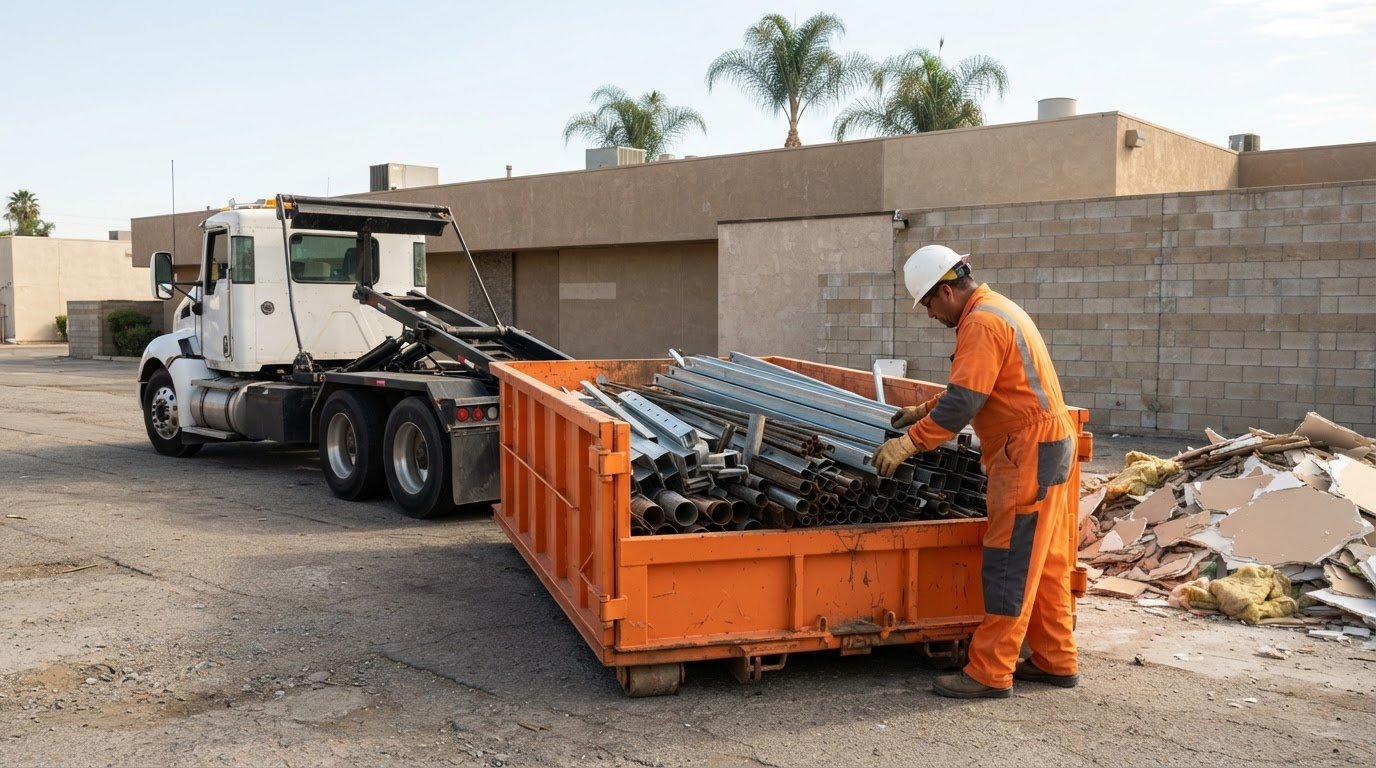
Don’t assume pickup is free: demolition scrap recycling in Fountain Valley has no universal no-cost collection rule. Whether scrap is collected or delivered depends on the material and arrangement. Recyclable metal may have value, but that does not make transport free or guarantee payment for every demolition load. Covered projects must also follow the city’s waste-diversion process and keep supporting records.
Before arranging a demolition cleanup, get clear on what happens to each material. This guide covers pickup and fee considerations, safe scrap preparation, and project documentation. It also explains how scrap-metal purchasing works at Orange County recycling centers, helping you compare a pickup arrangement with delivering sorted metal to a center.
Key Takeaways
- Sort demolition materials by type so recyclable metals can be handled separately from mixed debris.
- Plan transport around the load’s size, weight, and handling needs; scrap value does not automatically mean pickup is free.
- Keep project diversion records and weight tickets organized for the required city reviews.
- Compare the value of bringing sorted metal to a recycling center with arranging collection, and consider OC Recycling for scrap metal purchasing.
Where can I recycle scrap metal in Orange County?
Fountain Valley and nearby Orange County facilities handle metals such as aluminum, copper-bearing scrap, and appliances. For demolition projects, separate recoverable metal from mixed debris and plan the destination before hauling.
Demolition Recycling and Contractor Services
Demolition recycling separates reusable materials and scrap metal from debris headed for disposal. Fountain Valley’s construction and demolition waste diversion chapter identifies Public Resource Code Sections 42910 et seq. as part of its legal basis, according to California Legislative Information.
Covered residential work includes demolition or renovation that expands a building’s area, size, or volume. Covered non-residential projects include new construction and projects requiring a permit. Applicants must submit a waste management plan before work begins, and demolition records are reviewed before building permits are issued. Permits solely for roof replacement, electrical work, or plumbing are excluded.
Compare recycling and disposal costs by considering the metal’s recoverable value, sorting, transport, container use, and landfill disposal. A Republic Services roll-off bin can hold project debris, but keep valuable metal separate rather than mixing it with general waste.
Facilities and Operating Hours
Orange County metal facilities may accept aluminum siding and wheels, copper tubing, radiators, automobile batteries, and appliances. Some facilities also recycle fuel storage tanks. Confirm the material category and prepare a separate load for each destination to reduce sorting problems during drop-off.
Receiving hours and accepted materials vary by facility. For a Fountain Valley demolition load, sort the metal before departure, secure loose items, and keep recycling and disposal records with the project documents. Planning around the facility’s hours and material requirements makes drop-off more straightforward.
The Fountain Valley metal recycling service handles scrap processing, metal recovery, and the buying and selling of scrap metals. It accepts fuel storage tanks for metal recycling. Aluminum scrap is also accepted, including aluminum siding and wheels. These accepted materials cover both metal recovered from demolition loads and scrap offered to the service.
The service accepts appliances, automobile batteries, radiators, and parts for recycling as well. Together with fuel storage tanks and aluminum scrap, these are among the materials accepted by the Fountain Valley service. Keeping these items identifiable as metal recycling materials can help distinguish them from general project debris when preparing a load for the service.
Scrap pickup and secure transportation
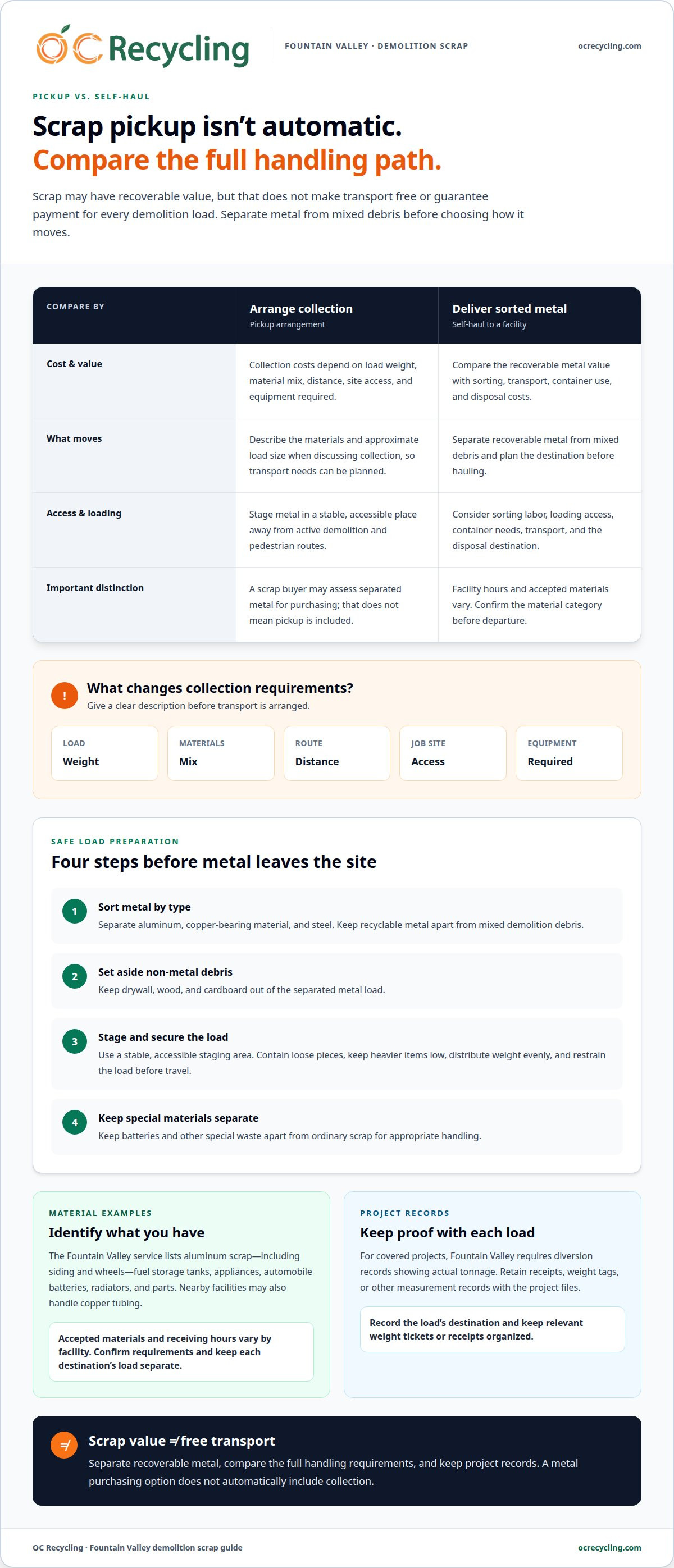
Free scrap pickup isn’t automatic in Fountain Valley. Collection costs depend on factors such as the load’s weight, material mix, distance, site access, and equipment required. A sorted load of aluminum framing, for example, is different to handle from mixed demolition debris containing metal, drywall, and lumber. Separate recyclable metal before arranging transport so its handling and destination are clear.
Prepare the pickup area before loading. Keep metal in a stable, accessible location, away from active demolition work and pedestrian routes. Separate long pieces, sharp-edged sheet metal, and bulky items such as radiators. Describe the materials and approximate load size when discussing collection; accurate details help plan suitable transport.
For secure transport from a Fountain Valley job site, use a suitable container or vehicle and restrain the load before travel. Contain small loose pieces that could shift or fall, keep heavier items low, and distribute weight evenly. Keep batteries and other special waste apart from ordinary scrap for appropriate handling.
- Sort metal by type, such as aluminum, copper-bearing material, and steel.
- Set aside non-metal debris, including drywall, wood, and cardboard.
- Stage the load where the vehicle can reach it without crossing the demolition work area.
- Record the load’s destination and retain relevant weight tickets or receipts for project files.
Before choosing collection or self-haul, compare the full job requirements: sorting labor, loading access, container needs, transport, and disposal destination. A scrap buyer can assess separated metal for purchasing, while mixed construction debris follows a different disposal route. For recoverable metal, scrap metal purchasing is a practical option to consider; it does not mean pickup is included.
Recycling and responsible disposal
Fountain Valley’s Construction and Demolition Waste Recycling Program Ordinance is established in Municipal Code Chapter 6.09. Covered projects must submit a waste management plan before work, identify an authorized recycling or transfer facility, and divert the minimum share of waste required by applicable California Green Building Standards Code provisions. The chapter cites Public Resource Code Sections 41821 and 41850, and CALGreen Sections 4.408 and 5.408.
Sort materials before hauling. Fountain Valley identifies lumber, drywall, metals, masonry, carpet, plastic, pipe, rocks, dirt, paper, cardboard, and land-development green waste as common non-hazardous construction and demolition debris. Keep these categories distinct from green waste or municipal trash. If sorting onsite is impractical, keep mixed debris together for a facility that handles mixed materials.
Before demolition, covered projects must be made available for deconstruction, salvage, and recovery. Remove reusable items such as cabinets, doors, lighting, lumber, and windows before bringing down the structure. This helps distinguish salvage from recyclable material and disposal debris.
Do not mix suspected asbestos, lead, or other materials of concern into ordinary demolition debris. Keep household hazardous and universal waste separate for proper handling, and arrange material-specific handling before including it in a recycling or disposal load.
Keep paperwork tied to each load. Fountain Valley requires diversion records showing actual tonnage, supported by receipts, weight tags, or other measurement records. Owners and contractors must retain weight tickets for the project’s duration and submit them with a Diversion Report for city review. Construction records are reviewed before framing inspection and again before final inspection. Demolition documents are reviewed for Waste Management Plan compliance before building permits are issued. Emergency demolitions needed to protect public health or safety are exempt from the waste management plan approval requirement.
Recycling centers that may pay for scrap
Recycling centers around Fountain Valley may pay for scrap metal, but payment depends on the material and how it is graded. Separate distinct metals before delivery. Aluminum, copper-bearing material, and steel should not be treated as one uniform lot because composition affects processing and value.
Specialty metals need careful sorting. Some centers grade recovered mixed high-speed tool steel by alloy, with payment based on the identified alloy. Recycled tungsten is also bought and sold, and accepted materials may include tungsten carbide, molybdenum, cobalt, tantalum, metal powder, spent catalyst, and thermal spray materials. Keep available labels or material records with industrial scrap.
The material’s form matters, too. Cobalt scrap may arrive as powder, residues, solids, turnings, catalysts, or battery scrap. Zinc scrap can come in different forms, so keep it identifiable for evaluation. Precious-metal scrap may require analysis and processing before its recoverable content is assessed. That is why a mixed demolition load cannot be valued like a clearly separated metal lot.
- Sort metals into separate, identifiable groups before loading.
- Keep alloy or material information with specialty scrap.
- Separate non-metal debris and electronics from metal loads.
- Retain project weight tickets and recycling receipts for diversion records.
For a demolition project, decide whether to sell separated, recoverable metal or send mixed debris through the required construction-waste route. Compare the sorting and transport effort with the material’s potential recovery value. Grading, alloy identification, and metal form can affect an assessment, so keep unusual materials separate instead of blending them into general scrap.
Have sorted scrap ready for evaluation? Explore scrap metal recycling options for recoverable demolition materials.
The Fountain Valley metal recycling service grades each piece of recovered mixed high-speed tool steel and pays by alloy. Keeping this material separate allows its alloy to be assessed rather than blending it into general scrap. The Fountain Valley service offers precious-metal scrap analysis, processing, transportation, and storage.
Ask the recycling service which forms of zinc it can evaluate before bringing material in. Keeping these distinct forms identifiable can help when presenting zinc scrap for evaluation. For unusual materials, retain any available labels or material records and ask about handling before combining them with other metal groups.
OC Recycling: CRV Redemption
OC Recycling offers CRV Redemption for eligible beverage containers, a separate route from demolition debris. Check with the recycling location about its CRV redemption process before bringing containers. If your cleanup also produces recoverable metal, OC Recycling’s Scrap Metal Purchasing can direct that material toward recycling. Keep containers, scrap, and mixed construction debris separate so each stream can be handled appropriately.
OC Recycling also provides Electronics Recycling and Certified Product Destruction for applicable items. These services do not replace Fountain Valley’s construction and demolition waste requirements. Keep project tickets and diversion records organized, and route each material according to its type.
Contact OC Recycling to discuss CRV Redemption or scrap-metal purchasing for your materials.
Plan your next step with confidence
Before clearing a demolition site, decide which materials need recovery, which require separate handling, and what records the project requires. Planning this in advance can make demolition scrap recycling in Fountain Valley more orderly and help prevent valuable metal from being mixed into general debris.
For recyclable metal, contact OC Recycling to discuss your scrap and the next step. OC Recycling offers Scrap Metal Purchasing, along with CRV Redemption and Electronics Recycling for those material streams. Scrap purchasing is distinct from residential curbside pickup, so describe the material and any collection needs clearly when you get in touch.
Contact OC Recycling about your scrap to discuss the next step for your materials. With a clear plan and separated loads, you can move your cleanup forward with confidence.
Frequently Asked Questions
What demolition scrap recycling services are available in Fountain Valley, CA?
For demolition scrap recycling in Fountain Valley, first identify whether the load contains separated metal, electronics, or mixed construction debris. OC Recycling offers Scrap Metal Purchasing and Electronics Recycling. Pickup may incur a charge depending on the material and quantity. Its local service area includes Santa Ana, Anaheim, Costa Mesa, Huntington Beach, Orange, Irvine, Garden Grove, Westminster, Fountain Valley, and Tustin.
Which demolition materials can be recycled in Fountain Valley?
Demolition scrap recycling in Fountain Valley may involve metals, lumber, drywall, masonry, carpet, plastic, pipe, paper, cardboard, and land-development green waste. Consider each item’s condition: reusable building materials can be salvaged, while sorted metals and fibers follow recycling routes. Keep household hazardous and universal waste separate from ordinary debris, and direct each stream to an appropriate destination.
What affects demolition scrap metal prices in Fountain Valley, California?
Scrap value depends on metal type and how it is graded. Alloy identification can matter for mixed high-speed tool steel, while cobalt powder, turnings, and solids may be assessed differently. OC Recycling purchases scrap metal and pays for metals in cash the same day. Separate identifiable materials before evaluation; payment depends on the scrap assessed.
