
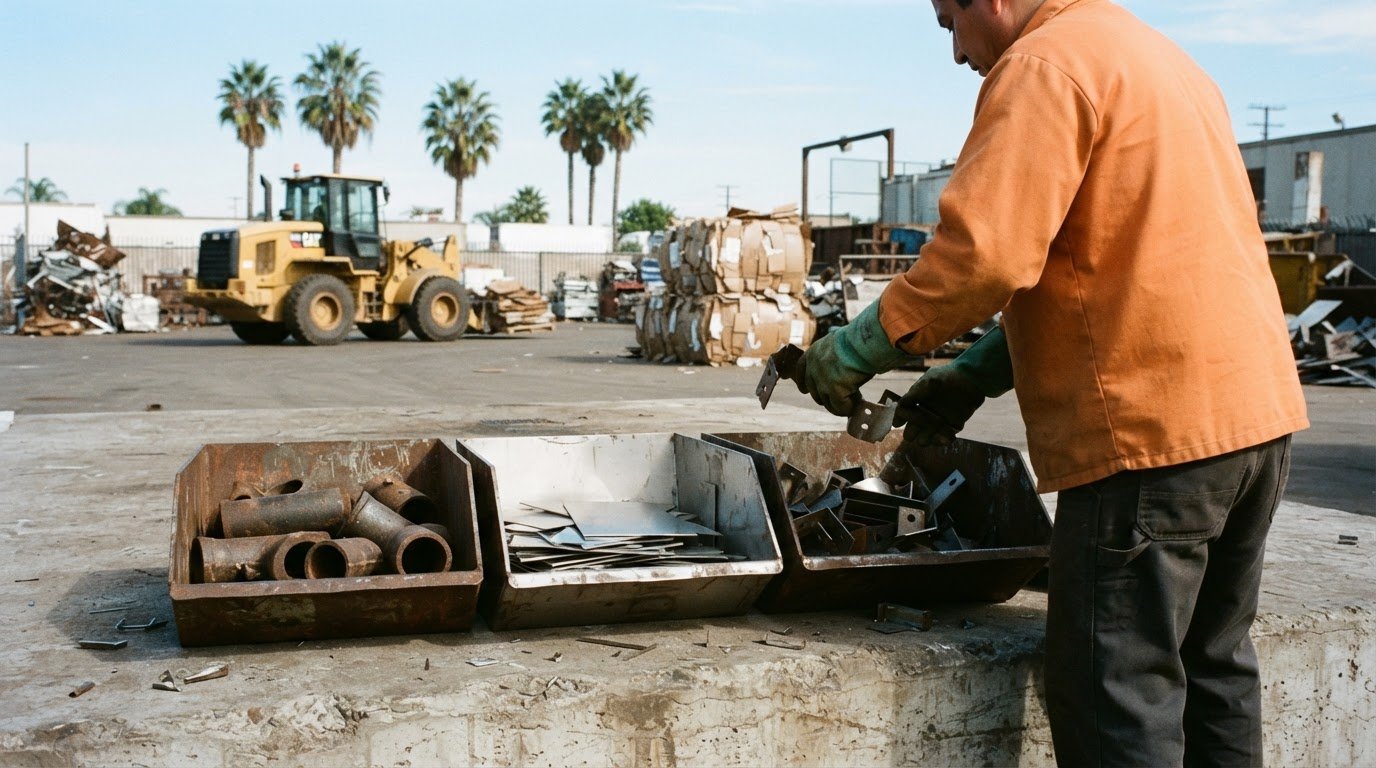
Steel, cast iron, stainless steel, and aluminum can bring relatively little per pound at a scrap yard, especially in small or mixed loads. What metals are not worth scrapping depends on the amount you have, how the material is sorted, and its condition. Low payout doesn’t mean a metal can’t be recycled; it means the time and effort to collect it may outweigh its scrap value.
It’s reasonable to expect a pile of metal to have value, but not all metals bring the same return. Ferrous metals generally earn less than non-ferrous metals, and mixing materials can make higher-value pieces harder to identify.
This guide explains which metals may bring a lower return, why values vary, and how sorting can make materials easier to assess. You’ll also learn which metals are commonly more valuable and what to consider before taking a load in for scrap.
Key Takeaways
- Stainless steel is common in scrap yards but is generally less highly valued than some other metals, so material type matters when estimating a load’s potential.
- Scrap value changes with market conditions, including supply and demand, while the amount and condition of your material also affect its worth.
- Separating metals before recycling can help identify more valuable pieces that might otherwise be priced with a mixed load.
- Small quantities and items made from mixed materials may bring limited returns; learn what to look for before deciding what to scrap.
What Scrap Metal is Worth Recycling?
Scrap value depends on the metal, its condition, and whether it’s separated from other materials. Copper often attracts more interest than steel, while stainless steel is common but generally less valuable.
Relative Values of Common Scrap Metals
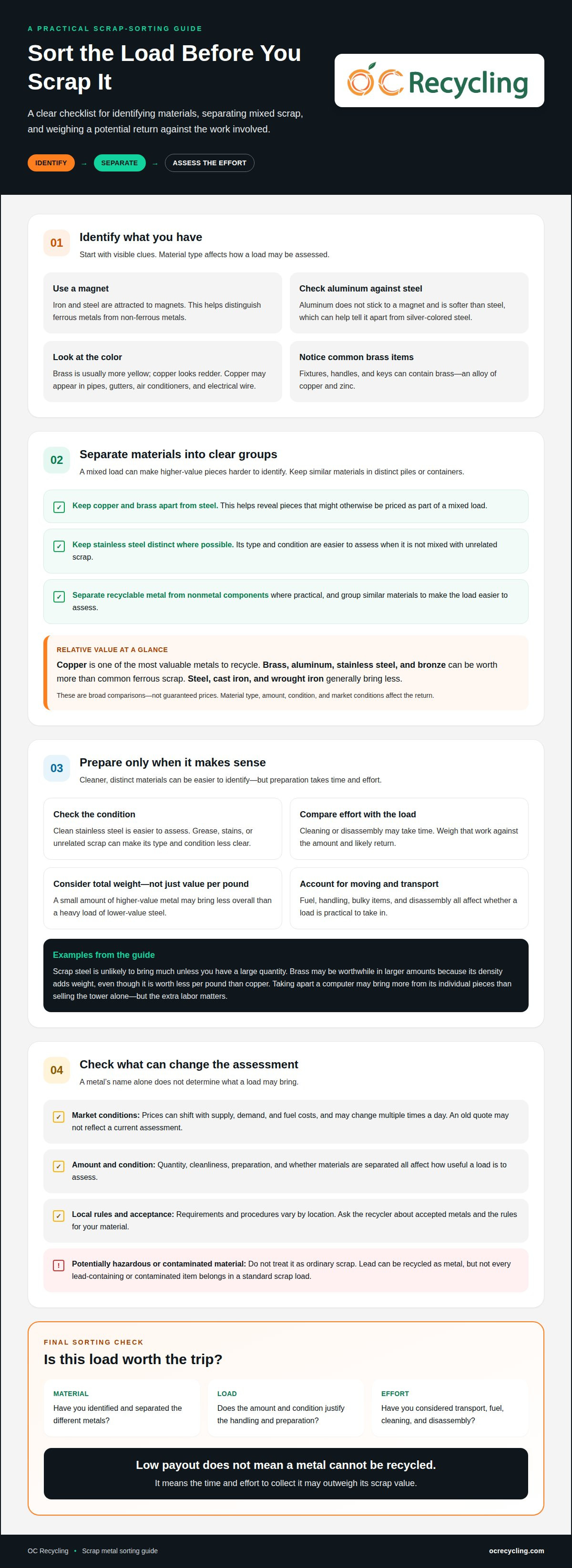
Relative scrap value compares what different metals may bring by weight. Copper is one of the most valuable metals to recycle and is in high demand. Brass, aluminum, stainless steel, and bronze are also non-ferrous metals that can be worth more than common ferrous scrap. Steel, cast iron, and wrought iron generally bring less. This comparison can help you decide whether sorting a mixed load will make its higher-value pieces easier to identify.
Stainless Steel’s Lower Scrap Value
Stainless steel is a common scrap metal, but it is generally valued less highly than other metals. Its presence in everyday scrap doesn’t mean it will match the return associated with copper or brass. Keep stainless steel separate from other materials where possible, so its type and condition are clearer when the load is assessed. Clean, distinct pieces are also easier to identify than stainless steel mixed with grease, stains, or unrelated scrap.
Copper is often found in plumbing pipes, gutters, air conditioners, and electrical wire, making it easier to spot in a household or renovation pile. Brass, an alloy of copper and zinc, appears in fixtures, handles, and keys. Separating brass from steel or aluminum helps distinguish its value rather than treating the whole load as one material.
Scrap-metal sales in the United States may be subject to state and local requirements, so identification procedures vary by location. There is no single process for every sale nationwide; the applicable jurisdiction and transaction determine what applies.
Potentially hazardous or contaminated material should not be treated as ordinary scrap. Lead can be recycled as metal, but that does not mean every lead-containing or contaminated item belongs in a standard scrap load.
Scrap yards in the United States do not share one universal fee or minimum quantity. A small amount may have limited practical value if the return is outweighed by the effort of transporting it.
Scrap metal recycling for cash
Scrap metal can turn unused material into cash, but the return depends on more than the metal’s name. Market value, quantity, condition, and preparation all affect what a load may bring. Prices fluctuate with supply, demand, and fuel costs, and can change multiple times a day. An old quote is therefore a poor guide to what the same material may bring now.
Consider both value per pound and total weight. A small amount of higher-value metal may bring less overall than a heavy load of lower-value steel. Scrap steel is unlikely to bring much unless you have a large quantity. Brass, by contrast, may be worthwhile in larger amounts because its density adds weight, even though it is worth less per pound than copper. Knowing what metals are not worth scrapping can help you decide whether a low-value load is worth transporting.
Some vehicle scrap can be particularly lucrative. Automotive converters and car bodies are examples, though they differ in size, material mix, and handling needs. Large appliances can require heavy equipment to move, so consider the work of transporting bulky items alongside their scrap value. Weigh the potential return against the effort and resources needed to collect and move the material.
For a more useful estimate, identify the material and consider its quantity before setting it aside. Separate recyclable metal from nonmetal components where practical, and group similar materials so the load is easier to assess. Old tools, for example, may be easier to evaluate when their metal surfaces are clean. If you’re deciding what metals are not worth scrapping, factor in preparation time and whether the amount justifies a trip.
Cash isn’t the only consideration: scrap metals can be melted down and reused in other products. If you have a metal load ready for recycling, scrap metal recycling offers a practical next step for putting it back into use.
Sorting scrap metal for better prices
Sorting separates materials that might otherwise be assessed as one mixed load. A recycler may value mixed scrap based on its lowest-value metal, so separating copper or brass from steel can help reveal higher-value pieces. Clear groups also make materials easier to identify and assess.
Start with a magnet. Ferrous metals are attracted to magnets, making this a useful way to distinguish iron and steel from non-ferrous metals. Aluminum does not stick to a magnet and is softer than steel, which can help distinguish it from silver-colored steel. Color offers another clue: brass is usually more yellow, while copper looks redder.
Keep separated materials in distinct piles or containers. Brass items such as plumbing fixtures can be mixed with steel or aluminum, obscuring their value in a combined load. Stainless steel is easier to assess when clean, since grease or stains may reduce the amount paid. Cleaning can make material easier to identify, but weigh the effort against the size and condition of the pieces.
Preparation time and transportation costs affect whether a low-value load is worthwhile. Compare the expected return with fuel, handling, cleaning, and disassembly effort. Taking apart a computer and selling its individual pieces for scrap, for example, may bring more than selling the tower alone, but the extra labor matters. A few light items may not justify a dedicated trip, while a larger, sorted load can make transport more practical.
For local prices and acceptance rules, ask the recycler about the metals it accepts and the procedures for your material. Prices can shift with market conditions, so a current assessment is more useful than an old quote. For unusual items, describe the material clearly, such as nickel, tin, or a mixed-metal component, before arranging transport.
Which metal items are usually not worth scrapping because of low weight or mixed materials?
Small items can contain recyclable metal yet bring little as individual pieces. A single aluminum soda can weighs little, so collecting only a few may not justify a separate trip. The same applies to loose metal odds and ends: their combined weight matters more than the number of objects. Grouping similar items helps build a clearer, more substantial load.
Bicycles show why an item’s total weight is not the same as its recoverable metal weight. A bicycle includes metal parts alongside tires, a seat, grips, and other nonmetal components. Those parts add bulk without adding scrap metal. Before treating the whole bicycle as metal, separate what can be removed easily and consider how much metal remains. Avoid time-consuming dismantling if the likely recovery is small.
Mixed-material household items can also be harder to value. A metal object with plastic handles, rubber coverings, or attached components contains less recoverable metal than its full weight suggests. A small appliance, for example, may combine a metal shell with wiring and nonmetal parts. Keep identifiable metal separate from obvious nonmetal materials rather than letting a mixed collection obscure what it contains.
Computer cables are a useful reminder that small items can still hold value: they can be worth nearly as much scrap metal as computers themselves. Do not overlook a bundle of cables just because each piece is light. Gather them with similar materials and separate them from unrelated household items. Their combined amount may matter more than the value of one cable on its own.
Think in terms of recoverable metal, not object count or overall size. A bulky item with mostly nonmetal parts may offer less scrap value than a compact group of metal-rich pieces. Aluminum cans, bicycle frames, and computer cables show why both material and quantity matter. Sorting these into clear categories makes the load easier to understand and assess.
If you have separated metal ready to recycle, bring your scrap metal to OC Recycling for Scrap Metal Purchasing.
OC Recycling: Scrap Metal Purchasing
OC Recycling purchases scrap metal, giving you a practical next step after sorting your load by material. Separate ferrous metals such as steel and cast iron from non-ferrous pieces where possible, so the materials are easier to assess. This can help with household cleanouts, renovation leftovers, or commercial scrap accumulated over time.
For items that are not primarily metal, OC Recycling also offers Electronics Recycling. Other services include CRV Redemption and Certified Product Destruction, each suited to a different type of recyclable material or product. Choosing the relevant service helps keep scrap metal separate from electronics and other items.
Have metal ready to sell or questions about a load? Contact OC Recycling about Scrap Metal Purchasing.
Turn Your Sorted Scrap Into a Clear Next Step
Let the intended use of each item guide your next step. Material that is not worthwhile as scrap may have another recycling route, while a sorted metal load is easier to assess. Knowing what metals are not worth scrapping can help you spend less time moving low-value or mixed materials and make a more considered decision about what to keep together.
OC Recycling offers Scrap Metal Purchasing for recyclable metal, Electronics Recycling for unwanted electronics, and CRV Redemption for eligible containers. Separating these categories before bringing materials in helps keep your next step organized. Choose the service that matches what you have, then move forward with a clear plan instead of letting unwanted materials accumulate.
Ready to discuss your scrap? Contact OC Recycling about your scrap. A well-sorted load is a practical starting point, and every recyclable material you direct to the right stream can be put to better use.
Frequently Asked Questions
Which metals have the lowest scrap value in the United States?
Steel, wrought iron, and cast iron generally have lower scrap value than non-ferrous metals. Stainless steel is also commonly recycled, but is less valuable than some other metals. A steel shelving unit, for example, may be recyclable yet bring a modest return, especially in a small load. The amount, condition, and separation from other materials all affect whether it is worthwhile to sell.
How much do scrap yards pay for common household metals by pound?
There is no single per-pound rate for household metals in the United States. The amount depends on metal type, grade, cleanliness, quantity, and current market conditions, which can shift during the day. Copper pipe and aluminum window frames are assessed differently, so a general rate cannot reliably predict either payout. For a specific load, the price depends on the material and is provided after a quote request.
