
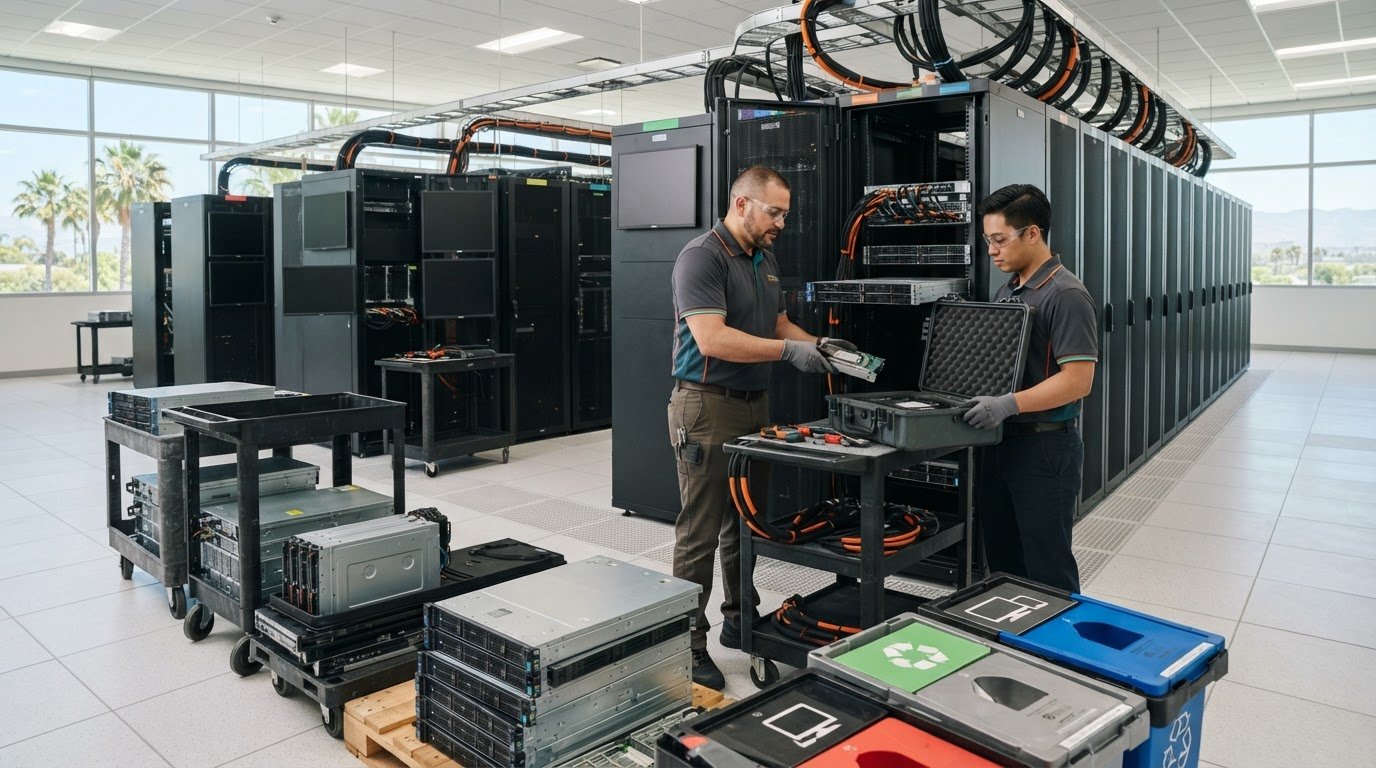
Data center decommissioning is the planned shutdown, removal, and disposition of equipment, with data handled securely before devices leave the site. For data center decommissioning and recycling in Irvine, the work typically involves inventorying assets, coordinating shutdown and removal, sanitizing or destroying data-bearing devices, and directing equipment toward reuse or recycling. NIST SP 800-88 describes three media sanitization methods: Clear, Purge, and Destroy.
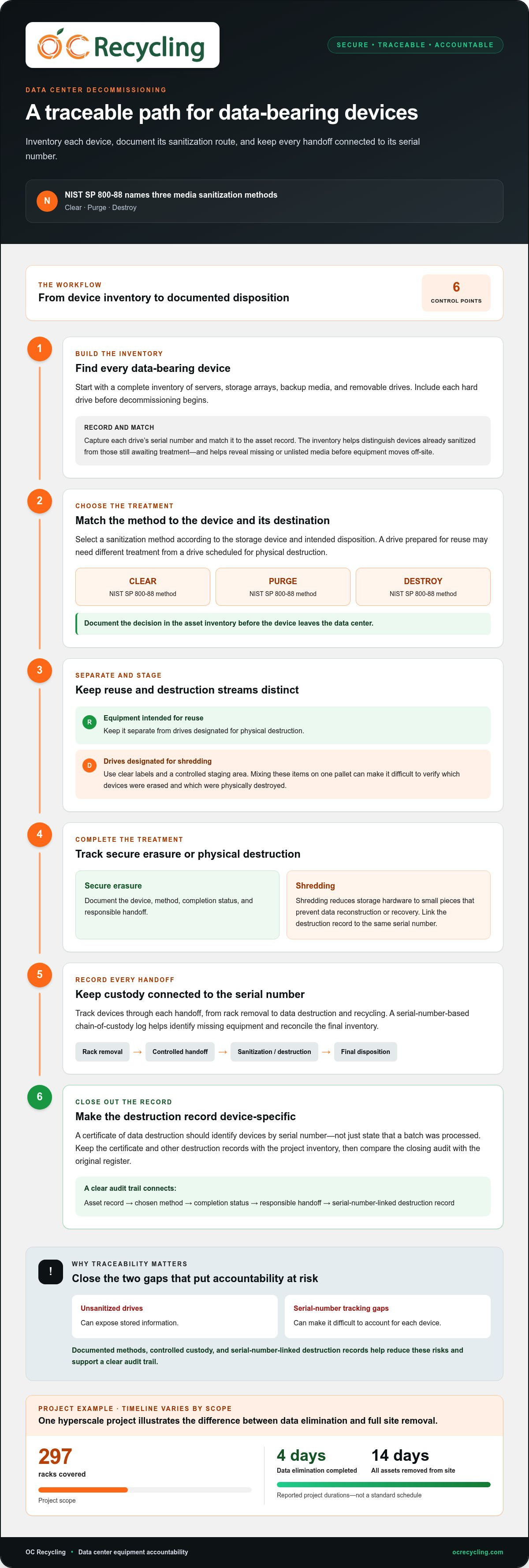
It’s reasonable to expect the schedule to depend on the size of the site and the complexity of its equipment and security requirements. One hyperscale project covering 297 racks completed data elimination in 4 days and removed all assets from the site within 14 days, showing how timelines can differ by project scope.
This guide explains data center decommissioning recycling in Irvine, including equipment inventory, safe power-down and de-racking, data sanitization, and the factors that shape timelines and outcomes. It also shows where responsible electronics recycling fits into the final stages, helping you plan a secure, organized transition while keeping equipment accountable.
Key Takeaways
- Build an asset register that records equipment identifiers, data-bearing devices, ownership, and shutdown dependencies before removal begins.
- Use a serial-number-based chain-of-custody log to track devices through each handoff, from rack removal to data destruction and recycling.
- Coordinate power-down and de-racking around equipment dependencies, safe handling, and the site’s removal plan.
- Plan the project timeline around inventory, data sanitization, logistics, and equipment disposition; OC Recycling’s Electronics Recycling and Certified Product Destruction can support the relevant end-of-life needs.
Data sanitization and destruction
NIST SP 800-88 describes three media sanitization methods: Clear, Purge, and Destroy. Choose the method according to the storage device and its intended disposition. A drive prepared for reuse may need a different treatment from one scheduled for physical destruction. Record the decision in the asset inventory, so each device has a documented path before it leaves the data center.
Start with a complete inventory of servers, storage arrays, backup media, and removable drives. Record each hard drive’s serial number before decommissioning and match it to the asset record. This helps distinguish devices that have been sanitized from those still awaiting treatment. It also helps uncover missing or unlisted media before equipment moves off-site.
For physical data destruction, shredding reduces storage hardware to small pieces that prevent data reconstruction or recovery. Keep drives designated for shredding separate from equipment intended for reuse, and record every handoff. Mixing these items on one pallet can make it difficult to verify which devices were erased and which were physically destroyed. Clear labels and controlled staging areas reduce confusion.
For secure erasure, document the device, method, completion status, and responsible handoff. For shredding, link the destruction record to the same serial number. A certificate of data destruction should identify devices by serial number, creating a traceable record rather than a general statement that a batch was processed. Keep the record with the project inventory.
What are the risks and compliance issues in data center decommissioning? Unsanitized drives can expose stored information, while gaps in serial-number tracking can make it difficult to account for each device. A documented method, controlled custody, and destruction records linked to serial numbers help reduce these risks and support a clear audit trail.
What is data center decommissioning?
Data center decommissioning is the controlled retirement of equipment, from asset audit through removal and final disposition. For organizations, a complete inventory links each device to its owner, condition, data status, and next destination.
Asset Inventory and Chain of Custody
Build the inventory through a physical audit, recording each asset’s make, model, serial number, condition, and location. Tag servers, storage devices, networking equipment, and separate components so records match the equipment on-site. Flag devices that contain data, and document ownership, dependencies, and shutdown order.
During removal, track every asset through each handoff, including transport and final disposition. A chain-of-custody log linked to serial numbers helps identify missing equipment and reconcile the final inventory. Compare the closing audit with the original register before clearing the space.
Disposition, Resale, and Recycling
IT asset disposition sorts retired equipment for potential reuse or resale, parts recovery, or recycling. Whether resale or recycling makes sense depends on equipment condition, age, completeness, and demand for its components. Record each pathway separately, and sanitize data-bearing devices before they leave controlled custody.
Recycling is appropriate for equipment that cannot be reused or resold, while recoverable materials can be directed to responsible processing. Separate electronics from metal and other site materials during staging. For end-of-life electronics, electronics recycling provides a practical route for equipment that isn’t being retained or remarketed.
Decommissioning Cost Factors
Data center decommissioning costs per rack or square foot depend on the work involved, not floor area alone. Key factors include asset quantity, equipment condition, data sanitization requirements, access constraints, removal complexity, transport, and final disposition. A detailed inventory helps connect the requested scope to the labor and handling required.
Project costs vary with the scope, including inventory, sanitization, access, logistics, and disposition. A rack containing dense storage equipment may need different handling from one with lighter networking components, even if both occupy similar space.
Irvine Decommissioning Services
Data center decommissioning companies serving Irvine, California may coordinate asset inventory, data sanitization, equipment removal, and IT asset disposition. Define whether your project covers removal alone or also device tracking and final recycling. Clear scope makes responsibilities easier to manage and helps account for each equipment group.
Data center decommissioning and IT asset disposition services in Irvine can cover the transition from site audit to each item’s final destination. Match the scope to the equipment, data requirements, and disposition plan. Separating reusable assets from equipment bound for recycling supports an organized closeout.
How do you power down and de-rack the equipment safely?
Safe removal starts with a shutdown sequence, equipment records, and clear separation of items for reuse, return, or recycling. For Irvine projects, classify servers, switches, telecom equipment, racks, cabling, and UPS batteries before moving them. This organizes logistics and helps prevent reusable or leased equipment from entering the wrong disposition stream.
First, coordinate the shutdown order with the systems and departments that depend on the equipment. Confirm which connections and components belong to each rack, then label cables and record each device’s location and serial number. After shutdown, disconnect equipment in the planned order and keep data-bearing devices traceable. This links physical removal to asset records and data security controls.
Next, separate servers, network switches, storage devices, and telecom equipment from racks, loose cabling, and batteries. Record the condition and intended destination of each item. Keep equipment suitable for redeployment or lease return identifiable and protected during handling. Group recycling-bound electronics separately from ferrous metal, and keep cardboard packaging and paper records apart.
California regulates lead-acid and lithium UPS battery cells as universal or hazardous waste. Plan for retired servers, switches, and battery-backed power equipment to be handled through appropriate recycling or waste-disposal channels rather than ordinary landfill disposal. Irvine commercial electronics recycling and battery handling fall under California DTSC hazardous- and universal-waste rules; battery-backed equipment needs an appropriate separate disposition path.
For a practical removal sequence, document each rack and its connected components, complete the approved shutdown, disconnect and label cables, then de-rack and stage equipment by destination. Keep racks, cabling, telecom devices, and UPS batteries distinct in the inventory. A final site walkthrough lets you compare remaining equipment against removal records and catch overlooked components before handing back the space.
Data center decommissioning timelines and project results
A dependable timeline begins with a complete plan, assigned responsibilities, and clear milestones. For data center decommissioning and recycling in Irvine, map inventory, sensitive data handling, shutdown dependencies, access, transport, and electronics recycling before work starts. Tasks can overlap only when ownership and sequencing are clear. For example, a delay in data sanitization can hold up equipment release even after physical removal is ready.
One hyperscale services provider’s project shows how scope and coordination shape results. The work covered 297 racks and 121,893 drives, including HDDs, SSDs, and flash cards. Data elimination was completed in 4 days, and all assets were removed from the client site within 14 days. These results belong to that project, not every data center schedule.
Build an Irvine data center decommissioning and recycling schedule in stages: inventory, shutdown planning, data treatment, de-racking, transport, and final disposition. Assign an owner to each stage and identify dependencies. A server, for example, should not enter resale or recycling until its data requirements and destination are addressed. Site access, equipment volume, and transport logistics also affect the sequence and pace.
Track progress against defined milestones, not just the number of racks cleared. Compare the physical inventory with serial-level records during removal, then reconcile destinations at closeout. This can reveal delayed devices, missed components, or electronics awaiting processing. A final walkthrough confirms that equipment and materials have left designated areas and that the site is ready for its next use.
Project results can include more than a cleared room. In the same hyperscale case, remarketing retired assets generated $4.4 million in client proceeds, showing how disposition planning can shape outcomes alongside removal speed. Include responsible recycling in the schedule, with clear staging and tracking through final disposition. Plan responsible electronics recycling as part of your project.
OC Recycling: CRV Redemption
OC Recycling is a practical next step when your decommissioning plan separates electronics, metals, and products requiring destruction. Once your data-handling process is complete, its Electronics Recycling service supports responsible recovery of retired servers and other electronic equipment. Project scrap metal may fit its Scrap Metal Purchasing or Ferrous Metal Recycling services, while Certified Product Destruction and Data Destruction serve products and data-bearing items requiring destruction.
CRV Redemption is a separate option for eligible beverage containers, not data center hardware. Check with a local recycling center about whether it accepts eligible beverage containers for CRV redemption. Keeping these material streams separate helps your team organize equipment recycling, metal recovery, certified destruction, and container redemption. For project-specific material needs, contact OC Recycling or visit ocrecycling.com.
Make the Next Transition Easier to Manage
Use project closeout to improve the next one. Record which planning decisions kept work moving, where handoffs slowed, and which equipment records proved most useful. Apply those lessons to set a clearer scope for future upgrades, relocations, or site changes.
A well-organized data center decommissioning and recycling plan in Irvine connects equipment disposition with the site’s broader operational goals. Identify the material streams that need support, then set the next action for each. This gives your team a practical starting point without losing sight of data security or responsible handling.
For equipment and material recycling needs, contact OC Recycling about your project. A clear description of your materials and intended next steps can help begin a focused conversation. Take the next step with a plan that keeps your transition moving forward.
Frequently Asked Questions
How is decommissioned hardware recycled and reported?
Sort hardware by its next use: reuse, resale, parts recovery, or material recycling. For example, assess a retired server for reuse, while an unusable device goes to electronics recycling. A useful closeout report links each equipment group to its recorded destination and notes unresolved items. For Irvine and nearby Orange County sites, align the report with internal asset records and project handoffs.
Is decommissioning part of ITAD?
Yes. Decommissioning is often one stage of IT asset disposition, or ITAD, which covers how an organization handles equipment at the end of its use. Decommissioning focuses on retiring and removing systems from a facility; ITAD also considers what happens to assets afterward. For example, a business may retire a server, assess it for reuse, and then direct it to resale or recycling.
Should hard drives be destroyed on-site or off-site?
Either approach can work; choose based on data sensitivity, site controls, equipment volume, and how custody will be documented. On-site destruction keeps drives at the facility until treatment, while off-site destruction requires secure identification and tracking during transport. In either case, link the destruction record to each drive’s serial number and reconcile records against the original inventory.
What happens to UPS batteries during decommissioning?
Identify and separate UPS batteries from general electronics during removal. California treats lead-acid and lithium UPS battery cells as universal or hazardous waste, so their handling and destination require a distinct waste-management path. Label battery types in project records, keep them separate from ordinary equipment loads, and account for every removed battery during the final site review.
What are data center equipment recycling prices in Orange County, California?
Recycling value depends on the equipment and project requirements, so there is no single useful rate for every Orange County data center. A project assessment should account for equipment type, quantity, condition, sorting needs, transport logistics, and whether data destruction is required. Separate the inventory into equipment categories first to clarify scope for businesses in Irvine, Santa Ana, Anaheim, Costa Mesa, Huntington Beach, Orange, Garden Grove, Westminster, Fountain Valley, and Tustin.
How do you decommission a data center: steps and timeline?
Start by assigning responsibilities and identifying dependencies, then inventory equipment, coordinate shutdowns, handle data, remove assets, and record final destinations. The timeline depends on site size, equipment volume, access, data requirements, and transport coordination. To avoid preventable delays, identify lease returns and equipment intended for redeployment before removal begins, and schedule the final walkthrough after reconciling the inventory.
