
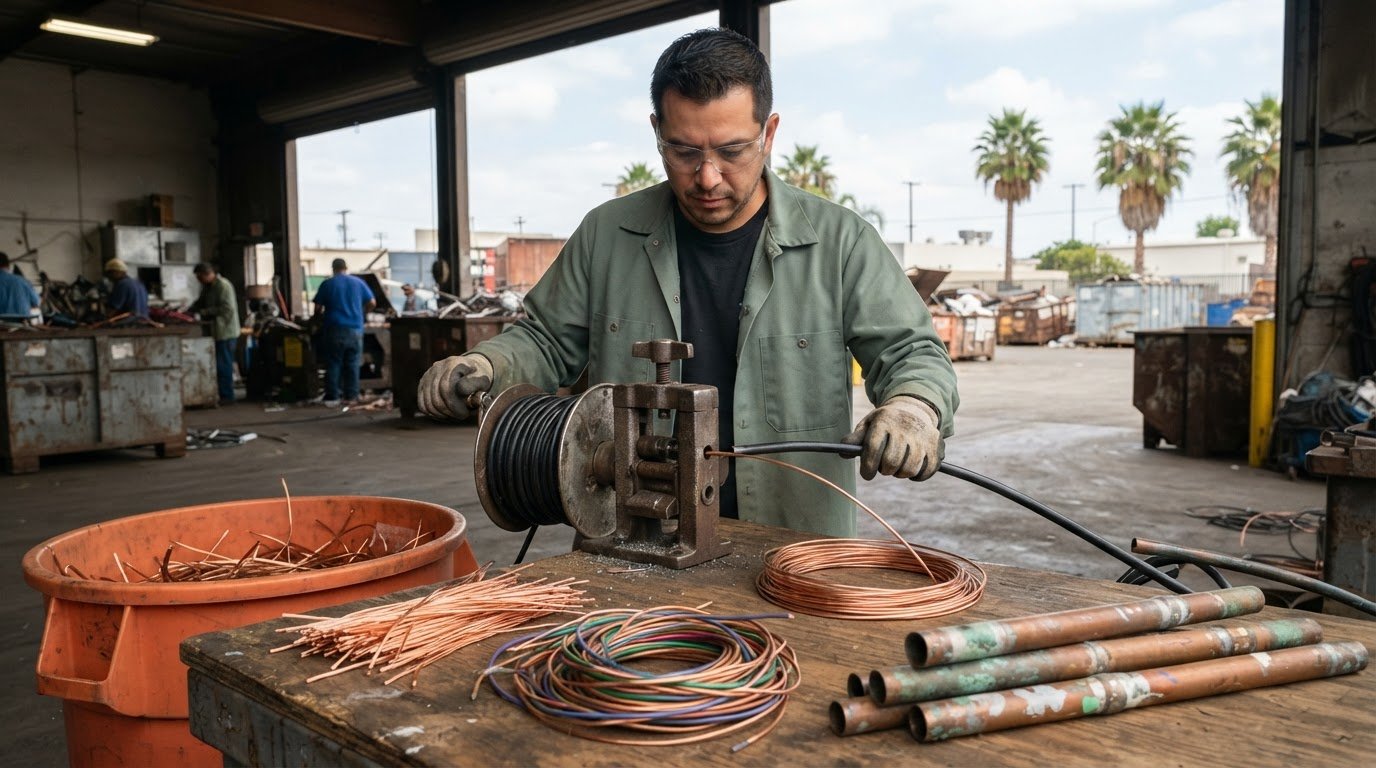
A polished shine isn’t the goal when preparing copper for scrap. Knowing how to clean copper for scrap starts with sorting clean, bare copper from material with paint, solder, heavy tarnish, or dirt, then removing wire insulation where it makes sense. Copper #1 is clean, bare, uncoated, and free of attachments; slightly tarnished, painted, or soldered copper is #2.
It’s reasonable to want every piece spotless before selling, but extra cleaning isn’t always worthwhile. Copper is graded by its condition, and stripping wire takes effort. Focus on separating materials and safely removing coatings or insulation rather than chasing a mirror finish.
This guide covers paint, solder, and dirt, when to strip wire, and which tools and protective gear can help. You’ll also learn how to sort copper by type and identify older wire that may have asbestos or lead wrapping, so you can prepare scrap carefully and keep usable copper separate from lower-grade material.
Key Takeaways
- Focus cleaning on coatings and residue that affect the copper’s condition; a bright polish isn’t the goal.
- Weigh the effort of stripping wire against the potential value, and never burn off insulation.
- Choose practical tools for the job and protect yourself when handling wire or cutting copper.
- Sort copper by condition before sale so clean pieces stay separate from material needing more processing.
1. Cleaning paint, solder, and dirt from copper
To understand how to clean copper for scrap, first separate loose dirt from attached material. Brush off soil and wipe the copper with a dry cloth, then inspect joints, bends, and pipe ends. Paint and solder aren’t ordinary grime, so a quick rinse won’t remove them. Keep painted pipe and soldered fittings separate from cleaner, bare copper.
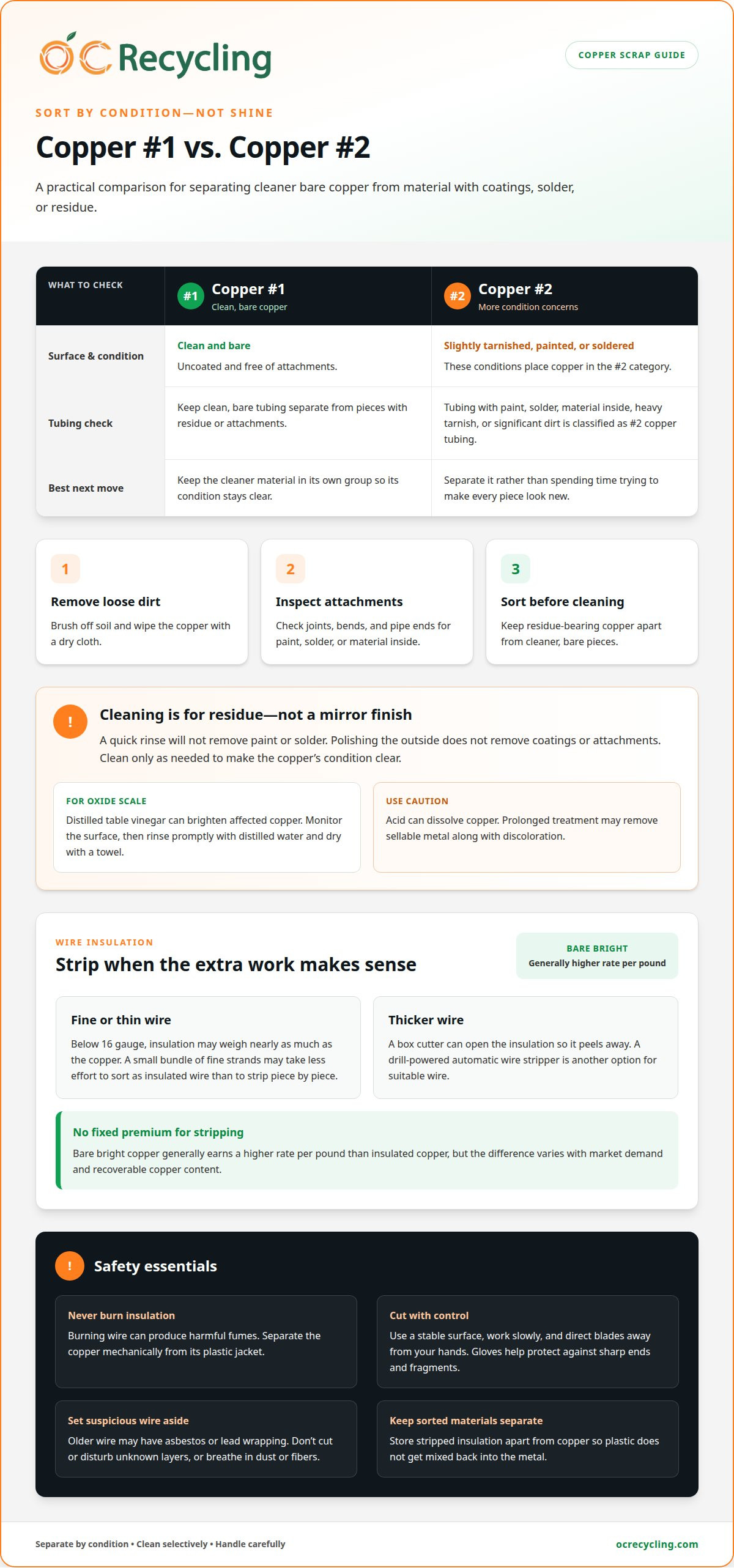
Copper #1 is clean, bare, uncoated, and free of attachments. Copper #2 is slightly tarnished, painted, or soldered copper. Tubing with paint, solder, material inside, heavy tarnish, or significant dirt is classified as #2 copper tubing. These distinctions are more useful than chasing shine: polishing the outside doesn’t remove solder or coatings. Sort pieces by condition before cleaning, so residue-bearing copper doesn’t get mixed with cleaner material.
Distilled table vinegar can brighten copper with oxide scale. Apply it to the affected area and monitor the surface rather than soaking the piece. Once the solution visibly works, rinse promptly with distilled water and dry the copper with a towel. Acid can dissolve copper, so prolonged treatment may remove sellable metal along with discoloration. Avoid aggressive cleaning if a simple rinse or brush removes the dirt.
Copper doesn’t need a mirror finish to be scrap, and paint or solder doesn’t automatically make it unusable. However, material with paint, solder, or dirt is often graded lower, which can reduce its payout. Separate it instead of spending time making every piece look new. Remove loose dirt, identify coatings and attachments, and clean only with a controlled method. This practical approach preserves copper and makes its condition clear for grading.
2. Removing wire insulation
Strip insulation only when the extra work makes sense for the wire. Removing the covering can improve its value, but the gain depends on the wire’s copper content and current market demand. Thin wire may contain nearly as much weight in insulation as copper, especially below 16 gauge. For a small bundle of fine strands, sorting it as insulated wire may take less effort than stripping each piece.
For thicker wire, a box cutter can slice along the insulation so it peels away from the copper. Work slowly and direct the blade away from your hands. A drill-powered automatic wire stripper is another option for suitable wire. Whichever tool you use, separate the copper from its plastic jacket rather than burning the coating off. Burning insulation is not a recommended stripping method.
How much more is clean bare bright copper worth than insulated copper? Bare bright copper generally earns a higher rate per pound because it is clean and has no insulation. The difference varies with market demand and the amount of recoverable copper in the insulated wire, so there’s no fixed premium.
Check cable before cutting or stripping it. Older copper wire may have asbestos or lead wrapping, which can create hazardous dust or fibers if disturbed. Don’t breathe in material from suspect wrapping; set the wire aside instead of treating it like ordinary insulation. Avoid cutting through unknown layers to reach the copper.
After stripping, keep the bare copper and removed insulation separate. This makes the material easier to sort and prevents plastic from getting mixed back into the metal. If a load contains a mix of fine insulated wire and thicker copper cable, handle each group according to its construction and the time stripping would take. For a practical next step, prepare your copper scrap for sale by keeping those categories separate.
3. Tools and safety gear for copper scrapping
Match each tool to the copper’s condition before starting. Wire strippers remove insulation from suitable cable, while a box cutter can carefully open thicker wire. Gloves provide a barrier when handling sharp cut ends, rough pipe, and metal fragments. Use a stable surface, clear the work area, and direct cutting tools away from your hands.
For pipe and tubing, metal cutters or a saw can separate sections, such as clean pipe from material with residue inside. Keep the tool steady and don’t force a blade through a stubborn cut. Put stripped insulation and copper pieces in separate containers. Loose offcuts can cause sharp hazards underfoot or get mixed back into sorted material.
What laws or local rules apply to stripping and selling copper scrap? Scrap handling and sales are subject to applicable state and local requirements, which vary by location. Follow the rules that apply where you live and where the transaction takes place.
Never burn wire to remove insulation. Burning can produce harmful fumes, while mechanical stripping avoids exposing copper to an open flame. Older wire may have asbestos or lead wrapping, so don’t cut or disturb suspicious layers or breathe in dust from them. Set questionable wire aside for safer handling.
Use care with acid, too. It can dissolve copper, reducing the material you retain, and its fumes can corrode metal and harm the lungs. Acid refining requires suitable ventilation, such as a fume hood; an open indoor space isn’t adequate protection. If using a cleaning solution, work with small amounts, monitor the surface, and rinse promptly once it has visibly worked. Gloves, wire strippers, and controlled cutting tools support safer preparation, but they don’t make hazardous wrapping or fumes harmless. Stop if you encounter unknown material, strong fumes, or a slipping tool, then keep the affected copper separate from prepared scrap.
4. How do you sort copper scrap by type and grade?
Start by separating clean, bare copper from pieces with coatings or attachments. Copper #1 is clean, bare, uncoated, and free of attachments. Keep it apart from copper #2, which includes slightly tarnished, painted, or soldered copper. This simple division makes the condition of each group clear during sorting.
Inspect tubing individually. Paint, solder, material inside, heavy tarnish, or significant dirt places copper tubing in the #2 category. New copper cutoffs and used pipes that carried air, gases, or water are examples of clean copper pipe. Separate clean sections from dirty ones with a saw or metal cutters, keeping the cut pieces in distinct piles.
Attachments matter as much as surface appearance. A clean tube with soldered fittings doesn’t meet the definition of copper #1 because it isn’t free of attachments. Separate fittings where practical, then sort the remaining pieces by their condition. Don’t mix coated sections with clean cutoffs, since that makes the overall load harder to assess.
Use clear containers or separate marked piles for each category. Put clean pipe in one area, painted or soldered tubing in another, and wire in its own group. Keep copper with material inside separate until you can identify and remove what’s there. This helps prevent clean pieces from being overlooked in a mixed pile and makes it easier to present each grade distinctly.
Sorting by grade can help you receive more for scrap copper, because clean copper and lower-grade material are treated differently. Don’t assume every tarnished piece needs polishing; the grade depends on its condition and attachments. Once you’ve separated the types, bring your sorted copper for scrap metal purchasing. Organized material makes its type easier to identify and keeps the cleanest pieces from being mixed with tubing that has paint, solder, or residue.
OC Recycling: Scrap Metal Purchasing
OC Recycling purchases scrap metal, including prepared copper. Once you’ve separated clean copper from painted, soldered, or insulated material, bring the sorted groups in as scrap. Keeping categories distinct makes the copper’s condition easier to communicate and helps avoid mixing grades. You don’t need to keep cleaning just to make every piece shine; focus on safe preparation and clear sorting. Scrap Metal Purchasing is the next step for copper pipe, wiring, or other copper scrap. Contact OC Recycling about selling your prepared copper.
Make copper preparation part of your next project
Set up a simple sorting routine wherever copper is removed or collected. Keeping materials organized as a project progresses can make the next sale easier to manage and reduce last-minute sorting. It also gives you a clearer view of what’s ready to sell and what still needs attention.
If a project also leaves you with other recyclable materials, OC Recycling offers CRV Redemption and Electronics Recycling. Keeping those materials in mind can help you plan for more than one type of recycling need without mixing unlike items together. When you’re ready to discuss your copper, contact OC Recycling about copper scrap. Take the next step at a pace that works for you, and put your prepared material to productive use.
Frequently Asked Questions
How to strip insulation from copper wire safely and efficiently?
Sort wire by thickness, then use a stripper suited to each bundle. Test its setting on a short offcut before processing more wire, and collect the copper and insulation separately. Keep the work surface stable and your hands clear of the blade. Don’t burn insulation away. Set aside older wire with suspicious wrapping instead of cutting or disturbing it.
What tools and supplies are needed to clean copper scrap?
A practical setup can include gloves, wire strippers, a box cutter for suitable cable, metal cutters or a saw for pipe, a brush, a cloth, and separate containers. Choose tools for the material: a brush and cloth work for loose dirt, while cutters help divide pipe sections. Keep the work area clear so small offcuts don’t mix with sorted copper.
How to remove paint, solder, varnish, and corrosion from copper scrap?
First distinguish loose dirt from coatings or attachments. Brush away loose material, then separate painted, soldered, or varnished pieces from clean copper rather than assuming every surface mark can be safely removed. For oxide scale, distilled table vinegar can brighten the surface; rinse with distilled water once it visibly works, then dry the copper. Avoid prolonged acid treatment, which can dissolve copper.
How to clean copper scrap without using hazardous chemicals?
Use a dry brush or cloth for loose dirt, and rinse surface grime with water. To learn how to clean copper for scrap without chemical cleaners, focus on sorting: keep coated, soldered, or heavily dirty pieces separate instead of using aggressive treatment. This won’t remove attached paint or solder, but it avoids unnecessary chemical cleaning. Don’t burn wire insulation as an alternative.
