
Retiring business technology is a full lifecycle task, not just a haul-away. IT asset disposition services in Irvine help businesses retire equipment by managing data destruction, electronics recycling, and the handling of reusable or end-of-life hardware. The right process depends on each asset’s condition, data sensitivity, and your organization’s policies.
A clear, responsible process matters: retired computers and servers may contain sensitive information, while usable equipment and recoverable materials need not be treated as waste. This guide explains what ITAD covers, how data destruction and equipment recovery fit in, and what to consider when planning a business technology refresh. You’ll also see how electronics recycling and product destruction can support practical decisions about each asset’s next destination.
Key Takeaways
- Sort retired equipment by condition and remaining usefulness to determine what may be reused, remarketed, or recycled.
- Deleting files or formatting a drive may leave information behind, so choose a data destruction approach suited to the asset’s sensitivity.
- A coordinated decommissioning plan can connect secure data handling with equipment recovery and responsible recycling.
- Learn how environmental management standards and a provider’s services can inform your approach to retiring business IT in Irvine.
Electronics recycling and environmental responsibility
Retired equipment requires two decisions: whether it can serve another user and how to handle materials that cannot be reused. A sorting and logistics plan can support recovery while reducing avoidable environmental harm.
Environmental Compliance and Certified Recycling
Environmental management considers how equipment is collected, processed, and directed to its next destination. The International Organization for Standardization identifies ISO 14001 as a standard for environmental management and ISO 9001 as a standard for quality management. These standards describe management systems, not proof that every recycler holds a certification. For business IT, look for clear handling records, defined material pathways, and accountable recycling practices. A pickup plan should also explain how equipment moves from your site to processing.
Recycling Non-Reusable Electronics
When a computer, monitor, or networking device cannot be reused, recycling can recover materials instead of treating the whole unit as ordinary waste. Processors separate equipment into material streams, such as metals and other recoverable components. That work supports resource recovery, but it depends on responsible downstream handling. Keep non-reusable assets distinct from equipment selected for reuse or remarketing. This simple sorting step helps prevent usable devices from entering the recycling stream and makes final disposition easier to document.
Responsible E-Waste Disposal
Improper disposal can expose retained business data and send recoverable materials into unsuitable waste streams. Mishandling electronics can also create environmental harm and compliance concerns; secure data handling and documented recycling routes reduce these risks. Irvine businesses seeking local electronics recycling or hazardous e-waste drop-off options can start with the City of Irvine’s waste and recycling information for local guidance. For business equipment, identify a commercial recycling route that fits the load and material types; keep hazardous items separate for designated handling rather than placing them in ordinary electronics recycling.
Responsible recycling also depends on practical logistics. Group similar equipment, separate devices for reuse, and record what leaves your site to clarify each asset’s destination. For example, a retired server may be considered for continued use, while damaged components go to material recovery. Choosing a route for each item helps balance sustainability, recovery, and responsible handling.
Secure data destruction
Data destruction should match each device’s sensitivity, condition, and intended destination. A documented process helps protect information throughout an organization’s technology lifecycle.
Secure Data Sanitization
Sanitization removes stored information before a device enters redeployment, resale, donation, or recycling. NIST 800-88 data wiping is a recognized approach to consider when selecting a sanitization method. The process should account for the storage media and whether the device can be accessed and wiped reliably. Formatting a drive or deleting files alone doesn’t completely remove data, so those steps aren’t enough for secure disposition.
Physical Destruction
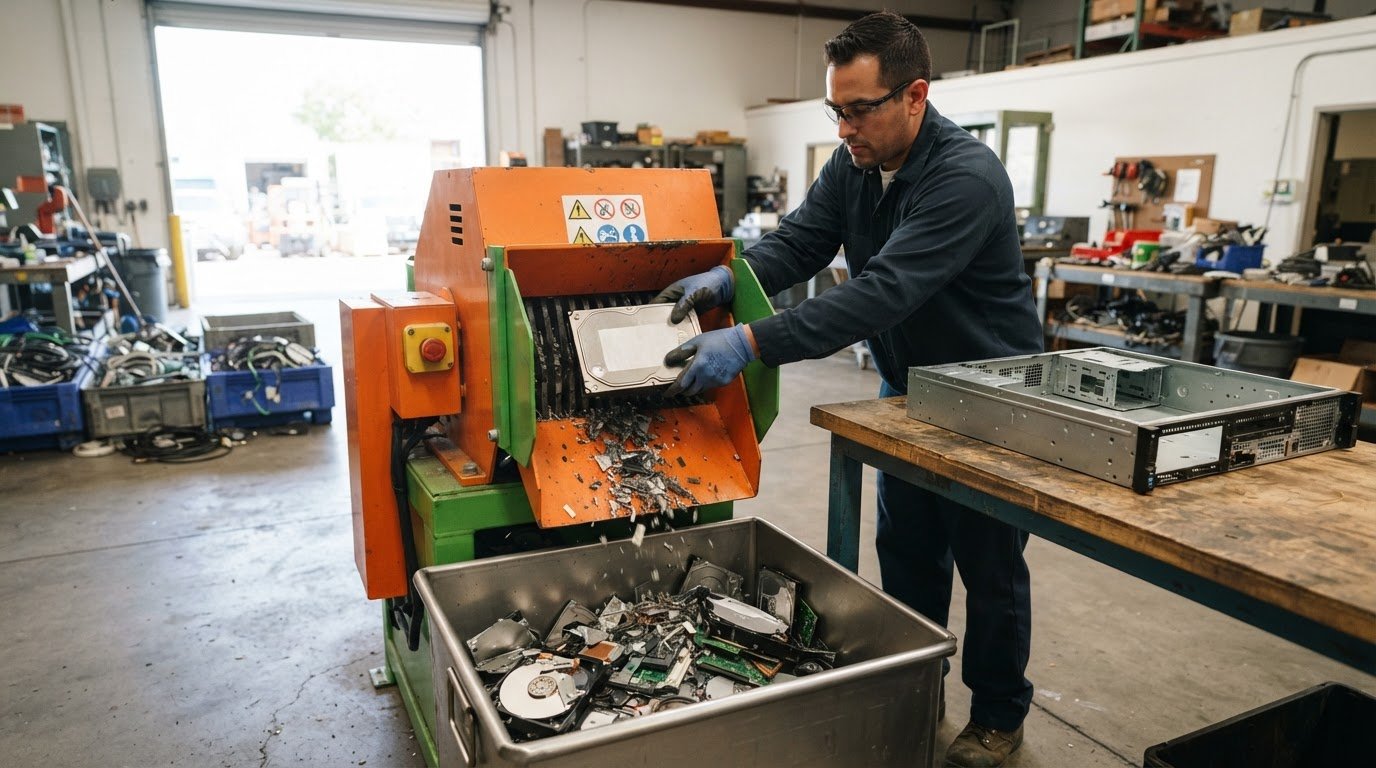
Physical destruction is appropriate when a storage device is damaged, highly sensitive, or unsuitable for safe reuse. It makes the media unusable, but also prevents that device from being redeployed or resold. Match the method to your organization’s data sensitivity and retention policies. For example, a functional laptop may be sanitized for reuse, while a failed drive may need physical destruction before its materials are recycled.
Destruction Certificates and Compliance Records
A Certificate of Destruction can document that equipment was destroyed in line with internal policies and applicable requirements. Useful records identify the assets covered, the method used, and completion of the work. Keep the certificate with inventory and disposition records so you can trace each device from retirement to its final outcome. Documentation matters for a single storage device as well as a larger equipment refresh.
For Irvine businesses, evaluate a provider’s stated certifications by their scope: which facility and destruction process they cover. Certification names alone don’t establish that every service or method is included. Ask for a clear record of whether the work uses sanitization, physical destruction, or both. Then match each device to redeployment, resale, donation, recycling, or destruction to maximize its remaining value without overlooking data risk.
Full-service IT asset decommissioning
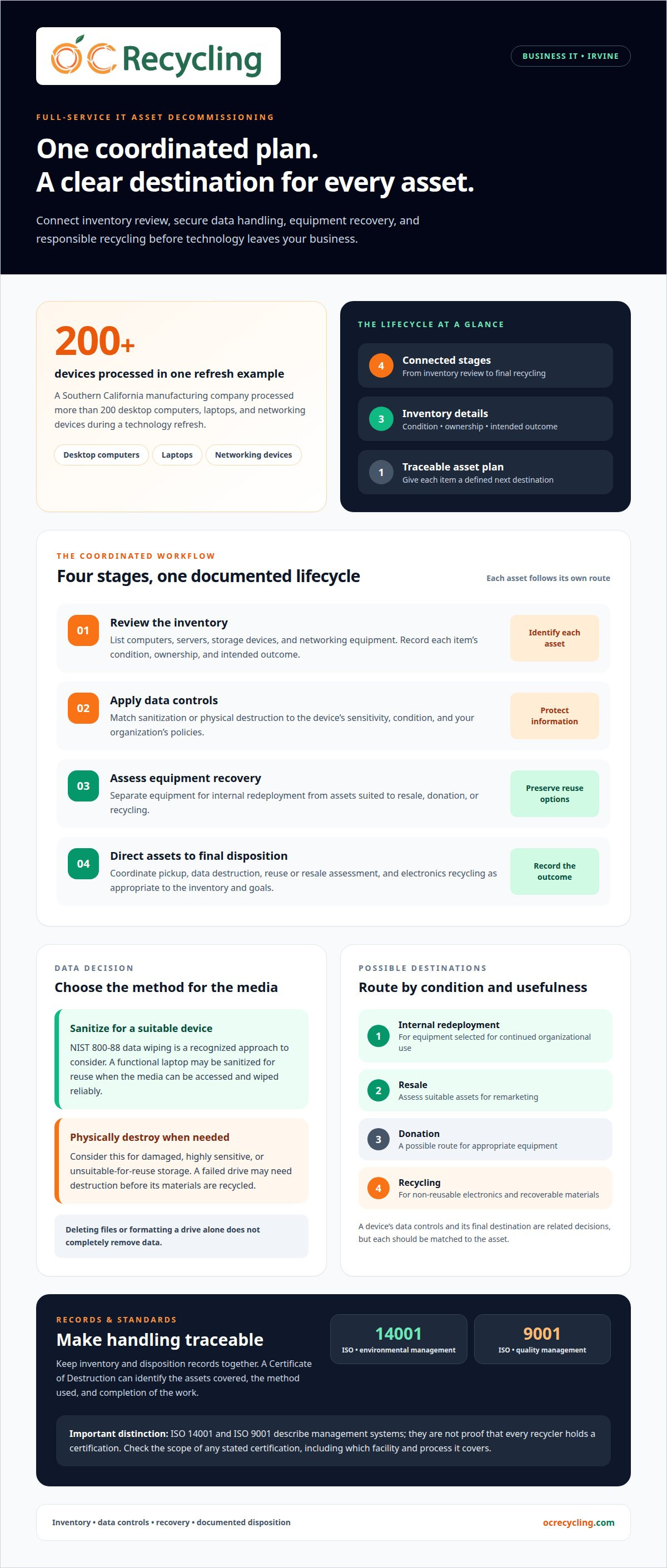
Full-service decommissioning connects inventory review, data handling, equipment recovery, and final recycling. IT asset disposition services in Irvine can coordinate these stages, giving each electronic asset a clear destination before it leaves your business.
A practical workflow starts with an inventory of computers, servers, storage devices, and networking equipment. Record each item’s condition, ownership, and intended outcome. Then separate equipment for internal redeployment from assets suited to resale, donation, or recycling. This creates a traceable lifecycle plan instead of treating every device as the same waste stream.
For a data center refresh, working servers may be assessed for reuse or resale, while damaged equipment is directed toward responsible material recovery after data controls. A Southern California manufacturing company processed more than 200 desktop computers, laptops, and networking devices during a technology refresh. This example shows why coordinated logistics matter: different asset types can require different handling and destinations.
Available services can include pickup logistics, data destruction, reuse or resale assessment, and electronics recycling. Which steps apply depends on the inventory, data sensitivity, equipment condition, and the organization’s disposition goals. Pickup planning should account for access, staging, and asset identification during removal. A clear inventory connects each item to its planned outcome.
Typical costs depend on the asset mix, data destruction needs, equipment condition, and transport requirements. Pricing is provided after a quote request; pickup or other services shouldn’t be assumed to be free. A well-planned IT asset disposition services in Irvine project can prioritize value recovery or focus on secure removal and environmentally responsible processing, depending on business needs.
For global enterprises, consistent inventory fields and disposition records can help align local projects with broader lifecycle policies. Irvine teams can use the same asset categories and outcome labels for office equipment and data center hardware. Plan the process from inventory and pickup through data handling and final destination before decommissioning begins.
Which IT asset disposition (ITAD) companies serve Irvine, California?
Irvine businesses need a provider whose services match their equipment, data risks, and disposition goals. A useful shortlist starts by separating full-service ITAD from electronics recycling alone. Full-service projects may coordinate inventory, pickup, data destruction, reuse or resale assessment, and recycling. Match the scope to the job: an office refresh with laptops differs from a data center retirement involving servers and storage devices.
Evaluate the provider’s handling practices, not just its service labels. Ask how it tracks assets from collection through final disposition, and what records document that chain. For sensitive drives, determine whether the provider offers sanitization, physical destruction, or both. A certificate of destruction can support internal governance records, while an equipment inventory helps connect each serial-numbered asset to its outcome.
Environmental credentials offer another comparison point. Recognized certifications to consider include R2v3, e-Stewards, and NAID AAA, which relate to responsible electronics recycling or data destruction. Sustainable Electronics Recycling International maintains the official R2 certified facility directory. Certification scope matters: distinguish a facility’s status from the particular service or process being considered for an Irvine project.
Build a practical comparison around your project requirements. List the equipment types, approximate quantities, data sensitivity, preferred pickup arrangements, and desired outcomes. Then assess whether each provider can explain its process for resale, reuse, recycling, and destruction. A provider suited to working computers may not be the right fit for damaged storage media requiring physical destruction.
For electronics that need recycling rather than reuse, explore electronics recycling options as part of your Irvine disposition plan. Keep data destruction decisions separate from material recovery decisions, and make sure each asset has an assigned route. That approach helps businesses compare service scope clearly, preserve traceability, and plan responsible handling without treating every retired device alike.
OC Recycling
OC Recycling helps Irvine businesses manage retired electronics through electronics recycling, data destruction, and certified product destruction. Turn to these services when equipment is no longer needed and requires responsible handling, or when products need destruction rather than continued use.
For an IT refresh, separate equipment requiring data destruction from electronics intended for recycling. This helps direct sensitive assets to the appropriate handling and keeps material recovery decisions clear. OC Recycling offers Electronics Recycling, Data Destruction, and Certified Product Destruction.
Tell OC Recycling what equipment you’re retiring and whether your priority is data destruction, recycling, or product destruction. Contact the team to discuss a practical next step for your business equipment.
Plan your next equipment transition with confidence
Your next technology refresh is a chance to plan disposition before equipment is ready to leave. IT asset disposition services in Irvine can help organize the transition around your equipment list, data-handling needs, and intended outcomes. Start by deciding which priorities matter most for this refresh.
OC Recycling offers Electronics Recycling, CRV Redemption, and Scrap Metal Purchasing. For businesses considering IT asset disposition services in Irvine, these services can help manage eligible materials as part of a broader equipment transition. OC Recycling recycles more types of material than any other local center. Share the material types and your planned outcomes to identify a practical next step.
Contact OC Recycling to discuss your ITAD needs and move your equipment transition forward with a clear plan. A thoughtful start can make the next refresh easier to manage.
Frequently Asked Questions
What is IT Asset Disposition (ITAD)?
IT asset disposition, or ITAD, is the managed process for equipment leaving business use. It covers decisions about each asset after retirement, including whether it remains useful, contains sensitive data, or can be recycled. For example, a company replacing office laptops can handle working devices differently from damaged drives while linking each outcome to its asset records.
How do ITAD solutions support sustainability goals?
ITAD can support sustainability by keeping usable equipment in service and directing end-of-life electronics toward material recovery. Businesses can set goals such as reducing unnecessary disposal, tracking equipment reused internally, and separating recyclable hardware from general waste. Reviewing outcomes during each technology refresh gives sustainability teams useful information for reporting progress and improving purchasing or replacement plans.
How should a business manage electronic waste disposal?
Separate business electronics from ordinary office waste and identify devices that may contain stored information. Assign an outcome to each group, such as continued use, data destruction, or recycling, then keep records linking equipment to its destination. Keep batteries and other items requiring special handling separate from standard electronics, and use local guidance to identify suitable routes for those materials.
What Are ITAD Services?
ITAD services are activities that help organizations retire technology in a controlled way. Depending on the project, they can include asset assessment, data handling, equipment recovery, recycling, and destruction. The right service mix depends on the equipment and the organization’s priorities. For instance, an office clearing storage devices may prioritize secure data handling, while a refresh with working computers may also consider reuse or resale.
What are the essential steps for a legal and ethical ITAD program?
Build the program around clear responsibilities and consistent asset records. Define who approves retirement, how sensitive information is handled, which outcomes are permitted, and what evidence must be retained. Apply those controls to each project, from replacing equipment in one department to a broader refresh. Review the process periodically to keep internal policies, data practices, and environmental goals aligned as business needs change.
What California and federal regulations apply to business electronics disposal in Irvine?
Applicable requirements depend on the business, the equipment, and the information stored on it. The California Privacy Protection Agency identifies CCPA as a privacy law relevant to ITAD; the European Union identifies GDPR as another relevant privacy law where its scope applies. For a specific disposal program, map data types and business obligations to applicable state and federal requirements, including any sector-specific rules.
