
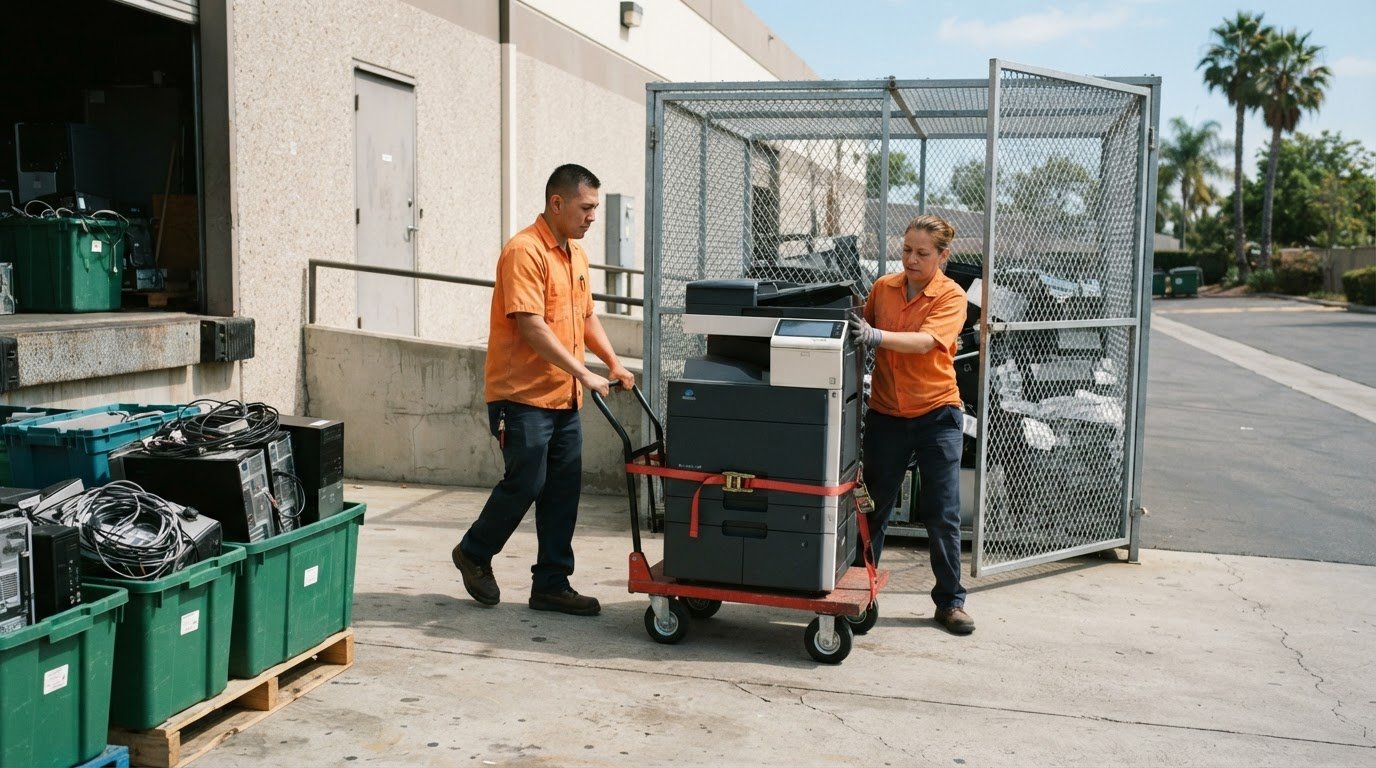
Old business electronics don’t belong in regular trash in Huntington Beach. A corporate e-waste recycling program in Huntington Beach gives businesses a responsible way to retire computers, televisions, copiers, and other devices through recycling instead of ordinary disposal.
Clearing out outdated equipment is easier when you plan for both the devices and any sensitive business data they contain. This guide explains how commercial electronics recycling works, what to prepare for a project, and how destruction certificates and other records can document the work. It also covers equipment inventories, data destruction, and practical ways to match the service to your business’s needs.
Key Takeaways
- Understand why retired business electronics need a different route from ordinary trash and how commercial recycling fits into waste planning.
- Learn which project details shape pickup arrangements and costs, without relying on a one-size-fits-all threshold.
- See how certified recycling can support responsible processing and what to consider when devices may contain sensitive data.
- Find out what destruction records can help document the process and when electronics recycling or certified product destruction may be the right next step.
What is e-waste recycling in Huntington Beach?
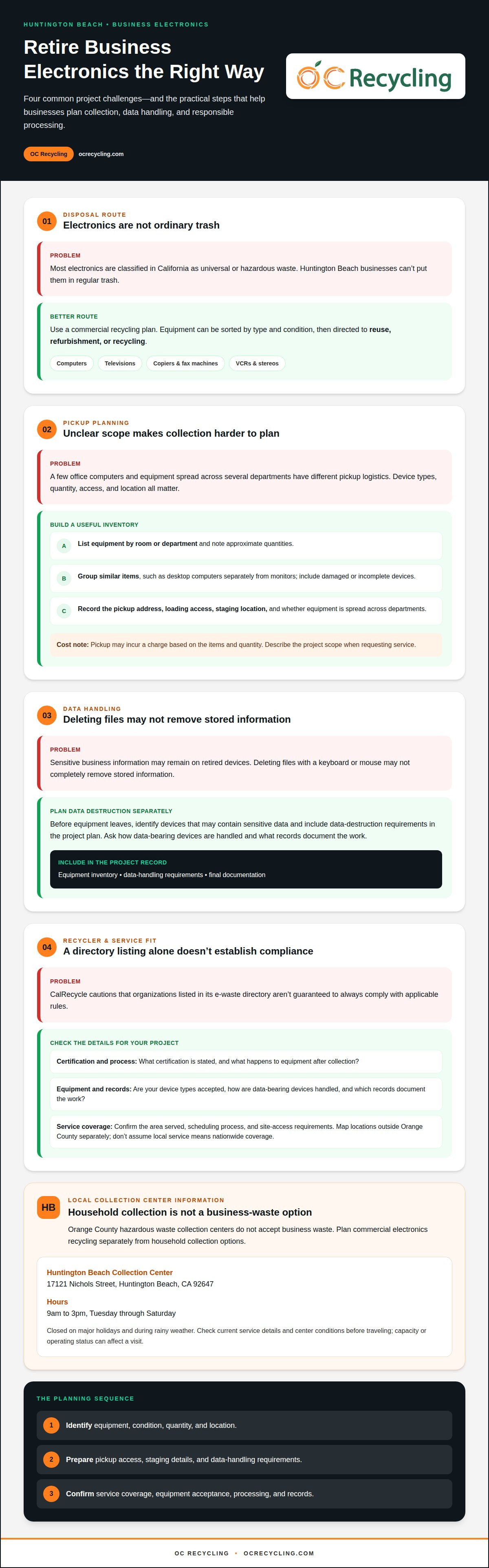
E-waste recycling directs retired electronics toward reuse, refurbishment, or material recovery rather than ordinary disposal. Common examples include computers, televisions, VCRs, stereos, copiers, and fax machines. To plan a corporate e-waste recycling program in Huntington Beach, first identify which equipment is being retired and where it is located. Grouping office computers separately from break-room televisions or meeting-room equipment helps define the project and its collection needs.
Commercial recycling plans should separate electronics from other workplace materials. Cardboard, paper, and metal follow different recycling streams, while electronics need processing suited to their components. When planning a collection, list the equipment quantity, loading access, and whether devices are spread across departments. These details help shape the logistics for your site.
IT asset disposition, or ITAD, is the organized retirement of business technology. It can include tracking equipment, deciding whether items may be reused or refurbished, and directing the rest to recycling. For example, a company replacing office computers can record each device’s department and retirement status. Data handling and final documentation can also be part of the organization’s disposition process.
Service coverage matters when a business has more than one location. A Huntington Beach site may need a local pickup plan, while a company with locations outside Orange County should map each site separately. Nationwide coverage is a distinct planning requirement, not something to assume from a local service arrangement. Confirm the area served, accepted equipment, scheduling process, and any site-access requirements for the specific project.
The Huntington Beach Collection Center is at 17121 Nichols Street, Huntington Beach, CA 92647, and operates from 9am to 3pm Tuesday through Saturday. It closes on major holidays and during rainy weather. Orange County hazardous waste collection centers do not accept business waste. Before traveling, check current service details and center conditions, since capacity or operating status can affect a visit. Businesses should plan commercial electronics recycling separately from household collection options.
Can a Huntington Beach business throw old electronics in the trash?
No. California classifies most electronics as universal or hazardous waste, so Huntington Beach businesses can’t put them in regular trash. Professional recyclers sort equipment by type and condition, then direct it toward reuse, refurbishment, or recycling.
Business Electronics Pickup Access
Commercial pickup planning depends on equipment volume, device types, loading access, and collection location. A small office retiring a few computers has different logistics from a company clearing equipment across several departments. Pickup may incur a charge based on the items and quantity, so describe the project scope when requesting service.
Organize a pickup inventory by room or department, noting approximate quantities and larger items that could affect loading. Separating desktop computers from monitors, for example, makes the collection easier to describe. Huntington Beach businesses should also note building access and where equipment can be staged.
Accepted Business Electronics
Business electronics may include computers, televisions, VCRs, stereos, copiers, and fax machines. A company may also have monitors and devices containing batteries among its retired technology. Grouping similar items makes it easier to describe the materials and plan their handling.
Before arranging collection, identify equipment types and separate electronics from cardboard, paper, and metal, which follow different recycling streams. Include damaged or incomplete devices in the inventory because condition can affect sorting for reuse, refurbishment, or material recovery.
Preparing Electronics for Recycling
Recyclers assess computers, monitors, batteries, and other devices, then sort them for appropriate processing. Equipment suitable for continued use may be reused or refurbished; other items can be directed to recycling. The route depends on the device type and condition.
Prepare an equipment inventory, pickup address, site-access details, and any handling or data-destruction requirements. Before equipment leaves, remove sensitive information from device memory. Deleting files with a keyboard or mouse may not completely remove stored information, so plan data destruction as a distinct part of equipment retirement.
Clear inventory and access details help prepare a practical collection plan. Businesses arranging a local pickup can plan a business electronics pickup around their equipment and site needs.
Certified electronics recycling
Certified electronics recycling provides a documented route for retired equipment. In California, businesses should distinguish recycling credentials from the specific handling and records their project requires.
Certified Recycling Options
Review the recycler’s stated certification and process. Ask what happens to equipment after collection, how data-bearing devices are handled, and which records document the work. These details help you assess whether the process meets your organization’s needs. CalRecycle cautions that organizations listed in its e-waste directory aren’t guaranteed to always comply with applicable rules, so directory presence alone doesn’t establish compliance.
Eligible Electronics and Categories
Common e-waste includes computers, televisions, VCRs, stereos, copiers, and fax machines. Depending on their condition and type, electronics may be reused, refurbished, or recycled. Group devices by category in your business inventory and flag equipment that may need data destruction. This gives the recycler a clearer picture of the materials and processing involved.
California’s Electronic Waste Recycling Act was established in 2003. That state framework makes responsible electronics disposal relevant to business equipment retirement. A commercial collection plan should keep electronics separate from ordinary trash and identify the equipment being transferred. Computers with stored business information need particular attention before donation or recycling.
CalRecycle’s e-waste directory can be a starting point, but it isn’t a compliance guarantee. CalRecycle advises contacting listed organizations to confirm services, operating hours, and potential charges before traveling with electronics. For businesses planning a drop-off, this helps clarify accepted materials and arrangements.
Community collection events can offer a local option, but an event’s date and scope matter. Huntington Beach held a historical e-waste collection at Central Library, 7111 Talbert Avenue, on January 23, 2016, from 9 AM to 4 PM. That past event doesn’t establish a current schedule or free service. For any collection event, confirm its current details and whether business electronics are accepted.
Certificates of Destruction and documentation
A Certificate of Destruction records that designated equipment or data was destroyed. A recycling record, by contrast, documents equipment or materials entering a recycling process. A business retiring laptops, for example, may need evidence of data destruction as well as a record of the devices transferred. Treat these as separate documentation needs, even when they relate to the same project.
For a useful audit trail, organize records around the equipment and work performed. An inventory can list device type, asset tag, department, and disposition status. A destruction document can identify the service, completion date, and equipment covered, connecting the certificate to internal asset records. This is especially helpful when a project includes several laptop models or departments.
Keep supporting records together, including the original inventory, pickup documentation, and any destruction certificate. If a record covers a batch, retain the batch description and matching asset list. For an Orange County office, this makes it easier to trace equipment from the internal register to its documented disposition. A general recycling receipt does not, by itself, confirm data destruction.
Before arranging service, decide whether the priority is physical product destruction, data destruction, or both. Certified Product Destruction and Data Destruction address different needs: one concerns the product, while the other concerns information stored on devices. For laptops containing business data, specify the intended outcome in the project scope. File the resulting documentation with the matching asset records, not just a general equipment count.
Clear documentation starts with a defined scope and an inventory that identifies the devices involved. For certified product destruction and data destruction, organize retired equipment records around the outcome your business needs documented.
OC Recycling
OC Recycling helps businesses manage retired electronics through Electronics Recycling and Certified Product Destruction. Use these services to move outdated devices out of regular waste streams or to destroy products as part of an equipment retirement project.
For equipment containing sensitive information, Data Destruction addresses information stored on devices, while Certified Product Destruction concerns the products themselves. Defining the outcome your business needs clarifies the project scope. Organize an inventory by device type and location to describe the equipment involved.
OC Recycling also offers Scrap Metal Purchasing and CRV Redemption for other eligible materials your business handles. Contact OC Recycling to discuss your business electronics recycling needs.
Make Electronics Retirement Part of Your Next Asset Plan
Make technology retirement a repeatable process rather than a one-off cleanup. Assign someone to coordinate the asset inventory, data-handling needs, and records your business wants to retain. This preparation helps keep future equipment transitions organized and easier to document.
A corporate e-waste recycling program in Huntington Beach can connect device retirement with a broader materials plan. OC Recycling provides Electronics Recycling for business electronics, along with CRV Redemption and Scrap Metal Purchasing for other recyclable materials. Matching each material to the appropriate service keeps the project scope clear.
As you plan your next equipment refresh, define which devices are leaving service and what documentation your organization needs. Then take the next step with a local recycling partner. Contact OC Recycling to discuss e-waste and plan a responsible path for your retired electronics.
Frequently Asked Questions
What corporate e-waste recycling services are available in Huntington Beach, California?
OC Recycling provides commercial electronics recycling and certified product destruction for business equipment. Its local service area includes Huntington Beach, Santa Ana, Anaheim, Costa Mesa, Orange, Irvine, Garden Grove, Westminster, Fountain Valley, and Tustin. Businesses planning a technology refresh can coordinate equipment retirement with other recyclable materials. Choose the service according to whether devices need recycling, product destruction, or separate data destruction.
Which Huntington Beach e-waste recyclers accept business electronics and what items do they take?
OC Recycling accepts business electronics through its commercial electronics recycling service, including computers, monitors, televisions, and other electronic devices. For projects involving different equipment types, an inventory helps describe the collection and identify items that need product or data destruction. Device type and condition inform how equipment is sorted for reuse, refurbishment, or recycling.
What are the pickup, drop-off, and minimum-volume requirements for business e-waste in Huntington Beach?
OC Recycling offers business pickup, and its Huntington Beach location is at 7632 Slater Ave, Huntington Beach, CA 92647. Pickup charges may depend on the materials and quantity. To plan a collection, provide the business address, equipment types, approximate quantities, and site-access details. This gives the project a practical scope; no single minimum-volume threshold applies to every collection arrangement.
How much does corporate e-waste recycling cost in Huntington Beach?
Corporate electronics recycling costs depend on the material type, quantity, and whether pickup or additional logistics are needed. Pickup may incur a charge based on the items and quantity. OC Recycling does not publish one price for every business project. Request a quote based on your equipment and required services.
Do local e-waste recyclers provide secure data destruction and certificates of destruction?
OC Recycling offers Data Destruction and Certified Product Destruction, and its certified destruction service provides certificates of destruction. These services address related but distinct needs: data destruction concerns information stored on devices, while product destruction concerns the items themselves. When retiring laptops, identify the outcome your business needs and keep the resulting documentation with the equipment records.
What California rules apply to businesses disposing of electronic waste and universal waste?
California’s Electronic Waste Recycling Act was established in 2003. Most electronics are classified as universal or hazardous waste, so Huntington Beach businesses can’t put them in regular trash. Businesses should keep electronic equipment out of ordinary waste and arrange an appropriate recycling route. This applies to workplace devices being retired, not only to equipment generated during a large technology upgrade.
