
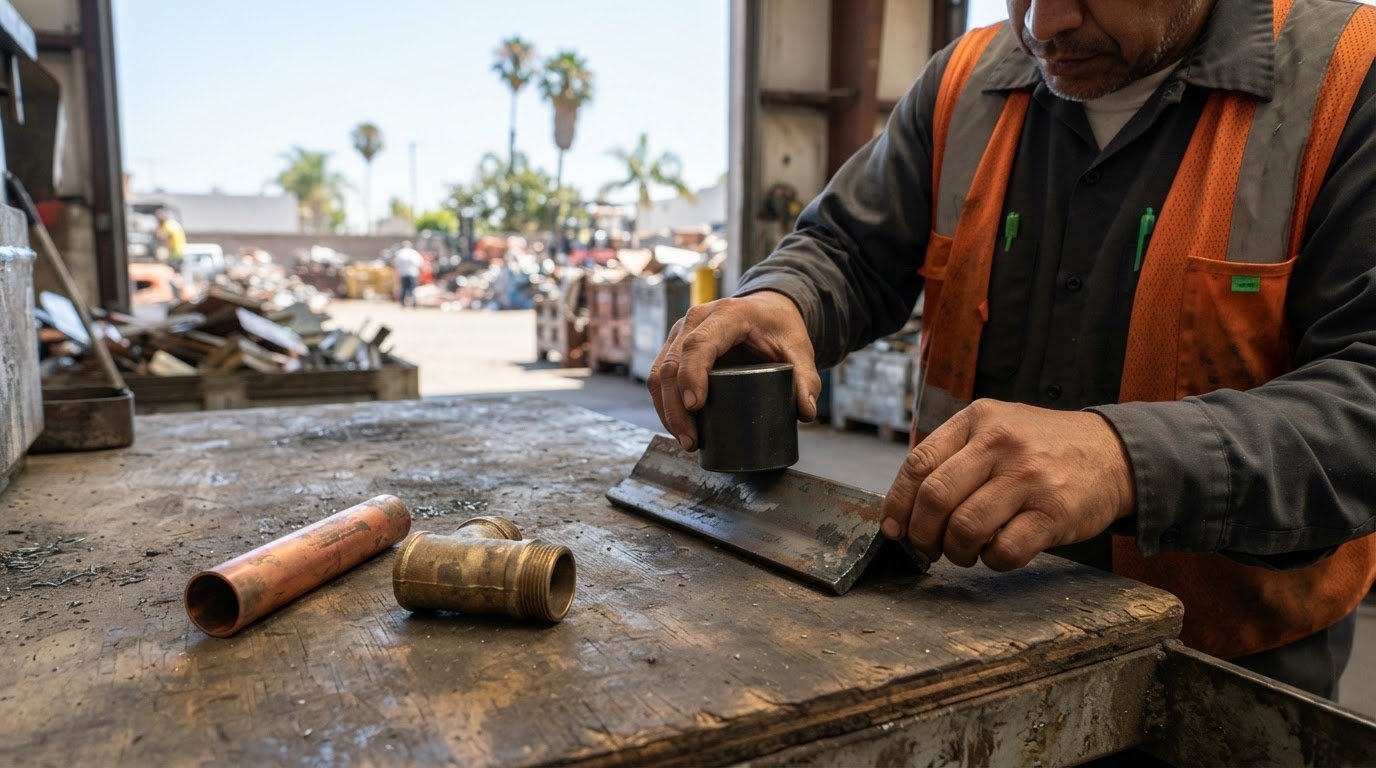
A metal’s appearance can mislead you, but its response to a magnet offers a useful first clue. Scrap metal includes discarded ferrous and non-ferrous metal from manufacturing and consumer products. Ferrous metals contain iron; non-ferrous metals don’t. Knowing how to identify different types of scrap metal starts with sorting those groups, then looking at color, weight, and sound.
It’s easy to mistake brass for copper or assume every silvery metal is steel. A magnet helps distinguish magnetic from non-magnetic metals, while color and sound provide additional clues. This guide explains what counts as scrap metal and how to recognize common types, including brass, copper, steel, and aluminum, so you can sort materials more confidently.
Key Takeaways
- Use a magnet to sort iron-based ferrous metals from non-ferrous metals, then consider corrosion and appearance for added clues.
- Compare a metal’s weight and finish to distinguish lightweight aluminum from heavier stainless steel.
- Look for brass’s yellow sheen and clear ring, while copper’s reddish-brown color and muted sound offer different clues.
- Once you’ve sorted your scrap, OC Recycling’s scrap metal purchasing can help you take the next step toward recycling it.
How to Differ Ferrous And Non-ferrous Metals?
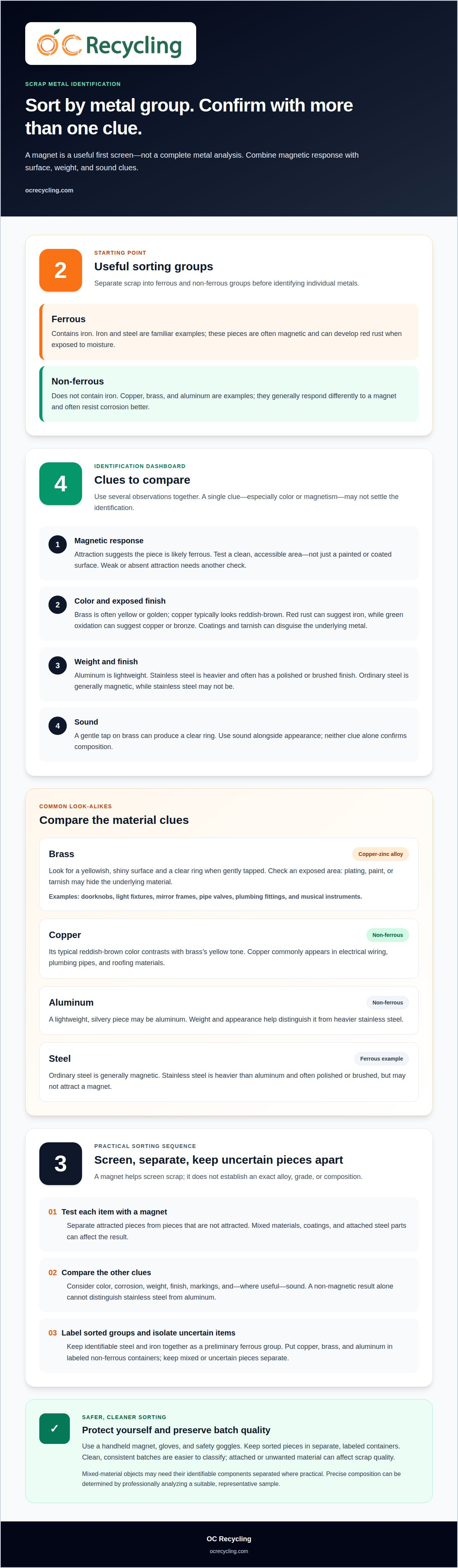
Sort scrap into ferrous and non-ferrous groups by testing it with a magnet and inspecting its surface. Use a handheld magnet, gloves, and safety goggles. Keep sorted pieces in separate, labeled containers to prevent mix-ups and protect your hands from sharp edges.
Ferrous and Non-Ferrous Metal Categories
Ferrous metals contain iron; non-ferrous metals do not. This distinction helps you sort common scrap into two useful groups. Iron and steel are familiar ferrous examples, while copper, brass, and aluminum are non-ferrous. Jewelry can also contain non-ferrous metals such as silver or gold. Sorting by category keeps materials organized for recycling and helps you recognize what each item may contain.
Key Differences Between Metal Types
Ferrous and non-ferrous metals differ in composition, magnetic response, and typical corrosion behavior. Iron-based ferrous scrap is often magnetic and can develop red rust when exposed to moisture. Non-ferrous metals such as copper and brass generally resist corrosion better and respond differently to a magnet. Green oxidation can suggest copper or bronze, while red rust can suggest iron. These clues help distinguish similar-looking pieces, but color alone cannot identify every alloy.
Magnet Testing for Ferrous Metals
A magnet offers a quick first test: if it attracts a piece, the metal is likely ferrous. Test a clean, accessible area rather than relying on a painted or coated surface. The National Institute of Standards and Technology notes that in-line magnets can separate ferrous scrap from shredded material because many iron-based alloys are ferromagnetic. The U.S. Government Publishing Office also describes magnetic separators for iron and steel scrap. Weak or absent attraction calls for another check, not an automatic classification.
For a practical sorting sequence, hold a magnet near each item, then separate attracted pieces from those that are not attracted. Keep steel and iron together as a preliminary ferrous group, and put copper, brass, and aluminum in labeled non-ferrous containers. A magnet is a screening tool, not a complete metal analysis. Oxidation, coatings, and mixed-material objects can complicate identification, so keep uncertain pieces separate rather than mixing them into a sorted batch.
How to identify different metals?
Scrap metal is discarded metal from products, buildings, or manufacturing that can be collected for recycling. Examples include a damaged steel shelf, copper pipe removed during a Santa Ana renovation, or aluminum window frames. Some items combine metal with plastic or wood. Identify their main materials and keep mixed-material objects separate while sorting.
How Is Scrap Quality Assessed?
Scrap quality is assessed by metal type, dimensions, composition, and attached or unwanted material. Grading standards may set limits for metallic content, residual materials, and particular impurities. A clean, consistent batch is easier to classify than a mixed load. Precise composition can be determined by professionally analyzing a suitable, representative sample.
How can you identify ferrous versus non-ferrous scrap metal?
A magnet can screen scrap, while an item’s construction and surface provide additional clues. Iron and steel parts often attract magnets; copper, brass, and aluminum generally do not. A steel bracket attached to a copper pipe can complicate a quick test. Separate identifiable components where practical, and keep mixed pieces apart from clearly sorted metal.
How does a magnet test help identify scrap metal, and what are its limitations?
A magnet test shows whether a metal surface attracts a magnet, helping screen for iron-based scrap. It does not establish an exact alloy, grade, or composition. Stainless steel is non-magnetic in most cases, and coatings or attached steel parts can affect the result. Treat magnetism as one useful clue, not a complete material assessment.
How to identify common scrap metals by color, weight, markings, and appearance
To identify different types of scrap metal, compare weight, finish, markings, and the object’s likely use rather than relying on one clue. A lightweight, silvery piece may be aluminum; a yellow surface may suggest brass. Stamps or recycling codes can offer another lead, but may describe only one alloy or component. Household appliances, for example, can contain different materials.
How to distinguish aluminum, stainless steel, and ordinary steel scrap
Learning how to identify different types of scrap metal includes comparing weight, finish, and magnetic response. Aluminum is lightweight, while stainless steel is heavier and often has a polished or brushed finish. Ordinary steel is generally magnetic, but stainless steel may not attract a magnet. Since a non-magnetic result can’t distinguish stainless steel from aluminum, consider appearance and weight together.
Identifying brass by color and sound
Brass is a yellowish copper-zinc alloy, often recognized by its shiny, golden color. A gentle tap with a metal object can produce a clear ring, offering another clue alongside appearance. Check an exposed area, since plating, paint, or tarnish may disguise the underlying metal. Color and sound work best together; neither alone confirms an item’s composition.
Household brass may appear in doorknobs, light fixtures, mirror frames, and decorative fittings. Also look at pipe valves, plumbing fittings, musical instruments, metal bed frames, and brass-plated crockery. These examples span home hardware, décor, and construction, so brass can appear in many shapes. A yellow surface on crockery may be plating rather than solid brass, an important distinction when sorting.
Compare an exposed surface with copper: copper typically looks reddish-brown, while brass looks yellow. Copper commonly appears in electrical wiring, plumbing pipes, and roofing materials; brass is often used for fixtures and fittings. Stainless steel may also look shiny, but its polished or brushed finish differs from brass’s characteristic yellow tone. Coatings can complicate visual identification, so inspect an uncoated edge if one is safely accessible.
Bronze is another copper alloy, and its surface can develop green oxidation. This green patina may help distinguish it from bright yellow brass, but oxidation can alter the color and make visual clues less clear. For a simple comparison, examine the surface, note whether it looks yellow or reddish-brown, then gently tap the object and listen for brass’s clear ring. Keep uncertain pieces separate instead of assuming every yellow household item is brass.
Identifying copper by color and sound
Copper usually looks reddish-brown, distinguishing it from yellow brass and silvery metals. A gentle tap with another metal object typically produces a muted sound. Use both clues together: tarnish, coatings, or oxidation can change a surface’s appearance. Green oxidation can indicate copper, but it can also occur on bronze. Examine an exposed area and treat color and sound as clues, not proof of an exact alloy.
Household copper commonly appears in plumbing pipes, electrical wiring, kitchen sinks, pots, appliances, and decorative pieces. Building cladding and roofing materials can also contain copper. Its effective electrical conductivity makes it common in wiring, while plumbing systems are another recognizable source. Copper may also appear in printed circuit boards and components. These examples can help you spot possible copper scrap from a household repair or building project.
Insulated copper wire has a plastic covering, so the metal may not be visible. A wire stripper can remove the insulation; a utility knife is another method described for preparing wire before recycling. Work carefully and cut away from your hands, since the exposed conductor and tool edges can cause injury. Once exposed, copper’s reddish-brown surface can help distinguish it from other wiring materials. Do not assume every wire contains copper based only on its insulation.
Copper is a valuable recyclable material, but its appearance and form can differ across household plumbing, electrical wiring, and roofing. Keep insulated wire separate from bare copper so the materials remain organized. For identified copper scrap, you can sell your copper scrap through scrap metal purchasing. This provides a practical next step after sorting, whether your material comes from wiring, pipes, or construction offcuts.
OC Recycling: Scrap Metal Purchasing
OC Recycling purchases scrap metal, giving you a practical next step after separating ferrous metals from non-ferrous materials such as copper and brass. If you’ve sorted scrap from a household project, renovation, or manufacturing work, clear categories help keep materials organized for recycling.
Bring your identified scrap metal to OC Recycling for purchasing. If you also have unwanted electronics, Electronics Recycling provides a separate route for those items. Keep metals and electronics distinct so each material can be handled through the appropriate service.
Contact OC Recycling to discuss your scrap metal.
Put Your Sorted Scrap to Work
Identifying materials is a useful first step; deciding what to do with them turns sorting into action. As you learn to identify different types of scrap metal, keep track of what you’ve separated and consider the right recycling route for each item. OC Recycling offers Scrap Metal Purchasing for scrap metal, CRV Redemption for eligible CRV containers, and Electronics Recycling for unwanted electronics. Keeping these categories distinct makes the next step clearer and helps direct each item to the appropriate recycling service.
If you have scrap metal ready to recycle, or questions about which service fits your materials, contact OC Recycling to discuss your next step. You can reach out with the material types you’ve sorted and move forward with a clearer plan. Every well-sorted batch is a practical opportunity to keep useful materials in circulation. Make your next move with confidence.
Frequently Asked Questions
What Is Considered Scrap Metal?
Scrap metal is discarded metal from products, buildings, or manufacturing that can be collected for recycling. Examples include a damaged steel shelf, copper pipe removed during a Santa Ana renovation, or aluminum window frames. An item may combine metal with plastic, wood, or other materials. Consider whether it is mostly metal and keep mixed-material objects separate while sorting.
How to identify lead, zinc, and other less common scrap metals
Lead is relatively heavy and highly toxic, so protect yourself and your surroundings when handling it. Brass is a yellowish copper-zinc alloy; titanium is durable and corrosion-resistant, while carbide can be found in tool and drill bits.
What metal stamps, alloys, and recycling codes indicate scrap metal type?
Stamps and recycling codes can offer a clue, but may describe only one alloy or component. Brass is a copper-zinc alloy, and its yellow color can help identify it. Inspect the material rather than relying on a marking alone.
