
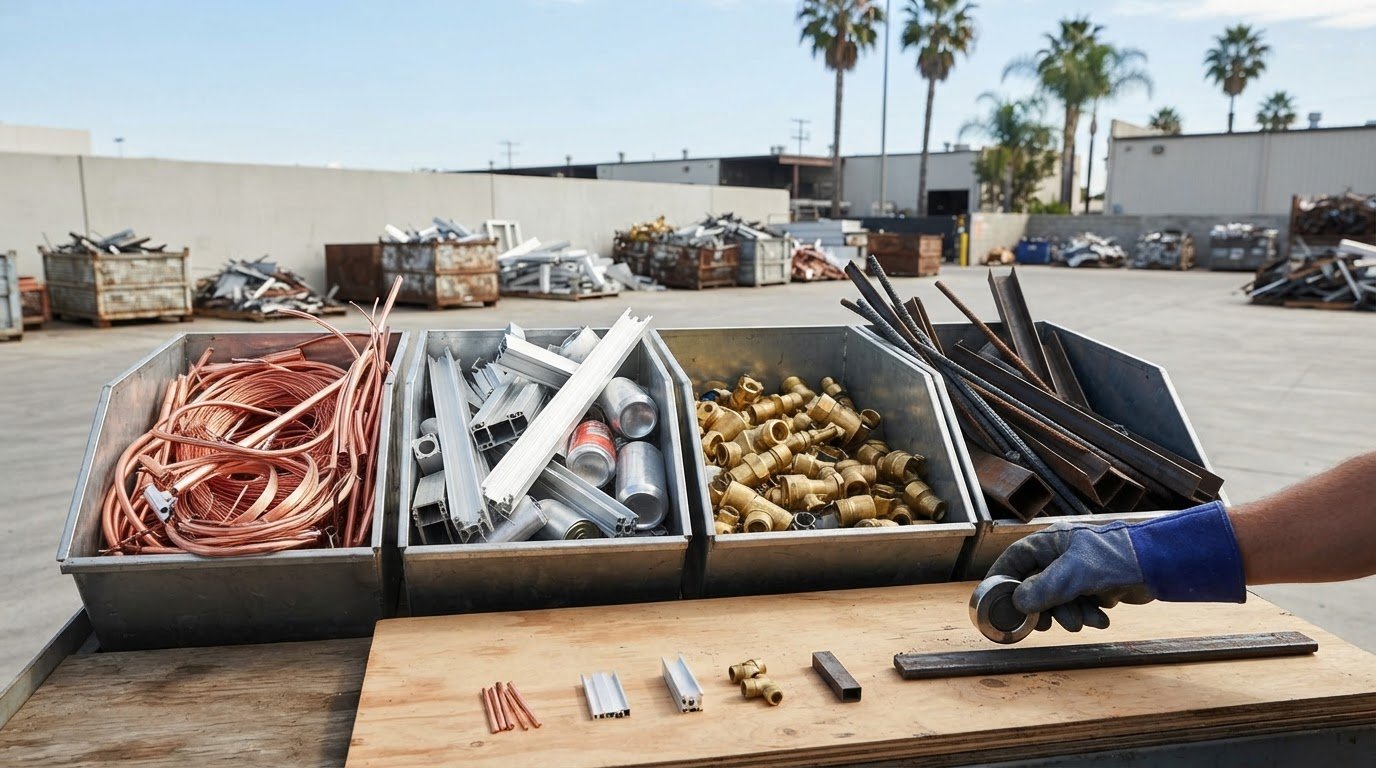
To maximize scrap metal profits, sort copper, aluminum, brass, and steel into separate groups before selling. Use a magnet to distinguish ferrous metals such as steel from non-ferrous metals such as copper, aluminum, and brass. Keep materials clean and remove unnecessary plastic, rubber, and other attachments so each metal can be assessed by type and condition.
It makes sense to want a better return for the time spent collecting and hauling scrap. Mixed or dirty materials can be harder to process, while careful sorting helps you identify what you have and present each metal clearly.
This guide covers practical ways to identify common scrap metals, separate them by material and condition, and find useful sources at home or work. You’ll also learn how to prepare a load for transport and what can affect its value, so you can make an informed decision before heading to a scrap yard.
Key Takeaways
- Learn the distinguishing traits of copper, aluminum, brass, and steel so you can keep each metal in a suitable category.
- Look for recoverable scrap in household items, old tools, and equipment, then clean and prepare materials to reduce unnecessary processing.
- Organize your load and understand how metal type, weight, and condition influence its value before visiting a scrap yard.
- Use a local scrap yard for scrap metal purchasing, and keep electronics separate for appropriate recycling.
1. Identifying copper, aluminum, brass, and steel
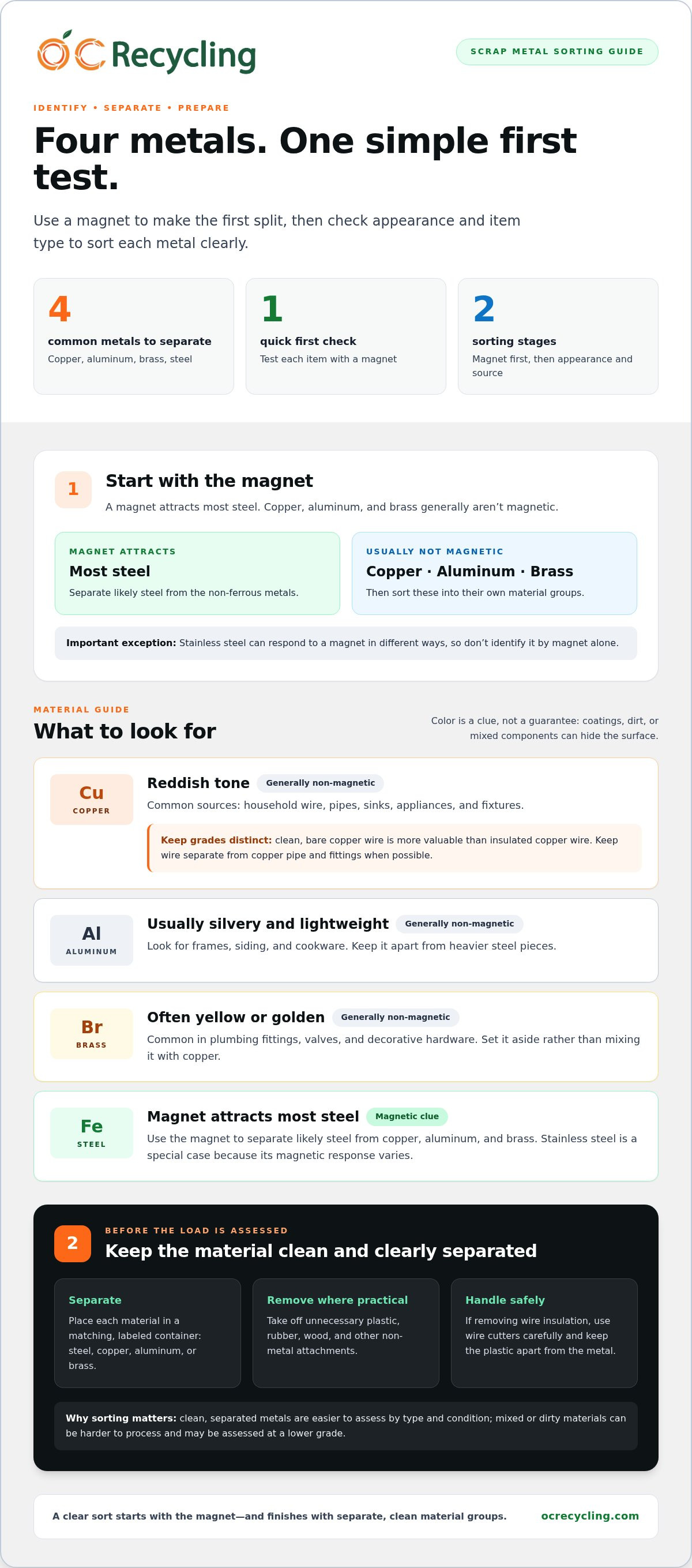
Identify scrap grades by combining a magnet test with appearance and the item’s source. A magnet attracts most steel, while copper, aluminum, and brass generally aren’t magnetic. First separate magnetic steel from non-ferrous metals, then sort the non-ferrous metals into individual groups. Color can help: copper has a reddish tone, aluminum is usually silvery and lightweight, and brass often looks yellow or golden. Don’t rely on color alone when coatings, dirt, or mixed components obscure the surface.
Look for copper in household wire, pipes, sinks, appliances, and fixtures. Copper scrap has different grades, so keep clean, bare copper wire separate from insulated wire and other copper pieces. Bare, clean copper wire is more valuable than insulated copper wire. If you can remove insulation safely, use wire cutters carefully and keep the plastic apart from the metal. Keep wire separate from copper pipe and fittings when possible.
For aluminum, look for lightweight items such as frames, siding, and cookware, and separate them from heavier steel pieces. Brass is common in plumbing fittings, valves, and decorative hardware, so set it aside rather than mixing it with copper. A magnet helps distinguish steel from these non-magnetic metals, but use appearance and item type as additional clues. Stainless steel can be tricky to identify because its magnetic response varies, so don’t rely on a magnet alone.
Keep each material clean and remove attached plastic, rubber, or wood where practical. Non-metal material can reduce a load’s grade, while separated metals are easier to assess by type and condition. Make sorting simple: test each item with a magnet, identify its likely metal, and place it in a matching container. Label containers “steel,” “copper,” “aluminum,” and “brass.” Clear separation helps prevent a mixed-metal load from being assessed at a lower grade.
2. Where Do You Find Scrap Metal to Sell?
Clean old tools before taking them to a scrap yard. Remove loose dirt, grease, and attached non-metal parts, then group similar tools together. A wire brush or rag can clear surface grime, but avoid spending time polishing metal that remains attached to wood or plastic. Buyers assess metal type, weight, and condition, so clean, well-separated items are easier to evaluate.
Rules for selling copper, catalytic converters, and other regulated scrap depend on the material and jurisdiction. Follow the applicable requirements for ownership, documentation, and sale, and keep records showing where your materials came from.
Your net proceeds depend on metal type, weight, condition, transportation, labor, preparation, and any applicable tax obligations. Track sale receipts and costs to assess the return from each load.
Scrap prices change with supply and demand, so selling when market prices are high can improve your return. Compare the current value of each sorted material with the time and transport involved, then decide whether to sell or hold the load.
For larger tools and equipment, plan the move before loading: estimate the weight, secure loose parts, and keep different metals separated. A clean, organized load gives buyers a clearer view of its contents and reduces avoidable handling during evaluation.
Finding and contacting a local scrap yard
Compare local scrap yards by the metals they accept and how they price each category. Call ahead with a short inventory, such as steel tools, copper pipe, or aluminum parts, and ask about unloading procedures. Some yards expect sellers to unload metal onto a scale; others may provide unloading help. Knowing the process helps you prepare your vehicle and load.
Scrap yard prices depend on metal type, weight, and condition. Yards weigh the material and assess its grade, so a clean, sorted load is easier to evaluate than mixed scrap. Prices also change with supply and demand. Compare current offers for each metal category, then weigh the quoted value against travel and handling.
Requirements for seller identification, permits, and documentation vary by jurisdiction and scrap material. Keep proof of ownership and relevant records with your load, and follow the rules where you’re selling, especially for controlled or theft-prone materials.
Before loading, remove non-metal contaminants such as plastic, rubber, and wood where practical. Items with too much attached material may be downgraded, so check appliances, tools, and equipment for removable non-metal parts. Don’t dismantle an item if doing so creates a safety risk or damages the metal you plan to sell.
For ongoing collections, use on-site containers to keep materials separate from the start. Label bins for steel, copper, aluminum, or brass, and place small pieces in sturdy containers to prevent spills during handling. Contain sharp edges and wear gloves and safety glasses while sorting. An organized collection area also makes mixed materials easier to spot before transport.
Secure the load before driving, keeping heavier pieces stable and loose scrap contained. For bulky equipment, plan how it will be lifted and unloaded instead of improvising at the yard. These steps reduce handling problems and help preserve a valuable, clearly sorted load.
4. Sorting scrap metals by material
Keep each metal in its own labeled container because scrap yards assess material type, weight, and condition. Separate copper, aluminum, brass, steel, and stainless steel rather than combining them in a mixed load. Mixed scrap may be paid at its lowest grade, while clearly separated materials are easier to evaluate and route for recycling.
Sort by both material and condition. Keep clean copper apart from coated or attached components, and separate steel from stainless steel when you can identify them. Stainless steel is a distinct category, not another name for ordinary steel. If a magnet attracts an item, set it aside for closer identification instead of assuming every magnetic piece is the same grade.
Remove non-metal parts that can be detached safely, including rubber grips, plastic housings, and wooden handles. For example, separate a shovel’s metal head from its wooden handle before sorting the metal. Check for sticks, cardboard, and other debris mixed into loose scrap. These add no recyclable metal and can complicate handling. Don’t dismantle equipment if doing so creates a safety risk.
Use sturdy, clearly marked bins or separate piles for each material. Keep small fittings together, but don’t mix them with larger pieces made of different metals. Set unusual items aside until you can identify their material, rather than contaminating a known grade. This simple system keeps each load consistent from collection through weighing.
Sorted scrap is generally more profitable than a mixed load because buyers can assess each metal grade separately, while mixed material may receive the lowest-grade price. The key is to separate metals, remove attached contaminants, and preserve clear categories through transport.
Have sorted metal ready to sell? Use scrap metal purchasing for your prepared materials.
OC Recycling: CRV Redemption
OC Recycling offers CRV Redemption for beverage containers and Scrap Metal Purchasing for sorted metal. After separating copper, aluminum, brass, and steel, bring your prepared scrap to OC Recycling for purchase. Keep electronics apart from metal loads. OC Recycling also offers Electronics Recycling for unwanted devices.
Choose the service that fits the material: CRV containers go through CRV Redemption, while sorted scrap metal is suited to Scrap Metal Purchasing. Use Electronics Recycling for unwanted devices rather than adding them to a metal pile. This keeps each material in the appropriate recycling stream.
For details about these services, contact OC Recycling or visit ocrecycling.com.
Build a Scrap-Sorting Routine That Gets Better Over Time
A practical way to learn how to maximize scrap metal profits is to keep a simple record of each load. Note where materials came from, how you sorted them, and which preparation steps took the most effort. Over time, these notes can help you focus on the sources and routines that work best for your needs.
When you’re ready to move sorted metal along, OC Recycling offers Scrap Metal Purchasing. It also offers Electronics Recycling for unwanted devices and CRV Redemption for eligible beverage containers. Keeping each material in the right service makes your next recycling step easier to plan.
Use the approach that fits your materials and schedule, then build on what you learn with each load. Contact OC Recycling about scrap metal to take the next step with your sorted materials.
Frequently Asked Questions
Ready to Maximize Your Scrap Metal Value?
Start by reviewing what you have and deciding which materials are worth collecting separately. Record where each load came from, what preparation it needed, and how the sale went. This makes it easier to focus future effort on useful sources, such as renovation leftovers or workshop cleanouts. A consistent process is a practical way to maximize scrap metal profits over time.
What Are The Most Valuable Things To Scrap?
Copper is one of the most valuable common scrap metals, especially when it’s clean and bare. Look for it in old electrical wire, plumbing work, and discarded appliances. Brass fittings and aluminum components can also add value when kept separate. Before taking an item apart, consider whether it could be reused intact, particularly working tools or equipment.
Where Do You Find Scrap Metal to Sell?
Useful sources include personal workshops, renovation leftovers, appliance replacements, and business cleanouts. In Santa Ana, Anaheim, Costa Mesa, Irvine, and nearby Orange County communities such as Huntington Beach, Orange, Garden Grove, Westminster, Fountain Valley, and Tustin, ask permission before collecting discarded materials. Keep a dedicated collection area so scrap doesn’t get mixed with items intended for reuse. Computer cables and metal fittings can be easy-to-overlook additions during a careful cleanup.
Which scrap metals have the highest value per pound in the U.S.?
Copper is among the most valuable widely collected scrap metals, while brass can be worthwhile because its density adds weight quickly. Precious metals such as gold and platinum can be valuable, but they’re usually found in specialized sources, including jewelry or laboratory equipment. For a typical household or renovation load, metal grade, cleanliness, and quantity strongly affect the practical return.
What are current U.S. scrap metal prices by metal and grade?
There isn’t one fixed U.S. price for each metal grade. Scrap values change with supply and demand, and the amount offered depends on metal type, location, weight, and condition. Clean copper wire, mixed copper pieces, and insulated wire may be assessed differently. Treat a quoted rate as specific to its material category and location, rather than assuming it applies to every load nationwide.
How can you prepare scrap metal to get better prices without damaging it?
Remove loose dirt and non-metal attachments by hand when possible, and keep removed materials separate. Don’t crush, burn, or cut pieces just to make them smaller; this can damage useful metal or make its grade harder to identify. For example, keep intact copper fittings together and don’t cut wire shorter than necessary for safe handling. Wear gloves around sharp edges.
