
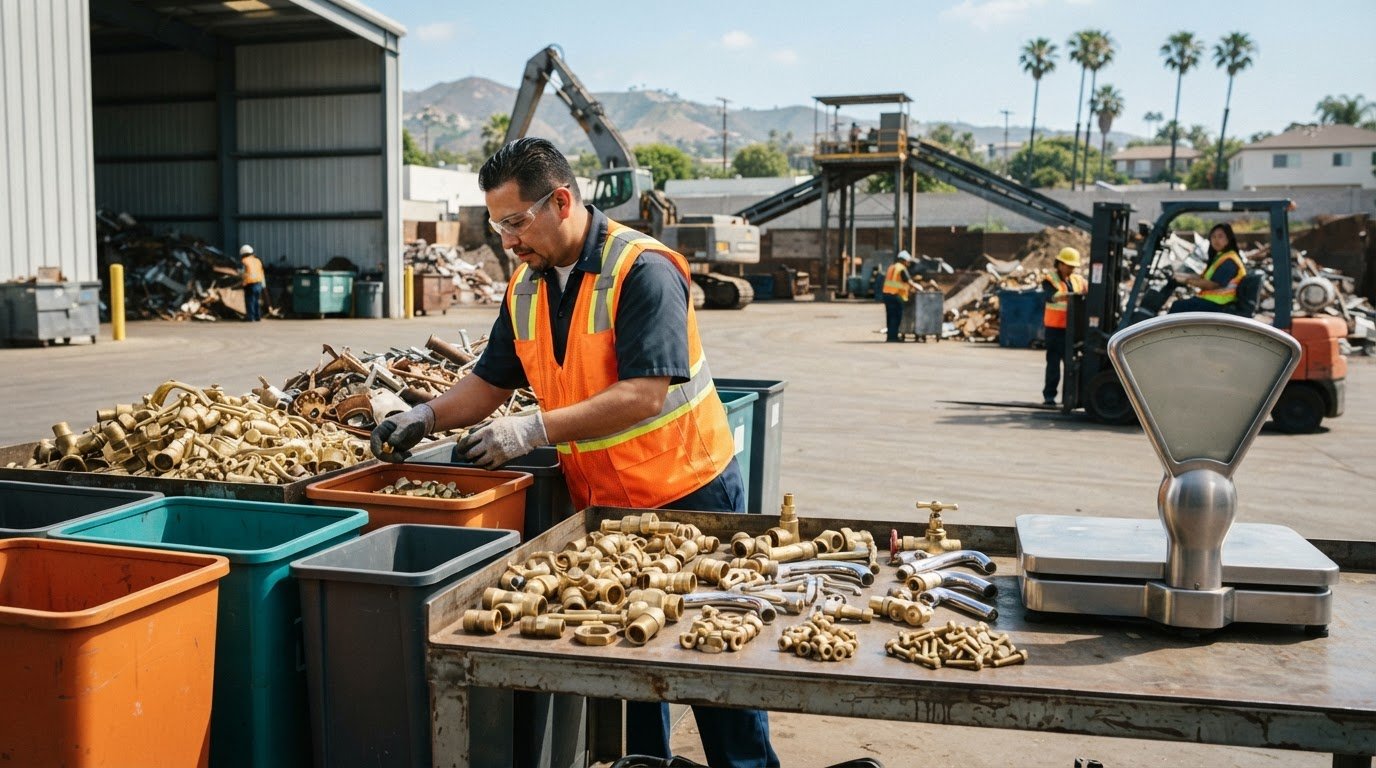
If you’re asking how much is brass scrap worth per pound, there isn’t one universal rate. Online prices can differ by date, location, and brass grade, while mixed materials or attached fittings can affect how a load is evaluated. Treat a posted figure as a market reference, not a guaranteed local offer.
Before sorting, loading, and making a trip, it helps to know what can influence the value of brass scrap and how to prepare your material. This guide explains how to recognize common brass items, why cleanliness and mixed components matter, and what to separate before visiting a recycler in Orange County.
OC Recycling purchases scrap metal from the public and commercial accounts in Orange County. Sellers from Santa Ana, Anaheim, Costa Mesa, Huntington Beach, Orange, Irvine, Garden Grove, Westminster, Fountain Valley, and Tustin can use the guidance below to sort likely brass and bring uncertain items for evaluation. Knowing what you have makes it easier to discuss your material and understand how grade, condition, and current market conditions affect its assessment.
Key Takeaways
- To understand how much is brass scrap worth per pound, look beyond a single online quote: grade, condition, date, and local market conditions all matter.
- Plumbing fittings, valves, and hardware may contain brass, but item composition can vary. Sort likely brass separately from other metals.
- Clean, organized material is easier to assess. Remove loose non-metal debris, but do not cut sealed, pressurized, or unfamiliar components.
- Brass type and cleanliness can affect evaluation. Copper-market changes may influence brass references, but they do not set a guaranteed rate.
- OC Recycling purchases scrap metal in Orange County from public and commercial customers.
Brass Scrap Value: Why There Is No Single Rate
Brass has no fixed per-pound value across all grades, locations, and dates. If you’re researching how much is brass scrap worth per pound, remember that a number published online is a time-sensitive reference, not a guaranteed local offer. A recycler evaluates the material presented, including its classification and condition, in the context of current buying conditions.
That distinction matters because “brass” describes a family of copper-and-zinc alloys, not one identical material. Composition and properties vary by type and use, as outlined in Brass Composition and Properties. An online market snapshot may refer to one grade or source, while your container may hold mixed items, attached materials, or pieces that are difficult to identify. The headline price alone can’t tell you what your specific load is worth.
What does a brass scrap price per pound actually represent?
A per-pound scrap price is a rate applied to material a recycler accepts and classifies as a particular grade. A published reference can help you understand how prices are moving, but it is not the same as a local buying evaluation. Rates are tied to a date and market context, so an older snapshot should not be treated as a guaranteed payout for material brought in later.
Even a recently posted figure may not reflect local buying conditions or the material in front of the scale. The grade used for a reference may differ from your items, and local supply, demand, and transportation considerations can influence buying conditions. When comparing prices, note the date, location, and material grade behind each figure. Use online prices as context, not as a promise or a calculation of what your particular load will bring.
Why can two brass loads receive different evaluations?
Two loads can differ in grade, cleanliness, attachments, and consistency. A group of similar, recognizable brass pieces is easier to sort than a mixed load containing other metals, plastic, or components that obscure what each item is made of. Dirt and attached materials can also make classification less straightforward. Market movement matters, but the material’s condition and classification matter alongside it.
For example, fittings with visible steel pieces mixed in may need more sorting than similar brass items kept apart. An assembly made from several materials can be harder to classify than a clean, separate piece. These examples do not establish a particular grade or outcome. They show why two loads that look broadly alike to a seller may be assessed differently.
Before comparing a posted price with your expected payout, consider what the reference describes and whether your material appears to match that grade. Separate obvious mixed materials where practical, and keep uncertain items apart rather than assuming they share the same classification. This organization gives the recycler a clearer view of the load and makes the evaluation easier to understand.
How to Recognize Common Brass Scrap Before Selling in Orange County
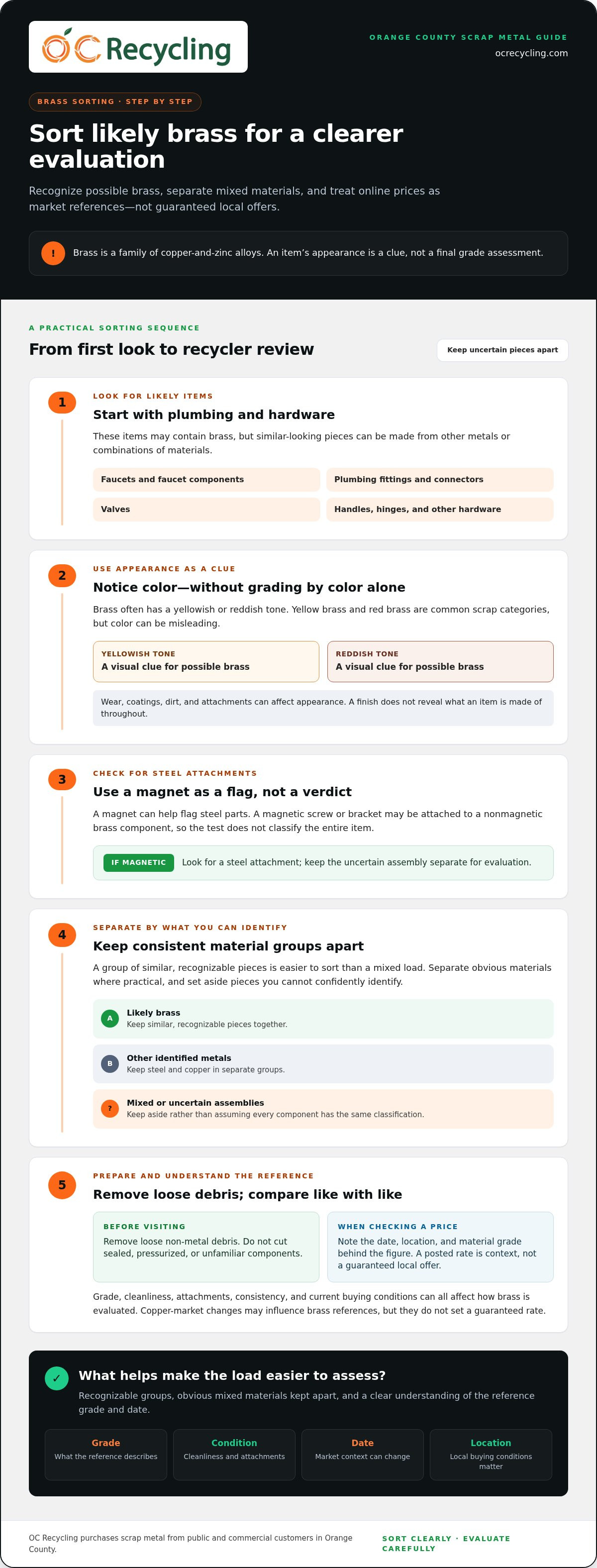
Brass is an alloy made mainly from copper and zinc, but its composition varies by item and grade. Recognizing a likely brass piece is a useful first step, not a final grade assessment. Faucets, plumbing fittings, valves, and some hardware may contain brass, but similar-looking items can be made from other metals or a combination of materials.
Start with what you can observe. Brass often has a yellowish or reddish tone, while a magnet can help flag steel parts. Neither clue confirms what an entire item is made of. Finishes can change its appearance, and a magnetic screw or bracket may be attached to a nonmagnetic brass component. Keep uncertain pieces separate rather than mixing them into a clearly identified group.
Yellow brass, red brass, and mixed brass: what is the difference?
Yellow brass and red brass are common categories used to describe brass scrap, with color offering a helpful visual clue. Surface wear, coatings, dirt, and attached materials can make appearance misleading, however. Don’t rely on color alone to determine a grade or estimate how much is brass scrap worth per pound. Separate pieces that look distinctly different, and set aside items you can’t confidently identify for a clearer evaluation.
“Mixed brass” is a practical way to describe a group that includes different-looking brass pieces or items whose composition is not obvious. It does not automatically identify the grade of every piece. Keeping visibly different materials apart gives the recycler a better chance to assess each group instead of treating a varied load as uniform.
Which household and job-site items may contain brass?
Look through plumbing and hardware materials for pieces that may be brass. Common examples include:
- Faucets and faucet components
- Plumbing fittings and connectors
- Valves
- Hardware such as handles or hinges
These are clues, not a guarantee that the whole item is brass. Fixtures can combine brass with steel, plastic, rubber, or other materials. A faucet, for instance, may include brass parts alongside non-brass pieces. Its exterior finish will not reveal the material throughout. Avoid assuming every item in the same category is brass or that every item, regardless of condition, will receive the same classification.
For a simple sorting approach, place likely brass together, keep steel and copper in separate groups, and set aside assemblies with several visible materials. A magnet may help identify a steel attachment, but do not let that single test decide the classification of the whole item. Clear separation makes it easier to present your material for evaluation at a local recycler. If you’re preparing likely brass for a local sale, OC Recycling’s scrap metal purchasing offers an Orange County destination for bringing material for evaluation.
What Changes Brass Scrap Value? Grade, Cleanliness, and Market Conditions
Brass scrap is evaluated as material, not just by its name. Its grade, condition, and market context at the time of sale can all shape a local offer. This is why a search for how much is brass scrap worth per pound cannot produce one number that applies to every load. A useful comparison separates the factors you can prepare from those that shift with the market.
What affects evaluation: Different brass types may be classified separately. A load with clearly identified, consistent material is easier to assess than one with uncertain or mixed grades.
What you can do: Keep visibly different brass groups apart rather than combining them.
What affects evaluation: Paint, oils, dirt, attached fittings, and mixed metals can make material harder to identify or require additional sorting and preparation.
What you can do: Remove loose debris where practical and separate obvious non-brass pieces without taking unsafe assemblies apart.
What affects evaluation: Supply, demand, timing, and broader metal-market movement can affect price references. Online snapshots may reflect a different date or region.
What you can do: Treat published figures as context, not as a local quote for your load.
How do brass grade and cleanliness influence evaluation?
Clearly sorted material is easier to identify and handle than a load with several grades or materials mixed together. A brass fitting with paint or an attached steel part, for example, may need closer classification than a clean, distinct piece. That does not establish a fixed premium or deduction. The evaluation depends on the material presented and the recycler’s current assessment.
Preparation can improve clarity without extensive dismantling. Keep separate what you can identify safely, and do not assume every coating or attachment needs to be removed. A tidy, consistent load helps show what’s there. Uncertain or complex pieces can remain grouped apart for evaluation.
How do copper markets and local conditions affect brass?
Brass contains copper, so changes in copper markets can influence brass-market references. The relationship is not a precise formula: brass grades, supply and demand, and timing also matter. A copper price movement alone cannot tell you what a particular brass load will be evaluated at.
Local conditions count, too. An Orange County evaluation may differ from a national reference or a dated online snapshot because those figures can reflect other regions, dates, and material assumptions. A recycler’s current evaluation establishes the local offer for your brass. Use market references to understand broad direction, then focus on presenting your material clearly. Its grade and condition remain part of the assessment.
How to Prepare Brass Scrap for a Recycler in Orange County
A little sorting before your visit can make brass easier to identify and help keep unrelated metals from getting mixed together. You do not need to take every item apart. Focus on separating what you can recognize safely, clearing loose debris, and keeping uncertain pieces visible for evaluation.
How should you sort brass before a local selling visit?
Use this checklist to organize your load without making risky assumptions about an item’s material or grade:
- Identify likely brass. Set aside items you believe may be brass, such as plumbing components or hardware. Leave uncertain pieces in their own group rather than labeling them as brass.
- Separate other metals. Keep likely brass apart from copper, steel, aluminum, and visibly mixed assemblies. A magnet can help flag some steel parts, but it does not establish the composition of an entire item.
- Group distinct materials. If some brass pieces look clearly different from others, keep those groups separate. This gives the recycler a clearer view than presenting one mixed container.
- Remove loose non-metal debris. Take out loose packaging, dirt, or other debris that can be removed easily. Do not cut or dismantle sealed, pressurized, or unfamiliar components. Leave complex assemblies intact if taking them apart could be unsafe.
Keep the sorted groups organized in separate containers or clearly divided areas of your load. If you’re unsure about a piece, include it separately and bring it for evaluation. It is better to present an uncertain item honestly than to classify every similar-looking object as brass. Preparation should make the material easier to review, not put you at risk or damage components.
What should you bring and expect during evaluation?
Bring the organized material and be ready to describe where unusual pieces came from, especially if they are part of a larger fixture or assembly. That context can help explain what you’ve sorted, though the material itself still needs to be evaluated. Keep separate groups accessible instead of burying them beneath mixed scrap, so the material can be reviewed by category.
For another example of how metal preparation relates to a local market, see this guide to scrap copper prices in Santa Ana. Brass and copper are different materials, but the guide offers relevant context on preparing scrap for a local evaluation.
OC Recycling purchases scrap metal from public and commercial customers across Orange County. Organize your brass and bring your sorted scrap metal to OC Recycling for evaluation. A clear, separated load helps show what you have without assuming every item shares the same grade or value.
Sell Brass Scrap in Orange County with OC Recycling
Once you’ve separated likely brass from other metals and kept uncertain pieces aside, you’re ready to bring your material for local evaluation. OC Recycling purchases scrap metal from public customers and commercial accounts across Orange County. Its locations serve sellers in communities including Santa Ana, Anaheim, Costa Mesa, Huntington Beach, Orange, Irvine, Garden Grove, Westminster, Fountain Valley, and Tustin.
There isn’t one brass rate that applies to every item or every date. Rather than relying on an online snapshot as a promised payout, bring organized material for assessment. Classification and condition help clarify what you have, while the local offer depends on the current evaluation. If you’re still wondering how much is brass scrap worth per pound, a prepared load and a current local assessment are more useful than treating an old price listing as a guarantee.
What makes OC Recycling a convenient local option?
OC Recycling serves Orange County residents and commercial customers who want to bring scrap metal for evaluation. With locations in the county, it offers a local destination after you have identified and organized your material. Whether you’re sorting plumbing scrap at home or preparing metal from a commercial job, separating likely brass from other materials is a useful first step.
Plan your trip by choosing the location that works for you and reviewing its current details. Keeping your material organized before leaving can also make the visit more straightforward: group similar items, separate other metals, and keep uncertain pieces accessible. You do not need to assume a particular brass rate or classification in advance.
How can you make your brass scrap visit more straightforward?
A clear load is easier to review. Keep likely brass separate from copper, steel, aluminum, and mixed assemblies, and group visibly different material rather than combining everything. Remove loose non-metal debris where practical, but do not cut sealed, pressurized, or unfamiliar components. If you can’t identify an item confidently, set it aside and bring it for evaluation instead of labeling it as brass.
Before setting out, review current location details and hours so you can plan your visit. Keep unusual items accessible and be prepared to explain where they came from if that context is helpful. Organizing the load by material makes it easier to review. Do not assume a particular rate or payout before the material is assessed.
Ready to take the local next step? Bring your sorted brass scrap to OC Recycling for evaluation. Plan your Orange County visit and review the available location information before heading out.
Turn Your Brass Sorting Into a Clear Next Step
Before you decide whether a load is worth bringing in, note what you’ve set aside and which pieces remain uncertain. That small bit of preparation can help you describe the material clearly during an evaluation, without relying on an online estimate to predict your payout.
If you’re still asking how much is brass scrap worth per pound, the most useful answer for your items comes from a current local evaluation. Bring your sorted brass to OC Recycling for scrap metal purchasing and an assessment of the material you have. Bring your sorted brass scrap to OC Recycling for a local evaluation.
You’ve done the work of identifying and organizing your material. Take the next step with confidence and let your prepared load guide the conversation.
Frequently Asked Questions
Is brass scrap worth the same amount per pound everywhere?
No, there isn’t one rate that applies everywhere. Grade, condition, market timing, and local evaluation can all affect what a load is worth. Online figures can help you understand market references, but they aren’t guaranteed offers for your material. If you’re researching how much is brass scrap worth per pound, use published numbers as context, not a payout estimate. Orange County sellers can bring material to OC Recycling for evaluation.
How can I tell whether an item is brass or copper?
Color and a magnet can offer clues, but neither reliably identifies every alloy or an entire assembly. Brass is a copper-based alloy that contains zinc, while copper items have a different composition and often a more reddish appearance. A coating or attached steel screw can confuse a quick visual or magnet check. Sort obvious copper and brass separately, then keep uncertain pieces aside for evaluation rather than assigning a definitive grade yourself.
Does dirty or mixed brass scrap get a lower value?
Not necessarily by a predictable amount. Dirt, oils, paint, and attached non-brass parts can make a load harder to identify and may affect how it’s classified for processing. The result depends on the material’s actual condition, so don’t assume a fixed deduction. For example, separate a greasy fitting or mixed-metal assembly from cleaner pieces, remove loose debris when safe, and let the recycler assess the items as presented.
Can I sell brass plumbing fittings and faucets as scrap?
They may contain brass, but a faucet or fitting can also include steel, plastic, rubber, or other materials. A shiny brass-colored finish doesn’t establish what the item is made of throughout, and it doesn’t determine the grade. Keep likely brass plumbing pieces together, but set complex fixtures aside rather than treating every component as brass. Bringing uncertain assemblies intact allows the recycler to evaluate their materials without risky disassembly.
Should I remove steel or plastic parts from brass before recycling?
Remove loose, easily separated materials only if doing so is safe and straightforward. Don’t cut sealed or pressurized parts, or dismantle unfamiliar components with tools just to separate metals. If a steel bracket or plastic fitting is attached, keep the assembly apart from clearly identified brass so it can be assessed separately. Your role is to organize what you can identify safely; the recycler evaluates and classifies the material.
Do brass scrap prices change over time?
Yes, scrap-metal market conditions shift, and brass market references can be influenced by copper markets, supply, and demand. Those factors do not provide a precise formula or predict a particular direction. A price snapshot with an old date may describe a different market and location than the one you’re selling into. Rather than planning around it as a quote, rely on a current local evaluation of your material.
Where can I sell brass scrap in Orange County?
OC Recycling purchases scrap metals from public and commercial customers across Orange County. Sellers from Santa Ana, Anaheim, Costa Mesa, Huntington Beach, Orange, Irvine, Garden Grove, Westminster, Fountain Valley, and Tustin can organize their material and review current location details and hours before setting out. Bring uncertain items separately for evaluation. The material’s classification and condition inform the local assessment, not an assumed online rate.
