
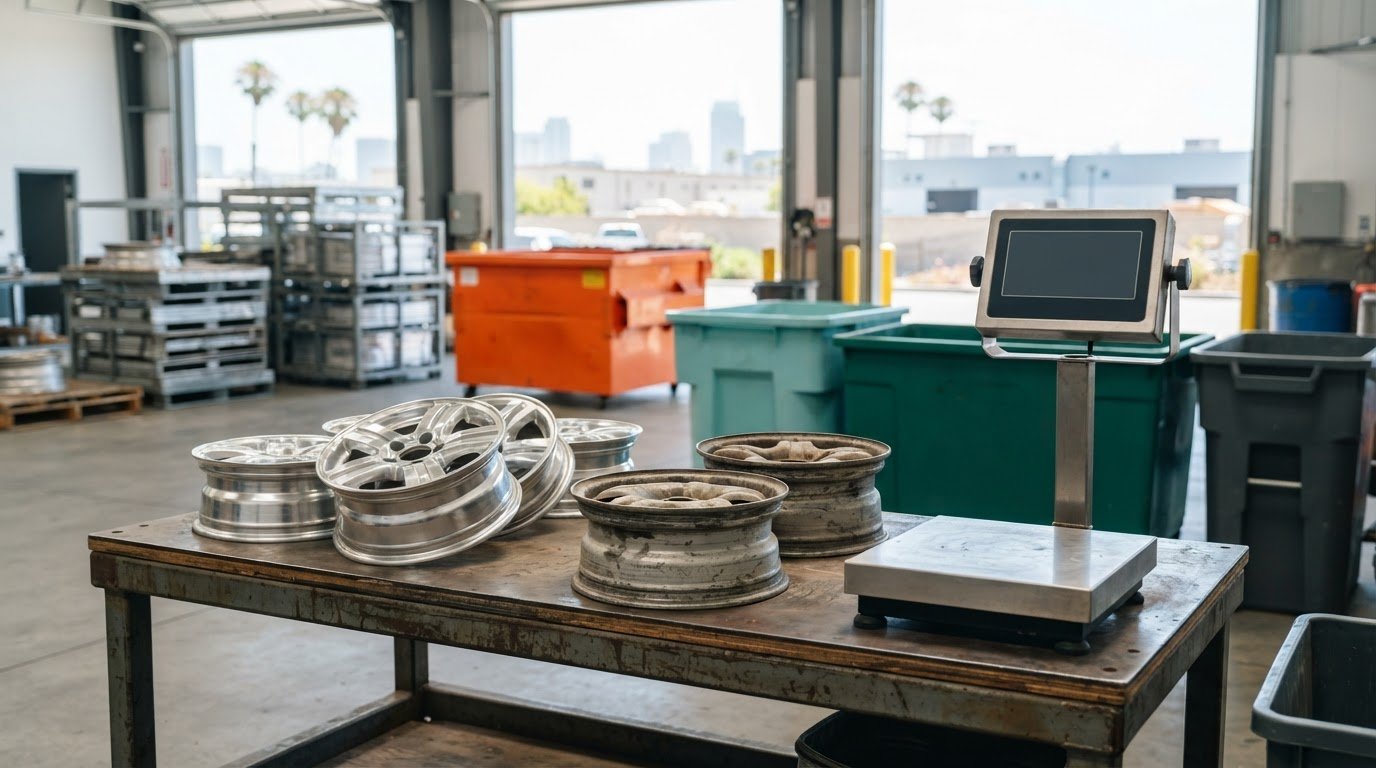
Before taking aluminum wheels to a recycler, sort and prepare them so you can clearly describe the load. If you’re looking for cash for aluminum wheels Anaheim, start by checking for material markings and separating wheels that look different. A little preparation helps you plan a practical local trip, though the recycler’s assessment determines how the metal is classified.
This guide covers ways to identify and prepare wheels, what can affect a scrap evaluation, and how to plan a visit in the Anaheim area. OC Recycling purchases scrap metals from the public and commercial accounts across Orange County. Use the steps below to prepare your wheels and set realistic expectations before bringing them in.
Key Takeaways
- Selling wheels for scrap means their material is evaluated for recycling, not resold as reusable auto parts.
- Inspect and sort wheels before loading them, but remember appearance alone may not reveal the metal or alloy.
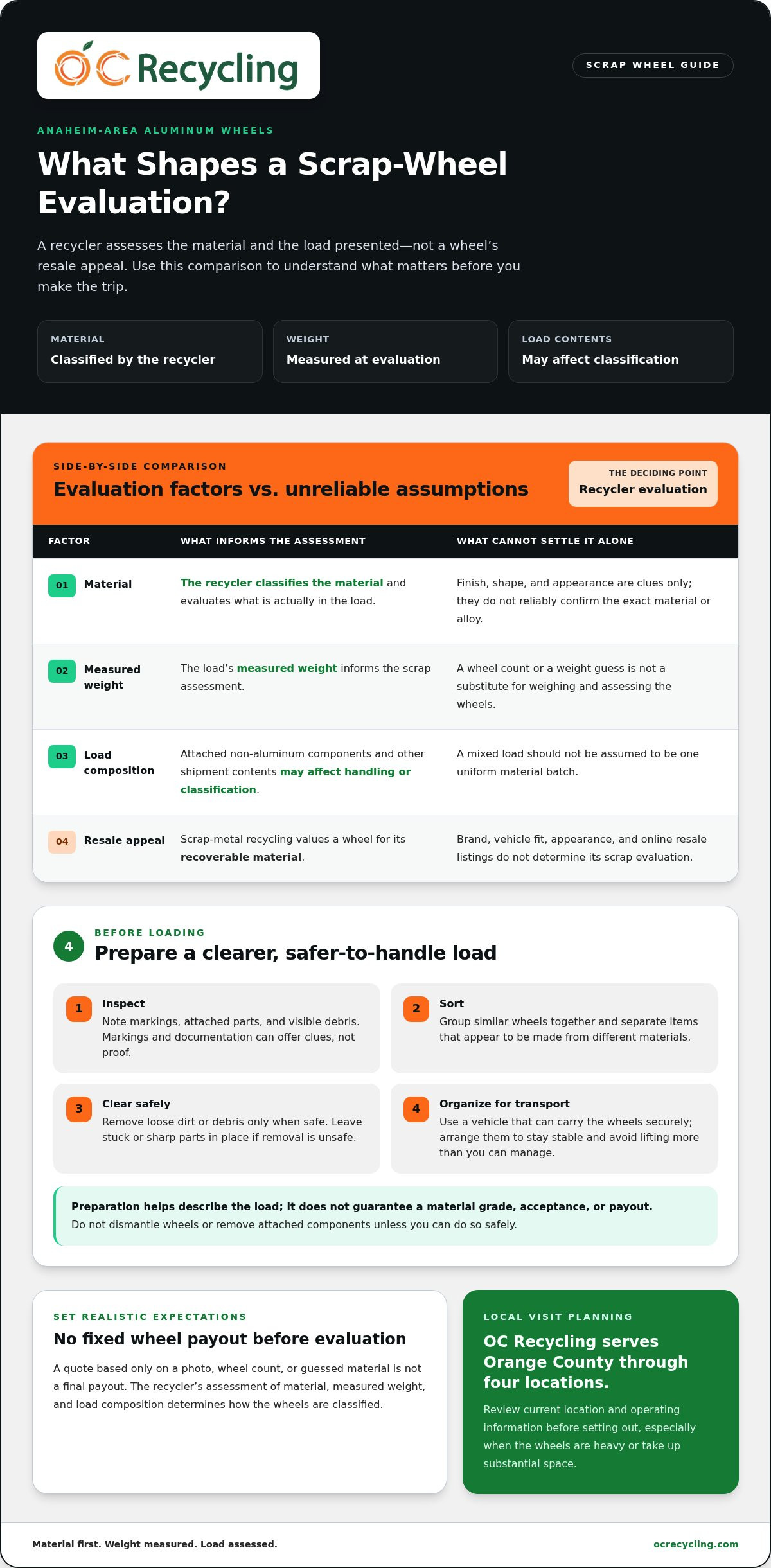
- Material type, measured weight, and attached non-aluminum components can all influence how a recycler classifies a load.
- Plan your transport and review visit information before setting out to make your cash for aluminum wheels Anaheim sale more straightforward.
- OC Recycling serves Orange County with four locations and more than 15 years of local recycling experience.
Selling Aluminum Wheels for Cash in the Anaheim Area: What to Expect
If you’re searching for cash for aluminum wheels Anaheim, first distinguish a scrap-metal sale from selling a wheel as a ready-to-install auto part. A recycler assesses the material and the load presented. The amount depends on that evaluation, not simply on the wheel’s brand, vehicle fit, or online resale listings.
A wheel that interests a private buyer because it fits a particular vehicle may be assessed differently as scrap. For recycling, material identification, measured weight, and the contents of the shipment matter more than appearance or demand for a replacement part.
Scrap aluminum wheels versus reusable auto parts
Scrap-metal recycling values a wheel for its recoverable material; used-wheel resale values it for reuse, fitment, and buyer demand. OC Recycling purchases and processes scrap metals. It handles wheels as recyclable material, not as auto parts for resale. If a wheel might be usable, its potential value as a part is a separate consideration from its scrap evaluation.
Some wheels commonly called alloy wheels are made from aluminum alloys, but appearance alone doesn’t establish a wheel’s exact composition. Design, finish, and condition vary, and a wheel that looks like aluminum may still need to be sorted or assessed as part of the load. Treat identification as a helpful first step, not a guaranteed grade or payout.
Why Anaheim sellers should plan before making a trip
Before traveling, group wheels together, separate any that appear to be made from a different material, and estimate how many you’ll bring. Note attached items or debris that could affect handling. These details help you describe the load clearly and avoid presenting mixed materials as a uniform batch.
OC Recycling serves Orange County through four locations. Before setting out, review the current location and operating information to plan your route. This is especially useful when the wheels are heavy or take up substantial space.
There’s no reliable wheel-specific payout to assume before an evaluation. Material classification and measured weight inform the assessment, while the shipment’s contents and attached non-aluminum components may affect how it is handled. Prepare what you can, describe the load accurately, and base expectations on the recycler’s evaluation rather than a resale listing or unverified estimate.
How to Identify and Prepare Aluminum Wheels Before Selling
A tidy, clearly sorted load is easier to describe and handle. Before planning a trip for cash for aluminum wheels Anaheim, inspect each wheel, group similar items, remove loose debris if it’s safe, and arrange the wheels for transport. These steps help you prepare, but they don’t guarantee a particular material classification or acceptance. The recycler’s evaluation determines how the load is assessed.
Clues that a wheel may be aluminum
Finish, shape, and weight can offer preliminary clues, but appearance alone can’t reliably confirm a wheel’s material or alloy. Coatings and dirt may disguise the surface, and attached components may be made from other materials. Look for markings on the wheel or check vehicle and wheel documentation if you have it. Treat these as clues, not proof. The recycler’s evaluation determines the material classification.
Use this basic preparation checklist before loading:
- Inspect: Look over each wheel and note markings, attached parts, or visible debris.
- Sort: Keep similar wheels together and separate items that appear to be made from different materials.
- Clear: Remove loose dirt or debris only when you can do so safely.
- Organize: Arrange the wheels so they’re stable and manageable for loading and transport.
Sort and handle wheels for a smoother visit
Keep the wheels in one group and separate them from unrelated scrap when practical. A mixed load can be harder to describe, so make a quick note of what you’re bringing and whether some wheels look different. Don’t dismantle a wheel or remove attached components unless you can do so safely. If a part is stuck, sharp, or requires tools you’re not comfortable using, leave it in place.
Preparation doesn’t mean taking every wheel apart. Focus on loose, accessible debris and safe handling. Aluminum is recyclable. For background on aluminum recycling, see Novelis’ information on aluminum recycling. Sorting wheels and keeping unwanted material separate can make the load clearer to assess, while the recycler determines how it can be processed.
Plan transport around the wheels’ size and weight. Use a vehicle that can carry them securely, avoid lifting more than you can manage, and prevent the wheels from shifting during the trip. If you’re bringing several, organize them before loading so you can keep track of the group. For a local next step, review OC Recycling’s scrap-metal recycling information as you prepare your wheels for evaluation.
What Can Affect a Cash Payout for Aluminum Wheels?
A scrap evaluation considers the material in the load, its measured weight, and how it can be classified for processing. An estimate can help with planning, but it isn’t a substitute for weighing and assessing the wheels. A quote based only on a photo, a wheel count, or a guess about material shouldn’t be treated as a final payout.
A wheel payout is determined after the recycler evaluates the material, weight, and composition of the load. For anyone researching cash for aluminum wheels Anaheim, this is the key point: preparation can make a load easier to assess, but no fixed amount can be promised before evaluation.
Material, weight, and load composition
First, the recycler needs to classify what’s being sold. A wheel that appears to be aluminum may need to be distinguished from another material, and appearance alone doesn’t establish its alloy. The recycler evaluates the material rather than relying only on a seller’s description. The total measured weight helps determine the quantity of recyclable material in the shipment.
Load composition matters, too. If aluminum wheels arrive mixed with unrelated scrap or with components made from other materials, those items may need to be sorted or accounted for separately. Attached weights, stems, or other non-aluminum parts can affect how a wheel is classified or processed. Keeping wheels together and separating visibly different items can make the load clearer to assess, though it doesn’t guarantee a particular grade or result.
Condition, preparation, and changing market factors
Scratches, bends, or a worn finish don’t establish scrap value on their own. Cosmetic condition may matter to someone considering a wheel for reuse, but a scrap assessment focuses on recyclable material and processing details. A wheel’s appearance isn’t proof of its composition either. The recycler’s classification and measurement provide the basis for evaluating the load.
Preparation can still help. Removing loose debris when safe and keeping unrelated materials separate makes the shipment easier to handle and can reduce confusion about what’s being evaluated. Don’t dismantle wheels or remove attached parts if doing so would be unsafe or require tools you aren’t equipped to use. Describe the load clearly, then let the material assessment determine its classification.
Scrap-metal markets change, so the value associated with a material can vary over time. A price in an older listing or one quoted for a different grade, location, or load may not apply to the wheels you bring in. The amount depends on the recycler’s current evaluation and market conditions. Use an estimate for planning only, not as a guaranteed payout.
A Practical Anaheim-Area Checklist for Selling Scrap Wheels
A smooth recycling visit starts before you leave home. Planning helps you keep the wheels organized, transport them safely, and arrive with a clear idea of what’s in your load. If you’re arranging cash for aluminum wheels Anaheim, use this checklist to prepare for an evaluation without assuming a particular payout or payment schedule.
Before you load the wheels
Separate the wheels from unrelated scrap when practical, then count them or estimate how many you’ll transport. Gather any visible material markings or wheel records you have. They may help describe the load, though the recycler determines its classification. Plan loading around the wheels’ size and weight, use safe lifting practices, and secure the load so it won’t shift during transport.
- Group the wheels: Keep the wheels together and set other scrap aside where possible.
- Make a load note: Record the approximate quantity and any differences you notice between wheels.
- Gather useful details: Bring available markings or documentation that may help identify the material.
- Plan safe transport: Choose a vehicle and loading approach suited to the load, and secure the wheels before driving.
Before visiting an Orange County recycler
Before setting out from Anaheim, review current location and operating details to plan your route and timing. OC Recycling serves Orange County through four locations. Organize the wheels so the load is easy to describe, and follow facility staff directions when you arrive.
Expect the recycler to evaluate the actual material and load rather than rely only on your count or estimate. The assessment informs the classification and payout. Payment timing and process can depend on the transaction, so don’t plan around an assumed payment method or schedule for a specific wheel load. Scrap materials such as copper are evaluated according to their own material and load details, not by the same assumptions used for aluminum wheels.
Keep the visit focused: know what you’re bringing, transport it securely, and allow the recycler to assess the load. OC Recycling purchases scrap metals from the public. When your wheels are organized and you’ve reviewed current visit information, plan your scrap-metal recycling visit with OC Recycling.
Sell Aluminum Wheels Through OC Recycling in Orange County
For Anaheim-area residents looking for a local scrap-metal recycling option, OC Recycling purchases scrap metals from the public and commercial customers. The company serves Orange County through four locations. Its local presence gives you a practical place to start planning a scrap-metal sale.
This process is about recyclable material, not selling wheels as reusable auto parts. A recycler evaluates the load to determine its material classification and measured weight, so the outcome depends on the assessment. Don’t assume a fixed payout or payment schedule for a particular wheel load.
Why work with a local Orange County recycler?
A regional recycler can make it easier to plan where to take scrap metal and fit a visit into your route. OC Recycling serves the public as well as commercial accounts, purchasing and processing scrap metals as part of its recycling operations. Its four Orange County locations provide regional access for Anaheim-area residents. Current location details can help you choose a suitable destination.
Local recycling gives scrap metal a route into processing rather than leaving unwanted material unused. The evaluation still depends on the wheels and the load you bring. Sorting items and describing them clearly can help make the assessment more straightforward, but it doesn’t determine the final classification or payout. Keep the goal clear: recycling the material, not listing wheels for resale based on vehicle fit or buyer demand.
Your next step for aluminum wheels near Anaheim
Put the preparation steps into action before planning a visit. Look for markings or documentation that may help identify the wheels, group them together, and keep unrelated scrap separate when practical. Arrange safe transport based on the load’s size and weight. Then review current location and operating information to plan your trip from Anaheim.
OC Recycling’s Orange County presence offers a local starting point for scrap-metal recycling. The recycler evaluates the material and load at the time of the transaction, so avoid relying on an assumed rate or promised outcome. An organized load and a little route planning can help you arrive ready for the next step.
Visit OC Recycling’s website for current service and location information, then plan your trip with your aluminum wheels prepared for evaluation.
Make Your Next Recycling Trip Count
Clearing out stored wheels can be a useful first step in a garage or vehicle project. Rather than letting scrap sit while you decide what to do, set a simple plan: choose a day to review current visit information, gather the wheels you intend to recycle, and make room to transport them safely. A little planning helps turn an uncertain task into a practical next step.
If you’re considering cash for aluminum wheels Anaheim, keep your expectations flexible. The recycler’s assessment determines how the material is classified and valued, and the result depends on the load presented. An organized visit gives you a clearer path forward without relying on a guessed price or promised outcome.
OC Recycling purchases scrap metals from the public and commercial accounts across Orange County, including Santa Ana, Anaheim, Costa Mesa, Huntington Beach, Orange, Irvine, Garden Grove, Westminster, Fountain Valley, and Tustin. Visit OC Recycling’s website to plan your scrap-metal recycling visit with your wheels ready for evaluation.
Frequently Asked Questions
Can I get cash for aluminum wheels in Anaheim?
Yes, selling aluminum wheels as scrap in the Anaheim area may be an option through a recycler that purchases scrap metal. OC Recycling buys scrap metals from the public and commercial accounts in Orange County. A wheel load is evaluated as recyclable material, so don’t assume it will be treated like a used auto part or expect a specific payout or payment timing. The phrase “cash for aluminum wheels Anaheim” describes the goal, not a guaranteed result.
How much are aluminum wheels worth as scrap?
There isn’t one dependable amount for every wheel. The recycler’s assessment considers the material and the amount of recyclable metal, while market conditions can change. A price you see online may refer to a different date, material grade, or load condition, so it may not match your wheels. Treat any estimate as a planning reference, not a quote. The value for your specific load can only be determined through evaluation.
How can I tell if my wheels are aluminum or steel?
A magnet can offer a quick clue: steel is magnetic, while aluminum generally isn’t. Test a clean area of the wheel itself, since attached steel hardware can attract the magnet even when the wheel is aluminum. Markings on the wheel or its documentation may also help identify the material. These clues aren’t definitive, especially for coated or mixed-material assemblies; a recycler’s assessment determines how the metal is classified.
Should I remove tires from aluminum wheels before recycling?
Usually, separating the tire from the rim helps avoid including rubber in a load being assessed for metal. But tire removal requires appropriate equipment, so don’t try to pry one off with improvised tools or attempt the job if you’re unsure how to do it safely. A mounted tire also changes the item being transported and evaluated. Plan for a safe, suitable way to handle the tire and rim separately.
Do damaged aluminum wheels still have scrap value?
They may still contain recyclable metal, but a crack, bend, or corroded area doesn’t establish a particular scrap value. Damage can affect a wheel’s appeal to someone seeking a reusable part, which is separate from a scrap assessment. Keep visibly damaged wheels grouped apart from those in better condition and describe what you’re bringing. The recycler evaluates the material and load rather than determining value from appearance alone.
Where can I recycle aluminum wheels near Anaheim?
OC Recycling serves Orange County, including the Anaheim area, and purchases scrap metals from the public. Its website provides current location and operating information so you can plan a route from Anaheim. Before loading a heavy set of wheels, review those details and choose the location that fits your trip. The wheels’ classification and evaluation take place as part of the recycling transaction.
What should I bring when selling aluminum wheels to a recycler?
Bring the wheels you plan to sell and a valid government-issued photo ID, which is required for scrap-metal sales. If available, bring markings or records that may help identify the wheels’ material, but treat them as supporting information rather than a final classification. Keep the load organized and be ready to describe any differences between the items. Review current location and operating details before setting out.
