
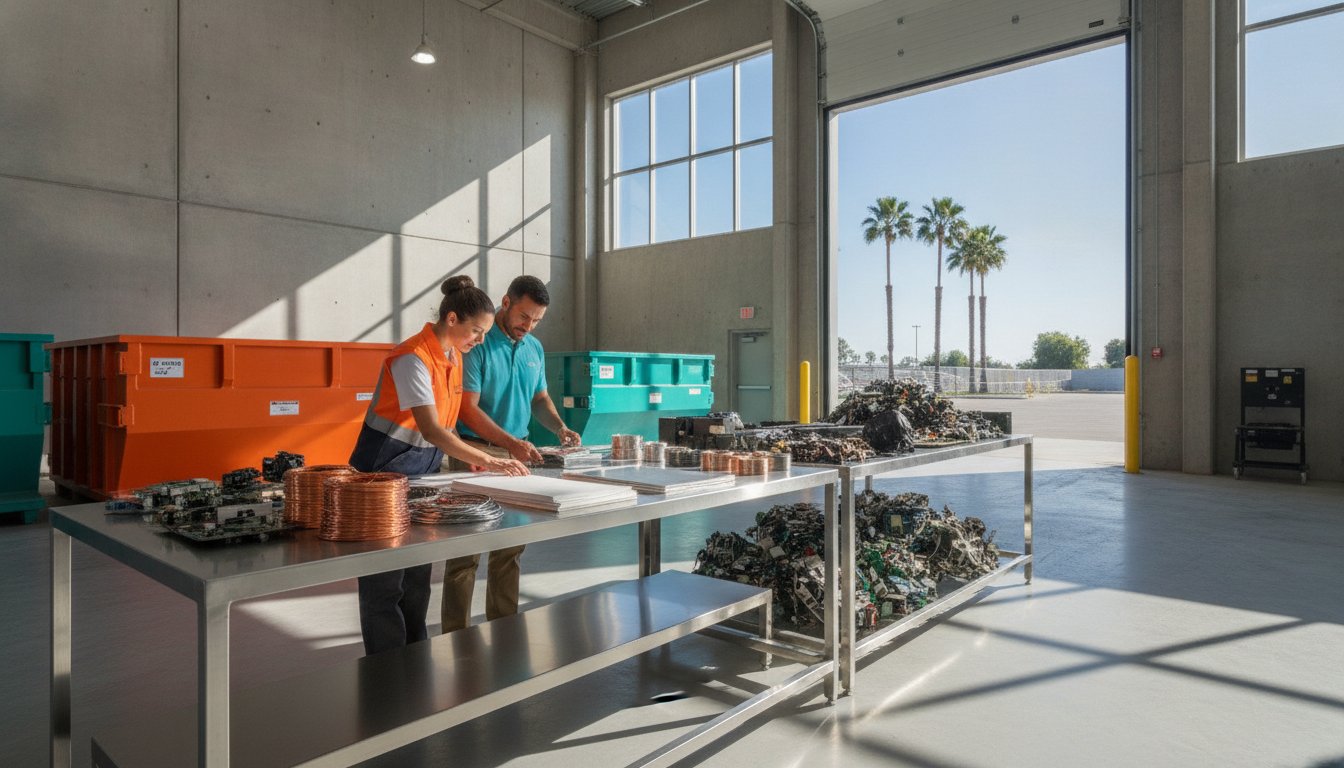
Did you know that your backyard shed or commercial warehouse is likely housing hundreds of dollars in untapped industrial commodities hidden in plain sight? While many residents view the process as a simple chore, the most informed people in Southern California treat recycling for money as a strategic harvest of high-value materials. It’s frustrating to spend your Saturday hauling heavy loads only to feel confused by complex scales or worried about being underpaid for your effort. You deserve a transparent, efficient, and professional experience that prioritizes your time and your bottom line.
In this guide, we’ll show you exactly how to turn your household or business scrap into same-day cash by identifying the materials with the highest market value. We’ll demystify the 2026 CRV redemption rates and explain how new regulations, like Senate Bill 1215 for battery-embedded electronics, create new opportunities for profit. You’ll walk away with a clear list of high-value recyclables and a roadmap to a reliable, local partner that provides secure, market-leading payouts in a clean and modern environment. This is your path to a more profitable and environmentally conscious routine.
Key Takeaways
- Identify high-value non-ferrous metals using the “Magnet Test” to prioritize the materials that offer the greatest return on your time.
- Master the updated 2026 CA CRV landscape by understanding the most profitable ways to redeem beverage containers, including new spirit and wine packaging.
- Learn how to properly prep and clean your scrap metal to move from “dirty” to “clean” grades, ensuring you receive the highest possible payout at the scale.
- Discover why obsolete electronics are “urban mines” for precious metals, making recycling for money a highly efficient way for businesses and residents to clear out tech.
- Find out how to choose a professional, transparent partner in Orange County that offers same-day cash and a modern, secure facility experience.
Identifying High-Value Materials: What Is Actually Worth Money?
Not all recycling is created equal. While many people start their journey by tossing cardboard and paper into blue bins, these materials are low-value bulk. If you want to turn recycling for money into a serious revenue stream, you need to think like a commodity trader. High-value materials, particularly non-ferrous metals, are the true profit drivers for both businesses and households.
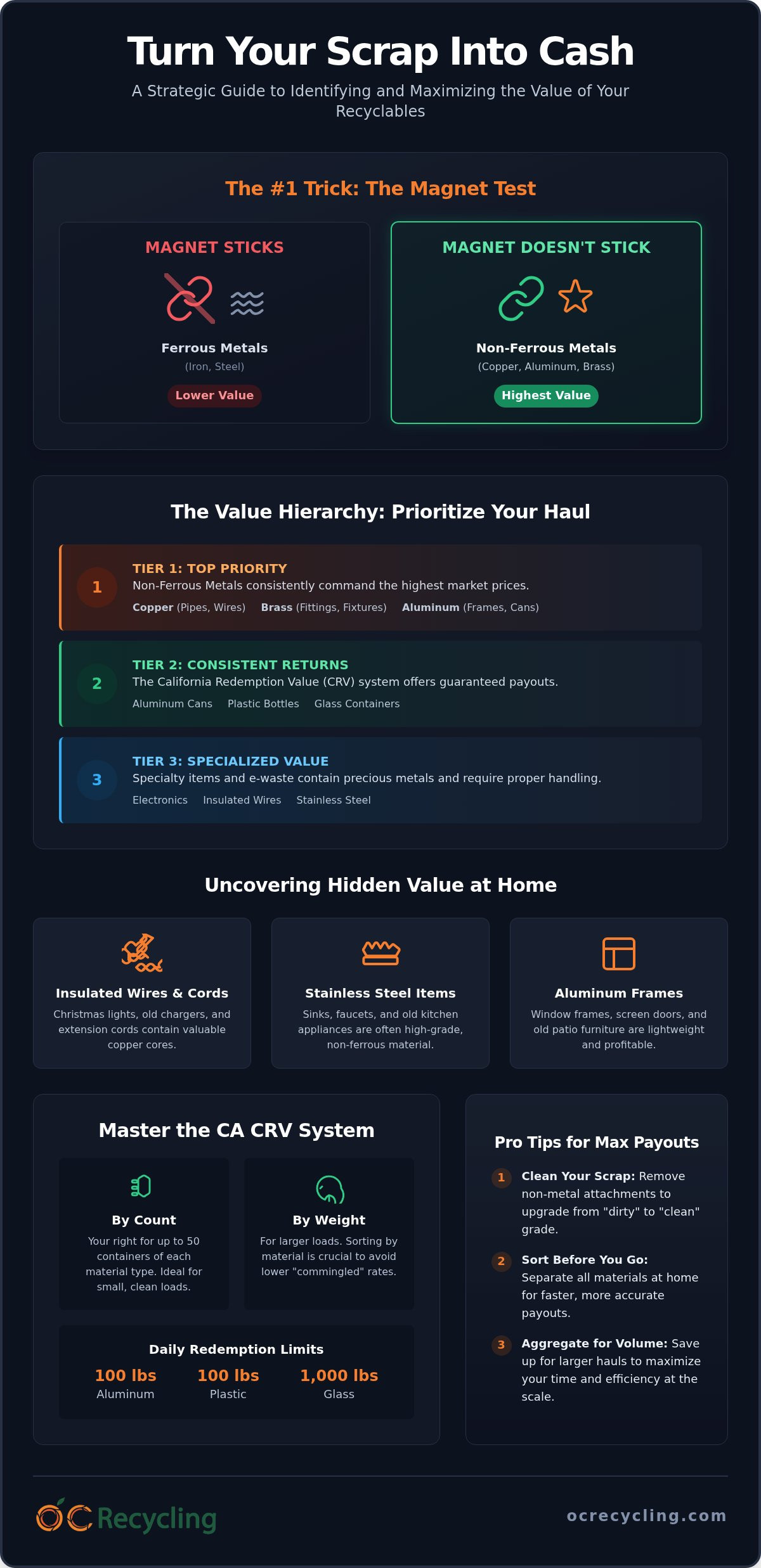
One of the most effective tools in your arsenal is a simple refrigerator magnet. This “Magnet Test” is the industry secret for separating low-value steel and iron from premium non-ferrous metals. If the magnet sticks, you have a ferrous metal. These are often accepted but pay less due to their abundance. If the magnet doesn’t stick, you’ve found non-ferrous gold. Turning your scrap into a consistent source of recycling for money requires knowing which metals are in high demand; aluminum, copper, and brass are the “big three” for individual recyclers because they consistently command higher market prices.
Efficiency is also a matter of volume. Payouts are more effective when you aggregate materials over several weeks or months. Instead of making multiple small trips that consume gas and time, saving up a significant haul allows you to maximize your efficiency at the scale. Professional facilities value high-volume partners, and organized loads lead to faster processing and more transparent transactions.
The Hierarchy of Recyclables
Understanding the value ladder helps you prioritize your efforts. At the top, Tier 1 consists of non-ferrous metals like copper, brass, and aluminum. These are highly sought after by industrial manufacturers for their conductivity and durability. Tier 2 includes items covered by the California Redemption Value system, such as plastic, glass, and aluminum beverage containers. Finally, Tier 3 involves specialized e-waste and industrial scrap. These items require professional handling but offer significant returns for those who know how to identify them.
Common Household Items You Didn’t Know Had Value
You don’t need an industrial site to find profitable scrap. Many everyday items in your garage or kitchen are overlooked because they look like junk. Consider these examples:
- Old Christmas lights and insulated wiring: These contain valuable copper cores. Even with the plastic coating, they remain a steady source of income.
- Stainless steel kitchen sinks and appliances: High-grade stainless steel is a non-ferrous item that often ends up in landfills by mistake.
- Aluminum window frames and screen doors: These are lightweight and easy to transport. When you remove glass or rubber attachments, they move into a higher value category.
Mastering the CA CRV System for Maximum Payouts
For many Orange County residents, the most consistent way to start Mastering the CA CRV System is through beverage containers. The “CA CRV” label on your bottles and cans is more than just a symbol; it’s a financial guarantee from the state. In 2026, this system covers a broader range of packaging than ever before, including wine and distilled spirit containers. Understanding how to navigate these regulations ensures you aren’t leaving money on the table when you pursue recycling for money.
One of the most important choices you’ll make at the scale is whether to redeem by the item or by the pound. According to state regulations, you have the right to request a per-item count for up to 50 containers of each material type per visit. For larger loads, centers transition to a weight-based payout. This is why separating your glass, plastic, and aluminum beforehand is essential. If you bring a mixed bag, you may be paid at a lower “commingled” rate. Taking ten minutes to sort your materials at home guarantees you receive the full value for every ounce of material you’ve collected.
Daily limits are also a factor to keep in mind. State law currently limits individual daily redemptions to 100 pounds for aluminum and plastic, and 1,000 pounds for glass. If you’re managing a large-scale cleanup or a commercial account, planning multiple trips or coordinating with a professional partner is the most efficient way to stay compliant while maximizing your returns.
Eligible vs. Ineligible Containers
Timing your visit can save you significant time. Mid-week mornings, specifically Tuesday through Thursday, are generally the best times to avoid the weekend rush in Santa Ana or Anaheim. For those seeking a professional and streamlined experience, using a certified CRV recycling center Santa Ana ensures you get in and out quickly with cash in hand. Remember to bring a valid ID for larger payouts, as this is a standard compliance requirement for professional facilities. If you’re looking for a reliable local partner, our team is ready to help you turn your containers into immediate capital.
The Professional Guide to Selling Scrap Metal
Selling scrap metal is a sophisticated process that requires a bit of insider knowledge to truly maximize your returns. While beverage containers are a great start, the real potential in recycling for money lies in high-grade non-ferrous metals. Professional recyclers look at more than just weight; they look at purity, grade, and market timing. Because global commodity prices shift daily, scrap copper prices Santa Ana serve as a benchmark for local value. Staying updated on these trends ensures you’re selling when the market is in your favor.
The most critical step in this process is cleaning your materials. In the scrap world, “dirty” metal refers to items with attachments like plastic handles, steel screws, or rubber insulation. If you bring a copper pipe with a brass fitting still attached, the entire piece might be graded at a lower price point. By taking the time to remove these attachments, you move your scrap from a lower grade to a premium “clean” grade, which significantly impacts your total payout at the scale. It’s a simple way to ensure you’re treated as a professional partner rather than a casual seller.
Don’t overlook the value of brass, which is often found in older plumbing fixtures, valves, and decorative hardware. Brass is a dense, high-value alloy that shouldn’t be tossed into a general iron or steel bin. Identifying these heavy pieces can drastically increase the efficiency of your haul. While metals are the primary focus of this guide, many of these valuable commodities are also recovered through Electronics and E-Waste programs, which we’ll explore as a modern “urban mining” opportunity.
Copper Grading: From #1 Bright to Insulated Wire
Copper is the undisputed king of the scrap yard. To get the best results, you need to recognize “Bare Bright” copper, which is clean, unalloyed, and uncoated wire or cable. This grade always commands the premier price. Below that, #1 copper consists of clean bus bars or piping, while #2 copper includes pieces with light oxidation or solder. You should also collect insulated copper wiring and extension cords. While these pay less due to the weight of the plastic, they’re a consistent source of income. You’ll need to decide if stripping the insulation is worth your time; for thick industrial cables, the labor usually pays off, but for thin household cords, it’s often better to sell them as-is.
Aluminum and Stainless Steel
Aluminum is incredibly versatile, but you’ll receive different rates for cast aluminum versus standard beverage cans or sheet aluminum. Cast aluminum, often found in engine parts or heavy grill lids, is a distinct category. Similarly, identifying high-grade stainless steel in commercial kitchen equipment or industrial sinks is vital. Stainless steel must be non-magnetic to qualify for higher payouts. You can learn how scrap metal recycling works in our comprehensive process guide to better understand how these materials are sorted and valued behind the scenes.
Electronics and E-Waste: Turning Tech into Cash
While many people associate the industry with heavy metal beams or beverage cans, the most concentrated value often sits in your desk drawer or server room. Obsolete computers, servers, and networking hardware are essentially “urban mines” that house precious metals like gold, silver, and palladium. When you approach recycling for money from a technology perspective, you shift from hauling bulk weight to harvesting high-grade components. This specialized sector requires a partner who understands the intricate value of circuit boards and the rigorous compliance standards of modern environmental law.
High-Value E-Waste Components
To maximize your returns, you must look past the plastic casing of a device. The true value resides in the motherboards, CPUs, and RAM modules. High-grade circuit boards, particularly those found in servers and industrial equipment, feature gold-plated connectors and pins that command premium prices. Interestingly, “vintage” electronics from the 1990s and early 2000s often contain significantly higher metal content than modern, ultra-slim devices. This makes clearing out old storage units a highly profitable endeavor. Beyond the boards, don’t ignore peripheral components like power supplies and lead-acid batteries from UPS systems. With the implementation of Senate Bill 1215 in 2026, the scope of covered electronic waste now includes battery-embedded products like smart speakers and personal grooming devices, providing even more avenues for profit.
Security and Data Destruction
The biggest barrier for most businesses and residents is the fear of data theft. Profiting from old hardware shouldn’t come at the expense of your privacy. Choosing a center that offers certified data destruction is a non-negotiable requirement for any professional transaction. At OC Recycling, we provide the peace of mind that comes with institutional-grade security protocols. Our process ensures that every hard drive and memory chip is physically destroyed or wiped according to strict compliance standards. This allows Costa Mesa residents and local businesses to focus on the financial benefits of their haul without worrying about identity risks. If you have a collection of old tech taking up space, contact our electronics recycling team today to secure your data and claim your payout.
The OC Recycling Advantage: Premier Service in Orange County
Choosing where to take your materials shouldn’t be a gamble. While “back-alley” scrap yards often feel disorganized or intimidating, OC Recycling offers a polished and institutional alternative. We’ve spent over 15 years refining a process that treats recycling for money as a professional commodity transaction rather than a messy chore. Our commitment to environmental standards and legal compliance provides the peace of mind you need when handling valuable household or industrial assets. We carry ourselves as a bold leader in the industry, ensuring every guest feels like a valued partner from the moment they enter our facility.
A Modern, Transparent Recycling Experience
The foundation of our premier service is absolute transparency. We utilize state-of-the-art certified scales that are rigorously maintained to ensure every ounce of your load is weighed with pinpoint accuracy. You won’t find the confusion or worry about being underpaid at the scale here. Instead, our friendly and expert-led staff will guide you through the grading process. We help you separate non-ferrous metals from ferrous items to maximize your total value. We take immense professional pride in our clean, organized, and safe facilities. This ensures your visit is efficient whether you’re dropping off a few bags of cans or a commercial truckload of industrial copper.
Getting Started Today
Ready to turn your scrap into immediate liquidity? Getting started is straightforward. For individual redemptions, please bring a valid government-issued ID to comply with state regulations for larger payouts. Whether you’re arriving in a compact car or a heavy-duty commercial vehicle, our sites are designed for easy access and quick turnaround times. For local businesses managing large-scale projects, we offer comprehensive commercial bin placement services to streamline your site’s scrap management and profitability. Our team handles the logistics so you can focus on your core operations.
Turning your household or business clutter into a consistent revenue stream is a matter of strategy and partnership. By shifting your focus toward high-value commodities like copper, brass, and 2026 CRV eligible containers, you can transform a routine chore into a profitable habit. You now have the tools to identify premium non-ferrous metals and the knowledge to secure your data when clearing out obsolete electronics. Organizing your materials and choosing a professional facility ensures you receive the maximum value for every load you bring to the scale.
OC Recycling is proud to be your premier partner in this process. With over 15 years of trusted local service and four convenient locations across Santa Ana and Anaheim, we provide a modern, transparent experience that respects your time. As a fully certified and licensed facility, we prioritize your security and offer same-day cash payouts for immediate liquidity. It’s time to stop leaving money on the table and start harvesting the value hidden in your scrap. Turn your scrap into cash today; visit one of our 4 Orange County locations! We look forward to helping you succeed in your journey of recycling for money.
Frequently Asked Questions
How much can I realistically make recycling for money?
Earnings depend on the material grade, weight, and current market commodity prices. While a few bags of aluminum cans provide modest returns, focusing on high-grade non-ferrous metals like copper or brass can lead to significant payouts. Many residents find that collecting materials over time and bringing a high-volume load is the most efficient way to maximize profit. Businesses often generate substantial revenue by recycling industrial scrap and obsolete hardware consistently.
Do I need to crush my cans before bringing them in?
You don’t need to crush your cans; however, doing so can help you transport a larger volume in a single trip. Most professional centers accept both crushed and uncrushed beverage containers for redemption. The primary requirement is that the containers are empty and free of debris. If you’re redeeming by count for small loads of up to 50 items, uncrushed cans allow for a faster manual tally by the facility staff.
What kind of ID do I need to get paid for scrap metal in California?
You must present a valid government-issued photo ID, such as a California driver’s license or passport, to receive payment for scrap metal. This is a strict legal requirement under state compliance laws designed to prevent the sale of stolen materials. Professional facilities maintain rigorous records of these transactions to ensure institutional stability and safety. If you’re managing a large-scale commercial haul, having your documentation ready ensures a smooth, same-day cash payout.
Can I recycle old appliances like refrigerators for money?
You can recycle many appliances, though their value depends on the specific metal content rather than the appliance itself. Items like stainless steel sinks or aluminum window frames are high-value targets. Refrigerators and air conditioners often contain ferrous metals, which pay less; they must also have their coolants professionally removed before arrival. We focus on purchasing the scrap metal components of these items rather than providing general waste disposal for non-metallic parts.
What happens if my bottles don’t have the CA CRV label?
Containers without the “CA CRV” or “California Redemption Value” label are not eligible for the state’s redemption payout. These items can still be recycled to keep them out of landfills, but they won’t contribute to your earnings when you’re recycling for money. Always check for the label on soda, water, and spirit containers before sorting your haul. This ensures you only spend time transporting materials that provide a guaranteed financial return.
How do I know if a metal is non-ferrous and worth more?
The most reliable method is the magnet test. If a magnet does not stick to the metal, it’s likely a non-ferrous material like copper, aluminum, or brass. These metals are highly valued for their resistance to corrosion and superior conductivity. Identifying these items allows you to separate them from lower-value steel and iron. This ensures you receive the premier price point for your most valuable commodities during your visit to the scale.
Is there a limit on how much electronics I can bring at once?
There’s generally no limit on the volume of electronics you can bring, but large hauls should be coordinated in advance for the best experience. Whether you have a single laptop or a warehouse full of obsolete servers, our facility is equipped to handle the load. For businesses clearing out massive amounts of tech, we provide efficient processing and certified data destruction to ensure your transition is both secure and profitable.
Does OC Recycling provide bins for business cleanouts?
We offer commercial bin placement services for businesses that generate significant amounts of scrap metal or cardboard. This solution allows you to collect materials on-site in a clean, organized manner before we transport them for processing. It’s an ideal service for construction sites, manufacturing plants, or office buildings undergoing a major technology refresh. This professional partnership helps you manage large-scale scrap while maintaining a safe and efficient workplace environment.
