
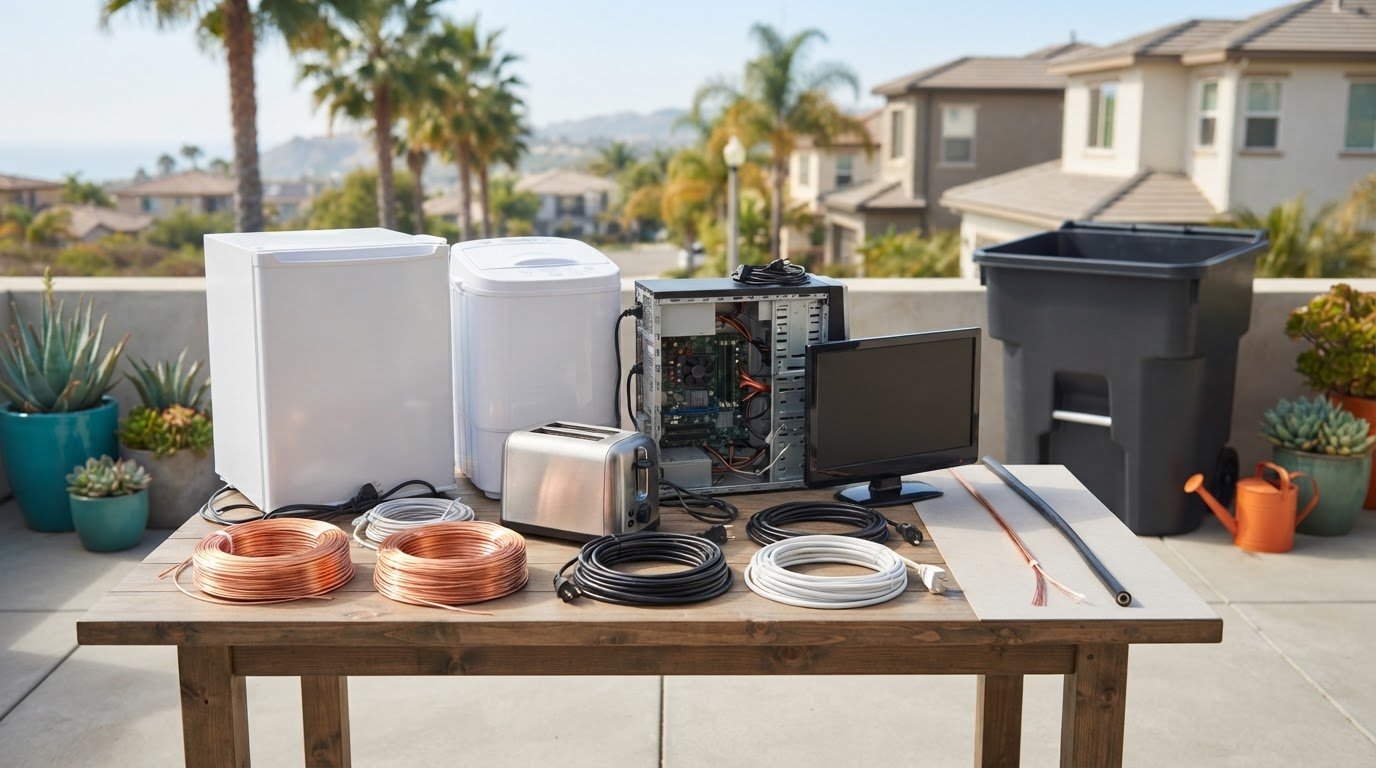
What if the copper wire in your home is easier to spot than it is to safely remove? If you’re wondering what household items have copper wire, look beyond loose cables: refrigerators, washers, small kitchen appliances, computers, and TVs may all contain wiring. But opening an appliance just to find it can create unnecessary risks or damage an item that could be recycled intact.
It’s understandable to want to know what’s inside before deciding what to do with an old item. This guide covers household items that may contain copper wire, clues you can check without taking them apart, and ways to sort loose wire for recycling. In most cases, separating wire from other materials isn’t worth the safety risk, and burning insulation is never a safe option.
We’ll also explain when to keep an item whole and how to choose a practical recycling route. OC Recycling purchases scrap metals and provides electronics recycling at four Orange County locations, serving residents across the area. That gives you a local option for loose scrap metal and unwanted electronics.
Key Takeaways
- Find out what household items have copper wire by checking common categories such as cords, appliances, electronics, and home systems.
- Learn why motors, transformers, and electrical connections may contain copper, even when the wire isn’t visible from the outside.
- Use visible clues to distinguish cords and cables from complete electronics, while remembering that appearance alone can’t confirm a metal’s composition.
- Follow a simple safety-first approach: unplug items, sort only what’s safe to handle, and avoid opening equipment just to retrieve wire.
- Choose a practical recycling route for loose scrap wire or unwanted electronics through OC Recycling’s scrap metal purchasing and electronics recycling.
What household items have copper wire? Start with these common sources
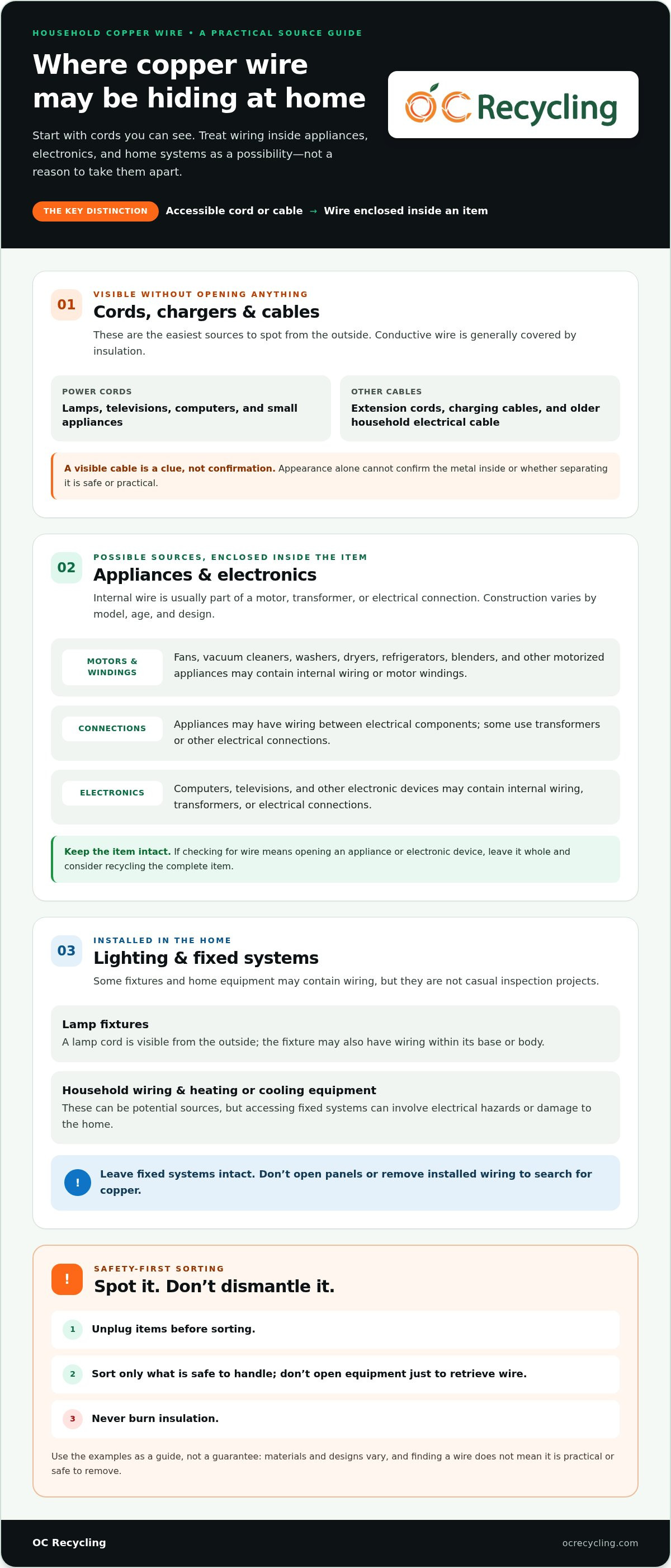
Cords, cables, appliances, electronics, and some home systems may contain copper wire. In a power cord, the wire is usually enclosed beneath an insulating outer layer. Inside an appliance or electronic device, it may be part of a motor, transformer, or electrical connection. You can often recognize a likely source without being able to see or confirm the copper itself.
Common household sources include power cords, extension cords, charging cables, appliances with motors, computers, televisions, and fixed electrical systems.
Use this list as a guide, not a guarantee. Materials and designs vary by model, age, and construction. Finding a wire also doesn’t mean it’s practical or safe to remove.
- Usually visible as an intact cord: lamp, television, computer, and small-appliance power cords.
- Usually visible as a cable: extension cords, charging cables, and older household electrical cable.
- Enclosed inside an appliance: wiring and, in some models, motor windings in items such as washers, dryers, refrigerators, or kitchen appliances.
- Enclosed inside electronics: internal wiring and components in computers, televisions, and other electronic devices.
- Part of a fixed system: wiring in some heating, cooling, or electrical equipment installed in the home.
Everyday cords, chargers, and electrical cables
Start with cords you can see without opening anything: a lamp cord, a television or computer power cord, or the cord attached to a toaster or coffee maker. Extension cords and charging cables are other common examples. Their conductive wire is generally covered by insulation, which helps protect the conductors and keeps them together. Copper is widely used for electrical wiring because of its useful properties; the overview of the properties and uses of copper explains why it appears in so many everyday applications. Still, a cable’s outer covering doesn’t confirm what metal is inside, and its appearance alone can’t tell you whether it’s suitable to separate for recycling.
Appliances, electronics, and home equipment
Some household appliances contain copper wire beyond their power cords. A motor may have copper windings, while transformers and electrical connections may contain wire or other copper components. Washers, dryers, refrigerators, blenders, and fans are possible examples, but internal construction differs across products. Computers, televisions, and other electronics may also contain wiring inside their cases. Larger home systems, including heating or cooling equipment, can contain wiring too, but they aren’t casual inspection projects.
For a practical first pass, distinguish between accessible cord or cable and wire enclosed inside an item. You can identify the first without dismantling equipment. The second is only a possibility based on the item type. If confirming the material would require taking apart an appliance, electronic device, or fixed system, leave it intact and consider recycling the complete item.
Where copper wire is found in household appliances and systems
After checking cords and cables, consider what may be enclosed inside the item itself. A motor can contain copper windings, while transformers and electrical connections may use copper wire or components. These parts are hidden within the appliance or device, so identifying a likely source doesn’t mean you need to open it or remove the wire.
A cord may offer a visible clue to copper wiring, but copper inside an appliance or electronic is usually enclosed within components and isn’t a reason to dismantle the item.
Small and large appliances that may contain wiring
Fans and vacuum cleaners may have motors and internal electrical connections. Refrigerators and washing machines may also contain motors or wiring. The amount and arrangement of these parts depend on the appliance’s model, age, and design. Treat these examples as possibilities, not a promise that every appliance contains copper that can be recovered safely or practically.
It helps to think about where components do their work:
- Moving parts: A fan or vacuum cleaner motor may include copper windings that help power its operation.
- Power connections: Appliances such as refrigerators and washing machines may have internal wiring connecting electrical components.
- Control components: Some appliances use electrical connections or transformers as part of their operation, though construction varies.
These parts are typically behind a casing or within the appliance. Avoid taking an item apart just to look for wire. Doing so can expose sharp edges or electrical components and leave you with mixed materials that are harder to manage.
Electronics, lighting, and fixed household systems
Computers, televisions, and some audio equipment may contain internal wiring, transformers, or other electrical connections. A lamp’s cord is easier to identify from the outside, but the fixture itself may also have wiring within its base or body. Household wiring and heating, ventilation, and air-conditioning equipment can be further potential sources, but accessing fixed systems can involve electrical hazards or damage to the home. Leave those systems intact rather than opening panels or removing installed wiring to search for copper.
For an unwanted computer, television, or other electronic device, keeping it whole is often the more practical starting point. OC Recycling provides electronics recycling for unwanted electronic devices, rather than requiring you to extract hidden wire at home. For scrap metal recycling information in Orange County, explore scrap metal purchasing.
Recycling copper can help return a useful material to circulation. The American Chemical Society discusses the benefits of copper recycling, including the potential for more efficient, less energy-intensive recovery approaches. For household sorting, the practical takeaway is simple: identify likely sources from the outside, keep equipment intact when wire is enclosed, and handle loose, accessible material separately only when it’s safe.
How to tell whether a household item has copper wire
A visual check can help you recognize likely wiring, but it can’t prove what metal is inside. Start with what you can see without opening, cutting, or damaging anything. A cable’s flexible, insulated outer covering suggests that conductors are enclosed, while a complete electronic device may contain wiring that isn’t visible from the outside.
Identify accessible cords visually, but leave wiring enclosed inside equipment. Never cut open a live or plugged-in cord, touch exposed conductors, or open sealed equipment just to identify its materials. If a cord is damaged, don’t handle it to inspect the inside.
| What you can see | What it may indicate | A safe next step |
|---|---|---|
| Intact power cord | Insulated conductors are enclosed beneath the outer covering. | Keep it intact; don’t cut it to check the metal. |
| Insulated cable | One or more covered conductors may run inside. | Sort it by appearance and type without stripping it. |
| Exposed conductor | The metal is visible, but its appearance may not confirm its composition. | Don’t touch it if its power status or condition is uncertain. |
| Complete electronic device | Internal wiring may be present, but can’t be assessed from the exterior. | Keep the item whole rather than dismantling it to search. |
Visible clues in cords and cables
A flexible cord usually has an insulating jacket around its conductors. That outer material may be black, white, or another color, but insulation color doesn’t reliably identify the metal inside. You may encounter a cut end on an already separated piece, but don’t create one for inspection. Cutting a cord can expose sharp edges or conductors and may damage material that could otherwise be sorted safely.
Use the item’s visible form as a clue, not a test. If you can’t tell what a cable contains without cutting or stripping it, leave it intact for recycling sorting.
Copper wire versus copper-colored or coated wire
Metal that looks copper-colored isn’t necessarily solid copper. A surface coating or plating can affect its appearance, and other conductors may be difficult to distinguish by sight alone. Color is a clue, not confirmation, so don’t rely on a quick glance to assign a definite material grade.
Avoid chemical tests, burning insulation, or improvised destructive checks. They can create safety and environmental hazards without providing a reliable household identification method. If knowing the exact material matters for recycling, keep the item intact and let the recycling process determine how it should be sorted. That’s more practical than dismantling equipment based on uncertain visual clues.
How to prepare household copper wire for recycling safely
A safe recycling handoff starts with simple sorting, not stripping wire from appliances. If you’re deciding what household items have copper wire, focus on what you can separate without opening equipment or touching anything damaged. Keep loose cords distinct from complete electronics, and leave uncertain or enclosed materials as they are.
- Unplug only safe, intact cords. Disconnect a cord from the outlet and device before handling it. If it’s damaged, frayed, hot, or connected to power, don’t touch it.
- Visually sort what’s accessible. Set intact, loose cords and cables apart from unrelated household items. Don’t cut or strip insulation to identify the conductor.
- Keep materials intact and organized. Group similar loose cords together and keep them reasonably clean and separate from other materials. Clear sorting can make material handling easier, but it doesn’t guarantee a particular recycling grade or payout.
- Route each item appropriately. Bring loose wire into the scrap metal category, and keep unwanted computers, televisions, and other electronics whole for electronics recycling.
Safe steps for loose cords and cables
Handle only cords that are unplugged, intact, and easy to separate from other items. Keep the plug and insulation in place; don’t burn insulation, strip the cable, or cut it into pieces at home. If a cord has exposed conductors, damaged insulation, or an uncertain power connection, leave it alone rather than trying to prepare it. You can sort by visible type without claiming to know the metal inside.
When to keep an appliance or electronic item intact
Leave appliances and electronics closed if wire is hidden inside. Motors, capacitors, refrigerants, and other enclosed components can make dismantling unsafe or complicated, and construction varies between items. Don’t open equipment that’s connected to power, and don’t take apart a device simply to extract a possible copper winding.
For unwanted electronics, keeping the complete item intact and routing it through electronics recycling is more practical than treating it as loose wire. The same approach applies to appliances with inaccessible internal parts: avoid unnecessary disassembly and separate only cords that are already loose and safe to handle. If you’re unsure whether a piece is safe to move, don’t handle it.
OC Recycling purchases scrap metal and provides electronics recycling, offering relevant routes for loose scrap materials and complete unwanted electronic items. Keeping those categories separate makes the next step clearer without requiring risky home dismantling. Explore recycling options for scrap metal and electronics.
Where to recycle household copper wire in Orange County
Once you’ve separated safe-to-handle loose cords from complete electronics, choose a recycling route that matches the item. OC Recycling serves Orange County, including Santa Ana, Anaheim, Costa Mesa, Huntington Beach, Orange, Irvine, Garden Grove, Westminster, Fountain Valley, and Tustin. With four locations across the county, OC Recycling provides a local option for scrap metal purchasing and electronics recycling.
If you’re researching what household items have copper wire, remember that spotting a possible source and deciding how to recycle it are separate steps. A loose, intact cord and a complete computer aren’t the same kind of material. You don’t need to dismantle an item to make that distinction.
Choosing between scrap metal and electronics recycling
Loose household cords and cables are a potential scrap-metal category. Complete unwanted electronics, such as computers or televisions, are better considered as whole items for electronics recycling, rather than taken apart at home to retrieve enclosed wire. Appliances may also contain internal components, so keep them intact if reaching the wiring would require dismantling.
Keep your categories clear as you prepare items: set aside loose cords from complete electronics, and don’t mix damaged or uncertain materials with items you can safely handle. Avoid cutting or stripping insulation. If a cord is frayed, conductors are exposed, or the item may still be connected to power, don’t handle it. Simple sorting helps you describe what you have and keeps the next step focused on the item itself, not an uncertain guess about its internal contents.
Readers comparing scrap options can consult the scrap copper pricing guide for information about copper scrap. The guide can support your research, but the material’s appearance alone doesn’t establish its grade or value.
A simple local next step for Orange County residents
Organize what you have into loose scrap material and complete electronics. Keep each item whole if preparing it would involve opening equipment or handling unsafe wiring. OC Recycling’s four Orange County locations provide local access to scrap metal purchasing and electronics recycling.
OC Recycling connects Orange County residents with scrap metal purchasing and electronics recycling. Explore local recycling options to find a practical next step for the household materials you’ve sorted.
Make your next recycling decision simple
Knowing what household items have copper wire is a useful starting point, but the goal isn’t to recover every hidden conductor. Think about the item’s next best use. If it still works, consider whether it can keep serving its purpose. If it’s ready to go, choose a recycling route without turning an intact appliance or electronic into a disassembled project.
A little restraint can make the process safer and less frustrating. You don’t need to prove what every component is made of before making a responsible choice. Leave unfamiliar equipment intact, and focus on clear, safe next steps rather than chasing uncertain scrap.
For Orange County residents, OC Recycling offers a local path for scrap metal purchasing and electronics recycling. Explore OC Recycling’s Orange County recycling services and take the next step with confidence. Thoughtful sorting, safe handling, and a practical recycling choice can turn household clutter into a more responsible outcome.
Frequently Asked Questions
What common household items contain copper wire?
Common possibilities include appliance and lamp cords, extension leads, chargers, and wiring inside some household electronics or equipment. If you’re asking what household items have copper wire, distinguish between a visible cord and components hidden inside a device. A familiar brand or product category can’t guarantee the material: construction changes between models. Use item type as a clue, and avoid opening equipment just to verify what’s inside.
Do phone chargers and power cords have copper wire?
Many chargers and power cords contain conductive wire, and copper is commonly used for electrical conductors. But the cable’s thickness, plug shape, or outer color won’t confirm its internal metal or composition. Two chargers that look similar, for example, may differ in construction. Treat an intact charger as a complete cord rather than cutting it open to check; use its visible condition to decide whether it’s safe to handle.
Can you get copper wire from old appliances?
Some old appliances contain copper wiring or motor windings, but recovering those parts at home isn’t a straightforward task. A vacuum cleaner, for example, may include a motor alongside plastic and other components, and its construction can differ from another model. Before deciding what to do with a working appliance, consider whether it could remain in use. For an unwanted item, keep it whole rather than dismantling it for uncertain scrap.
How can you tell if a wire is copper without cutting it?
You generally can’t confirm the conductor metal by looking at an intact, insulated cord. An outer jacket hides the conductor, and visible color or cable markings may not establish its exact composition. Don’t cut the cord, burn the insulation, or apply chemicals as a test. If material identity matters for recycling, keep the piece as it is and let sorting determine its category. That avoids turning identification into a risky home experiment.
Should I strip insulation from household copper wire before recycling?
No. Keep household wire insulated and intact rather than trying to strip it with household tools. Stripping can leave sharp edges or expose conductors, particularly if you can’t be certain the cable is fully disconnected or undamaged. Burning insulation is also unsafe. If you have several cords, place them together and separate them from unrelated materials without cutting them. This makes the group easier to identify while avoiding unnecessary processing at home.
Can household electronics be recycled for the copper inside?
Yes, unwanted electronics can be routed through electronics recycling without opening them to retrieve internal copper. A computer or television may contain materials that aren’t accessible without disassembly, and keeping the device complete avoids unnecessary handling. If a device stores personal information, consider data protection as a separate part of preparing it for retirement. OC Recycling provides electronics recycling in Orange County for complete unwanted devices.
Where can Orange County residents recycle household copper wire?
OC Recycling serves Orange County and purchases scrap metals, with electronics recycling for complete unwanted devices. Residents in Santa Ana, Anaheim, Costa Mesa, Huntington Beach, Orange, Irvine, Garden Grove, Westminster, Fountain Valley, and Tustin can use OC Recycling for these recycling services. Keep loose cords separate from complete electronics, and use the item’s condition to guide safe handling.
