
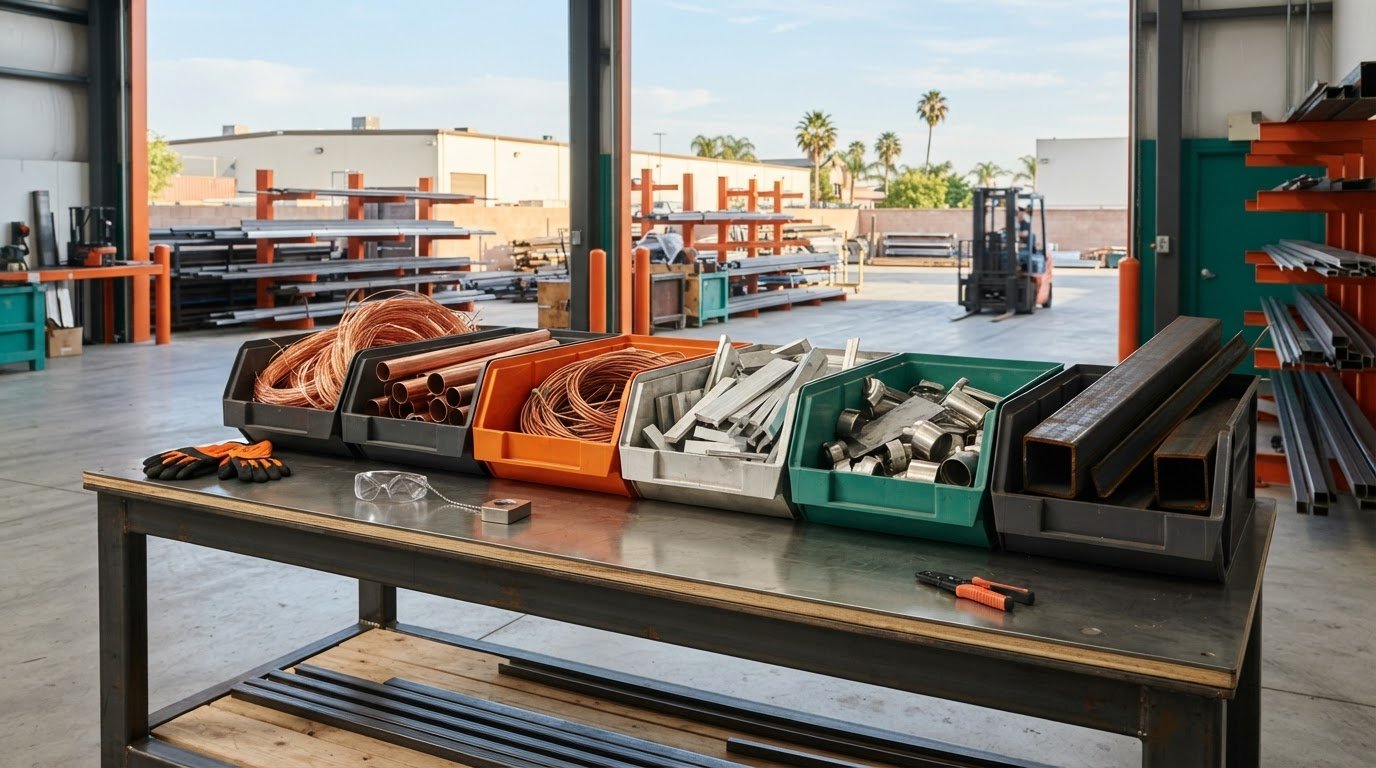
Could two pieces of the same metal belong to different scrap grades? Absolutely. Understanding scrap metal grades starts with recognizing that a metal’s name alone doesn’t determine its classification. Copper pipe, for example, may be sorted differently depending on whether it’s clean, coated, or mixed with other materials.
Grade names and buyer specifications can feel inconsistent, especially when a load contains multiple metal types or unwanted attachments. A useful starting point is to separate three ideas: metal type tells you what the material is, grade describes its composition and quality, and condition reflects how clean or prepared it is. Clean, uncoated copper wire may qualify as Bare Bright, while steel is commonly sorted into categories such as Heavy Melting Steel (HMS).
This guide explains how classifications work, gives common ferrous and nonferrous examples, and shows how sorting and basic preparation can make a load easier to assess. You’ll also learn why the receiving recycler makes the final classification. For people bringing material to a local recycler in Orange County, these practical steps can make scrap metal purchasing clearer and recycling more efficient.
Key Takeaways
- Use composition, cleanliness, and physical form to understand why similar-looking scrap may receive different classifications.
- Recognize common ferrous and nonferrous material categories, and use identification cues carefully rather than relying on appearance alone.
- Make understanding scrap metal grades easier by separating metal types and removing loose nonmetal materials before recycling.
- Avoid cutting or dismantling sealed or potentially hazardous components during routine preparation.
- At OC Recycling, separated loads help with assessment, but the receiving team determines the final classification.
What Does “Scrap Metal Grade” Mean? Start with the Basics
Understanding scrap metal grades starts with one practical distinction: a metal’s name tells you what it is, but its grade describes what kind of scrap it is. Two loads can both contain copper and still be classified differently because of composition, condition, preparation, or the receiving recycler’s specifications.
A scrap metal grade identifies scrap by its material composition, condition, and the buyer’s applicable specification. Grading gives recyclers a consistent way to describe and sort material, but there isn’t one universal system that every buyer uses in exactly the same way.
Scrap is material collected for reuse or recycling rather than simply treated as waste. For a broad introduction to recyclable materials and the distinction between ferrous and nonferrous metals, see Wikipedia’s overview of scrap. In practice, a recycler assesses the material and determines how it fits the categories used for processing and resale.
How Is a Scrap Metal Grade Different from a Metal Type?
Metal type is broad; grade is more specific. Copper is a metal type, while Bare Bright, #1 Copper, and #2 Copper are examples of copper scrap categories. The exact classification can depend on whether wire is coated, pipe has solder attached, or the material is clean and separated.
Condition matters, too. A clean copper item may be sorted differently from a similar piece with paint, insulation, or other materials attached. Grade names and requirements can vary by specification and receiving recycler, so a label used in one context doesn’t guarantee the same classification elsewhere. Sorting is useful preparation, but the recycler makes the final assessment.
Why Does Scrap Metal Grading Matter?
Consistent grading helps processors direct materials into appropriate recycling pathways. Keeping distinct metals and grades separated can reduce cross-contamination and limit extra sorting or processing. Mixed materials may need further separation before they can be prepared for industrial reuse.
Classification also gives the recycler a clearer basis for evaluating a load. Composition, cleanliness, and form help establish which category it fits, while the applicable buyer specification guides the assessment. A familiar grade name is a useful starting point, not a guaranteed classification or payout.
For anyone bringing scrap to OC Recycling in Orange County, separating obvious material types is a practical first step. A well-sorted load is easier to assess, and the receiving team determines its final classification as part of scrap metal purchasing.
How Scrap Metal Grades Are Determined: Composition, Condition, and Preparation
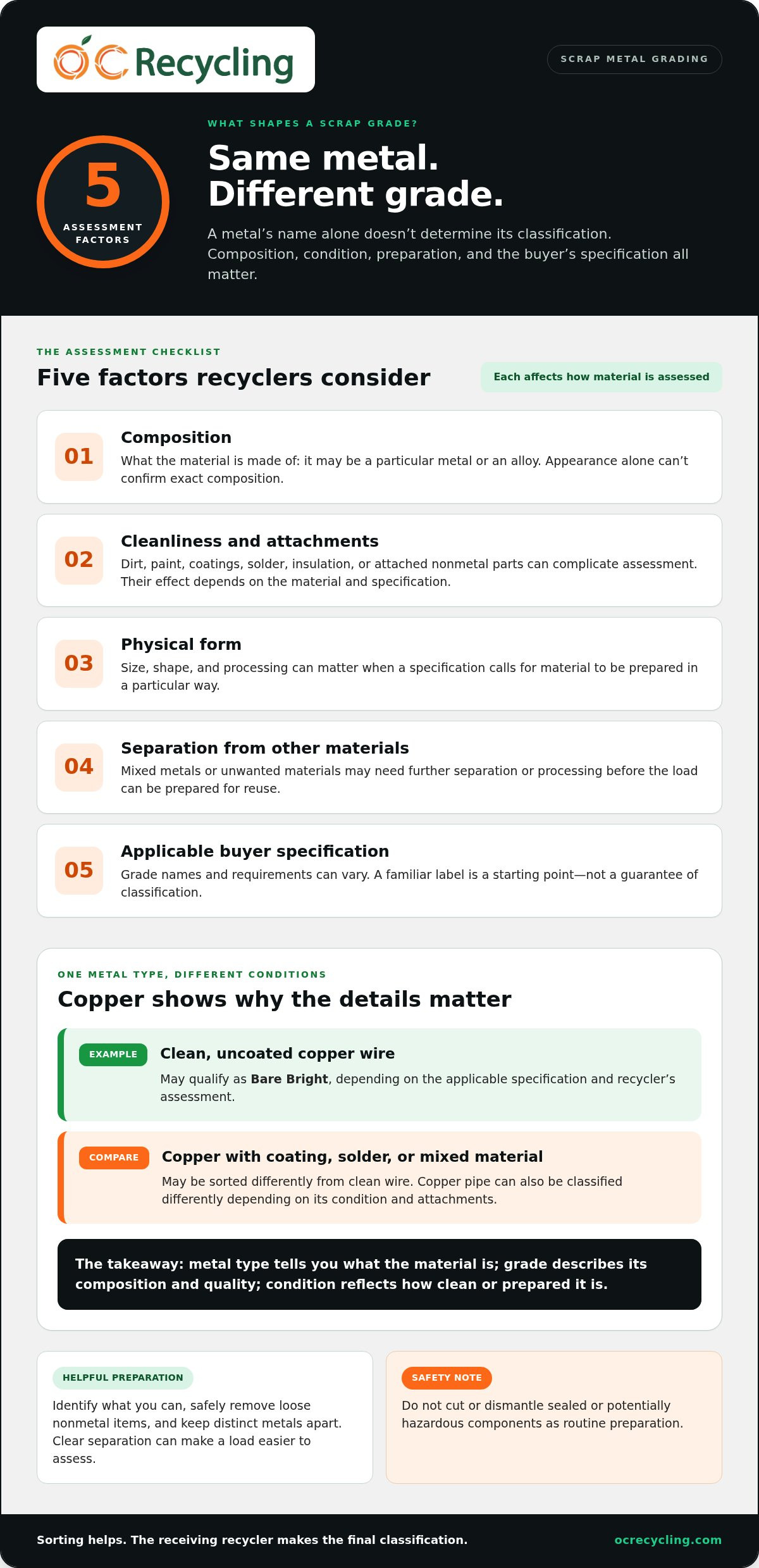
A scrap grade isn’t decided by metal type alone. Grade is determined by a material’s composition, cleanliness, physical form, separation from other materials, and the applicable buyer specification. These factors explain why two pieces that look alike can be assessed differently, and why no single visible cue guarantees a particular grade.
Specifications give recyclers a framework for sorting material while accounting for the requirements of a specific buyer or recycling process. The Recycled Materials Association publishes updates to the ISRI Scrap Specifications Circular, a useful reference for seeing how defined criteria distinguish scrap categories. Actual classification still depends on the material and the specification in use.
Which Material Characteristics Can Affect a Scrap Grade?
Composition: Metals may be pure or part of an alloy, a mixture of metals with different properties. A visual check can help you sort obvious categories, but appearance alone can’t confirm exact composition.
Cleanliness and attachments: Dirt, paint, coatings, solder, insulation, and attached nonmetal parts can complicate assessment. Their effect depends on the material and applicable specification; there’s no universal contamination threshold for every grade.
Form and preparation: Size, shape, and processing can matter when a specification calls for material to be prepared in a particular way. Cut sizes and other preparation requirements aren’t universal, so don’t assume that smaller or more uniform pieces automatically qualify for a particular grade.
Why Can Two Loads of the Same Metal Receive Different Grades?
Consider two loads containing the same broad metal type. One is clean and separated; the other includes dirt, coatings, attached parts, or pieces of other metals. Their composition and processing needs may differ, so they may not fit the same category. A recycler may need to separate or further process mixed material before preparing it for reuse.
Specifications also vary according to the buyer and recycling pathway. Visual identification and a familiar grade name are useful starting points, not a promise of classification. The receiving recycler evaluates the material and determines its final grade.
For practical preparation, identify what you can, remove loose nonmetal items safely, and keep distinct metals apart. Don’t cut or dismantle sealed or potentially hazardous components as ordinary scrap preparation. If you’re organizing a load for scrap metal purchasing in Orange County, clear separation can make assessment more straightforward, while the receiving recycler determines the final classification.
Common Scrap Metal Grade Examples: Ferrous and Nonferrous Materials
Scrap is commonly sorted first into ferrous and nonferrous groups, then assessed by material type and condition. The table offers a starting point for identifying familiar categories, not a way to confirm a specific grade. Specifications and receiving recycler practices determine how each load is classified.
| Group | Common material examples | Identification caution |
|---|---|---|
| Ferrous | Steel and stainless steel | Steel’s form, condition, attachments, and preparation can affect its classification. Stainless steel contains iron, but appearance or magnet response alone may not establish its precise composition. |
| Nonferrous | Aluminum, copper, and brass | These materials generally aren’t identified by a magnet test. Coatings, solder, attachments, and mixed pieces can affect how a load is assessed. |
A magnet can offer a useful first clue: it usually sticks to iron-containing steel, while aluminum, copper, and brass generally aren’t magnetic. Treat this as a sorting aid, not a definitive test. Stainless steel’s response can vary, so don’t rely on magnetism alone to identify it.
What Are Examples of Ferrous Scrap Categories?
Ferrous metals contain iron, and steel is a familiar example found in many forms. Steel scrap may be evaluated according to dimensions, thickness, attached materials, and preparation. These details can shape the appropriate category under a buyer’s specification. An object’s appearance or general description won’t necessarily establish its grade.
How Do Nonferrous Scrap Examples Differ?
Stainless steel is a useful reminder to distinguish material families carefully. It contains iron, so it is generally considered ferrous, even though recyclers may sort it into a distinct stainless category. Don’t assume similar-looking metals share the same composition or recycling pathway.
For more copper-specific context, OC Recycling’s copper prices guide is a related resource. Keep materials separated where practical, and treat these examples as orientation rather than a grade guarantee. As you build confidence in understanding scrap metal grades, remember that the receiving recycler makes the final classification after assessing the material against its applicable specifications.
How to Sort Scrap Metal by Grade Before Recycling
Sorting before recycling can make a load easier to assess. You don’t need to identify every exact grade at home or at a job site. Focus on separating obvious material types, removing loose nonmetal items when it’s safe, and keeping uncertain items apart for the receiving recycler to evaluate.
What Should You Separate Before Bringing Scrap In?
- Separate obvious metal types. Group visibly distinct materials, such as steel, aluminum, copper, and brass, rather than combining everything. A magnet can help identify some iron-containing metals, but it won’t confirm every metal or grade.
- Remove loose nonmetal materials safely. Take away loose plastic, cardboard, or other easy-to-remove items. Don’t pull apart components that are attached, difficult to remove, or potentially unsafe.
- Keep mixed or heavily attached items aside. Set aside pieces with substantial attachments, coatings, or more than one material. Keeping them separate helps the receiving recycler assess them without assuming they fit a clean, single-metal category.
- Keep electronics, batteries, and questionable items separate. Don’t put them into an ordinary scrap-metal pile. Electronics follow a separate recycling pathway, while unknown containers, sealed components, and suspected hazardous materials should remain undisturbed.
How Can You Prepare Scrap Safely?
Wear sturdy gloves when handling scrap, and watch for sharp edges, loose wire ends, and unstable pieces. Avoid cutting, dismantling, or opening sealed items as part of routine sorting. If you can’t identify a container or component, don’t open or handle it further; keep it away from the metal load.
Clean, separated material generally makes assessment more straightforward, but sorting doesn’t guarantee a particular grade or payout. The receiving recycler determines the final classification based on the material and applicable requirements. That’s the practical value of understanding scrap metal grades: you can prepare thoughtfully without treating a visual guess as a final decision.
Household quantities usually need only basic separation and safe handling. Commercial loads may involve larger volumes, varied materials, or ongoing recycling needs, so they benefit from an organized process that keeps material streams distinct. OC Recycling serves public and commercial customers across Orange County and processes recyclable materials for industrial reuse.
Have separated scrap ready for assessment? Bring your scrap metal to OC Recycling for scrap metal purchasing in Orange County.
What to Expect When Bringing Scrap Metal to OC Recycling
OC Recycling purchases scrap metal from the public and commercial customers across Orange County. When you bring in material, the receiving team assesses the load and determines its classification based on its contents, condition, and applicable requirements.
Sorting ahead helps make that assessment more straightforward, but it doesn’t guarantee a particular grade or payout. A load that looks like clean copper or steel may include coatings, attachments, or mixed materials that affect its classification. Understanding scrap metal grades helps you prepare with realistic expectations: sorting is a useful first step, while the recycler’s assessment determines the final category.
How Does a Recycler Assess Scrap Metal?
The receiving team evaluates the material itself rather than relying on a handwritten label or the seller’s estimated grade. They consider metal type, condition, visible contaminants, attached components, and how the material fits the receiving requirements. Similar-looking pieces may be sorted differently if their composition or condition differs.
Keep material separated by obvious type where practical, and point out items that are mixed, coated, or difficult to identify. This gives the receiving team a clearer view of what’s in the load. The assessment, not appearance alone, establishes the classification. Don’t count on a grade or payout based only on a visual guess before arrival.
What Should Orange County Scrap Sellers Do Next?
Before heading in, group clearly identifiable metals separately and keep unusual or mixed items apart. Don’t dismantle sealed components or attempt to handle potentially hazardous materials as part of ordinary preparation. An organized load can make review easier, even when some pieces need closer assessment.
OC Recycling has four locations across Orange County, serving communities including Santa Ana, Anaheim, Costa Mesa, Huntington Beach, Orange, Irvine, Garden Grove, Westminster, Fountain Valley, and Tustin. If you’re researching copper in particular, the existing scrap copper prices guide offers related context; market prices can change, and a guide shouldn’t be treated as a quote for your material.
When your scrap is ready, bring your sorted material to OC Recycling for assessment through its scrap metal purchasing service.
Put Your Scrap Sorting Knowledge to Work
Understanding scrap metal grades means looking beyond the metal name. Composition, cleanliness, attachments, and preparation all help shape a material’s classification, while the receiving recycler makes the final assessment against its applicable requirements.
Before recycling, separate obvious metal types and remove loose nonmetal materials only when it’s safe. Keep mixed or unusual items aside rather than assuming their grade from appearance. These steps can make a load easier to assess, but they don’t guarantee a particular classification or payout.
OC Recycling purchases scrap metal across Orange County and sorts, cleans, and prepares recyclable materials for industrial reuse. Bring your sorted scrap metal to OC Recycling for assessment and take a practical next step toward recycling your materials.
Frequently Asked Questions
What are the most common scrap metal grades?
Common grade names include Bare Bright, #1 Copper, and #2 Copper for copper scrap, along with categories used for steel and other metals. These terms describe more than the metal itself: cleanliness, coatings, attached materials, and preparation can affect classification. The names are examples, not universal labels with identical requirements everywhere. A receiving recycler evaluates the material against the specifications used for its recycling and processing needs.
How do I identify the grade of scrap metal?
You can make an initial assessment by identifying the likely metal type, checking whether materials are mixed, and noting visible coatings, dirt, or attachments. A magnet may help distinguish some iron-containing metals, but it can’t confirm every metal or exact composition. Understanding scrap metal grades means treating a visual check as a useful guide, not a final determination. The receiving recycler assigns the classification after evaluating the material and applicable specifications.
What is the difference between ferrous and nonferrous scrap metal?
Ferrous metals contain iron; common examples include iron and steel. Nonferrous metals include copper, aluminum, and brass. A magnet can help identify some ferrous materials because it often sticks to iron or steel, while these nonferrous metals generally aren’t magnetic. It’s only a quick sorting clue, not a definitive test. Stainless steel contains iron and is generally considered ferrous, though it may be handled as a distinct material category.
Can mixed metals affect a scrap metal grade?
Yes. A load containing different metals, coatings, or attached nonmetal parts may be assessed differently from clean, separated material. Mixing can make composition harder to determine and may require additional sorting or processing. Keep clearly different metals apart where practical, and set mixed or unusual items aside rather than labeling them as a specific grade. The receiving recycler evaluates the load and determines its final classification under the applicable requirements.
Does cleaning scrap metal change its grade?
Removing loose dirt or nonmetal debris may make scrap easier to assess, but cleaning doesn’t automatically change its grade. Coatings, solder, insulation, or attached parts can still affect classification, and the relevant specification determines how those characteristics are treated. Remove only loose materials you can handle safely. Don’t cut, dismantle, or open sealed components to clean them. A recycler makes the final classification after assessing the material’s condition and composition.
Are scrap metal grades the same at every recycling center?
No. Grade names may be familiar across the industry, but definitions and requirements can vary by specification, buyer, and processing needs. A label or grade estimate from one source doesn’t guarantee another recycler will classify the material identically. Treat grade terms as helpful reference points, and expect the receiving recycler to assess the load directly. Its evaluation considers the material’s composition, condition, and applicable receiving requirements.
How should I sort scrap metal before taking it to a recycler?
Separate obvious metal types, keep ferrous and nonferrous materials apart, and remove loose nonmetal items only when it’s safe. Set mixed, attached, or unidentified pieces aside. Keep electronics, batteries, sealed items, and suspected hazardous materials out of ordinary scrap sorting. OC Recycling serves the public and commercial accounts in Santa Ana, Anaheim, Costa Mesa, Huntington Beach, Orange, Irvine, Garden Grove, Westminster, Fountain Valley, and Tustin. Bring your sorted scrap metal to OC Recycling for assessment and scrap metal purchasing.
