
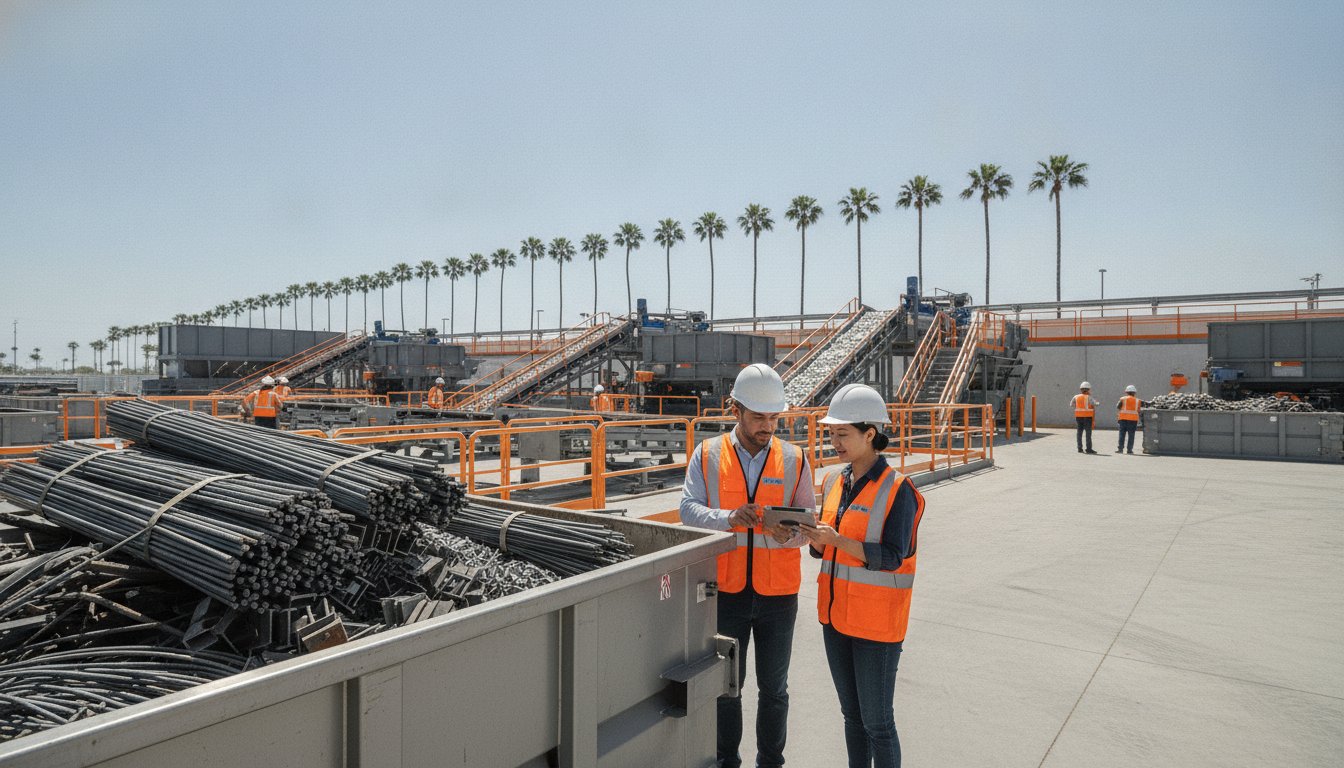
Could that pile of rusted industrial beams or old appliances actually be the most valuable asset sitting in your yard right now? Many Orange County contractors and homeowners feel the weight of heavy metal disposal, quite literally. It’s easy to feel overwhelmed by the logistics when you need to recycle scrap steel, especially when faced with complex transportation hurdles or confusing price sheets at the scale. You want a process that is as efficient as it is profitable, but finding a yard that handles mixed loads with professional standards can often feel like a gamble.
You deserve a transparent and rewarding experience every time you clear out your site. This expert guide provides everything you need to identify your materials, prepare them for the highest possible payout, and support Southern California’s circular economy in 2026. We’ll walk you through the specifics of steel grading, reveal professional preparation secrets for faster service, and show you how to find a reliable local partner for seamless bulk removal. By the end, you’ll have the confidence to turn your industrial leftovers into a streamlined source of revenue and a win for the environment.
Key Takeaways
- Master the simple magnet test to accurately distinguish between ferrous and non-ferrous metals for proper grading.
- Learn the professional preparation techniques needed to recycle scrap steel for the highest possible cash payout at the scale.
- Identify high-value steel sources found in everyday residential appliances and industrial construction materials like rebar and roofing.
- Understand how choosing a local recycling partner helps reduce landfill waste while supporting the Southern California manufacturing economy.
- Explore efficient logistics solutions, including commercial bin placement, designed to handle large-scale metal removal for industrial projects.
Understanding the Value of Scrap Steel Recycling in Southern California
Steel is the undisputed backbone of modern infrastructure. It’s the most recycled material on the planet, largely because it doesn’t lose its strength or durability during the reclamation process. When you choose to recycle scrap steel, you’re participating in a sophisticated industrial cycle that keeps Southern California moving. In 2026, this practice has evolved from a simple waste management task into a strategic financial decision for local contractors, demolition crews, and industrial manufacturers.
Orange County landfills face constant pressure from rising population density and limited space. Diverting heavy ferrous metals like steel is a top priority for municipal planners in cities from Santa Ana to San Clemente. For tradespeople, the incentive is twofold. First, you avoid the escalating tipping fees associated with mixed construction and demolition waste. Second, you tap into a reliable revenue stream. Steel prices remain a key indicator of industrial health, and high-quality scrap provides a consistent cash injection for businesses that manage their materials with precision.
The year 2026 marks a pivotal shift in California’s sustainability landscape. Updated green building standards now place a heavier emphasis on “embodied carbon,” which measures the total energy used to create building materials. By providing high-quality scrap back to the market, OC businesses help lower the carbon footprint of new local projects. It’s a professional, ethically driven approach that aligns with the modern standards of the Southern California construction industry.
The Role of Steel in the Circular Economy
Steel possesses a unique physical property: it can be melted and repurposed an infinite number of times without any loss in structural integrity. This makes it a permanent material that never needs to see the inside of a landfill. Modern steel production has shifted toward Electric Arc Furnaces (EAF), which utilize electricity to melt scrap rather than traditional blast furnaces that rely on raw iron ore. This process is significantly more energy efficient and relies almost entirely on the scrap you provide. In the context of Orange County scrap, a circular economy is a closed-loop system where steel is recovered, processed locally, and returned to the supply chain as new raw material.
Why Local Recycling Matters for OC Businesses
For businesses operating in industrial hubs like Anaheim, Irvine, and Costa Mesa, logistics are everything. Transporting heavy loads across the county is expensive and time-consuming. Utilizing local facilities reduces your carbon footprint and lowers overhead for construction and demolition projects. It’s about maintaining a well-oiled operation that stays compliant with California’s rigorous waste diversion mandates. Partnering with a local expert ensures your materials are handled with the transparency and speed your business requires to stay competitive. Before committing to a facility, reviewing a comprehensive guide to metal recyclers near me in Orange County can help you identify which yards offer the certified scales, fair pricing, and professional service your operation demands.
- Reduced Disposal Fees: Avoid the high costs of landfilling heavy ferrous materials.
- Regulatory Compliance: Meet CALGreen and local municipal waste diversion requirements easily.
- Economic Support: Keep raw materials within the Southern California industrial supply chain to support local jobs.
Identifying Your Metal: Ferrous vs. Non-Ferrous Steel Grades
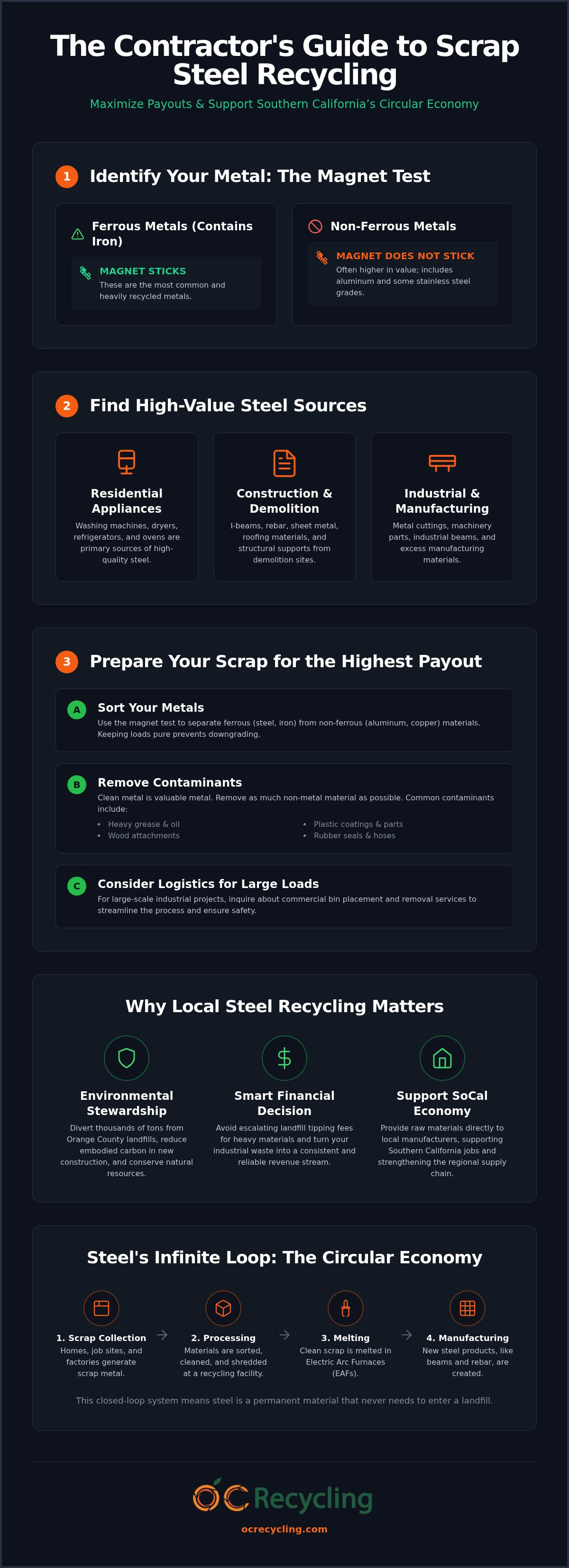
The first step to a successful payout is sorting. If you want to efficiently recycle scrap steel, you have to understand exactly what’s in your load. The industry standard for initial categorization is the magnet test. It’s the fastest way to separate your materials into two primary buckets: ferrous and non-ferrous. Grab a simple pocket magnet and touch it to your metal. If the magnet sticks with a firm snap, you’ve found a ferrous metal. If it slides right off, you’re likely looking at a high-value alloy or a non-ferrous material like aluminum or certain grades of stainless steel.
Purity equals profit in the recycling world. Identifying contaminants before you arrive at the yard is essential for maintaining your material’s value. Common contaminants include heavy grease, plastic coatings, wood attachments, or rubber seals. While most yards accept these mixed loads, the most efficient way to maximize your return is to present clean, stripped metal. If you’re unsure about a specific alloy, our team at any of our four locations can provide a professional assessment to ensure you receive the most accurate value.
The Ferrous Category: Iron and Standard Steel
Ferrous metals are the heavy hitters of the industrial world. Characterized by their iron content, these materials are magnetic, exceptionally strong, and generally prone to rust if left exposed to the coastal Orange County air. This category includes carbon steel, mild steel, and wrought iron. You’ll commonly find these in the form of structural I-beams, rebar from demolition sites, and heavy plate steel. While the per-pound price for ferrous scrap is usually lower than non-ferrous, the sheer volume and weight of these materials make them a significant revenue driver for construction and demolition projects across Southern California.
High-Value Stainless Steel and Alloys
Stainless steel represents the “stainless exception” in the world of steel recycling. While it’s a steel alloy, many high-grade versions are non-magnetic because of their high nickel and chromium content. Distinguishing between 304 and 316 grades can significantly impact your total payout. Grade 304 is the most common industrial standard, while 316 contains molybdenum, making it more resistant to corrosion and more valuable at the scale. For a deeper dive into these specifics, check out our guide on Stainless Steel Scrap Value and Grade Identification to see how these alloys are categorized. Understanding these nuances ensures you don’t leave money on the table by tossing high-value alloys into a standard ferrous bin. If you’re ready to move your inventory, partnering with a premier local yard is the best way to guarantee a transparent and rewarding transaction.
Common Sources of Scrap Steel: From Home Appliances to Demolition Sites
Steel is the invisible engine of Orange County’s growth. It’s in the skeletons of our new high-rises and the appliances in our kitchens. When you’re ready to recycle scrap steel, knowing exactly where to look within your own inventory or job site can drastically improve your bottom line. From residential cleanouts to massive industrial teardowns, the opportunities for recovery are constant and diverse. Identifying these sources early allows you to plan your logistics and maximize the value of every pound you bring to the scale.
Automotive steel remains one of the most reliable sources of heavy ferrous material. Frames, body panels, and engine components are designed for extreme durability, making them ideal for the melting process. Similarly, industrial and manufacturing facilities often produce a steady stream of “prompt scrap.” This includes punch-outs, off-cuts, and defective parts that are essentially pure steel ready for immediate reclamation. By capturing these materials before they’re mixed with general waste, you maintain a cleaner, more valuable product for the recycling facility.
Residential Recycling for Quick Cash
Many homeowners don’t realize that their old washing machines, dryers, and refrigerators are essentially cash sitting in their garage. These “white goods” are primary sources of heavy ferrous steel. Instead of letting them take up space or paying for a hauling service, bringing them to a professional yard ensures they’re processed safely. You can maximize your trip by combining your steel load with a visit to our CRV recycling center Santa Ana location. This allows you to secure a double payout for both your heavy metals and your household beverage containers in one streamlined stop.
Safety is paramount when handling these bulky items. Always secure your load with heavy-duty ratcheting straps rather than simple rope. If you’re transporting old fencing or patio furniture, ensure no sharp edges protrude from your vehicle’s bed. It’s about protecting yourself and others on the 55 or 405 freeways while you move your materials to the scale. Our staff is always ready to help you unload quickly so you can get back to your day with cash in hand.
Commercial and Demolition Steel Recovery
On active job sites in Tustin and Garden Grove, steel recovery is a high-volume operation. Construction scrap like rebar, structural I-beams, and metal roofing represents a massive portion of the local waste stream. The secret to maximizing your return is on-site sorting. Keeping your heavy melting steel (HMS) separate from lighter galvanized sheets or metal roofing prevents your entire load from being downgraded at the scale. This methodical approach ensures you’re paid the premium rate for each specific grade of metal you recover.
For industrial manufacturers, scrap often appears as proprietary parts or defective engine components. In cases where these items carry sensitive branding or intellectual property, certified product destruction is a critical service. This ensures your scrap is rendered unrecognizable before it enters the melting furnace. It provides you with peace of mind and a documented paper trail of destruction for your compliance records. Whether it’s a small residential load or a multi-ton industrial haul, our four facilities are equipped to handle the volume with the precision and speed you expect.
How to Prepare Your Steel Scrap for the Highest Payout
Preparation is the bridge between a standard load and a premium payout. When you recycle scrap steel, the condition of your material directly dictates the final number on your receipt. Efficiently managing your inventory before you hit the road ensures you aren’t leaving money on the table due to simple preparation oversights. By following a methodical four-step process, you transform a messy pile of industrial waste into a high-value commodity that moves through the scale with speed and transparency.
- Step 1: Sort by Grade. Keep your high-value stainless steel separate from standard mild steel. Mixing grades usually results in the entire load being priced at the lowest value, which is a common mistake that costs sellers money.
- Step 2: Strip Non-Metal Attachments. Remove any plastic handles, rubber seals, or wood frames. The cleaner the metal, the less labor is required for the yard to process it, which often translates to better rates for you.
- Step 3: Surface Cleaning. While a bit of surface rust is expected, heavy grease or oil can be a dealbreaker. Wiping down industrial parts or engine components makes them safer to handle and ensures they meet environmental standards.
- Step 4: Audit for Prohibited Items. Check for sealed containers or pressurized tanks. Safety is a top priority, and identifying these items early prevents delays or rejected loads at the gate.
Maximizing Payout Through Sorting
Recycling facilities differentiate between “prepared” and “unprepared” scrap based on size and purity. Clean scrap always fetches a premium because it’s ready for the furnace without further intervention. For example, if you’re dealing with steel-reinforced cables, taking the time to strip the insulation can significantly boost your return. Contamination from non-metallic materials like dirt, concrete, or heavy plastic reduces the usable weight of the load, leading to price deductions that could have been easily avoided with basic sorting. When evaluating where to bring your prepared load, consulting an Orange County comparison guide for metal recyclers near me helps you identify which facilities reward well-prepared scrap with the most competitive market-based rates.
Safety and Prohibited Items
Maintaining a secure and compliant facility is essential for the safety of our community and the environment. Certain items are strictly prohibited due to environmental hazards or explosion risks. This list includes propane tanks, mercury switches, and items containing CFCs like older refrigeration units. If you’re preparing automotive scrap, ensure all fluids are drained and tires are removed before arrival. OC Recycling prioritizes environmental compliance in every transaction to provide you with total peace of mind. If you have questions about a specific item, contact our expert team to ensure your load meets all safety standards before you arrive.
Professional Steel Recycling Solutions with OC Recycling
Choosing the right partner is the final and most critical step in your recycling journey. After you’ve identified your grades and prepared your materials, you need a facility that mirrors your professional standards. For over 15 years, OC Recycling has served as the premier choice for those looking to recycle scrap steel throughout Southern California. We’ve built our reputation on a foundation of institutional stability and community-focused service, ensuring every guest feels like a valued partner. With four modern, accessible locations across Santa Ana, Anaheim, and Costa Mesa, we’ve removed the logistical friction often associated with heavy metal disposal.
Our facilities are designed for speed and precision. We understand that for commercial contractors and industrial manufacturers, time is a non-renewable resource. That’s why we offer same-day cash payouts for both public and commercial accounts. Whether you’re dropping off a small residential load of patio furniture or managing a multi-ton industrial haul, our streamlined intake process gets you in, weighed, and paid without unnecessary delays. For our corporate clients, we provide specialized services like certified product destruction and secure logistics for tech upgrades, ensuring your proprietary materials are handled with the highest level of compliance and security.
Logistics for Large-Scale Projects
Large-scale demolition and construction projects require a more robust approach to waste management. If you’re managing a site in Huntington Beach or Tustin, our commercial bin placement service offers a seamless solution for long-term scrap collection. You can request a high-capacity roll-off bin to be delivered directly to your site, allowing your crew to sort materials as they work. This eliminates the need for multiple small trips and keeps your job site organized and safe. Our hauling team provides same-day processing and replacement, creating an efficient cycle that supports your project’s timeline. We also develop customized recycling programs tailored to the specific output of local manufacturers, ensuring your industrial off-cuts are recovered with maximum efficiency.
The OC Recycling Difference: Transparency and Trust
- Market-Based Pricing: We track industrial trends to provide the most competitive rates for your scrap.
- Certified Accuracy: Our scales are state-certified for precise, honest weighing.
- Community Commitment: We are a locally rooted business dedicated to Orange County’s environmental health.
Secure Your Payout and Support Orange County’s Industrial Future
You now have the professional tools to transform a cluttered job site or garage into a high-value revenue stream. By mastering the magnet test and following a methodical preparation process, you ensure that every load you bring to the scale is priced at its maximum potential. These simple steps don’t just increase your bottom line; they fuel Southern California’s circular economy and help our community meet the rigorous environmental standards of 2026. The decision to recycle scrap steel is a strategic choice that balances personal profit with a commitment to local sustainability.
OC Recycling has spent over 15 years perfecting a polished, transparent, and highly efficient experience for both residents and commercial contractors. With our state-certified scales and fully compliant processes, you can enjoy total peace of mind knowing you’re receiving fair, market-based value with the convenience of same-day cash. We’re ready to act as your reliable partner for everything from small residential drop-offs to large-scale industrial bin placements.
Get an Instant Quote for Your Scrap Steel at OC Recycling
Let’s work together to keep Orange County’s industry moving forward while keeping our local environment clean and productive.
Frequently Asked Questions
Is scrap steel magnetic?
Most scrap steel is magnetic because iron is its primary component. This magnetic property is the easiest way to identify ferrous metals in your inventory. It’s important to remember that certain high-value stainless steel grades are non-magnetic due to their nickel content. You should always use a magnet to sort your load before heading to the yard to ensure proper grading.
What is the current scrap metal value of steel in Orange County?
Steel prices shift daily based on global market demand and local industrial activity in Southern California. Because rates are tied to the current commodities market, we recommend visiting one of our four locations for a real-time quote. This ensures you receive the most accurate, transparent value for your materials on the day you choose to recycle scrap steel.
Can I recycle old appliances like refrigerators as scrap steel?
You can definitely recycle old appliances like refrigerators, washing machines, and dryers at our facilities. These items are often referred to as “white goods” and provide a substantial amount of heavy ferrous metal. Just ensure that any refrigerants or hazardous components are professionally drained before arrival to stay compliant with California environmental regulations and safety standards.
Do I need to clean the rust off my steel before recycling?
You don’t need to remove surface rust from your steel before bringing it to the scale. Rust is a natural result of oxidation and is a standard expectation in the recycling process. However, you should ensure the metal isn’t heavily contaminated with non-metallic attachments like thick plastic, rubber, or wood. These materials can affect the final weight and grading of your load.
What is the difference between ferrous and non-ferrous steel?
The primary difference lies in iron content and magnetism. Ferrous metals contain iron and stick firmly to a magnet, while non-ferrous metals don’t contain iron and are non-magnetic. While steel is technically a ferrous metal, high-grade stainless steel is often categorized differently in scrap yards due to its unique alloy composition and significantly higher market value.
How much scrap steel can I bring to OC Recycling at one time?
Our facilities are equipped to handle any volume, from a single appliance in a pickup truck to multi-ton loads from industrial demolition sites. We provide professional scale services for both the general public and commercial contractors. If you have an exceptionally large project, we can coordinate commercial bin placement to help you manage the flow of materials efficiently.
Does OC Recycling offer pick-up services for heavy steel beams?
We provide commercial bin placement for construction and industrial sites that need to recycle scrap steel on a large scale. While we don’t offer residential curbside pickup, our professional hauling team can deliver and swap roll-off bins for heavy beams and demolition debris. This service is designed to keep your job site organized while providing a seamless logistics solution.
Can I recycle steel cans with my other scrap metal?
Yes, you can include steel food and beverage cans with your other scrap metal loads. While they are lighter than structural steel or rebar, they are fully recyclable and contribute to the overall weight of your ferrous scrap. It’s helpful to rinse them out to remove any food residue before you bring them to our facility for processing.
