
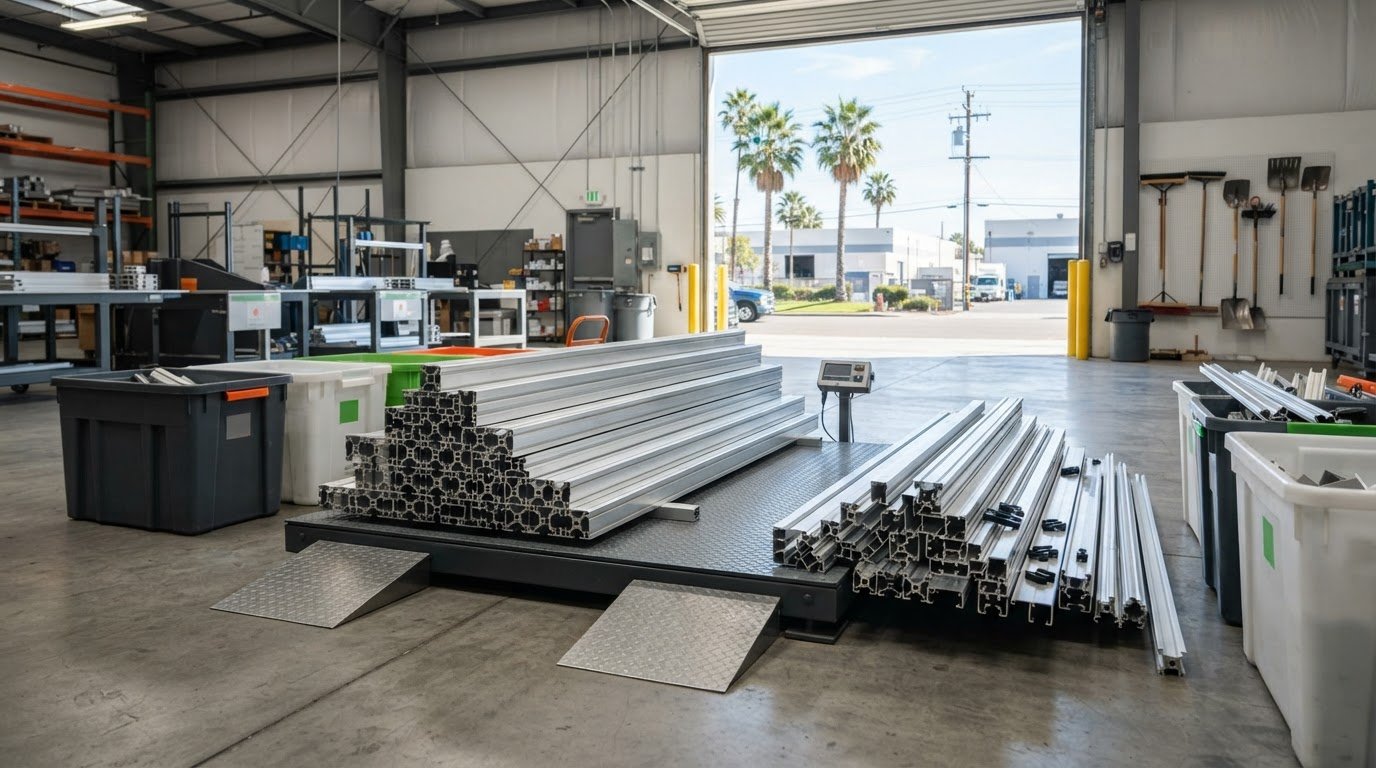
Scrap aluminum extrusion prices in Costa Mesa depend on the material’s grade, condition, and current market, not just its weight. Clean, sorted extrusion is assessed differently from mixed or contaminated scrap, so identifying what is in your load is the first step toward understanding its value.
There is no single rate for every aluminum extrusion load. Alloy, cleanliness, attached materials, quantity, and market movement all affect how scrap is assessed.
This guide explains how those factors shape grade-based estimates, why preparation can matter, and what to expect when selling scrap extrusion. You’ll also learn how aluminum’s market benchmark relates to yard pricing, so you can better understand the difference between a broad market reference and the value assigned to a particular load.
Key Takeaways
- Identify the aluminum grade before estimating its scrap value; clean 6063 extrusion is assessed differently from mixed or lower-grade aluminum.
- Separate non-aluminum attachments and keep extrusion clean to make its grade easier to assess.
- Use the LME benchmark as market context, not as a direct prediction of a recycling yard’s payout.
- Track daily market movement and material condition together to better understand why estimates can change.
- Learn how to prepare your extrusion and what factors shape its assessment before bringing it in for scrap metal purchasing.
Factors affecting scrap metal pricing
Scrap value reflects market conditions, material grade, cleanliness, and quantity. For Costa Mesa sellers, separating aluminum extrusion from copper, steel, plastic, and coated parts makes the material being assessed clearer at OC Recycling.
Clean 6063 Extrusion Pricing
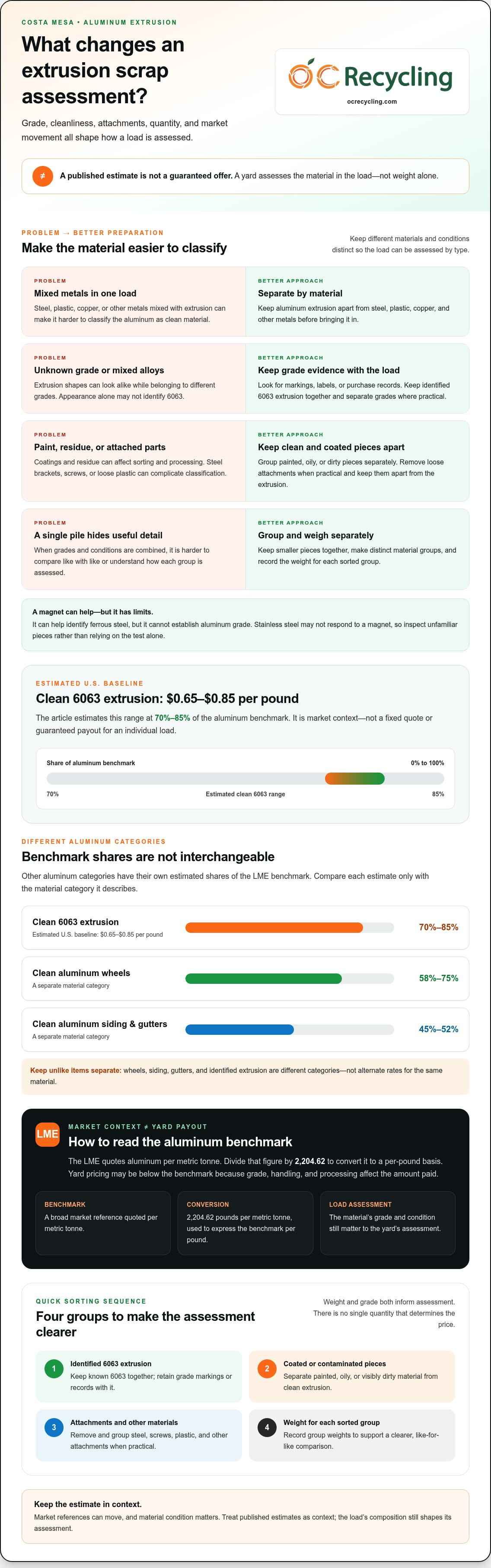
Clean 6063 extrusion has an estimated U.S. baseline value of approximately $0.65 to $0.85 per pound. That estimate is 70% to 85% of the aluminum benchmark. Yard prices were estimated from posted boards last checked on September 18, 2026. Treat the range as market context, not a guaranteed offer for an individual load.
Grade identification matters because mixed metals and attachments can affect classification. Keep a note of the extrusion’s condition and separate grades where practical.
Clean Versus Painted Extrusion
Yes, clean and painted extrusion can receive different prices because coatings and residue affect sorting and processing. Clean 6063 is the reference grade in the estimate above; painted pieces may be assessed differently from clean, uncoated material.
Before weighing, group painted sections separately from clean extrusion. Remove loose plastic or steel attachments when practical, and keep them apart. This makes the load easier to assess without assuming every piece has the same grade.
Sorting and Load Requirements
Separate aluminum extrusion from steel, plastic, and other metals before bringing it in to OC Recycling. Scrap is assessed by type and condition, so a mixed load may not be classified as clean aluminum.
Load requirements vary, so there is no single quantity that determines scrap aluminum extrusion prices Costa Mesa sellers receive. Keep smaller pieces together and different materials in separate groups. Both weight and grade inform the assessment.
Public scrap metal prices are useful reference points, not guaranteed local offers. The LME quotes aluminum per metric tonne; dividing that figure by 2,204.62 converts it to a per-pound basis. Yard prices may sit below that benchmark because grade, handling, and processing affect the amount paid.
Assess smaller quantities by weight and grade, rather than comparing them with retail prices for new aluminum products. Retail prices reflect finished goods; scrap value reflects recoverable material. Published estimates can provide context, but the load’s composition still matters.
California scrap-metal sale rules and payment methods depend on the transaction. Before selling extrusion, understand the purchase terms and payment method for your transaction at OC Recycling.
Clean 6063 aluminum extrusion prices
Clean 6063 extrusion has an estimated U.S. That estimate equals 70% to 85% of the aluminum benchmark. It offers a useful reference for Costa Mesa sellers, but it isn’t a fixed quote for every load. Material grade and condition influence how a yard classifies the aluminum.
The estimate is based on posted yard boards last checked on September 18, 2026. That date matters because market references can move, and a past board doesn’t represent every day’s assessment. Compare estimates with the date attached, and treat them as a snapshot rather than a standing price.
Before sorting, look for grade markings, labels, or purchase records that identify 6063. Keep those details with the material instead of relying only on appearance. Extrusion shapes can look alike while belonging to different grades, so records help distinguish a known alloy from mixed aluminum.
Cleanliness matters. Remove loose plastic, steel brackets, and screws where practical, and keep attachments separate. A magnet can help identify ferrous steel, but it cannot establish the aluminum grade. Stainless steel may not respond to a magnet, so inspect unfamiliar pieces rather than relying on the test alone.
Coatings and residue can affect classification. Keep painted, oily, or dirty pieces apart from clean extrusion instead of combining them to make a larger pile. Separate groups let the clean material be assessed on its own and help identify other scrap-metal categories.
For a more comparable estimate, prepare the load in clear groups:
- Keep identified 6063 extrusion together.
- Separate coated or visibly contaminated pieces.
- Remove and group steel, screws, plastic, and other attachments.
- Record the weight for each sorted group.
Those steps make it easier to compare like with like. A clean, documented group is a stronger basis for discussing the published 6063 estimate than a mixed load containing stainless, steel, or unknown alloys. Sorting also supports efficient recycling by keeping different metals distinct.
Use market estimates as context, then weigh the material and review its condition. For Costa Mesa sellers, careful sorting and clear grade information make an assessment easier to understand. A published estimate is a reference, not necessarily the final offer.
Other aluminum categories provide useful context, but they should remain separate from clean 6063 extrusion when comparing estimates. The page estimates clean aluminum wheels at 58% to 75% of the LME aluminum benchmark, while the page estimates clean aluminum siding and gutters at 45% to 52% of the LME aluminum benchmark. Those benchmark shares describe different material categories, not a revised rate for extrusion.
Estimated U.S. Keep siding, gutters, wheels, and identified extrusion in distinct groups when discussing a load, and make clear which category each estimate refers to. That keeps the 6063 comparison focused on the material actually being assessed and avoids treating unlike aluminum items as interchangeable.
Estimated scrap aluminum prices by grade
Aluminum scrap categories are not interchangeable. Clean extrusion, wheels, siding, gutters, sheet, beverage cans, cast pieces, and dirty turnings can each be assessed differently. Identify the material first, then compare its condition with the closest category. This makes published estimates more useful without treating every aluminum load alike.
Clean 6063 extrusion belongs in a different category from mixed or contaminated aluminum. Clean wheels and siding have their own estimated market ranges, as do sheet aluminum, beverage cans, and cast aluminum. Dirty aluminum and turnings sit at the lower end of the listed category estimates. These distinctions reflect sorting and processing differences, not simply the metal’s color or shape.
Use this practical sorting sequence before comparing estimates:
- Separate recognizable extrusion from sheet, cast pieces, cans, and wheels.
- Keep dirty turnings apart from clean, solid aluminum.
- Remove attached steel or stainless steel where practical.
- Set aside radiators, valves, and mixed assemblies for closer identification.
A radiator may contain aluminum alongside copper or other metals, and appearance alone does not establish its category. Valves may also include non-aluminum parts. Keep these assemblies separate from clean extrusion so a mixed-material load is not mistaken for a single grade.
California sellers should bring identification and any records that describe the material or help establish ownership. Paperwork expectations depend on the transaction and yard procedures. For business loads, keep relevant purchase, inventory, or job records together to help explain the scrap’s origin and contents.
The amount for a specific load depends on its grade, cleanliness, attachments, and composition. Compare estimates only when they describe similar aluminum categories and conditions.
Market estimates are snapshots, not a promise of what a particular load will receive. An estimate for clean extrusion does not apply to a pile containing cans, cast pieces, stainless steel, and coated scrap. An estimate for dirty turnings likewise does not describe clean, solid extrusion. Match the category first, then consider condition and current market context.
For a clearer comparison, label sorted groups by material and condition before weighing. Note whether each group contains clean extrusion, painted pieces, sheet, or mixed assemblies, and keep supporting records with the matching group. This helps you compare like grades and conditions rather than unlike loads.
On a benchmark basis, sheet aluminum is estimated at 40% to 48% of the LME aluminum benchmark, while beverage cans are estimated at 36% to 44%. Cast aluminum is estimated at 35% to 43%, and dirty aluminum and turnings at 3% to 14%. These percentages provide a category-level reference, not a substitute for matching the actual load to its grade and condition.
Another view is the estimated U.S. Keep per-pound estimates distinct from benchmark percentages when comparing categories, and use each only for the material type it describes.
Daily price changes
Aluminum scrap estimates can change as market benchmarks move, so a price is meaningful only alongside its date and grade. Treat the figure as a dated reference, not a standing offer for extrusion in Costa Mesa.
Estimates also vary by material category. These ranges show why a market update for one grade cannot simply be applied to another.
Posted yard boards used for estimates were last checked on September 18, 2026. That difference in dates matters: the benchmark and posted yard estimates don’t represent one simultaneous market snapshot. When comparing figures, note both the date and the category. A newer reference may reflect a changed market, while an older board may lag behind.
For a useful comparison, record these details each time you review an estimate:
- The date the benchmark or yard board was posted.
- The aluminum grade and condition described.
- The unit, such as price per pound.
- The material weight and any visible contamination.
Weight affects the total because a per-pound figure applies to the material weighed. Keep plastic, rubber, and steel attachments separate where practical. If they remain mixed with extrusion, the gross weight will not represent aluminum alone. Sorting also makes later comparisons more accurate.
Market movements are only one part of the assessment. A clean extrusion load and a dirty or mixed load can be classified differently, even when brought in on the same day. Compare like with like: clean 6063 against clean 6063, rather than against cans, turnings, or cast aluminum.
Use a simple tracking note for each load: date, estimated grade, condition, separated attachments, and weight. For example, if you compare a posted clean-extrusion estimate from September 18 with the October 25 benchmark, label both dates clearly. That avoids treating a dated estimate as today’s confirmed yard price.
Before deciding when to sell, consider current market context and the material you actually have. Keep clean extrusion separate from pieces with plastic, rubber, or other attachments. A dated estimate provides market context, while accurate grade and weight make the comparison more relevant to your load.
Scrap aluminum extrusion price
Scrap aluminum extrusion prices in Costa Mesa depend on grade, condition, weight, and market timing. Clean 6063 extrusion has an estimated U.S. That’s a useful benchmark, not a guaranteed value for every load. Material with contamination, attachments, or mixed grades needs a different assessment.
Which scrap yards near Costa Mesa buy aluminum extrusion? Look for scrap-metal buyers that purchase nonferrous aluminum and assess extrusion by grade. Their material categories and evaluation methods determine whether clean 6063 can be separated from painted or mixed pieces.
The estimated clean 6063 range equals 70% to 85% of that benchmark. The difference reflects the gap between a broad market reference and yard pricing for sorted material. Scrap metal prices therefore need context: compare the same grade, condition, unit, and date.
Check the load before estimating its value. A step-by-step review can make the material easier to describe:
- Separate identified 6063 extrusion from other aluminum shapes.
- Set aside pieces with paint, oil, or visible contamination.
- Remove loose plastic, rubber, steel, and chrome attachments where practical.
- Record the weight of each sorted group.
Do not automatically classify chrome-plated or mixed-metal pieces as clean aluminum extrusion. Brackets, fasteners, and decorative finishes can affect classification. Keep unusual components separate and describe them accurately to distinguish the aluminum from attached metals or coatings during assessment.
Weight affects the total return. A per-pound estimate applies to the measured aluminum, not necessarily every item in a mixed container. Separating extrusion, steel brackets, and plastic gives a clearer basis for comparison. Use the same scale unit when reviewing estimates.
Use dated references carefully. The posted-board estimates behind the yard range were last checked on September 18, 2026, while the benchmark figure is dated October 25, 2026. Those dates represent different snapshots. Don’t treat them as a single, same-day quote or apply the extrusion range to cans, turnings, or cast aluminum.
For a practical comparison, note the grade, condition, weight, and date beside each estimate. Then compare the resulting description with the clean 6063 category. If you’re ready to sell sorted extrusion, explore scrap metal purchasing as a next step.
OC Recycling: CRV Redemption
OC Recycling purchases aluminum extrusion and other scrap metal through its Scrap Metal Purchasing service. Sort the extrusion by grade and condition before bringing it in. Keep beverage containers separate: CRV Redemption is for eligible containers, not extrusion.
OC Recycling also offers Electronics Recycling and Certified Product Destruction. Sorting each material into its proper stream helps you choose the relevant service for scrap metal, electronics, or another recycling need.
Contact OC Recycling to discuss your scrap metal.
Turn Your Scrap Into a Clear Next Step
Keep a simple record of where aluminum came from and how it was sorted to make future sales easier to manage. This can help you compare scrap aluminum extrusion prices in Costa Mesa over time and plan for leftover material from upcoming projects.
OC Recycling offers Scrap Metal Purchasing for recyclable metal, CRV Redemption for eligible beverage containers, and Electronics Recycling for unwanted devices. Keeping these streams separate helps direct each material to the appropriate recycling service.
Whether you are sorting a small batch or materials from ongoing work, a clear routine makes the next step easier. Gather what you know about the material and any relevant project records, then choose the recycling service that fits.
Contact OC Recycling about your scrap and take the next step with confidence.
Frequently Asked Questions
What is the current scrap aluminum extrusion price per pound in Costa Mesa, California?
That is a dated U.S. yard estimate, not a live Costa Mesa quote. For a useful comparison, identify whether your pieces are 6063, note any coating or contamination, and record the net aluminum weight. Those details help distinguish your load from mixed-grade material.
How can I check today’s aluminum extrusion scrap prices before visiting a Costa Mesa yard?
Check a yard’s latest posted price information and note its date, grade, and unit before loading your vehicle. Then contact the yard directly with the extrusion’s grade, condition, approximate weight, and details about attached materials. For OC Recycling, call 714-RECYCLE (732-9253) about Scrap Metal Purchasing. A clear description helps you discuss the material you actually plan to bring in, rather than relying only on a broad market benchmark.
What quantity minimums or load requirements do local scrap yards have for aluminum extrusion?
Load requirements vary, so there is no single quantity that determines aluminum extrusion pricing in Costa Mesa. Keep smaller pieces together and separate different materials, since both weight and grade inform the assessment.
