
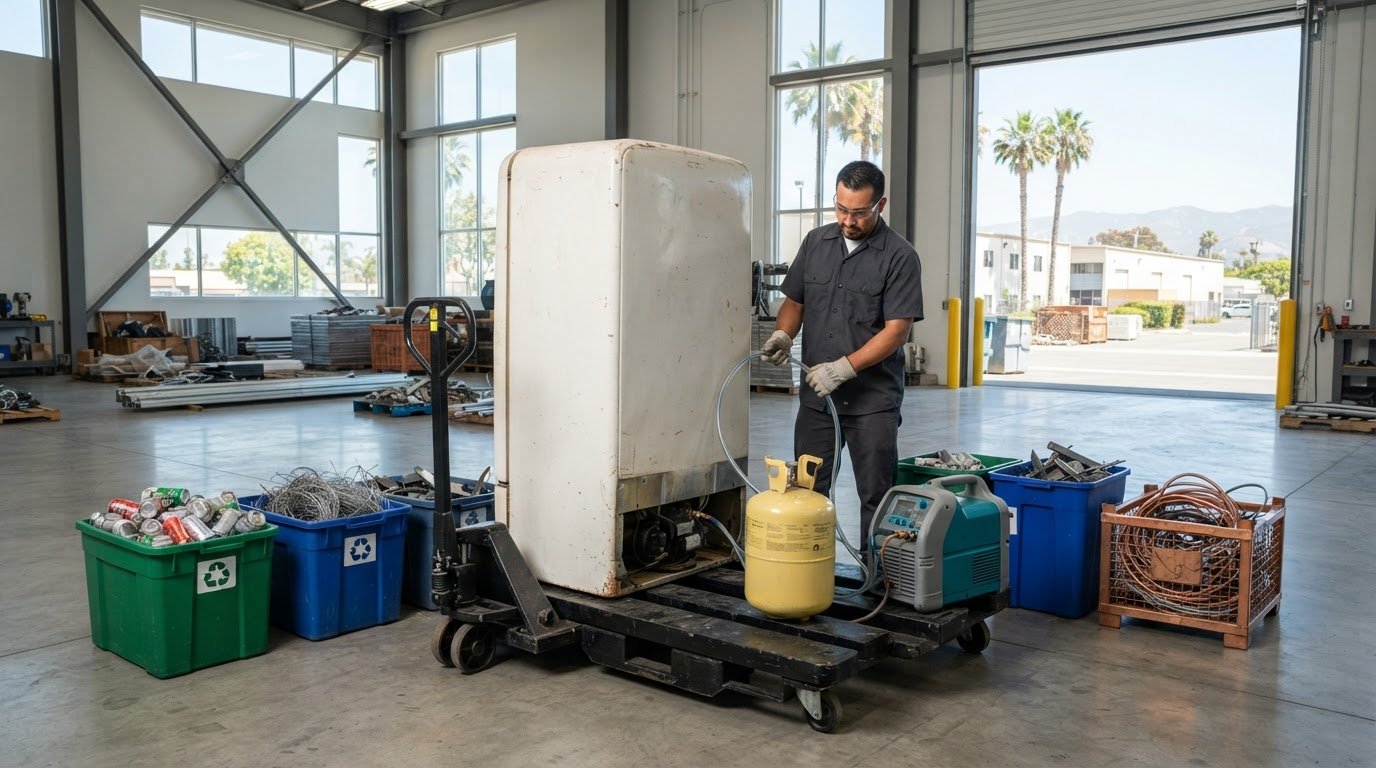
A refrigerator may qualify for Santa Ana’s bulky-item pickup, but it still needs careful handling before it’s recycled. If you’re searching for refrigerator recycling Santa Ana options, first confirm who will accept the appliance and how its refrigerant will be managed.
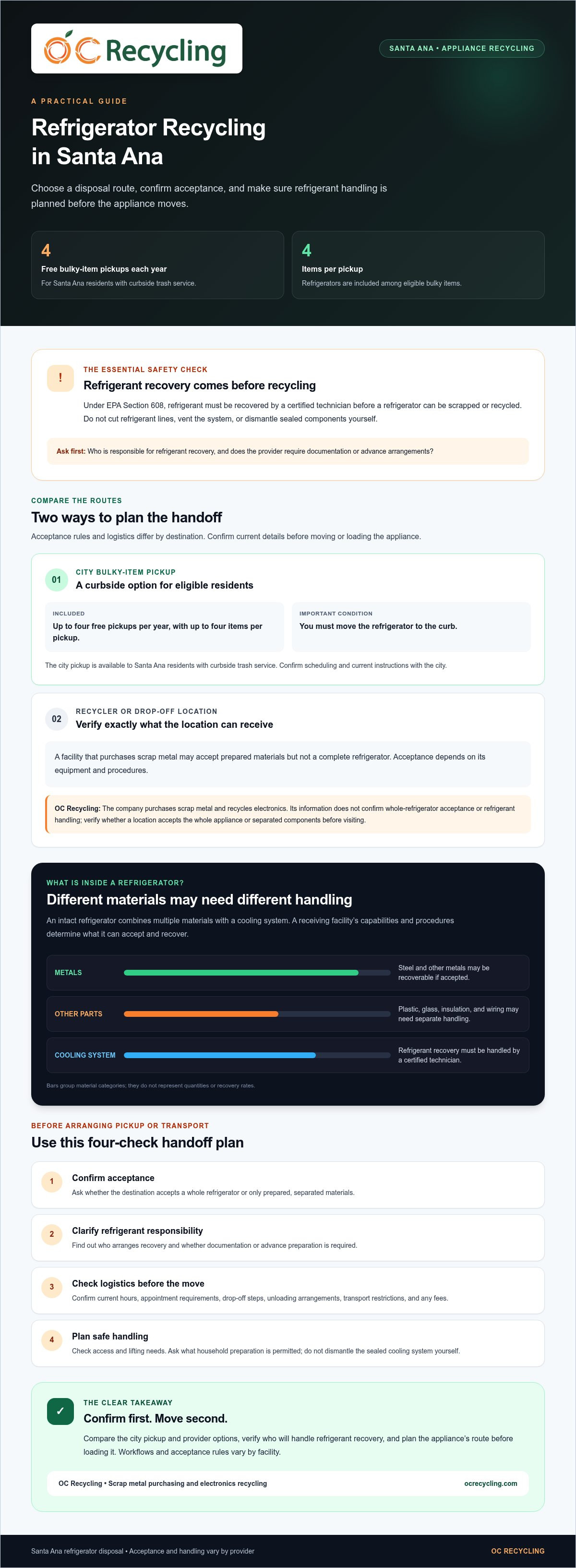
A straightforward drop-off can sound appealing, especially when a refrigerator is heavy and acceptance rules are unclear. Santa Ana residents with curbside trash service can schedule up to four free bulky-item pickups each year, with up to four items per pickup, including refrigerators. The city’s pickup option requires you to move the appliance to the curb.
This guide explains how to prepare an old refrigerator, compare disposal routes, and check acceptance and transport requirements before making a trip. It also covers why refrigerant handling matters: under EPA Section 608, refrigerant must be recovered by a certified technician before a refrigerator can be scrapped or recycled. OC Recycling purchases scrap metal and recycles electronics, but contact the company to confirm whether a location accepts whole refrigerators or separated components before visiting.
Key Takeaways
- For refrigerator recycling Santa Ana, compare disposal routes and confirm each provider’s current acceptance rules before choosing.
- Ask who is responsible for refrigerant handling and what preparation or documentation the receiving provider requires.
- Plan the move before arranging transport. Check access, lifting needs, appointments, and any fees with the provider.
- OC Recycling offers scrap metal purchasing and electronics recycling. Contact the company to verify whether a location can accept your appliance or its separated materials.
Refrigerator Recycling in Santa Ana: Why Disposal Takes More Than a Scrap-Metal Drop-Off
Replacing a refrigerator is only part of the job. The old unit is bulky and difficult to move, and its materials may need different handling. A quick trip to a scrap yard isn’t always an option. Responsible recycling means recovering suitable materials and managing the appliance’s components appropriately, not treating every part as ordinary scrap.
A refrigerator combines metal with plastic, glass, insulation, wiring, and a cooling system. Some models contain refrigerants that require careful handling, and refrigerant types vary by model and age. For background on refrigerants and their environmental impact, it helps to understand why an intact appliance may need different processing from metal already prepared for recycling.
What makes refrigerator recycling different from ordinary scrap?
An intact refrigerator still has its components assembled, including the refrigeration system. A facility that purchases scrap metal may accept certain prepared materials but not a complete appliance. Acceptance depends on the facility’s equipment and procedures, so don’t assume a refrigerator qualifies just because it contains metal.
After appropriate preparation, some parts may be separated for material recovery. That doesn’t mean you should dismantle the unit or try to remove refrigerant yourself. Ask the receiving provider what preparation is permitted and who handles the cooling system.
What should Santa Ana residents verify first?
Before loading the refrigerator, call the destination and ask specific questions. Confirm whether it accepts a whole refrigerator or only prepared, separated materials. Ask who handles refrigerant recovery and whether you need to provide documentation or arrange that step in advance.
Check the practical details too: current drop-off instructions and hours, appointment requirements, unloading arrangements, and transport restrictions. If available, note the model information, since appliance details may help the facility assess acceptance.
- Whole unit or parts: What exactly can the location receive?
- Refrigerant: Who is responsible for handling it, and is documentation needed?
- Logistics: What are the current hours, drop-off steps, and transport expectations?
For refrigerator recycling Santa Ana, confirming these points first makes it easier to choose a route and plan the move. OC Recycling offers scrap metal purchasing and electronics recycling in Orange County, but its published information doesn’t confirm whole-refrigerator acceptance or refrigerant handling. Contact the company to ask about current policies before visiting.
How Refrigerator Recycling Works: Refrigerants, Components, and Material Recovery
Refrigerator recycling involves a series of checks and processing steps, not just a drop-off. The receiving facility confirms what it can accept and whether the appliance needs preparation. Depending on its procedures, the unit may then be made safe for processing, separated into components, and sorted so suitable materials can be recovered. Workflows vary by facility, so ask what will happen to your refrigerator rather than assuming every destination follows the same process.
Why refrigerant handling belongs with qualified professionals
Household preparation means getting the appliance ready to hand over; refrigerant work belongs with a qualified professional. Don’t cut refrigerant lines, vent the system, or dismantle sealed components yourself. Refrigerant handling raises environmental and equipment-safety concerns. EPA Section 608 guidance addresses refrigerant recovery, while California’s Department of Toxic Substances Control (DTSC) provides state-level hazardous-materials guidance. Check current EPA and DTSC information, and ask the provider who will handle refrigerant recovery and what qualifications or records may apply.
Which refrigerator materials may be recovered?
Once a facility has accepted and appropriately prepared a unit, it may separate materials such as steel and other metals for recovery, depending on its capabilities and acceptance rules. Other parts may need distinct handling:
- Metals: Steel and other metal components may be recyclable if the facility accepts them.
- Plastics and insulation: These materials may require sorting or a separate processing route.
- Wiring and other components: Their destination depends on the facility’s procedures and available recovery options.
Recycling doesn’t guarantee that every component will be reused or recycled. The facility’s equipment, preparation standards, and material outlets determine what can be recovered. Ask which parts it accepts and how it handles anything it can’t process.
For refrigerator recycling Santa Ana, ask: “What steps do you perform here, and what must be completed before delivery?” This clarifies who is responsible for each step without asking you to handle sealed-system components yourself. OC Recycling offers scrap metal purchasing and electronics recycling, but its published information doesn’t confirm whole-refrigerator acceptance or refrigerant removal. You can review OC Recycling’s recycling services and confirm current acceptance policies before arranging a visit.
Compare Santa Ana Refrigerator Disposal Options Before You Choose
The right route depends on whether you’re replacing the refrigerator, whether you can move it, and what the receiving provider accepts. Compare the practical details before scheduling a collection or loading the appliance. Policies vary, so treat unconfirmed terms as questions to ask, not guaranteed services.
| Option | Acceptance and refrigerant handling | Transport | Fees and appointment |
|---|---|---|---|
| Retailer or delivery provider | Ask if haul-away is available for your purchase, which appliance conditions qualify, and who handles refrigerant. | Confirm whether removal is from inside the home or requires the refrigerator to be accessible. | Check any charges and arrange removal when booking delivery; terms vary by provider. |
| Appliance-recycling or removal provider | Confirm whole-unit acceptance and how refrigerant is managed. | Ask whether collection is available and what access or preparation is required. | Request a quote and confirm whether an appointment is needed. |
| Santa Ana bulky-item pickup | The city’s service includes refrigerators, but confirm handling instructions for your unit. | Residents with curbside trash collection must move the item to the curb. | Eligible residents can schedule four free pickups per year, with up to four items per pickup, through Republic Services at (657) 467-6220. |
| Direct recycler drop-off | Ask whether the facility accepts a whole refrigerator, prepared components, or metal-only loads, and who is responsible for refrigerant handling. | Plan to transport the appliance unless the facility confirms another arrangement. | Verify current fees, drop-off hours, and appointment requirements before setting out. |
When retailer or appliance-removal service may fit
When to contact a local recycling facility
Call with the refrigerator’s type and condition before making the trip. Ask whether the facility accepts a complete unit, prepared components, or only metal. Confirm refrigerant arrangements, transport expectations, current hours, and appointment rules. OC Recycling offers scrap metal purchasing and electronics recycling, but whole-refrigerator acceptance and appliance pickup are unconfirmed. Verify directly before visiting. For other current options, consult Santa Ana or Orange County municipal guidance.
For refrigerator recycling Santa Ana, a quick confirmation can save a difficult, unnecessary trip. Choose a route only after you know what it accepts, who handles the cooling system, and how the appliance must get there.
Prepare an Old Refrigerator for Recycling and Transport Safely
Planning ahead can make refrigerator removal safer and help prevent a wasted trip. Start with the receiving provider’s rules, then prepare the unit and arrange transport. Don’t disconnect or dismantle sealed refrigeration components yourself.
A simple pre-trip checklist for Santa Ana residents
- Confirm acceptance and transport requirements. Ask whether the destination accepts a whole refrigerator or only prepared parts, and whether you must deliver it yourself.
- Check the logistics. Verify current hours, any fees, whether an appointment is needed, and where or how the unit should be unloaded.
- Ask what stays attached. Confirm instructions for doors, shelves, cords, and other parts. Follow the provider’s cleaning directions.
- Empty and prepare the interior. Remove all food and secure loose shelves or drawers so they don’t slide or break during movement.
- Arrange suitable help and a vehicle. Plan for the refrigerator’s size and weight, and confirm the vehicle can transport it as the provider requires.
Protect people and property during removal
Use appropriate lifting help and clear the path to reduce the risk of injury or damage to floors, walls, and doorways. During transport, keep the refrigerator upright and secure it against shifting if the vehicle and receiving provider’s instructions allow. Secure the doors so they can’t swing open, unless the provider gives different instructions.
Keep children away from the work area and any removed appliance. Follow applicable local safety guidance for storing or moving an old refrigerator. If you suspect a refrigerant leak or notice damage to the cooling system, stop handling the unit and seek advice from a qualified professional. Don’t cut refrigerant lines, vent the system, or attempt sealed-system repairs.
These steps can make refrigerator recycling Santa Ana safer and more predictable, but the receiving provider’s instructions take priority. OC Recycling offers scrap metal purchasing and electronics recycling; its whole-refrigerator acceptance, refrigerant handling, and home pickup are not confirmed. Contact OC Recycling to verify appliance acceptance and requirements before arranging transport.
Contact OC Recycling to Confirm the Right Santa Ana Recycling Route
Before choosing a destination, confirm three things: whether it accepts the appliance or its prepared materials, who is responsible for refrigerant handling, and how the item must be transported. Asking first can help you avoid arriving with a refrigerator the facility isn’t equipped to receive.
OC Recycling is an Orange County recycler with four locations and confirmed services that include scrap metal purchasing and electronics recycling. Its published information doesn’t confirm acceptance of intact refrigerators, refrigerant removal, or residential pickup. Contact the company about its current policies rather than assuming it accepts whole appliances.
What to ask before visiting an OC Recycling location
Be specific about what you have and where you plan to take it. Ask whether that location currently accepts a whole refrigerator or only certain prepared materials from it. Before loading anything, confirm the required preparation, whether refrigerant-related documentation is needed, the location’s current hours, and unloading instructions.
- Does this location accept the complete refrigerator, separated components, or metal-only loads?
- What preparation is required, and who must arrange refrigerant handling?
- Are there documentation, appointment, transport, or unloading requirements?
If the answer is no, ask which local authority or service can advise you on alternatives. Santa Ana or Orange County municipal guidance can help you check local disposal options. A retailer or verified appliance-removal provider may also be worth contacting if you need whole-unit handling.
Choose a responsible next step for your appliance
Use a provider that confirms it can accept and handle the complete refrigerator if that’s the route you need. For direct drop-off, take only materials the destination confirms it currently accepts, and follow its instructions. Don’t assume scrap-metal purchasing means an intact appliance or its sealed cooling system is accepted.
For a clear answer about OC Recycling’s confirmed services and current location policies, contact OC Recycling to confirm accepted materials and current location guidance. Checking first helps you choose a practical route for refrigerator recycling Santa Ana without making assumptions about acceptance, refrigerant work, or pickup.
Make Your Next Recycling Step with Confidence
Responsible refrigerator recycling Santa Ana starts with a few clear checks: confirm whether the destination accepts the whole appliance or only prepared materials, ask who handles refrigerant, and understand transport requirements before setting out. These details help you choose a practical route and avoid unsafe handling or a wasted trip.
OC Recycling has served Orange County for over 15 years and has four locations across the county. Its confirmed services include scrap metal purchasing and electronics recycling. Whole-refrigerator acceptance, refrigerant removal, and residential pickup aren’t confirmed, so contact the company before visiting to ask about current location policies.
Contact OC Recycling to confirm accepted materials and current location guidance. With that information, you can make a safer, more informed plan for your old appliance.
Frequently Asked Questions
Where can I recycle a refrigerator in Santa Ana?
Check current City of Santa Ana guidance or contact a recycler directly. Eligible residents with curbside trash collection can schedule four free bulky-item pickups each year, up to four items per pickup, including refrigerators, through Republic Services at (657) 467-6220. Ask any facility about intact-unit acceptance, refrigerant handling, and appointments before transporting the appliance. Residents in Anaheim, Costa Mesa, Huntington Beach, Orange, Irvine, Garden Grove, Westminster, Fountain Valley, and Tustin should check their own city guidance.
Does OC Recycling accept refrigerators?
OC Recycling’s published business information confirms scrap metal purchasing and electronics recycling, but doesn’t confirm acceptance of whole refrigerators or refrigerant removal. Contact the specific location before transporting an appliance. Describe whether it’s intact, damaged, or already prepared, and ask what materials are accepted, what preparation or documentation is required, and what the current hours and unloading instructions are. Don’t assume that a service accepting scrap metal can take a complete refrigerator.
Can I take a refrigerator to a scrap metal recycler?
Possibly, but acceptance depends on the recycler and the appliance’s condition. Some facilities may take prepared metal or certain appliances, while others won’t accept an intact refrigerator. Call ahead to ask whether the site accepts the complete unit or only separated materials, who is responsible for refrigerant handling, and what preparation is required. Confirm unloading and appointment details too, so you don’t make a difficult trip with an item the facility can’t receive.
Do I need to remove refrigerant before recycling a refrigerator?
Don’t try to remove refrigerant, cut lines, or dismantle the sealed system yourself. Ask the receiving provider who handles refrigerant recovery and whether any documentation is needed. The U.S. EPA and California Department of Toxic Substances Control (DTSC) are relevant sources for current guidance. Check their latest information and confirm with the provider, since specific obligations may depend on the work and circumstances.
Can I put an old refrigerator out for curbside pickup in Santa Ana?
Santa Ana offers scheduled bulky-item pickup for refrigerators, but don’t leave one out with regular cart collection without checking the instructions. Residents with curbside trash service can schedule four free bulky-item pickups per year, with up to four items per pickup, by calling Republic Services at (657) 467-6220. The appliance must be moved to the curb. Confirm current scheduling and placement requirements before setting it out. OC Recycling doesn’t offer residential curbside pickup.
How should I prepare a refrigerator for recycling?
First, confirm the destination accepts the refrigerator and ask for preparation instructions. Remove food, secure loose shelves and drawers, and follow the provider’s cleaning directions. Ask whether doors, shelves, cords, or other parts should remain attached. Arrange suitable lifting help and transport, and follow the provider’s loading and unloading guidance. Keep the sealed cooling system intact; don’t cut refrigerant lines or attempt repairs or dismantling.
Is refrigerator recycling different from electronics recycling?
Yes. A refrigerator is a large appliance made of mixed materials and may contain refrigerants that require careful handling. Electronics recycling covers items accepted under a facility’s specific electronics policy. A recycler that accepts electronics doesn’t necessarily accept refrigerators or their components. Before arranging transport, describe the exact item and its condition, then confirm acceptance, preparation instructions, and handling requirements with the destination.
