
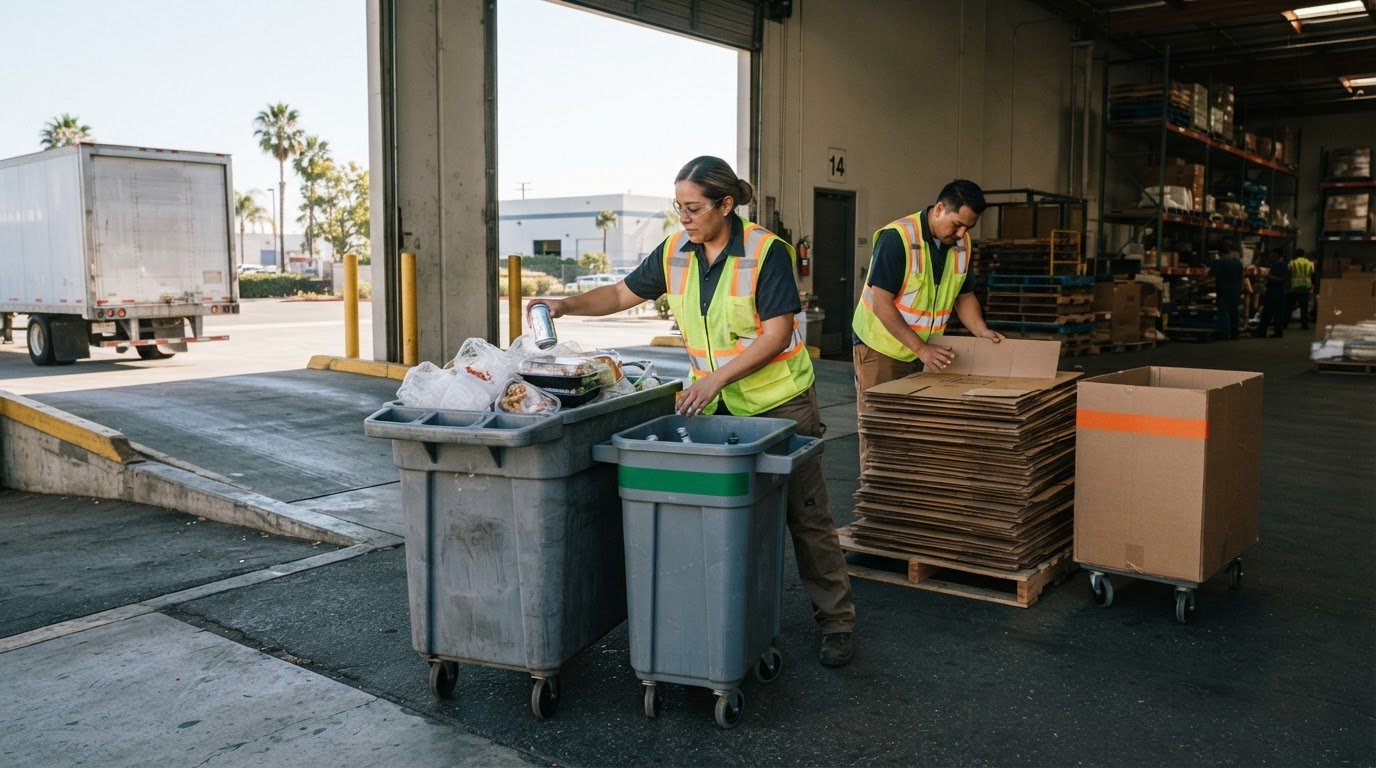
A recycling program can fail before the first bin is filled if it doesn’t match local rules. To learn how to start a recycling program at work, first check which materials your municipality accepts and what collection service is available. Then choose a convenient collection setup, explain it clearly to employees, and track what gets recycled and what ends up in the trash.
It’s easy to assume that adding labeled bins is enough. A lasting workplace recycling program also needs clear sorting instructions, staff who understand the collection routine, and regular adjustments based on what your workplace actually discards.
This guide covers practical steps, from understanding local requirements and choosing single-stream or separated collection to educating employees and reviewing results. Start with a manageable setup, make it easy to recycle correctly, and build on what you learn over time.
Key Takeaways
- Confirm which materials local programs accept before deciding what your workplace will collect.
- Choose a collection method that fits your facility, then make bin labels and pickup routines easy to follow.
- Build employee participation with clear instructions, practical training, and a designated program lead.
- Use waste audits and recycling records to spot problems and guide future improvements.
Employee education and program communication
To gain management and employee support, assign a recycling point person and involve staff in planning. Explain why materials are collected, what belongs in each bin, and where employees can recycle. Invite questions and suggestions.
-
Educate Employees About Recycling
Post clear guidelines beside each recycling container, using photos and concise labels to show accepted items. For example, label a bin “Paper and cardboard” rather than relying on a general “Recycling” sign. Share the same instructions by email, in employee manuals, and during onboarding, so people can find them where they already get workplace information.
-
Provide Ongoing Recycling Training
Train employees and janitorial staff on accepted materials, collection locations, and pickup routines. Give practical examples, such as which paper products go in the paper bin and what should stay out. Repeat the guidance during department orientations and staff meetings, especially when instructions change. Clear, consistent communication helps reduce contamination, which can result in a load being sent to a landfill.
-
Build Management and Employee Buy-In
Ask management to support the program’s goals and give employees a way to shape its daily routine. A recycling point person can answer questions, coordinate an interested employee team, and collect suggestions. Introduce the program at a staff meeting or lunch-and-learn, then explain how recycling fits into everyday work. Keep janitorial staff informed so recyclables are collected separately from trash.
Keep signs, emails, onboarding materials, and team discussions consistent. Explain why recycling matters and where collection is available, then share employee suggestions with the recycling team. Regular education helps the program keep pace as workplace routines evolve.
Choosing single-stream or multi-stream collection
Match collection to the materials your workplace generates and the sorting instructions your service uses. Clear labels and coordinated pickups help employees sort recyclables correctly.
- Choose a collection method. Single-stream recycling collects all accepted recyclable materials together in one bin. Multi-stream collection uses separate bins for different material categories, such as paper, plastic, and electronics. Ask facilities management which approach fits the building’s collection and storage routine, then coordinate pickup times and locations with the recycling service.
- Plan around setup costs. There’s no single cost for starting a workplace program. Expenses depend on the collection setup, including bins, signs, storage needs, pickup frequency, and whether materials require separate collections. A service price depends on the project and is provided after a quote request.
- Use precise labels. Put large, readable labels with words and pictures on or beside each container. Choose “Plastic Bottles and Jugs” instead of the broad label “Plastic,” and mark an aluminum container “Cans” or “Aluminum Cans.” Label trash “Landfill” where appropriate. Consistent signs help employees identify the right bin quickly and reduce sorting mistakes.
- Identify likely materials. Common workplace recyclables include plastic bottles, tubs, and jugs; aluminum and steel cans; and mixed paper and cardboard. Offices may also generate items such as file folders and catalogs. Which materials a workplace can collect depends on the local program and the collection service’s accepted categories. Separate electronics when the collection arrangement calls for it. For that stream, consider electronics recycling options.
- Prevent contamination. Keep food waste separate from plastics, and don’t place items in a bin simply because their material seems recyclable. Follow the accepted-material list shown on each container. Contamination can make an entire load non-recyclable and send it to a landfill, so clear labels and correctly placed bins matter.
Monitoring program performance and conducting waste audits
Use waste audits and collection records to see which materials your workplace recycles and where sorting breaks down. Review the findings regularly and adjust the program based on evidence from your facility.
-
Assess the Workplace Waste Stream
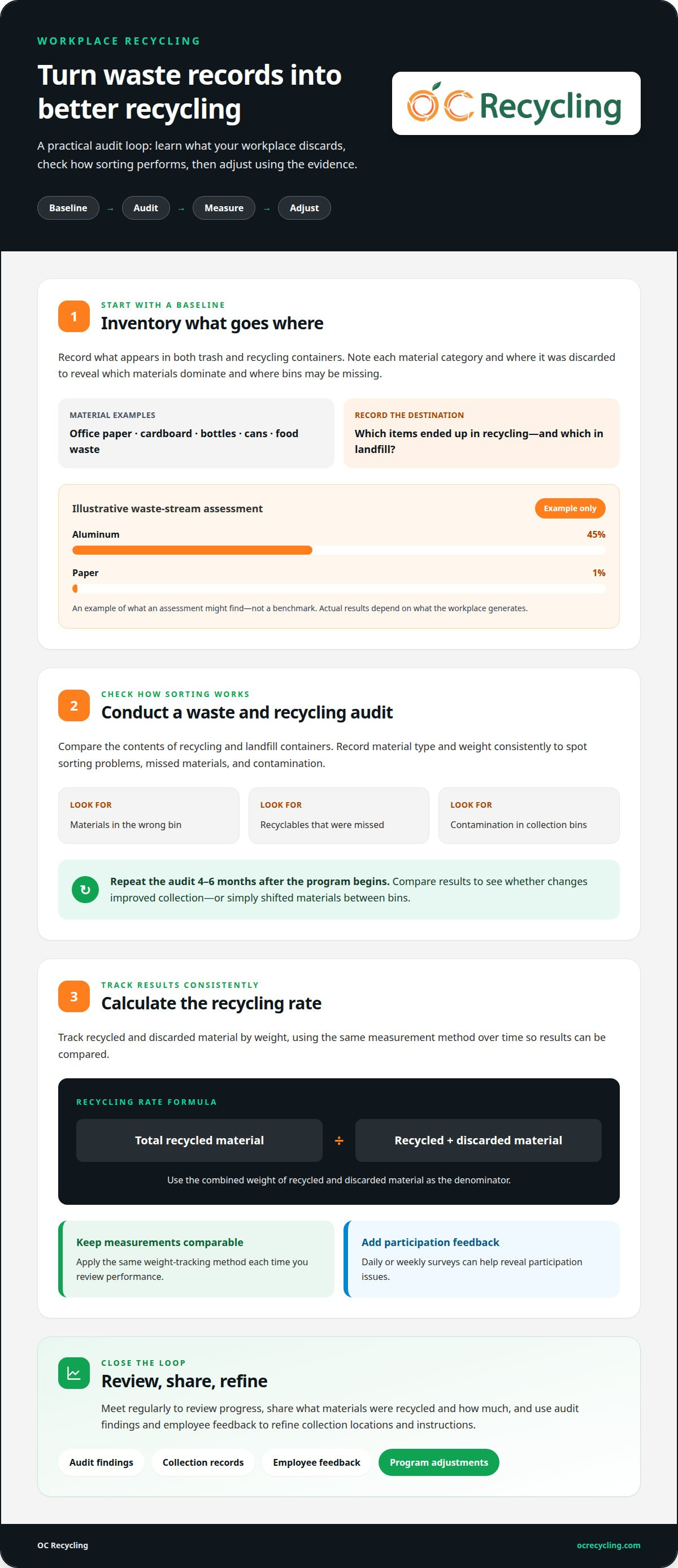
Start by inventorying what appears in trash and recycling containers. Record material categories, such as office paper, cardboard, bottles, cans, and food waste, then note where each item was discarded. This baseline shows which materials dominate and where collection bins may be missing. An illustrative assessment might find aluminum at 45 percent and paper at one percent of the waste stream; actual results depend on what the workplace generates.
-
Conduct Waste and Recycling Audits
Use the baseline to conduct a waste audit and identify sorting problems, missed materials, and contamination. Compare the contents of recycling and landfill containers, then record the material type and weight consistently. A follow-up audit can show whether changes improved collection or simply shifted materials between bins. Conduct another audit 4-6 months after the program begins, and use the findings to refine collection locations and instructions.
-
Monitor Program Performance
Track recycled and discarded material by weight to calculate the recycling rate: divide total recycled material by the combined weight of recycled and discarded material. Use the same measurement method over time to make results comparable. Recycling teams can also use daily or weekly surveys to spot participation issues, meet regularly to review progress, and share what materials were recycled and how much. Celebrate improvements and use employee feedback to guide the next adjustment.
Checking local recycling rules and services
If you’re deciding how to start a recycling program at work, begin by understanding local rules and the services available to your facility. Accepted materials and collection arrangements vary, so build the program around what your municipality and building can support.
- Check municipal acceptance rules. Contact your municipality for its current list of accepted business recyclables. Don’t assume household guidance covers workplace collection. Confirm how the local program handles plastic bottles, tubs, and jugs; aluminum and steel cans; mixed paper; and cardboard. Use those accepted categories as the basis for your workplace’s collection plan.
- Match accepted materials to workplace needs. Compare the local list with materials your teams generate. For example, a shipping area may produce cardboard, while offices discard mixed paper. Keep a record of what’s accepted and what your facility actually handles, so you can avoid collecting materials without an appropriate local stream.
- Identify existing building services. Ask the facility or property manager whether recycling collection is already arranged. If service isn’t in place, ask the manager to arrange it and clarify which materials are accepted. Some providers require paper, plastic, and electronics to be separated into distinct categories.
- Coordinate storage and collection. Confirm where materials should be stored and how they’ll reach the collection point. Check that the recycling storage area complies with local fire and building codes. Keep food waste separate from plastics, and make sure the collection routine keeps recycling apart from trash.
- Turn local details into a usable guide. Record accepted materials, sorting requirements, storage locations, and pickup arrangements in one staff-facing document. Use the same information for signs and training. Knowing how to start a recycling program at work also means keeping these instructions aligned when municipal rules or building services change. Discuss workplace recycling collection as you plan the material streams.
OC Recycling
OC Recycling is a practical resource for workplaces that have identified recyclable materials needing an appropriate outlet. Services include cardboard and paper recycling, electronics recycling, ferrous metal recycling, and certified product destruction. These services can support parts of a workplace program that handle paper, electronics, or metal separately, while your facility follows local acceptance rules and collection arrangements.
Consider OC Recycling for those material streams as you launch your program or refine it after reviewing waste audit results. Matching each material to the appropriate service helps keep your recycling process organized and focused on what your workplace actually generates.
Contact OC Recycling to discuss your workplace recycling needs.
Make Your Workplace Program Part of Everyday Operations
A practical plan for how to start a recycling program at work should also account for what comes next: keeping recycling visible as teams, materials, and workplace needs change. Give the program an owner, invite employees to share useful observations, and use their insights to keep routines relevant.
For material streams that need a dedicated recycling destination, OC Recycling offers CRV Redemption, Scrap Metal Purchasing, and Electronics Recycling. These services can suit workplaces that handle beverage containers, scrap metal, or unwanted electronics. Choose the service that fits the materials your business generates, while keeping local acceptance rules central to your program.
When you’re ready to discuss a recycling need for your workplace, contact OC Recycling. A clear next step can help turn your program into a steady part of the workday.
Frequently Asked Questions
How do I assess workplace waste and recycling needs?
Observe how different teams use the facility, then note the materials generated at workstations, kitchens, shipping areas, and copy stations. A design team may discard paper and packaging, while a break room generates food scraps and containers. Record recurring materials and where they appear, then use that information to decide which areas need collection points or separate streams.
How do I choose recycling bins and where should I place them at work?
Match each bin’s opening and label to the material it should collect, so employees can identify the right container at a glance. Mark collection points on a floor plan near the tasks that generate each material, such as packaging areas or shared printers. Keep stations easy to reach and consistently arranged, so employees don’t have to search for the right bin.
How do I find a commercial recycling hauler and compare service costs?
Before arranging service, define the materials, collection locations, container needs, and pickup frequency your workplace requires. Compare costs against the same set of needs, including bin placement, hauling, and separate material streams. Commercial recycling costs vary by material type, container needs, pickup frequency, and site logistics.
What recycling rules and accepted materials apply to businesses in my city or state?
Accepted materials depend on the local program, so use your municipality’s current business recycling information rather than assuming household rules apply. Requirements may differ across Santa Ana, Anaheim, Costa Mesa, Huntington Beach, Orange, Irvine, Garden Grove, Westminster, Fountain Valley, and Tustin. Confirm acceptance for each material category your workplace generates, including paper, cardboard, cans, and plastics, before adding it to collection instructions.
How should I communicate recycling instructions and train employees?
Make instructions easy to follow at the moment of disposal: show employees what goes into each workplace stream and what to do with uncertain items. Include a short explanation in onboarding materials, then use real examples from the facility during team refreshers. Give staff a simple way to report confusing labels or recurring mistakes, so training can address actual problems rather than generic scenarios.
How can I measure and improve workplace recycling rates?
Calculate the recycling rate by weight: divide recycled material by the combined weight of recycled and discarded material. Keep records by stream, such as paper, cardboard, and cans, to see which categories need attention. Compare results with your workplace’s baseline, then make one practical adjustment, such as clearer instructions for a stream with frequent sorting mistakes, and assess the effect.
