
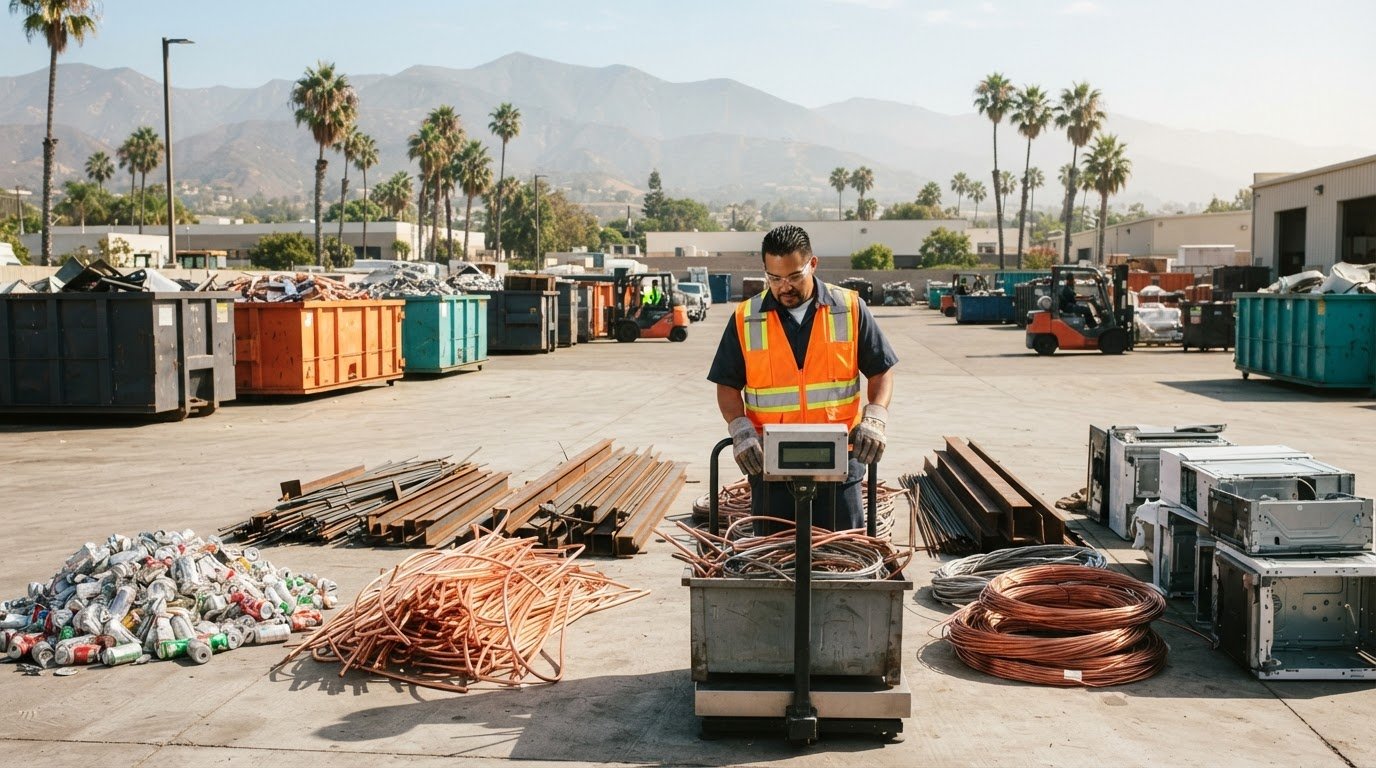
Could a quick call before loading your vehicle save you a wasted trip to a scrap yard? If you want to sell scrap metal for cash Orange County, it helps to know what you have, how to prepare it, and what the buyer needs before you arrive. Accepted materials and inspection procedures vary by location, so a mixed load isn’t automatically ready to sell.
It’s reasonable to want clear answers before making the drive, especially about identification, payment timing, and how your metal will be evaluated. OC Recycling purchases scrap metal from residents and businesses across Orange County, with four local locations. Confirm the current material requirements and procedures at the location you plan to visit, since details can differ.
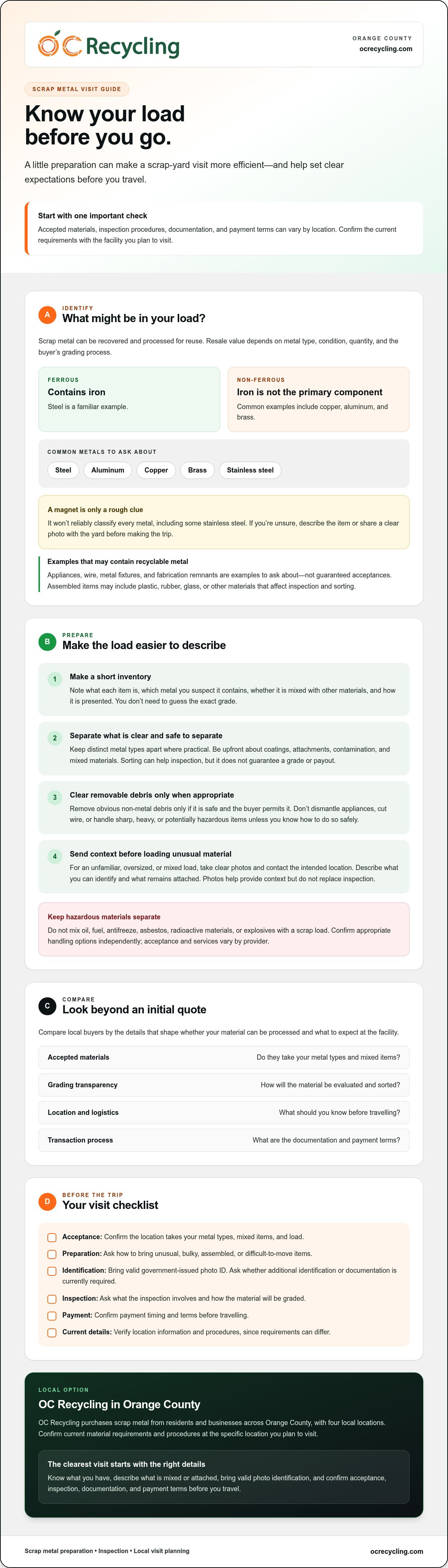
This guide explains how to identify common metal types, prepare your load, compare buyers, and ask the right questions before travelling. You’ll also find a visit checklist to help you confirm what to bring and what to expect during inspection. A little preparation can make your visit more efficient and your expectations clearer.
Key Takeaways
- Learn the difference between ferrous and non-ferrous metals, and why acceptance rules and material condition matter.
- Find out how separating metals and safely clearing away removable debris can help prepare your load for inspection.
- Compare local buyers by accepted materials, grading transparency, location, and transaction process, not just an initial quote.
- Use a visit checklist to confirm acceptance, documentation requirements, inspection steps, and payment terms before travelling to sell scrap metal for cash Orange County.
- Consider OC Recycling as a local option for public and commercial customers, and verify current location details and procedures before your visit.
What Scrap Metal Can You Sell for Cash in Orange County?
Scrap metal is material that can be recovered and processed for reuse rather than thrown away. Its resale value depends on factors such as metal type, condition, quantity, and the buyer’s grading process. For a neutral overview of what scrap metal is, start with the basics, then confirm how the Orange County facility you plan to visit handles your particular load.
Common examples include steel, aluminum, copper, brass, and stainless steel. But not every buyer accepts every category, and an item may not be purchased in its current condition. If you plan to sell scrap metal for cash Orange County, treat a list of common metals as a starting point, not a guarantee of acceptance. The buyer’s policies and inspection determine whether an item qualifies and how it’s sorted.
How to Recognize Common Ferrous and Non-Ferrous Scrap
Ferrous metals contain iron, and steel is a familiar example. Non-ferrous metals don’t have iron as their primary component; copper, aluminum, and brass are common examples. These broad categories can help you describe a load, but they don’t identify every alloy or mixed item. A magnet can offer a rough clue, though it won’t reliably classify every metal, including some stainless steel. If you’re unsure, describe the item or share a clear photo with the yard before making the trip.
Which Household and Business Items May Contain Recyclable Metal?
Appliances, wire, metal fixtures, and fabrication remnants may contain recyclable metal. These are examples to ask about, not guaranteed acceptances. An appliance or assembled fixture can combine several materials, and attached plastic, rubber, glass, or other components may affect inspection and sorting. Don’t dismantle an item if doing so could be unsafe or if you’re unsure what the buyer permits. Ask the specific Orange County location whether it accepts the whole item and what preparation, if any, it recommends.
Before calling, make a short inventory. Note what each item is, which metal you suspect it contains, whether it’s mixed with other materials, and how it’s presented. This gives the buyer useful context without requiring you to guess the exact grade. Ask about vehicles separately rather than assuming a scrap-metal transaction includes a whole vehicle or auto parts. Hazardous materials require separate handling. Don’t mix oil, fuel, antifreeze, asbestos, radioactive materials, or explosives with a scrap load. Confirm appropriate handling options independently, since acceptance and services vary by provider.
For unfamiliar, mixed, or bulky material, contact the intended location before you load it. A short description or photo can help clarify whether the facility accepts the item and what to expect at inspection. That simple step can save you from transporting something the facility can’t process.
How to Prepare Scrap Metal for a Better, Smoother Sale
Some preparation can make it easier for a buyer to identify your material and inspect the load. Sort clearly recognizable metals into separate groups when it’s safe and practical. Don’t dismantle appliances, cut wire, or handle sharp, heavy, or potentially hazardous items unless you know how to do so safely. If an item is difficult to move or separate, ask the facility how it prefers you to bring it.
Sort and Describe Your Material Before You Go
Keep distinct metal types apart where possible, and be upfront about coatings, attachments, contamination, or mixed materials. Removing obvious non-metal debris may help, but only do it safely and if the buyer permits it. Sorting can make inspection more straightforward, but it doesn’t guarantee a particular grade or payout. For copper-specific preparation, see this scrap copper selling guide. The Recycled Materials Association (ReMA) also provides broader information about the recycling industry.
Have an unusual, oversized, or mixed load? Take clear photos and contact the yard before loading or travelling. Describe the items, the materials you can identify, and what remains attached. The buyer can tell you whether the items may be accepted and explain any preparation steps to confirm. Photos provide useful context, but they don’t replace the facility’s inspection.
What to Bring and What to Confirm in Advance
Bring valid government-issued photo identification, and check with the specific location about any additional identification or documentation it currently requires. Before you leave, confirm the details that could prevent a wasted trip:
- Acceptance: Does this location take your metal types, mixed items, and load size?
- Visit logistics: What are the current hours, and how should you arrive or arrange unloading?
- Inspection: How will the material be checked, weighed, and graded?
- Payment: Which payment methods are available, and when is payment made for this specific scrap-metal transaction?
Don’t assume that a payment method or timing applies to every material or sale. Confirm the current terms directly before you go. If you’re planning to sell scrap metal for cash Orange County, checking acceptance, documentation, and unloading procedures first helps you arrive prepared without making assumptions about the final grade or payout.
OC Recycling purchases scrap metal from public and commercial customers across Orange County. Review OC Recycling’s scrap metal purchasing information as you plan, then confirm current procedures at your chosen location before travelling.
How to Compare Scrap Metal Buyers in Orange County
A useful comparison goes beyond an advertised rate. Before choosing where to sell scrap metal for cash Orange County, check whether the buyer accepts your specific load, explains how it will be evaluated, and offers a visit or transaction process that suits your needs. The same questions can help whether you’re bringing a small personal load or managing metal from a business project.
| What to compare | What to ask |
|---|---|
| Material acceptance | Does this location accept the metal type, condition, and mixed items in my load? |
| Grading and weighing | How do you inspect, weigh, and assign a grade? Can you explain the result before the sale is finalized? |
| Location and logistics | What are the current hours and unloading arrangements? For recurring or larger business loads, are commercial logistics options available and appropriate for scrap metal? |
| Transaction process | What identification or documents should I bring, and what payment methods and timing apply? |
Questions to Ask Before Choosing a Scrap Yard
Be specific when describing your material. Instead of asking whether a yard “takes metal,” identify the item, likely metal type, approximate load size, and any coatings or attached materials. Confirm that the location accepts the material in its current condition. Then ask how inspection and weighing work, whether staff explain the grade, and what unloading or documentation steps to expect. Verify current hours and procedures directly before leaving.
For metal from a construction or demolition project, California’s Construction and Demolition Debris Recycling resource offers information about recovering materials from these projects. A scrap buyer’s acceptance rules still depend on the specific facility, so confirm that your metal and load arrangement fit its process.
How Material Grade and Market Conditions Affect Payout
A quote may not predict the final payout if it doesn’t account for the actual grade, weight, condition, and transaction terms. Copper, for example, can be evaluated differently depending on its form and condition. Market conditions can also change, so avoid relying on an old listing or comparing figures based on different assumptions. Ask each buyer for a current assessment and clarify whether it’s preliminary or based on inspection.
For business sellers, convenience matters too. A walk-in visit may suit a manageable load, while recurring or larger volumes may make it useful to ask about commercial options. Compare the practical fit, not just the quoted figure. Clear grading, confirmed acceptance, location, unloading, and payment procedures all help set realistic expectations.
How to Sell Scrap Metal for Cash: A Local Visit Checklist
A successful sale starts before you load the vehicle. Use this sequence to confirm the facility can accept your material, prepare for its visit process, and understand how the transaction will be completed. Requirements and procedures can vary by buyer and location, so verify details directly rather than relying on assumptions.
Before Leaving Home or Your Job Site
First, contact the location you plan to visit. Describe the materials, their condition, and the approximate size of the load. Confirm the facility accepts them, check current hours, and ask how unloading works. If the load is mixed, oversized, or difficult to identify, explain that before setting out.
- Check documentation: Bring government-issued identification and ask the facility what current California requirements apply. Confirm whether additional documents are needed for you, your business, or the specific material.
- Prepare the load: Keep different material types accessible for inspection. Secure items for transport so they won’t shift or fall.
- Put safety first: Scrap can be heavy, sharp, or awkward to handle. Don’t lift or dismantle items if you can’t do so safely; ask the facility about its unloading expectations.
These checks help you arrive ready, but the facility’s own instructions take priority. If anything changes, such as the load contents or the location you plan to use, confirm the details again before travelling.
What to Expect During Inspection and Payment
At the facility, staff may inspect, sort, grade, and weigh the material before determining the transaction details. The exact steps depend on facility policy and the type of scrap. If the grade or calculation isn’t clear, ask what material category was assigned, what weight was recorded, and how those details factor into the offer. You can ask questions before deciding whether to proceed.
Confirm the payment method and timing for your specific material and transaction. Don’t assume every scrap-metal sale is paid in cash or settled the same day; ask the location directly. Once you understand the inspection result, recorded weight, and payment terms, you can make an informed decision about completing the sale.
If you’re planning to sell scrap metal for cash Orange County, a brief check-in can clarify the process before you make the trip. Contact OC Recycling about selling scrap metal to confirm current material acceptance and visit procedures at the location you plan to use.
Sell Scrap Metal with OC Recycling Across Orange County
OC Recycling purchases scrap metal from public and commercial customers across Orange County. The company reports four local locations, giving residents and businesses more than one facility to consider when planning a visit. Before setting out, check current location information and confirm which facility best fits your route and load. Verify addresses, hours, accepted materials, and procedures directly, since details may change.
If you’re searching for “sell scrap metal for cash Orange County,” a nearby buyer is only part of the decision. Make sure the location accepts your material and can explain how it handles inspection, weighing, and payment. Advance confirmation helps you choose with clearer expectations, whether you’re bringing a small household load or scrap from a business project.
Find a Convenient Orange County Location
Consider where you’re travelling from, the size of your load, and how easy it will be to transport and unload it. If you’re in or near Santa Ana, Anaheim, Costa Mesa, Huntington Beach, Orange, Irvine, Garden Grove, Westminster, Fountain Valley, or Tustin, check OC Recycling’s current location information to see which facility may be convenient for your trip. Don’t assume a city name means a particular location is there or accepts every metal type. Confirm the address, hours, material acceptance, and unloading arrangements before departure.
Get Ready to Sell with Clear Expectations
Before visiting, identify what you can about the metal and separate distinct materials when it’s safe and practical. Describe coatings, attachments, or mixed items honestly when checking acceptance. Ask what identification or other documentation is currently required, and how staff will inspect, grade, and weigh the load. The facility’s assessment and current policies determine transaction details, including the final payout and payment timing, so confirm them instead of relying on old price information or assumptions.
A prepared seller can make the visit more straightforward by arriving with the right material, documentation, and unloading plan. If an item is unusual or you’re uncertain about acceptance, ask before loading it. OC Recycling serves customers across Orange County, but location-specific details and procedures should be confirmed before you travel.
Contact OC Recycling about selling your scrap metal to confirm material acceptance, current location details, and transaction procedures before your visit.
Make Your Scrap-Metal Visit Count
A smoother sale starts with knowing what’s in your load and checking acceptance before you travel. Separate identifiable metals when safe, describe mixed or attached materials clearly, and ask the buyer how inspection, grading, weighing, documentation, and payment work. Those details help you compare offers on an informed basis instead of relying on a price that may not reflect your material’s final assessment.
If you’re ready to sell scrap metal for cash Orange County, OC Recycling is a local option for public and commercial customers. The company reports four Orange County locations and purchases and processes scrap metals for industrial resale. OC Recycling has operated in the area for more than 15 years. Confirm current location details, material acceptance, and transaction procedures before heading out.
Contact OC Recycling to confirm your scrap-metal drop-off and get the details you need to plan your visit. With a little preparation and clear expectations, you can take the next step with confidence.
Frequently Asked Questions
What types of scrap metal can I sell in Orange County?
Common scrap metals include steel, aluminum, copper, brass, and stainless steel, but acceptance varies by buyer and location. Ferrous metals contain iron, while copper, aluminum, and brass are familiar non-ferrous examples. Appliances, wire, fixtures, or fabrication remnants may contain recyclable metal, though attached materials or the item’s condition can affect inspection. Contact the intended facility with a description of your load to confirm what it accepts before travelling.
How do I get cash for scrap metal in Orange County?
Contact a local scrap buyer to confirm it accepts your material, then ask about current hours, unloading, identification, inspection, and payment procedures. Sort materials by type when practical and safe, bring the requested documents, and let the facility assess the load. If you want to sell scrap metal for cash Orange County, confirm the transaction terms with the specific location before making the trip. Payment timing and methods can vary.
Do I need ID to sell scrap metal in California?
Plan to bring valid government-issued photo identification, and verify current documentation requirements with the specific scrap-metal facility before visiting. Requirements may depend on the material, transaction, or facility procedures, so don’t assume your ID is the only document needed. If you’re selling on behalf of a business, ask whether any additional seller or material records apply. Confirming in advance helps you arrive prepared and avoid delays at the facility.
How is the value of scrap metal determined?
A buyer’s assessment may reflect the metal type, grade, weight, cleanliness, and current market conditions. The final grade and recorded weight may differ from an estimate based on a brief description, especially for mixed or attached items. Ask how the facility inspects and weighs your load, and whether an estimate is preliminary or based on inspection. Request a current assessment rather than relying on old price listings or unconfirmed quotes.
Should I separate scrap metal before taking it to a recycling center?
Separating clearly identifiable metals can make a load easier to inspect, but it doesn’t guarantee a particular grade or payout. Keep materials apart when it’s safe and practical, and describe coatings, attachments, or mixed components honestly. Don’t dismantle heavy, sharp, or unfamiliar items if you can’t do so safely. If you’re unsure how to prepare a specific item, ask the facility what it accepts and how it wants the material presented.
Can I get same-day cash for scrap metal at OC Recycling?
OC Recycling reports same-day cash for many recyclable items, but that doesn’t confirm same-day payment for every scrap-metal material or transaction. Payment method and timing may depend on the material assessment and current location procedures. Before travelling, contact the intended OC Recycling location and ask how payment works for your specific load. Confirm the accepted material, inspection process, and any required identification at the same time.
What should I check before choosing a scrap metal buyer near me?
Confirm that the location accepts your specific metal and condition, then ask how it inspects, grades, and weighs material. Check current hours, unloading arrangements, identification requirements, payment method, and timing. Consider convenience for your load size, too. OC Recycling reports four Orange County locations serving customers in communities including Santa Ana, Anaheim, Costa Mesa, Huntington Beach, Orange, Irvine, Garden Grove, Westminster, Fountain Valley, and Tustin. Verify current location details before setting out.
