
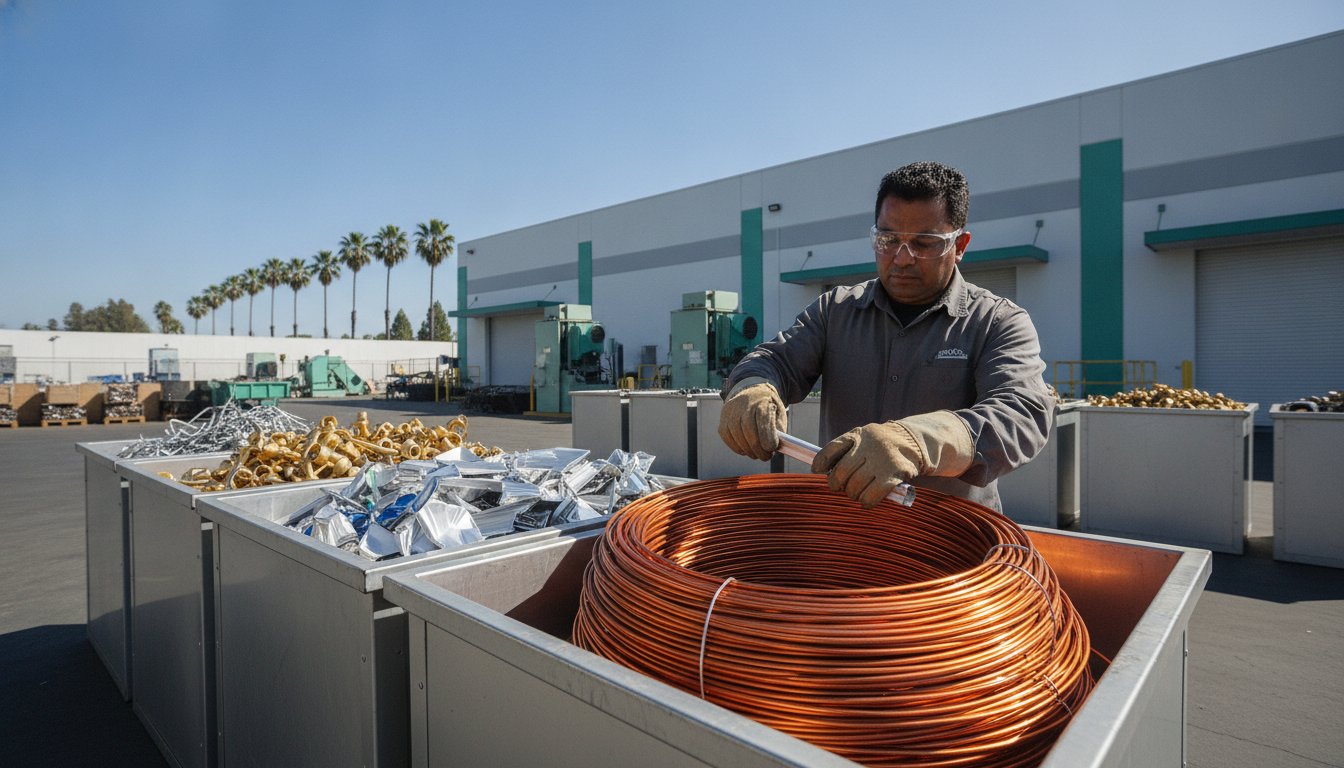
Bringing a tangled, unorganized load of metal to a recycling center is effectively handing a portion of your profit back to the yard. You’ve likely felt that familiar sting of anxiety when pulling onto the scale, wondering if you actually know how to prepare scrap metal for recycling or if your “dirty” copper will be downgraded to the lowest price tier. It’s a common frustration; no one wants to see their hard labor undervalued because of simple sorting errors or a lack of technical preparation.
Our goal is to provide you with total peace of mind by revealing the professional secrets of the trade. This guide will show you exactly how to prep your materials to ensure you receive the maximum payout for every ounce of metal you bring in. We provide a clear, methodical approach that transforms your haul from a pile of junk into a high-value commodity, ensuring you’re treated like a professional partner rather than a casual visitor.
We will cover everything from the essential tools for cleaning your metals to the critical 2026 regulatory changes under AB 476. You’ll discover how to navigate new California licensing requirements for copper and master the sorting techniques that separate the amateurs from the pros. By the time you finish reading, you’ll have a complete checklist for a smooth, transparent, and highly profitable experience at the yard.
Key Takeaways
- Understand the critical price difference between “clean” and “dirty” metal grades to ensure your materials are valued at the highest possible tier.
- Learn professional techniques for how to prepare scrap metal for recycling, including stripping copper wire and removing non-metallic attachments for premium payouts.
- Master the simple magnet test to accurately separate high-value non-ferrous metals from common ferrous steel and iron.
- Organize your haul into categorized bins to facilitate a faster weighing process and a more professional experience at the recycling center.
- Stay informed on 2026 California regulatory changes to ensure your documentation is ready for a seamless and secure transaction.
The Value of Preparation: Why Sorting Your Scrap Matters
Scrap preparation is the deliberate process of removing non-metal attachments to increase the overall commodity value of your haul. It’s the difference between being treated as a casual hobbyist and a professional trading partner. For those looking for a comprehensive overview of scrap metal and the global recycling industry, understanding the distinction between ferrous and non-ferrous materials is the first step toward mastery. By learning how to prepare scrap metal for recycling at home or on the job site, you essentially perform the yard’s labor yourself, which allows us to pass that value back to you through higher payouts.
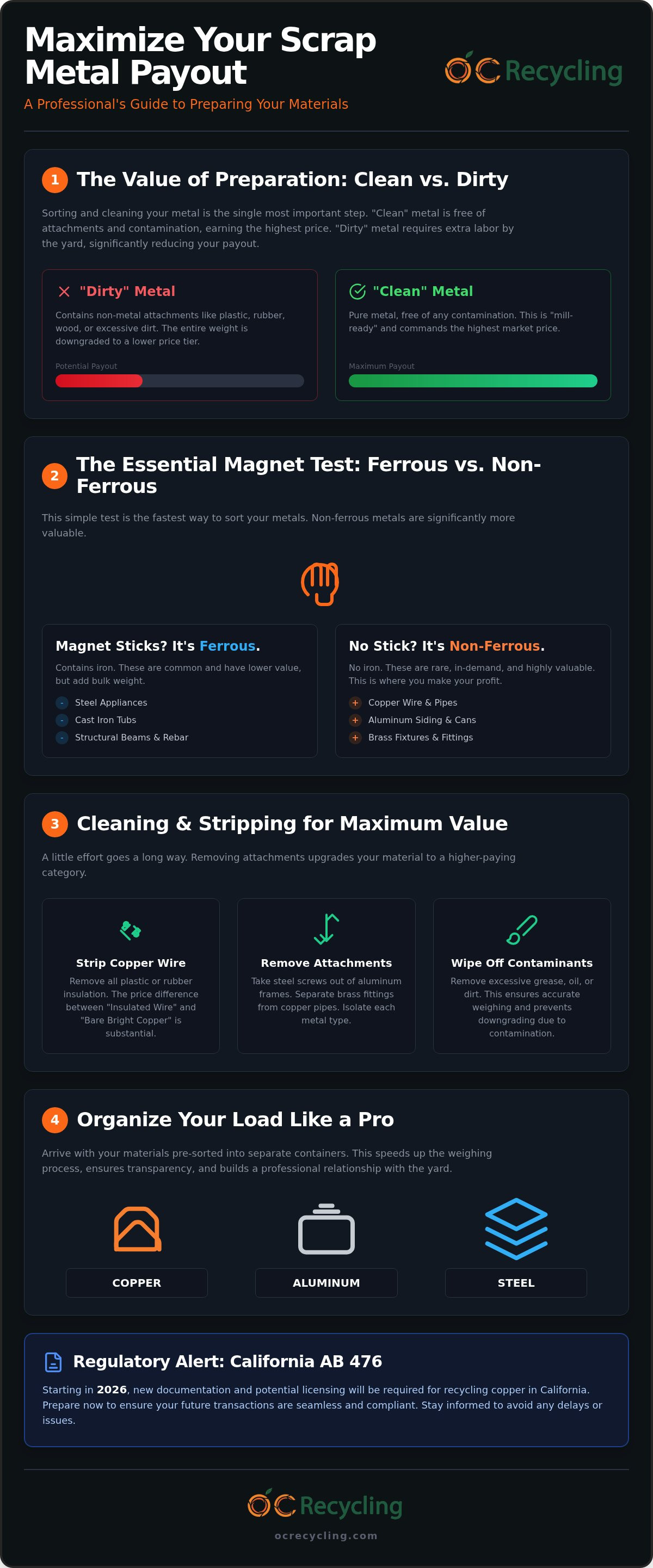
Professional recyclers categorize materials into “clean” and “dirty” pricing tiers. Clean metal is free of contamination like plastic, wood, or glass. Dirty metal, conversely, requires additional labor and machinery to process before it can be sent to a refinery. Upgrading your scrap through minimal physical effort transforms a low-value pile of debris into a premium industrial commodity. This methodical approach ensures transparency during the weighing process and builds a foundation of trust with your local recycling center.
The Financial Impact of Pre-Sorting
Mixed loads are the most common reason for lower-than-expected payouts. If you bring a bin filled with high-grade copper but leave the rubber insulation attached, a yard might be forced to buy it at the lower “insulated” rate. Professional yards prefer “mill-ready” scrap because it streamlines the supply chain and ensures immediate processing. The time-to-money ratio is usually in your favor; spending thirty minutes stripping a thick cable or removing steel screws from an aluminum frame can significantly increase your payout. When you organize your load before arrival, you avoid the risk of your entire haul being downgraded to the value of the least expensive metal in the container.
Environmental Responsibility and Safety
The magnet test is the industry’s most reliable shortcut for rapid sorting. If your magnet sticks firmly to the metal, it’s ferrous. This category includes iron and steel. If the magnet doesn’t stick, you’ve successfully identified non-ferrous metal. These are the materials that drive high-value returns. Learning how to prepare scrap metal for recycling starts with this basic separation. It’s a fast, effective way to ensure you don’t accidentally mix low-value steel with your premium copper or aluminum loads. Look for the distinct reddish-orange hue of copper or the bright, golden-yellow finish of brass. Weight is another indicator; ferrous metals are typically much heavier and denser than aluminum. Using these visual and physical cues allows you to verify grades before you even reach the scale.
Ferrous vs. Non-Ferrous: The Payout Gap
Non-ferrous metals command higher prices because they are rare and possess unique properties like superior conductivity or corrosion resistance. Common ferrous items include old appliances, cast iron tubs, and structural steel beams. While these are great for adding bulk weight to a load, the real profit lies in non-ferrous gems. You’ll find these in aluminum siding, brass plumbing fixtures, and electrical wiring. If you’re tracking scrap copper prices Santa Ana, you know that even a small amount of non-ferrous material can outweigh the value of a large steel haul. These metals are prized for their ability to be recycled indefinitely without losing their structural integrity.
Grade Identification for Beginners
Professional identification ensures you aren’t leaving money on the table. If you’re unsure about a specific item, our team is always ready to help you identify your materials for a transparent and rewarding transaction. Taking the time to categorize your metals correctly turns a standard trip to the yard into a professional trading experience.
Step 2: Cleaning and Stripping for Maximum Value
Cleaning your materials is the most labor-intensive phase of how to prepare scrap metal for recycling, but it’s also where you’ll see the most significant increase in your payout. At this stage, your goal is to transition your haul from “dirty” industrial scrap to a “clean” refined commodity. This requires removing all non-metallic attachments such as plastic handles, rubber gaskets, wood frames, and glass shards. Professional yards must account for the weight of these contaminants and the labor cost to remove them. When you handle this yourself, you secure the full market value of the metal. For automotive parts or machinery, you must drain all fluids, including oil, coolant, and transmission fluid, to remain compliant with local environmental laws and ensure a safe, clean transaction at our facility.
The Dirty Metal Downgrade
The “dirty” downgrade is a common point of confusion for many sellers. Aluminum siding or pots that still have steel screws, plastic trim, or heavy paint coatings are categorized as dirty aluminum, which carries a lower price point. Stainless steel is particularly sensitive; if a stainless sink still has wood or plastic attachments, it’s often priced as “iron” because of the processing required to separate the materials. We also look for “breakage” in motors, which refers to the non-metal components like plastic housings or internal rubber seals. Removing these attachments ensures your metal stays in its highest possible value bracket. It’s a simple matter of efficiency. The cleaner the metal, the faster we can process it and the more we can pay you.
The Mechanics of Stripping Copper
Stripping insulation from copper wiring is the gold standard for maximizing scrap profit. By moving your wire from an “insulated” grade to “bare bright,” you’re essentially stripping away the weight of the plastic to reveal the high-value conductor underneath. For tools, a simple utility knife works for small loads, but a manual or electric wire stripper is a superior investment for high-volume commercial hauls.
Strip the wire. It’s worth the time. However, you should evaluate the gauge before starting. Thick industrial cables and structural wiring are prime candidates for stripping. In contrast, very thin “spaghetti” wire or computer ribbons may not yield enough copper to justify the labor. Safety is paramount during this process. Always wear cut-resistant gloves and eye protection to guard against sharp wire ends and slipping blades. This professional approach to preparation guarantees you walk away with the highest possible payout for your effort.
Step 3: Organizing and Transporting Your Load Safely
Organizing your materials is the final logistical hurdle in the preparation process. If you’ve spent hours stripping wire and cleaning pipes, don’t let that effort go to waste by burying high-value items under a ton of mixed steel. Group similar metals together in dedicated bins or buckets. This speeds up the weighing process and ensures the weighmaster can quickly verify your work. It’s a critical part of how to prepare scrap metal for recycling that many beginners overlook. You should also separate your CRV recycling center Santa Ana materials from your heavy industrial scrap. Processing aluminum cans and plastic bottles follows a different flow than weighing bulk copper or brass. Keeping them distinct ensures you move through the facility with maximum efficiency.
Before you hit the road, secure your load properly. Use heavy-duty ratcheting straps or cargo nets to prevent loose debris from flying onto the 55 or the 5 freeways. Safety doesn’t stop at the truck bed; it extends to your personal attire. Wear appropriate PPE, including durable gloves, closed-toe boots, and long pants. Most professional yards in Orange County have strict safety protocols and may turn away customers who arrive in unsafe clothing. This polished approach protects you and ensures a smooth, professional interaction at the yard.
Efficient Loading Strategies
Start with a solid foundation. Place your heaviest ferrous items at the bottom of your truck or trailer to maintain vehicle stability during transport. High-value non-ferrous items should be placed on top or secured in the cab for easy access. We recommend using clear plastic bins for small items like brass fittings or copper joints. This transparency allows for a quick visual inspection by yard staff. Labeling your bins with the specific metal grade you’ve prepared ensures the weighmaster applies the correct payout tier immediately. This level of organization reflects a professional mindset and guarantees a transparent transaction.
Orange County Yard Etiquette
Modern recycling centers operate with the precision of a logistics hub. When you arrive at our facilities in Anaheim or Santa Ana, follow the designated traffic flow and watch for posted signage. Stay in your vehicle while on the truck scale unless an attendant directs you to step out. Have your valid government-issued ID ready for California state-mandated scrap metal reporting. Under laws like AB 476, we must record specific seller details for every transaction to ensure total compliance and security. Understanding these procedures before you arrive helps maintain a smooth, fast-paced environment for everyone. If you’re ready to experience a more professional way to recycle, check out our convenient Orange County locations today.
Turning Your Scrap into Cash at OC Recycling
Knowing how to prepare scrap metal for recycling is half the battle; the other half is choosing a partner that values your time and expertise. OC Recycling stands as a modern, professional alternative to the gritty, disorganized yards of the past. We offer a transparent and streamlined experience for everyone from residential recyclers to industrial contractors. With convenient locations across Santa Ana and Costa Mesa, we provide same-day cash payouts for everything from CRV aluminum cans to high-grade industrial copper. Our goal is to make the final step of your recycling journey as rewarding as the preparation itself.
Our operation is built on over 15 years of local experience. We understand that our customers want a reliable partner that prioritizes safety and legality. By maintaining a clean and ethically driven facility, we ensure that every visitor feels like a valued guest. Whether you’re dropping off a single bucket of brass or a truckload of structural steel, you’ll receive the same high degree of professional service and market-leading transparency.
The OC Recycling Difference
Our facilities are designed to be clean, organized, and safe. We respect your time. That’s why we’ve invested in state-of-the-art scales and a methodical traffic flow that gets you in and out quickly. If you’ve followed our guide on how to prepare scrap metal for recycling but still have questions about a specific alloy, our professional staff is on hand to assist. We use precise grading standards to ensure you receive the exact market value for your haul. This commitment to transparency and professional pride is why we’ve been a trusted part of the Orange County community for more than a decade and a half.
Commercial and Industrial Partnerships
While we welcome the general public, we also specialize in large-scale industrial solutions. We bridge the gap between residential “junk” disposal and professional commodity trading. For construction and demolition sites, we offer customized commercial bin placement programs to manage high-volume scrap on-site. Our services extend beyond simple purchasing to include electronics recycling and certified product destruction Anaheim. This ensures that corporate clients can protect their brand liability while recycling obsolete inventory or secure data. Whether you’re managing a home renovation or a corporate tech upgrade, we provide the logistics and certification required for a fully compliant, environmentally conscious recycling program.
Master Your Metal and Maximize Your Profit
Mastering the art of scrap preparation transforms a simple weekend chore into a professional trading opportunity. By utilizing the magnet test to separate ferrous from non-ferrous materials and taking the time to strip your copper wire, you ensure that every pound of metal earns its highest possible market value. Learning how to prepare scrap metal for recycling isn’t just about cleaning; it’s about understanding the industrial standards that define a premium commodity. When your load is organized, labeled, and secured, you step onto the scale with the confidence of a seasoned pro.
OC Recycling is here to be your reliable partner in this process. With over 15 years of experience serving the Orange County community, we provide a transparent, modern environment that prioritizes your safety and your payout. Whether you need same-day cash for a personal haul or certified data destruction for a corporate office, our team delivers professional results every time. Don’t leave your hard-earned money on the table by bringing in unorganized loads.
Visit OC Recycling Today for Competitive Cash Payouts. We look forward to helping you turn your well-prepped scrap into immediate results.
Frequently Asked Questions
Do I need to strip the insulation off all my copper wire?
You don’t have to, but it’s the most effective way to maximize your payout. Stripping insulation moves your material from the “insulated” category to “bare bright,” which is the highest price tier available. For thin, low-yield wires like computer ribbons, the labor might not be worth the effort. However, for thick industrial cables, stripping is a standard part of how to prepare scrap metal for recycling to ensure professional-grade returns at our Santa Ana or Anaheim facilities.
Will the scrap yard take my metal if it still has plastic or wood on it?
Yes, we’ll accept it, but it will be classified as “dirty” metal. This classification results in a lower payout because our team must manually remove the non-metallic attachments before processing. To secure the highest possible price, you should remove all plastic handles, wood frames, and rubber gaskets yourself. Delivering clean, mill-ready materials shows you’re a professional partner and ensures a much faster, more transparent weighing process at our Orange County yards.
How do I tell the difference between aluminum and stainless steel?
Use the spark test and the magnet test to identify these metals. While neither is magnetic, stainless steel is significantly heavier and denser than aluminum. If you use a grinder, stainless steel will produce a shower of bright sparks, while aluminum won’t spark at all. Aluminum also has a flatter, more dull appearance compared to the high-shine finish of stainless steel. Our staff at any of our four locations can help you finalize the identification during your visit.
What is the best way to transport a large amount of scrap metal safely?
Secure your load with heavy-duty ratcheting straps and cargo nets to prevent debris from falling onto Orange County freeways. Grouping similar metals into clear bins or buckets makes unloading much more efficient. For massive industrial hauls, we offer specialized commercial bin placement services. This allows you to fill a container at your job site in Irvine or Huntington Beach, and we’ll handle the logistics of hauling it safely to our processing center.
Can I recycle my old electronics at the same time as my scrap metal?
Absolutely. We provide comprehensive electronics recycling services alongside our scrap metal purchasing. You can bring in old computers, servers, and circuit boards during your standard scrap drop-off. For corporate clients in Costa Mesa or Tustin, we also offer certified data destruction. This ensures your sensitive information is permanently destroyed before the hardware is processed. It’s a convenient, one-stop solution for managing all your industrial and electronic waste in a single trip.
Why does the scrap yard need to see my ID when I sell metal?
California state law, specifically AB 476, requires all recycling centers to verify the identity of sellers to combat metal theft. We must record your legal name, residence address, and date of birth for every transaction. These records are kept for at least two years to ensure total compliance with state regulations. This procedure is a standard safety measure that protects the community and maintains the professional integrity of our operations across Orange County.
What items are NOT accepted at most scrap metal yards?
We cannot accept hazardous waste, including items containing asbestos, radioactive materials, or certain chemicals. We also don’t purchase used auto parts or handle residential curbside pickup. Other prohibited items typically include sealed containers like pressurized gas tanks unless they’ve been professionally decommissioned and cut in half. If you’re unsure about a specific item, it’s best to call our team in Santa Ana or Anaheim before you load your vehicle to ensure a smooth experience.
How often do scrap metal prices change in Orange County?
Scrap metal prices are tied to global commodity markets and can fluctuate daily. Factors like international demand, supply chain shifts, and the COMEX copper benchmark all influence the current rate. Because these values change so frequently, we don’t quote specific prices online or in print. We recommend calling our offices for the most current, up-to-the-minute pricing before you bring in your load. This ensures you have the most accurate information for your financial planning.
