
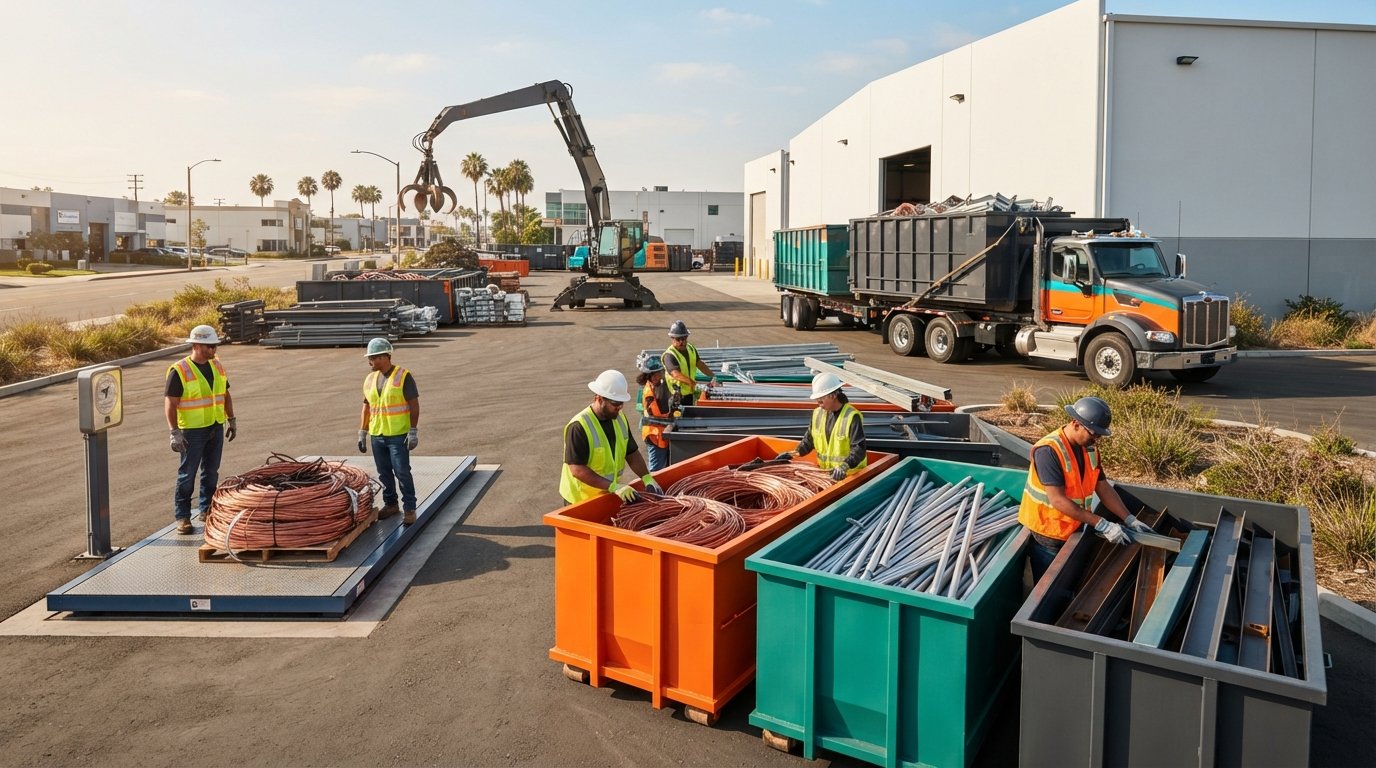
Jobsite metal scrap is working capital and compliance insurance, not disposable debris. If you manage active projects, you already know the frustration of watching high-grade electrical copper get buried under structural iron, or waiting on delayed container pickups that stall critical demolition trades. Managing construction scrap metal recycling in Anaheim requires a coordinated system that protects your crew’s labor, clears tight urban staging areas, and turns salvageable material into project revenue.
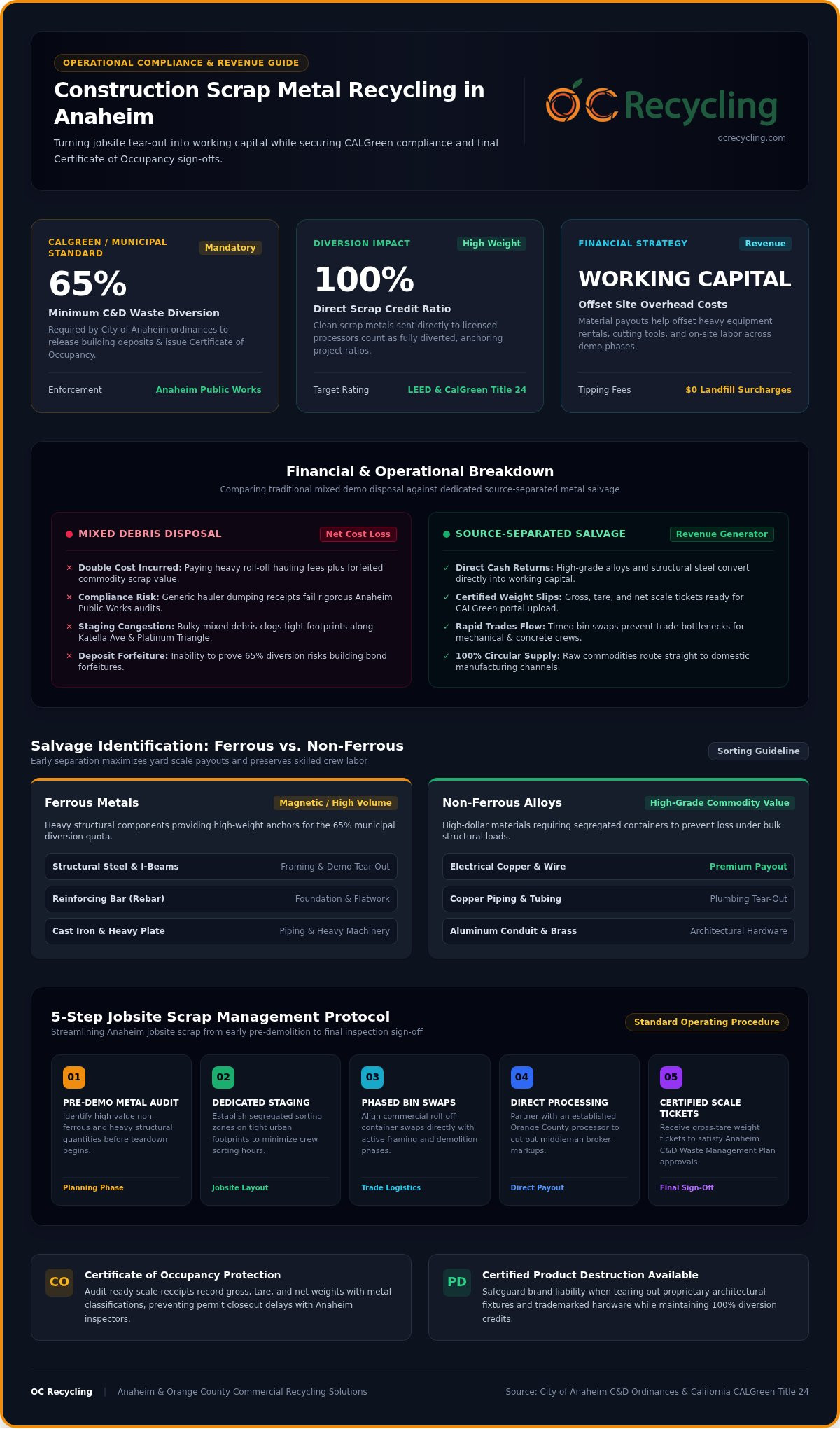
With the City of Anaheim strictly enforcing a 65% diversion threshold under CALGreen standards, missing scrap documentation can easily hold up your final Certificate of Occupancy. You will learn how to source-separate metals without burning skilled labor, coordinate commercial roll-off bin swaps tailored to your teardown phases, and secure certified scale tickets that guarantee municipal compliance while maximizing your payout. Here is your operational guide to managing Anaheim jobsite scrap efficiently from early demo to final inspection sign-off.
Key Takeaways
- Streamline project compliance by using source-separated metal salvage to satisfy municipal waste diversion mandates and secure your final building sign-offs.
- Separate magnetic ferrous structural steel from lucrative non-ferrous alloys early to capture maximum commodity value on certified yard scales.
- Establish pre-demolition site metal audits and dedicated staging zones to minimize crew sorting hours on constrained job footprints.
- Master the logistics of construction scrap metal recycling in Anaheim by utilizing scheduled roll-off container swaps aligned with specific demolition phases.
- Partner directly with an established Orange County scrap processor to eliminate third-party broker markups and receive fully certified gross-tare weight tickets.
Why Construction Scrap Metal Recycling Matters for Anaheim Job Sites
General junk haulers treat jobsite metals as cost-incurring disposal waste. That mindset costs contractors real money. When you toss structural steel, copper piping, and conduit into mixed debris bins, you pay twice: first through inflated disposal haul fees, then by forfeiting the cash value of the material. Treating demolition metals as recoverable assets flips that dynamic entirely, transforming tear-out materials into working capital that supports project overhead.
Active commercial builds across Anaheim face confined footprints. Tight staging areas along Katella Avenue or near the Platinum Triangle leave zero room for unmanaged debris piles. Fast-tracking material clearance keeps trades moving safely without bottlenecking framing, mechanical, or concrete crews. By segregating clean ferrous and non-ferrous scrap metal on site, you bypass landfill-bound roll-offs and eliminate punishing transfer station tipping charges. Recovered raw metals enter domestic manufacturing channels immediately, cutting virgin mining demand and keeping essential commodities within the local supply chain.
Financial Upside of Jobsite Metal Recovery
Proactive metal salvage creates a tangible revenue line on commercial balance sheets. Instead of writing off demolition as pure overhead, strategic contractors use material payouts to offset the cost of heavy machinery rentals, specialized cutting tools, and on-site labor. Keeping high-grade non-ferrous alloys out of bulk mixed containers ensures you capture true market value at the scale. Over multi-phase tenant improvements, these steady returns stabilize project margins and provide predictable cash flow from demo through final trim.
Environmental Impact on Anaheim Urban Development
Integrating structured construction scrap metal recycling in Anaheim significantly reduces the volume of solid waste trucked to regional Orange County landfills. Every ton of structural steel or heavy copper diverted from disposal lowers the embodied carbon footprint of the finished structure, a critical milestone for developments pursuing LEED status or targeting strict municipal sustainability ratings. Keeping scrap processing within North Orange County industrial hubs conserves vital resources, cuts long-distance hauling emissions, and directly reinforces Southern California’s circular industrial economy.
Navigating Anaheim C&D Ordinances and CALGreen Metal Diversion
Permit closeouts in Orange County stall when recycling documentation falls apart. The City of Anaheim enforces a strict municipal construction and demolition (C&D) diversion ordinance requiring covered projects to divert at least 65% of non-hazardous materials from local landfills. General haulers often claim they recycle off-site, but vague dumping receipts will not satisfy city inspectors. Managing construction scrap metal recycling in Anaheim requires an audit-ready paper trail from the moment your first container leaves the site.
Because scrap metals count as 100% diverted commodities when routed directly to a licensed processor, clean loads of rebar, structural frames, and copper conduit act as high-weight anchors for your diversion ratios. Following the EPA guide to sustainable C&D materials management, prioritizing clean source separation protects you against costly project deposit forfeitures while keeping your job compliant with state and municipal environmental thresholds.
Meeting California CALGreen Title 24 Standards
Under CALGreen non-residential and residential provisions, projects must verify their 65% waste diversion target through hard data. Certified scrap yards support this by issuing detailed scale tickets recording gross, tare, and net weights alongside precise metal classifications. You can upload these certified receipts directly into municipal tracking portals to satisfy CALGreen documentation without burning administrative hours recalculating estimates.
Securing Anaheim Waste Management Plan Approvals
Anaheim Public Works requires final recycling documentation before building officials release your Certificate of Occupancy. If your team pulls architectural components featuring trademarked hardware or architectural metalwork, you can coordinate certified product destruction in Anaheim to safeguard brand liability while logging certified diversion slips. Partnering with a dedicated yard ensures you receive signed chain-of-custody slips before your final walkthrough, eliminating city inspection delays.
If you want seamless compliance without paperwork headaches, consider setting up a direct commercial scrap account with OC Recycling to automate your weight reporting across every demolition phase.
Key Construction Metals: Identifying Ferrous vs. Non-Ferrous Salvage
Every dollar lost in scrap recovery usually traces back to a lack of basic segregation on the ground. A pocket magnet remains the simplest, most effective tool your crew can carry during tear-out operations. If the magnet sticks firmly, the material is ferrous iron or steel, which trades based on gross tonnage. If the magnet falls away, you are holding non-ferrous metal, which trades by the pound at significantly higher market rates.
Allowing non-ferrous materials to mix into bulk ferrous bins degrades your return immediately. Certified scale operators grade incoming loads by the lowest-value commodity present. Throwing brass shut-off valves or bare copper piping into a hopper filled with light gauge framing studs results in the entire container being weighed and billed as cheap shred steel. Implementing rigorous source separation reflects federal guidance on the sustainable management of construction and demolition materials, keeping material pure and preserving its maximum commodity value.
High-Value Non-Ferrous Construction Scrap
Electrical and plumbing tear-outs yield the most profitable scrap across commercial renovations. To capture top tier grading, crews should strip heavy insulation from thick feeder cables, separate clean bare bright conductors from painted busbars, and remove iron fittings from yellow brass distribution valves. Architectural aluminum framing, window mullions, and clean siding should stay isolated from structural elements. Keeping tabs on regional shifts like scrap copper prices in Santa Ana before dispatching non-ferrous loads ensures you hit the scale when commercial returns are strongest.
Heavy Ferrous Jobsite Metals
Bulk ferrous metal makes up the primary tonnage on demolition projects, playing a vital role in hitting municipal diversion quotas. Managing ferrous scrap effectively means organizing it by density and thickness:
- Structural Steel: Keep heavy I-beams, channel iron, and thick plate steel separate from sheet metal to qualify for premium heavy melting steel grades.
- Cast Iron: Consolidate heavy soil lines, drain fittings, and legacy plumbing stacks away from brittle sheet tin.
- Rebar and Wire Mesh: Stage concrete reinforcement steel in dedicated heavy-gauge roll-off bins to avoid binding lighter scrap in compactors.
Executing structured construction scrap metal recycling in Anaheim ensures that your heavy structural tear-outs clear the jobsite efficiently while keeping your high-value alloys protected, graded accurately, and monetized correctly.
How to Stage and Collect Scrap Metal on Anaheim Jobsites
Double-handling materials burns crew hours faster than almost any other jobsite error. Piling mixed demolition debris in central walkways only to sort it later creates safety hazards and cuts into trade productivity. Implementing a systematic collection plan keeps work areas clear, protects workers, and ensures that clean salvage heads directly from the wall or ceiling into dedicated scrap containers.
Execute this five-step staging protocol on your next Anaheim commercial renovation or structural teardown:
- Step 1: Metal Audit: Walk the structure before demo begins to identify mechanical piping, switchgear, aluminum fixtures, and heavy structural framing.
- Step 2: Position Dedicated Containers: Place clearly marked collection bins directly beside active interior demolition zones to capture materials at the point of removal.
- Step 3: Secure High-Grade Alloys: Store copper wire, brass valves, and aluminum extrusions in locked mobile job boxes to prevent site shrinkage.
- Step 4: Subcontractor Briefing: Train electrical, plumbing, and demolition subcontractors to drop separated metals into designated hoppers rather than general trash chutes.
- Step 5: Coordinated Haul Logistics: Schedule container swaps before bins hit maximum fill capacity to eliminate loading interruptions.
Optimizing Jobsite Logistics and Safety
Preventing On-Site Scrap Theft
High non-ferrous values make active urban sites attractive targets for nocturnal metal theft. Keep high-value materials secure using locked on-site containers within floodlit or camera-monitored staging areas. Establish daily material checkout logs for mechanical and electrical teams running wire pulls. Most importantly, schedule timely pickups with your recycling partner so premium salvage moves off the jobsite as soon as containers are full.
To eliminate site congestion and protect your salvage revenue, arrange reliable commercial bin placement with OC Recycling to keep your Anaheim project operating cleanly and efficiently.
Streamlining Removal with a Dedicated Orange County Scrap Partner
Working through third-party waste brokers or general debris haulers cuts into your salvage margins. Brokers often mark up container hauling fees while downgrading material classifications to pocket the commodity spread. Partnering directly with an established Orange County processing facility eliminates intermediaries, returning full market value directly to your job ledger. Dedicated commercial scrap teams understand contractor milestones, ensuring container drops and swaps integrate smoothly into active site operations.
Commercial Roll-Off Bin Logistics and Dispatch
Demolition timelines demand tight scheduling. Unplanned container shortages force crews to stockpile materials on the ground, triggering double-handling and project delays. Coordinating dedicated roll-off swaps directly with a scrap processor keeps your demo footprint organized. Staging containers inside approved site property lines avoids municipal street encroachment permitting. Specialized heavy-gauge container fleets handle dense structural beams and tangled rebar within road weight limits, keeping your site fully operational.
Transparent Scaling, Reporting, and Settlement
Accurate compensation and permit compliance depend on certified scale systems. State-certified gross-tare vehicle scales record precise empty and loaded weights, generating itemized tickets that separate high-grade non-ferrous lines from bulk ferrous tonnage. These tickets serve as unassailable audit records for Anaheim building officials and environmental tracking portals, protecting municipal deposits and project closeouts.
With over 15 years of experience serving Southern California job sites, OC Recycling provides end-to-end commercial container logistics, certified transparent scaling, and prompt payments for commercial accounts. Streamline your construction scrap metal recycling in Anaheim by partnering with a dedicated facility that treats your jobsite metal as working capital.
Turn Demolition Metal into Immediate Jobsite Capital
Treating metal salvage as a strategic line item protects your timeline, secures city approvals, and turns demolition debris into working capital. By separating non-ferrous copper from structural steel at the point of removal, you avoid costly grading penalties at the scale. Scheduled roll-off container swaps keep cramped footprints clear and active trades moving safely. When you implement a disciplined plan for construction scrap metal recycling Anaheim jobsites require, municipal CALGreen compliance follows naturally.
With over 15 years of dedicated scrap recycling leadership across Orange County, OC Recycling equips commercial teams with state-certified gross-tare vehicle scales providing audit-ready weight slips and rapid commercial roll-off bin placement tailored for demolition contractors. Don’t let salvage value disappear into mixed waste dumpsters. Partner with OC Recycling for fast commercial bin delivery and maximum payouts on your Anaheim jobsite metal scrap. Build your next phase with a clean jobsite and stronger project margins.
Frequently Asked Questions
What types of construction scrap metal can I recycle from an Anaheim job site?
Does the City of Anaheim require recycling documentation for construction and demolition debris?
Yes, the City of Anaheim mandates documented proof of recycling before approving final building inspections or issuing a Certificate of Occupancy. Covered projects must divert a minimum of 65% of non-hazardous C&D materials from landfills under local municipal code and CALGreen standards. To satisfy city requirements under self-haul salvage provisions, contractors must submit certified weight receipts that record the date, facility name, material classification, and gross-tare weights for all diverted metal scrap.
How do I tell the difference between ferrous and non-ferrous metals on the job site?
A basic handheld magnet provides the fastest, most reliable field test. Ferrous metals, including carbon steel, cast iron, and standard rebar, contain significant iron content and strongly attract a magnet. Non-ferrous metals like copper pipe, architectural aluminum, red and yellow brass, and most stainless steel alloys are non-magnetic, meaning the magnet won’t stick. Non-ferrous alloys yield higher scrap market payouts, making on-site magnetic testing essential before loading collection containers.
Can roll-off scrap metal recycling bins be placed directly on active construction sites?
Yes, commercial roll-off containers can be spotted directly inside your jobsite boundaries on stable, level surfaces like compacted base or asphalt. Placing dedicated containers within your property lines helps you avoid municipal street encroachment permits and traffic obstruction fines. Dedicated logistics teams deliver low-profile heavy-gauge containers for dense steel rebar and high-walled containers for lighter, bulky scrap like ductwork, swapping them out promptly as your demolition phases advance.
What is the best way to prevent metal theft from an unsecured Anaheim job site?
Securing high-value non-ferrous scrap inside lockable steel job boxes or enclosed ground containers prevents opportunistic theft. Position your storage containers in well-lit areas covered by perimeter fencing or temporary site security cameras. Require trade crews to log stripped wire and brass fixtures daily, and schedule immediate container swap-outs with your recycling partner rather than letting full bins sit over weekends when jobsite security risks are highest across urban commercial projects.
How does segregating metals increase my commercial scrap payout compared to mixed bins?
Commercial yards grade and buy mixed loads according to the lowest-value metal in the bin. If you throw high-grade copper or clean aluminum into a container with structural steel studs, the entire load gets downgraded and purchased at cheap shred steel rates. When coordinating construction scrap metal recycling in Anaheim, separating non-ferrous alloys from ferrous materials at the point of tear-out preserves purity grades, directly maximizing your payout while lowering third-party sorting charges.
Do construction recycling centers accept insulated copper electrical wire?
Yes, licensed recycling yards accept insulated copper wire directly from commercial electrical tear-outs. Processing facilities evaluate insulated wire based on copper recovery percentage, meaning heavy gauge cables yield higher returns than thin data communication lines. While stripping heavy jacket insulation on site can bump the wire into the top bare bright grading category, contractors can also sell insulated wire as-is to save crew hours on fast-moving tenant improvement jobs.
How are construction scrap metals weighed and verified for commercial payout?
Commercial metal scrap is verified using state-certified gross-tare vehicle scales and precision industrial platform scales. The hauling truck weighs in loaded to establish gross weight, dumps its segregated material at designated sorting bays, and weighs out empty to record tare weight. The resulting certified scale ticket provides the exact net weight alongside verified material grades, creating a transparent, legally binding audit trail for trade contractor disbursements and municipal compliance logs.
