
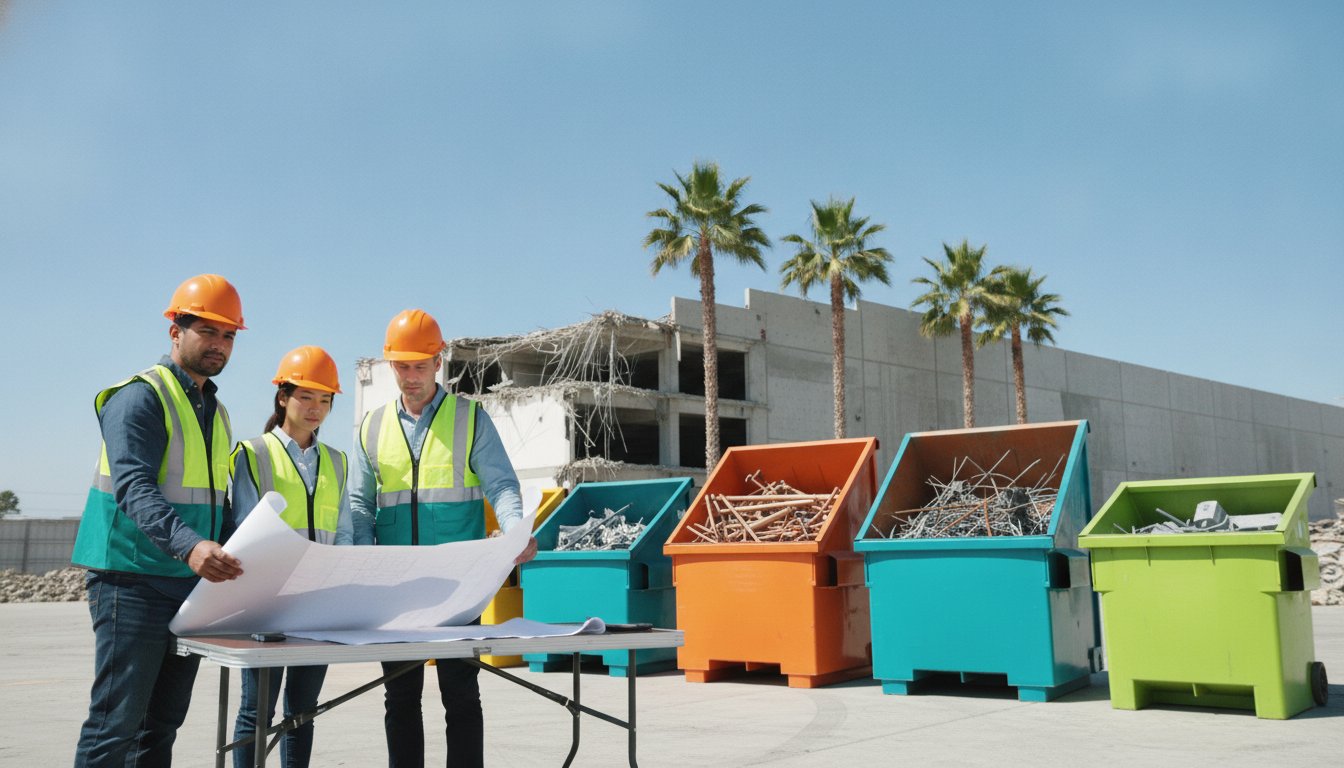
Did you know that Orange County landfill fees are scheduled for a massive 53% hike starting July 1, 2026? For contractors already juggling tight margins, the per-ton fee for loads over 880 pounds reaching $92.70 is more than a nuisance; it’s a direct hit to your project’s bottom line. Handling demolition waste recycling Orange County mandates isn’t just about avoiding a fine from OC Public Works. It’s about survival in an increasingly expensive market. You’re likely feeling the pressure of the mandatory 65% diversion requirement while trying to manage the logistical headache of sorting debris on a cramped job site.
We understand that staying compliant while keeping your project on schedule feels like a difficult balancing act. This guide will show you how to transform those piles of debris into a consistent revenue stream by maximizing scrap metal payouts and leveraging efficient, reliable, and professional commercial bin services. You’ll learn the specific steps to meet CALGreen standards, avoid the highest tipping fees, and partner with local experts who provide a secure and transparent experience. Let’s look at how you can turn a regulatory hurdle into your project’s most profitable asset.
Key Takeaways
- Master the 65% diversion mandate and learn which projects require a Compliance Work Plan to avoid costly project delays.
- Identify profitable commodities within your debris, such as copper and brass, to shift your focus from disposal fees to scrap metal payouts.
- Optimize your site logistics with professional commercial bin placement for demolition waste recycling Orange County, ensuring your crew stays efficient in high-traffic areas.
- Cut project costs by utilizing specialized recycling facilities that offer lower rates than the rapidly increasing Orange County landfill tipping fees.
- Partner with a reliable expert featuring four local facilities to ensure your demolition project remains fully compliant and environmentally responsible.
What is Construction and Demolition (C&D) Waste Recycling?
Demolition waste is the diverse collection of debris generated during the construction, renovation, or total teardown of buildings, roads, and bridges. In our thriving local economy, managing this material is a top priority for Orange County Public Works. Because landfill space is a finite and increasingly expensive resource, the county prioritizes recycling to extend the life of our regional facilities. This isn’t merely about waste management; it’s a systematic approach to resource recovery that benefits both the environment and your project’s bottom line.
Successful demolition waste recycling Orange County projects require a clear understanding of material categories. Debris is generally split into two groups: inert materials and high-value commodities. Inert debris includes items like clean concrete, asphalt, and dirt, which are often crushed for use in new road beds. High-value commodities include ferrous and non-ferrous metals, cardboard, and clean wood. Distinguishing between these allows you to sort effectively on-site, ensuring you don’t pay high disposal fees for materials that could actually put cash back in your pocket.
The Environmental Impact in Southern California
CalRecycle sets the pace for statewide diversion goals, pushing for a more sustainable future across California. When you choose to recycle demolition debris, you’re actively reducing the demand for virgin material mining, which is an energy-intensive and ecologically disruptive process. Local processing at specialized facilities also significantly cuts down on greenhouse gas emissions. By keeping heavy materials out of distant landfills and processing them closer to the job site, we reduce the carbon footprint of the entire construction lifecycle. It’s a polished, responsible way to build that aligns with Orange County’s commitment to environmental excellence.
Common Materials Found on OC Demolition Sites
Modern demolition sites are rich with recyclable assets. Identifying these early in your project planning is the key to maximizing your ROI. Common materials include:
- Structural Steel and Rebar: Frequently recovered from large-scale commercial teardowns and seismic retrofits.
- Copper Piping and Wiring: High-value non-ferrous metal often found during residential renovations or office gut-rehabs.
- Aluminum: Sourced from window frames, siding, and door tracks, this metal is highly sought after for its infinite recyclability.
- Cardboard and Paper: Generated in massive quantities during the finishing phases of new construction.
By viewing your job site as a source of raw materials rather than just a pile of trash, you transform a logistical burden into a strategic financial advantage. Our four convenient locations make it easy for your crews to drop off these materials and get back to work quickly. We pride ourselves on providing a transparent and efficient experience that respects your time and your project’s budget.
Maximizing Project ROI: Demolition Materials You Can Sell for Cash
Most contractors view demolition debris as a logistical hurdle or a mounting line item for disposal fees. However, shifting your perspective from “disposal” to “commodity resale” can significantly improve your project’s return on investment. By identifying and separating high-value materials, you transform what would have been a cost into a revenue stream. When you prioritize the recycling and reuse of C&D materials, you aren’t just following federal guidelines; you’re building a more profitable business model that offsets the rising costs of traditional landfilling.
Effective demolition waste recycling Orange County relies on distinguishing between ferrous and non-ferrous metals. Ferrous metals, such as iron and steel, are magnetic and usually found in massive quantities on commercial sites. Non-ferrous metals, including copper, brass, and aluminum, are non-magnetic and command much higher market prices. Because copper is highly conductive and infinitely recyclable, scrap copper prices in Santa Ana remain a primary driver for contractors looking to maximize their payouts during the teardown phase.
Non-Ferrous Metals: The High-Value Targets
Copper piping, yellow brass fixtures, and aluminum window frames are the “gold” of the demolition site. To get the best price, you must understand the difference between clean and “dirty” scrap. Clean copper is free of solder, paint, or brass fittings, while dirty copper includes these contaminants. While stripping insulated wire takes extra labor, the significantly higher payout for bare bright copper often justifies the time spent. If labor is tight, selling insulated wire as-is still provides a substantial return compared to throwing it in a mixed debris bin.
Ferrous Metals and Large-Scale Steel Recovery
While individual pieces of steel or iron are worth less than copper, the sheer volume found in structural beams, rebar, and heavy piping adds up quickly. Managing these heavy materials requires specialized logistics. Utilizing bulk ferrous recycling can often offset the cost of bin rentals entirely. We provide certified weight scales at our facilities to ensure transparent, honest payouts for every load. This level of professional reliability gives you peace of mind that your project’s financial interests are protected.
To ensure you capture the most value, follow these practical on-site sorting tips:
By implementing these strategies, you turn your job site into a well-oiled industrial process. To see how much your specific materials are worth today, you can explore our full range of scrap metal purchasing services and start boosting your project’s bottom line.
Navigating the 65% Diversion Rule in Orange County
Orange County’s 65% diversion mandate isn’t just a suggestion; it’s a legal requirement under the California Green Building Standards Code, known as CALGreen. Since this statewide mandate went into effect on January 1, 2017, every permitted construction and demolition project in the county must prove that at least 65% of its waste is being diverted from landfills. OC Waste & Recycling enforces this strictly. If you don’t meet these standards, your project finalization can be delayed, or worse, you could face significant administrative hurdles. We act as your reliable partner, ensuring that your demolition waste recycling Orange County efforts meet every legal benchmark while protecting your project schedule.
Most projects require a Compliance Work Plan (CWP) before a permit is even issued. This document outlines how you intend to handle debris, from structural steel to clean concrete. The county doesn’t just take your word for it; project finalization is entirely contingent on your ability to produce accurate disposal and recycling receipts. Working with a certified recycler simplifies this entire audit process. We provide transparent, certified weight tickets that clearly state the material type and tonnage, making your final reporting straightforward and stress-free.
Achieving Diversion Through Reuse and Recycling
To hit that 65% threshold, you need a methodical approach to on-site separation. While taking “mixed C&D” to a processing facility is an option, it often comes with higher gate fees, sometimes ranging between $135 and $180 per ton. Source-separating materials like scrap metal, cardboard, and clean wood on the job site is the gold standard for compliance. If you’re reusing materials on-site, such as using crushed concrete for a new road base or salvaging lumber, you must document these volumes. These “reuse” credits are vital. They count toward your diversion goals without the cost of hauling material off-site, effectively boosting your ROI.
Compliance Documentation and Final Reporting
The Final Compliance Report is where many contractors struggle. A single missing receipt for a 5-ton load can jeopardize your entire diversion percentage. We recommend a “digital first” approach to record-keeping. Scan every ticket the moment it’s received and categorize it by material type. Common mistakes, such as losing receipts or failing to distinguish between “inert” and “recyclable” loads, are the primary causes of project delays. Our four local facilities are designed for speed and precision. We ensure every load is weighed on certified scales and documented correctly, so your final submission to the county is polished and professional.
Commercial Logistics: Bin Placement and Site Management
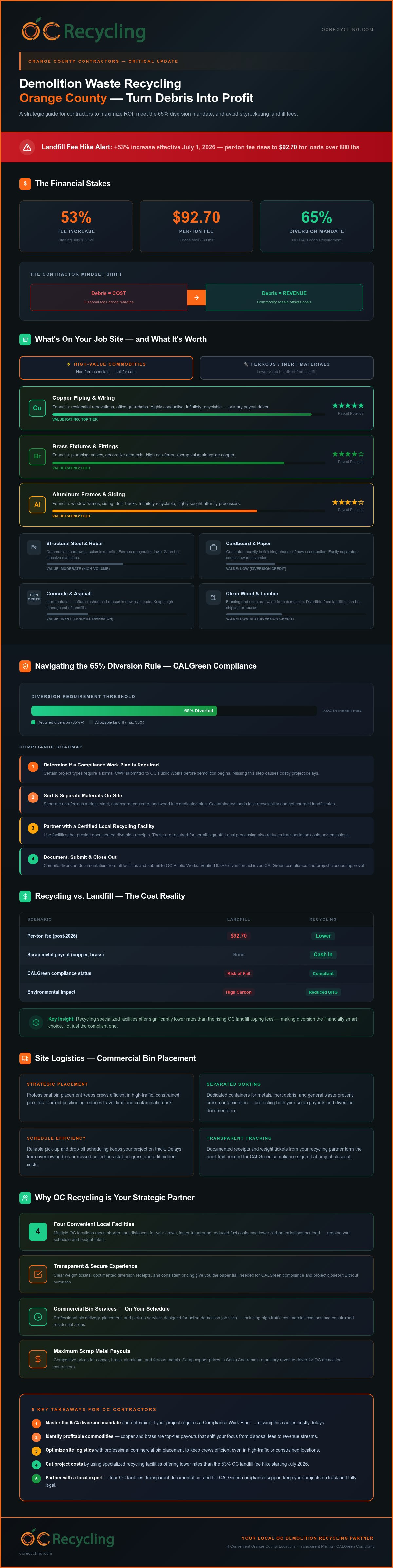
High-density urban centers like Anaheim and Huntington Beach demand meticulous logistical planning for any teardown. In these areas, narrow streets and high traffic volumes make site management a complex puzzle that can easily derail a project. Professional bin placement ensures that your crew has immediate access to disposal containers without blocking essential access points or violating local ordinances. Efficient demolition waste recycling Orange County depends on this level of logistical precision. When you optimize container placement, you reduce the time workers spend moving debris, which directly impacts your labor costs and project speed.
Tailored Solutions for Different Site Sizes
Small-scale residential demo needs in Tustin or Orange often have limited driveway space, requiring smaller, more maneuverable bins that won’t damage property. In contrast, large industrial teardowns in Irvine or Costa Mesa often require a fleet of multiple bins to handle different material streams like steel, cardboard, and concrete simultaneously. Balancing site space with debris accumulation is an art. We work closely with you to determine the ideal frequency of hauls, ensuring your site remains clean and organized without any unnecessary downtime or logistical bottlenecks.
Safety and Compliance in Bin Placement
Placing a bin on a public street in Orange County often requires specific city permits that vary by municipality. We help you navigate these local regulations to avoid costly fines or work stoppages. Safety is always our top priority. Every bin must be loaded safely to prevent road hazards during transport, such as falling debris or unbalanced weight. Working with a fully licensed and insured hauling partner provides the peace of mind that your project is protected from liability. Our drivers are trained to handle the specific demands of demolition logistics with professional pride and transparency.
To streamline your next project and maximize your efficiency, explore our commercial bin placement services and experience the difference of working with a local leader.
Why OC Recycling is Your Strategic Demolition Partner
Choosing a recycling partner is a decision that impacts your project’s compliance, safety, and profitability. We take immense professional pride in our clean, modern facilities that stand in stark contrast to the gritty, unorganized yards often associated with our industry. By applying rigorous standards to every process, we ensure your crew experiences a streamlined drop-off every time. Our four convenient locations across the county provide easy access for teams working anywhere from Santa Ana to Costa Mesa, reducing drive time and keeping your project on schedule. This local network is essential for efficient demolition waste recycling Orange County operations.
We provide immediate financial incentives that help offset your project overhead. Beyond large-scale scrap metal purchasing, we offer same-day cash for cans and other scrap commodities, ensuring your smaller recyclables are just as profitable as your heavy steel. For contractors handling sensitive commercial teardowns, we also provide certified product destruction in Anaheim. This specialized service is vital when you need to secure brand liability protection by ensuring that proprietary equipment or branded materials are fully destroyed and documented rather than entering the secondary market.
Transparency in Pricing and Tonnage
Trust is built on accuracy. We utilize state-certified scales for every load that enters our facilities, providing you with a transparent and honest weight every time. This precision is more than just a courtesy; it’s a requirement for your professional record-keeping. We provide the exact, detailed documentation you need for your mandatory 65% diversion report, ensuring your audit with OC Public Works goes smoothly. For contractors with ongoing needs, we specialize in building long-term commercial accounts. These partnerships offer prioritized logistics and consistent pricing for recurring demolition projects across Southern California.
A Local Business Rooted in the Community
With over 15 years of local operation, we possess a deep understanding of Orange County’s specific regulatory environment. We aren’t just a service provider; we are a local business committed to supporting our regional economy through responsible, domestic recycling. By processing materials locally, we ensure that the environmental and economic benefits of your project stay right here in our community. We act as an authoritative expert and a friendly guide, helping you navigate the complexities of waste management with ease and confidence.
Don’t let your valuable debris go to waste in an expensive landfill. Partner with a recycler that values your time, your safety, and the true market value of your scrap. Contact us today to set up your commercial account and turn your next demolition project into a model of efficiency and profit.
Build a More Profitable and Compliant Demolition Project
Managing your job site’s debris doesn’t have to be a drain on your resources. By shifting your focus from simple disposal to strategic commodity recovery, you can satisfy strict CALGreen mandates while putting money back into your project’s budget. We’ve explored how proper material sorting and professional logistics are the keys to mastering demolition waste recycling Orange County requirements. With our 15+ years of local expertise and four convenient facilities, we provide the institutional stability you need for a worry-free audit.
Our state-certified weight scales ensure you receive a transparent and honest payout for every load of scrap metal or cardboard. We take professional pride in offering a polished and modern recycling experience that respects your time and your bottom line. It’s time to stop paying high landfill fees and start leveraging your debris as a financial asset. Contact OC Recycling for a Commercial Bin Quote Today and let us help you streamline your next project with precision and ease. We’re ready to act as your reliable partner in building a cleaner, more profitable future for Southern California.
Frequently Asked Questions
What materials are considered C&D waste in Orange County?
Construction and demolition waste include any debris generated during the building, renovation, or teardown process. Common materials found on local sites include structural steel, rebar, copper piping, and aluminum window frames. It also encompasses cardboard, paper, and inert materials like concrete or asphalt. Please note that while we handle a wide range of recyclables, we don’t accept hazardous waste or offer residential curbside pickup.
How do I meet the 65% diversion requirement for my demolition project?
Meeting the 65% mandate requires a strategic approach to source-separating your debris. By utilizing professional demolition waste recycling Orange County services, you can ensure that high-value materials like scrap metal and cardboard are diverted from landfills. You must also document any on-site material reuse and maintain all certified weight tickets to submit with your final compliance report to OC Public Works.
Can I get cash for demolition scrap metal in Santa Ana?
Yes, we provide same-day cash for many scrap commodities at our Santa Ana facility. Whether you’re dropping off copper wiring from a residential renovation or heavy iron pipes from a commercial site, we use state-certified scales to ensure you receive a transparent payout. This immediate revenue stream is an excellent way to offset your project’s disposal costs and maximize your return on investment.
Do I need a permit for a recycling bin on a demolition site?
Permit requirements depend entirely on where the bin is placed. If you’re placing a container on a public street in cities like Anaheim or Huntington Beach, you’ll generally need a permit from the local public works department. Bins placed on private property typically don’t require these specific permits. We recommend verifying local ordinances for your specific project location to ensure you remain fully compliant.
What is the difference between ferrous and non-ferrous demolition scrap?
The primary difference is iron content. Ferrous metals contain iron and are magnetic, including items like structural beams and rebar found in large-scale commercial teardowns. Non-ferrous metals, such as copper, brass, and aluminum, don’t contain iron and are non-magnetic. While ferrous metal is often found in higher volumes, non-ferrous metals are much more valuable and provide the highest payouts for contractors.
How does OC Recycling help with LEED certification points?
We support your LEED goals by providing the rigorous tonnage documentation required for Construction and Waste Management credits. Our professional weight tickets track exactly how much material is diverted from landfills through recycling. Because we have four local facilities, using our services can also help your project qualify for regional priority points by processing materials near your job site in Orange County.
Can OC Recycling handle large-scale industrial demolition logistics?
We specialize in complex commercial logistics for industrial teardowns in cities like Irvine and Costa Mesa. Our team provides professional bin placement with a variety of container sizes, from compact roll-offs to massive industrial bins. We understand that timing is critical, so we offer efficient hauling to keep your site clean and ensure your demolition timeline remains on track without any logistical bottlenecks.
What happens if I don’t meet the 65% diversion threshold?
Failing to meet the 65% diversion mandate can result in significant project delays. OC Public Works often makes project finalization and the issuance of a certificate of occupancy contingent on meeting these standards. You might also face administrative hurdles or fines for non-compliance. Partnering with a certified recycler ensures your documentation is accurate, helping you avoid these common pitfalls and finish your project on time.
