
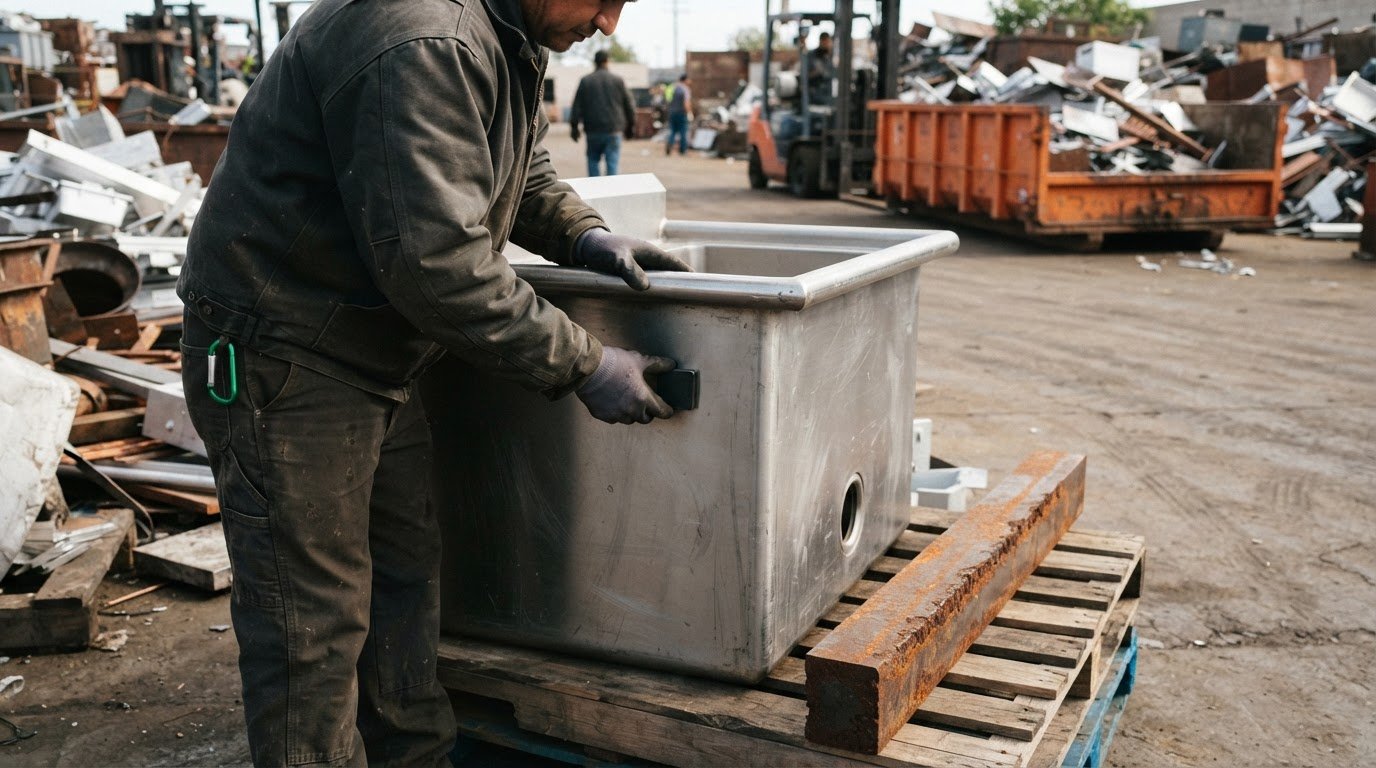
A magnet is a useful clue, but it doesn’t tell the whole story. To understand what the difference is between ferrous and non-ferrous metals, start with iron: ferrous metals contain it, while non-ferrous metals don’t. Most ferrous metals are magnetic, but stainless steel can be an exception, so a magnet test isn’t a complete classification.
It is easy to assume that metal resistant to rust must be non-ferrous. In fact, some iron-containing metals, including stainless steel, resist corrosion. Both the metal’s composition and the elements mixed into it matter.
This guide explains how to identify ferrous and non-ferrous metals, what magnetism and corrosion can tell you, and why stainless steel is still ferrous. You’ll see familiar examples, from steel and cast iron to aluminum, brass, and copper, to help you sort or recycle metal with more confidence.
Key Takeaways
- Start with iron content: it’s the key distinction between ferrous metals and non-ferrous metals.
- Use a magnet as a helpful clue, not a final test; some stainless steel behaves differently.
- Don’t rely on rust resistance alone to identify a metal, since some iron-based alloys resist corrosion.
- Recognizing ferrous metals can help you understand which materials may be suitable for ferrous metal recycling.
What is a Ferrous Metal?
Common ferrous metals include steel, carbon steel, cast iron, and wrought iron. Common non-ferrous metals include aluminum, copper, brass, bronze, and nickel. The U.S. Environmental Protection Agency identifies iron and steel as ferrous metals.
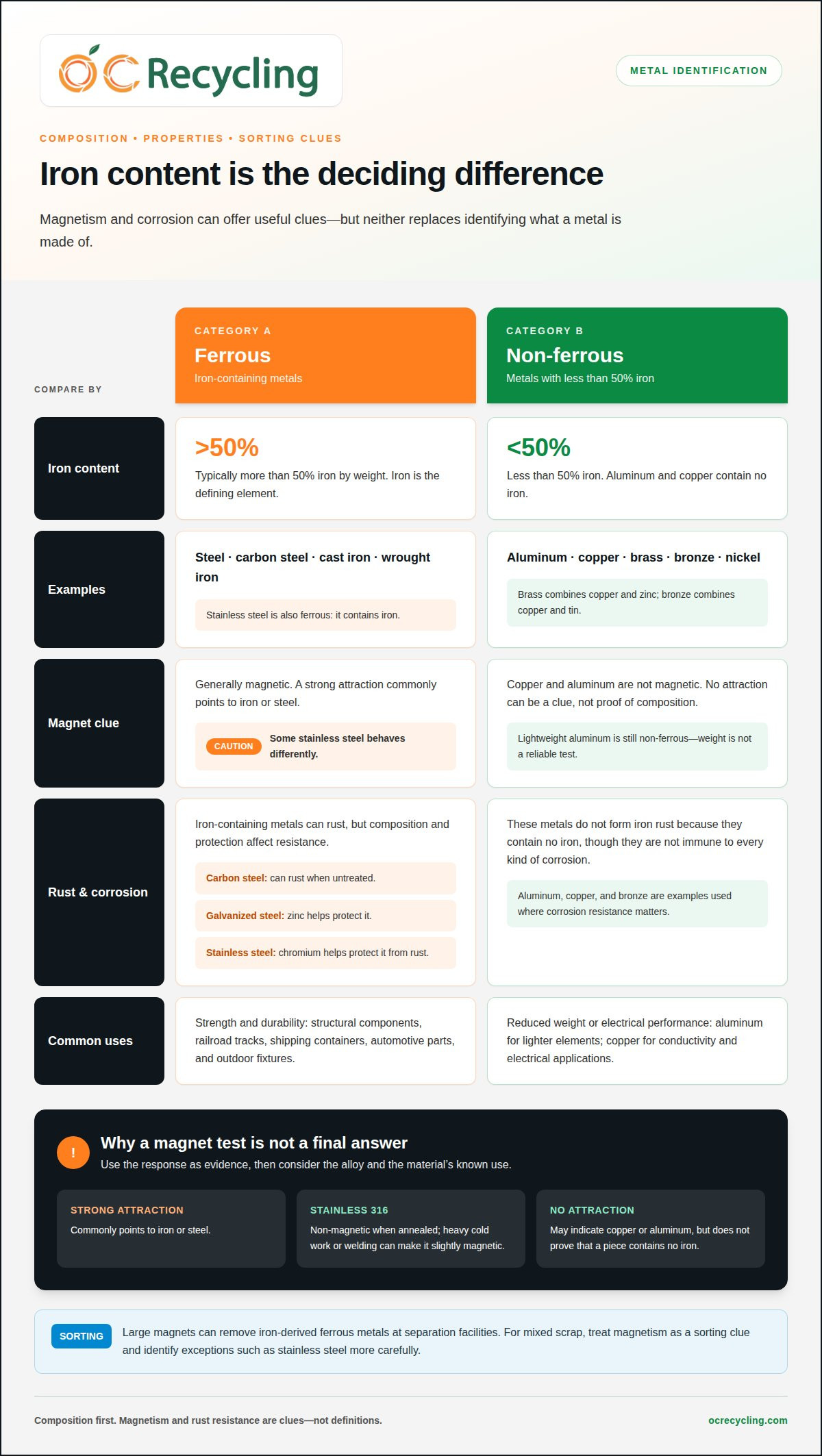
The key distinction is iron content. Ferrous metals typically contain more than 50% iron by weight, while non-ferrous metals contain less than 50%. Non-ferrous metals such as aluminum and copper contain no iron. The terms come from ferrum, the Latin word for iron. The practical question of what the difference is between ferrous and non-ferrous metals comes down to composition, which helps explain their different applications.
Ferrous metals are widely used where strength and durability matter. Carbon steel and cast iron appear in construction, including beams, nuts, bolts, and other structural components. Iron and steel are also used in railroad tracks, train components, shipping containers, and automotive parts. Cast iron is found in durable outdoor fixtures such as benches and tree grates. These examples show how iron-based metals support buildings, transportation, and public spaces.
Non-ferrous metals serve different needs. Aluminum is valued for its lighter weight, while copper is known for its conductivity and used in electrical applications. Non-ferrous metals also appear in electronics. In construction and design, aluminum and bronze can be used for lightweight elements such as decorative panels. These properties make them useful when reduced weight or electrical performance matters.
Some non-ferrous metals are alloys rather than pure elements. Brass, for example, combines copper and zinc; bronze combines copper and tin. Understanding the difference between ferrous and non-ferrous metals helps explain why these materials suit different applications. Classifying a metal by its composition, rather than appearance alone, gives a clearer idea of its properties and likely uses.
Magnetic properties
A magnet offers a quick clue when sorting scrap, but it cannot identify every metal. Ferrous metals are generally magnetic, although some stainless steel behaves differently.
Iron Content and Magnetism
Iron content helps explain why many ferrous metals respond to magnets. Iron and common iron-based materials, including carbon steel and wrought iron, are generally magnetic, while copper and aluminum are not. The word ferrum means iron, the defining element in this category. When sorting scrap, treat a magnetic response as evidence, not a complete composition test. Weight is not conclusive either: lightweight aluminum is still non-ferrous.
Identifying Scrap Metal
To use a magnet as a sorting clue, bring it close to the material and note whether it attracts. A strong response commonly points to iron or steel; no response may indicate copper or aluminum. The U.S. Environmental Protection Agency explains that large magnets can remove iron-derived ferrous metals at separation facilities. This principle helps sort mixed scrap efficiently, but exceptions mean you should consider the material’s appearance and known use alongside the magnet’s result.
Stainless steel shows why the test has limits. Stainless 316 is non-magnetic when annealed, but heavy cold work or welding can make it slightly magnetic. A weak attraction therefore doesn’t automatically make a piece non-ferrous, and no attraction doesn’t prove that it contains no iron. Identify the likely alloy before drawing a firm conclusion from the magnet alone.
Magnetism also does not determine how a metal should be joined. Copper, magnesium, and nickel, including their alloys, are suited to inert-gas-shielded arc welding. Their welding requirements differ from those of iron-based metals, even though magnetism can help with sorting. Keep these distinctions in mind when evaluating mixed scrap or considering a metal’s next application.
For iron-based scrap, ferrous metal recycling is a relevant next step. A magnet can help separate likely ferrous pieces from non-ferrous materials, while alloy exceptions such as stainless steel call for a more careful identification.
Rust and corrosion resistance
Rust is a form of corrosion that affects iron-containing materials. Ferrous metals can corrode, but their resistance depends on the elements mixed into them. Carbon steel, for example, behaves differently from stainless steel because their compositions differ. Iron content helps explain rust risk, but it is not the whole story. Alloying elements and protective treatments also influence how metals perform in construction and manufacturing.
Non-ferrous metals generally resist iron rust because they contain no iron. Aluminum, copper, and bronze are common examples used where corrosion resistance matters. Aluminum and bronze can form lightweight decorative panels, while copper is used in applications that benefit from its material properties. These metals are not immune to every kind of corrosion, but they do not form iron rust.
Iron and steel can also be protected. Zinc is widely used to galvanize iron or steel, creating a layer that helps prevent rust. This treatment is useful for steel products exposed to conditions that encourage corrosion. Stainless steel is another example: chromium helps protect it from rust. It remains ferrous, but its composition gives it different corrosion resistance from carbon steel.
Joints between ferrous and non-ferrous metals need attention, too. Protect them against galvanic corrosion. For example, where steel meets aluminum, a suitable barrier or separation helps protect the joint. Without protection, contact between different metals can accelerate corrosion under the right conditions. This matters in construction and manufacturing, where different materials may be assembled together.
Compare three materials: untreated carbon steel can rust, galvanized steel uses zinc for protection, and aluminum resists iron rust because it contains no iron. Stainless steel adds chromium to an iron-based alloy, while bronze is a non-ferrous option. The right choice depends on composition, exposure, and the material’s role in the finished product, not simply whether it is ferrous or non-ferrous.
Is stainless steel ferrous or non-ferrous?
Stainless steel is ferrous because it is a steel alloy that contains iron. Chromium and other elements are added to the iron-based material, changing its properties without changing its classification. Aluminum and bronze, by contrast, are non-ferrous because they do not contain iron. Composition, not color, shine, or rust resistance, determines the classification.
This distinction matters when identifying metals for manufacturing or recycling. Stainless steel can look very different from carbon steel, yet both are ferrous. Chromium helps stainless steel resist rust and staining more effectively than carbon steel. An alloy’s combination of elements can also affect its strength and magnetic response, so appearance alone cannot establish its exact type.
Not all stainless steel behaves alike. Its magnetic properties depend on its type and processing. Some stainless steel is magnetic, while other types may not respond strongly to a magnet. A magnet can offer a clue, but it cannot replace identification based on composition. This is useful to remember when a shiny item could be stainless steel or a non-ferrous metal such as aluminum.
Welding is another example of why alloy composition matters. Welding high-carbon steel with the oxy-acetylene process can change the base metal’s properties. Those changes might make future welding repairs impossible. Carbon content and welding method therefore matter alongside the broader ferrous classification.
Stainless steel’s corrosion resistance does not make it non-ferrous. Chromium protects the iron-containing alloy, while aluminum resists iron rust without containing iron. Bronze is also non-ferrous, despite its different elements and uses. Keep classification separate from performance: iron content determines whether a metal is ferrous, while alloying elements influence properties such as rust resistance and strength.
If you’re sorting stainless steel or other iron-based material for recycling, explore ferrous metal recycling as a practical next step.
OC Recycling: Ferrous Metal Recycling
OC Recycling offers Ferrous Metal Recycling for readers sorting iron-based scrap such as steel or cast iron. Once you’ve identified material as ferrous, recycling provides a practical next step for keeping it in the material recovery stream.
If you have scrap metal to dispose of, OC Recycling also offers Scrap Metal Purchasing. These services are relevant when you’re handling ferrous materials and want a clear route for recycling or selling scrap. Separating likely ferrous metal from non-ferrous items can help clarify which material you’re bringing forward.
For questions about ferrous metal recycling or scrap metal purchasing, contact OC Recycling.
Make your next recycling decision count
Understanding the difference between ferrous and non-ferrous metals gives you a useful starting point for deciding how to handle materials. Next, keep recyclable items moving through an appropriate recovery route so useful material does not go to waste. For mixed materials, separating what you can identify helps clarify what each item is.
OC Recycling offers Scrap Metal Purchasing, Electronics Recycling, and CRV Redemption. These services can help you decide what to do with scrap metal, electronics, or eligible CRV containers. Choose the service that matches your material and take the next step with confidence.
Contact OC Recycling to discuss your recycling needs. A thoughtful choice today can support responsible material recovery, one item at a time.
Frequently Asked Questions
What Are Nonferrous Metals?
Non-ferrous metals do not contain iron as their base material. Examples include tin, zinc, lead, gold, and silver. Their uses depend on their individual properties: tin and zinc appear in metal products, while gold and silver are used in jewelry and electronics. When appearance is unclear, an item’s label or known material can help distinguish it from an iron-based alloy.
Which type is stronger?
Neither category is automatically stronger; strength depends on the specific metal or alloy and the property being compared. For example, the listed tensile strength for carbon steel is 400-550 MPa, while titanium Grade 5 is 893-920 MPa. Those examples show why a material’s exact grade matters more than whether it’s ferrous or non-ferrous when selecting a metal for a load-bearing application.
What does ferrous mean in metals?
Ferrous means that a metal or alloy is iron-based. The term comes from ferrum, the Latin word for iron. Steel and cast iron are familiar examples, and stainless steel belongs to this group as well. The term describes composition, not a particular shape or use, so ferrous material can range from a structural beam to a small fastener.
What does non-ferrous mean in metals?
Non-ferrous describes metals that do not contain iron as their base material. Examples include tin, zinc, lead, gold, and silver. The label covers a wide range of materials, not one shared level of strength, weight, or conductivity. A decorative gold component and a zinc building part are both non-ferrous, but their properties and applications differ substantially.
How do ferrous and non-ferrous metals differ in iron content and magnetism?
Ferrous metals are iron-based and generally magnetic; non-ferrous metals lack iron and are generally non-magnetic. A magnet can help sort mixed scrap, but its response is only a clue, not a complete identification. For example, some stainless steel may not react like ordinary steel. Consider the material information as well as the magnet result.
How do ferrous and non-ferrous metals compare in corrosion and rust resistance?
Iron-based metals can form rust, while non-ferrous metals generally resist iron rust because they contain no iron. Corrosion resistance still depends on the particular alloy and any protective treatment. For example, a metal part used outdoors may need a protective finish or regular inspection, especially at joints and exposed surfaces. Choose materials based on the conditions they will face, not category alone.
