
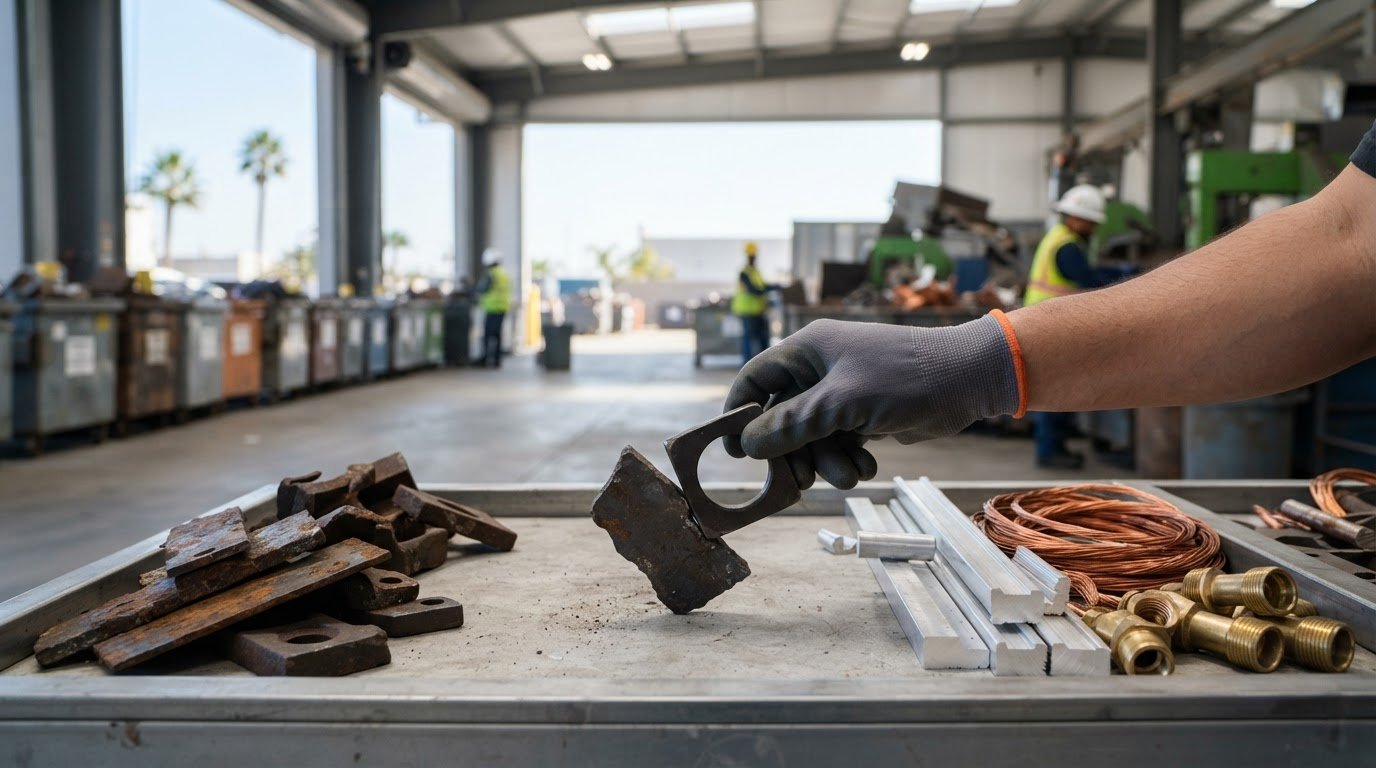
The key is the material’s composition: what is considered ferrous scrap metal is scrap containing iron or steel. Common examples include mild steel, stainless steel, cast iron, and wrought iron. Most ferrous metals are magnetic, so a magnet is a useful first clue when sorting scrap.
It’s easy to assume that a metal’s color or weight will tell you what it is, but those clues can be misleading. Aluminum, copper, brass, and other non-ferrous metals can look very different from one another, and they don’t contain iron. A magnet helps narrow things down: if a piece sticks, it’s likely ferrous; if it doesn’t, it may be non-ferrous.
This guide explains the difference between ferrous and non-ferrous metals, gives everyday examples, and shows how to use a magnet as a sorting aid. It also covers why identifying metal matters when preparing scrap for recycling and what to consider when a piece’s composition is not obvious.
Key Takeaways
- Compare metals by their properties, not appearance alone, to sort likely ferrous and non-ferrous scrap more confidently.
- Use a magnet as a practical first check, then consider the metal’s composition when the result isn’t straightforward.
- Learn how condition, material type, and preparation affect how ferrous scrap is graded and sorted.
- Find out when OC Recycling’s scrap metal purchasing can help you take the next step with recyclable metal.
How to Differ Ferrous And Non-ferrous Metals?
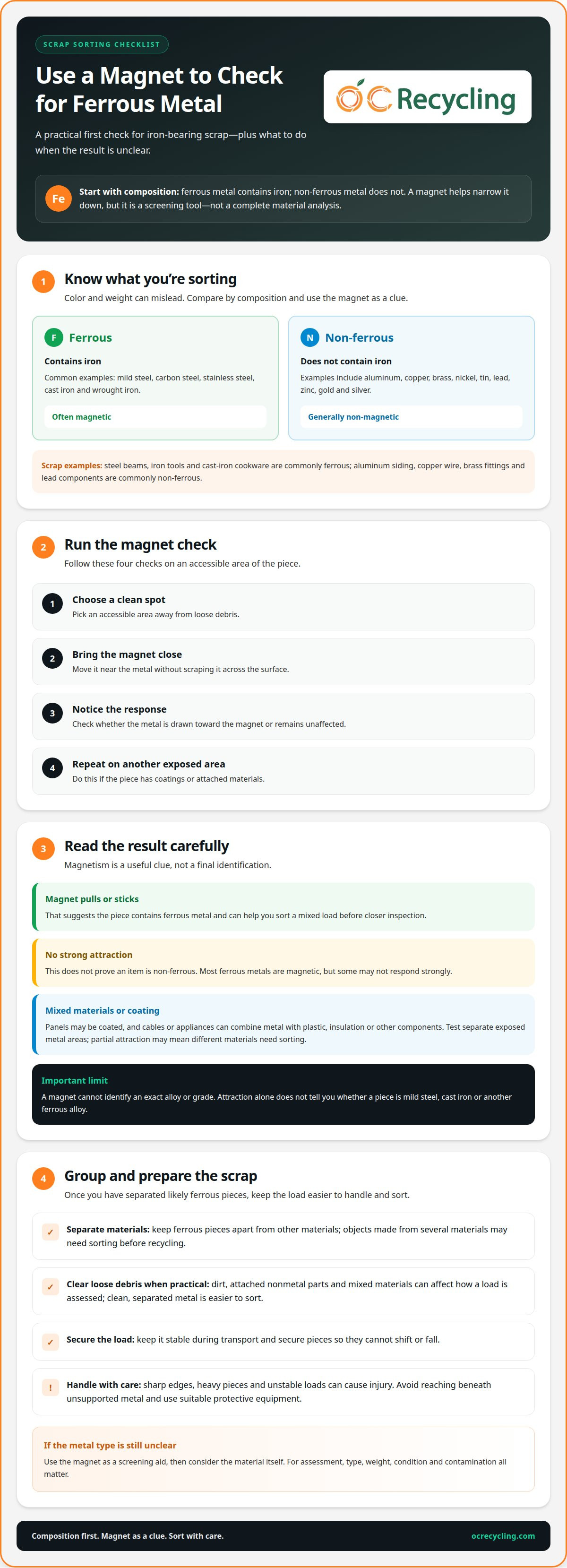
Start with composition: ferrous metals contain iron, while non-ferrous metals do not. Common ferrous metals include mild steel, carbon steel, stainless steel, cast iron, and wrought iron. Aluminum, copper, brass, nickel, tin, lead, zinc, gold, and silver are non-ferrous. Color alone can mislead, so consider the material’s properties and use a magnet as a helpful check.
Common ferrous scrap includes steel beams, iron tools, cast-iron cookware, and steel parts from vehicles or appliances. Non-ferrous scrap often includes aluminum siding, copper wire, brass fittings, and lead components. These examples are useful, but objects made from several materials may need to be sorted before recycling.
| Metal group | Composition | Examples | Typical clue |
|---|---|---|---|
| Ferrous | Contains iron | Steel, cast iron | Often magnetic |
| Non-ferrous | Does not contain iron | Aluminum, copper, brass | Generally non-magnetic |
Identify the likely material by composition first, then use a magnet as a practical sorting check.
The U.S. scrap recycling rate has averaged between 80% and 90% over the past decade, according to the U.S. Geological Survey.
For a sale, bring photo identification and relevant ownership records. Intake procedures vary, so prepare your documents before bringing in the material.
Ferrous scrap value depends on its type, weight, condition, and contamination. Dirt, attached nonmetal parts, and mixed materials can affect how a load is assessed. Clean, separated metal is easier to sort.
Separate ferrous pieces from other materials and remove loose debris when practical. Keep the load stable during transport, and secure pieces so they cannot shift or fall.
Sharp edges, heavy pieces, and unstable loads can cause injury during handling. Keep scrap under control, avoid reaching beneath unsupported metal, and use suitable protective equipment.
When looking for a local buyer, find scrap yards that purchase iron and steel and review their posted information for the relevant metal type and grade. Check how contamination and preparation affect assessment so you can sort your load appropriately.
Identifying ferrous metal with a magnet
A magnet is a useful first sorting test because most ferrous metals are magnetic. Hold it close to the metal and see whether the piece is pulled toward it or sticks. Attraction suggests the material contains iron, while non-ferrous metals such as aluminum and copper are generally non-magnetic.
Use this simple process to check a piece:
- Choose a clean, accessible spot on the metal, away from loose debris.
- Move the magnet close without scraping it across the surface.
- Note whether the metal is drawn toward the magnet or remains unaffected.
- Repeat the test on another exposed area if the piece has coatings or attached materials.
A strong pull is a practical sign that a piece contains ferrous metal, and can help you sort a mixed load before closer inspection. But a magnet is only a screening tool, not a complete material analysis. Some ferrous metals may not respond strongly, so a lack of attraction does not prove that an item is non-ferrous.
Consider how the object is made, too. A metal panel may be coated, while a cable or appliance can combine metal with plastic, insulation, or other components. Test separate exposed metal areas rather than relying on a single spot. If only part of the item attracts the magnet, it may contain different materials that need sorting.
Use magnetism as a clue to distinguish likely iron-bearing scrap from non-magnetic metal, not to identify an exact alloy or grade. For example, attraction does not tell you whether a piece is mild steel, cast iron, or another ferrous alloy. Those distinctions depend on the material itself, not the magnet alone.
Once you’ve separated likely ferrous pieces, keep them grouped for easier handling and sorting. If you’re preparing iron or steel scrap for recycling, ferrous metal recycling is a relevant next step.
Definition of ferrous scrap metal
Ferrous scrap metal is discarded or leftover material made from iron or steel. Its category depends on composition, not its shape, age, or original purpose. A steel pipe offcut, an iron fence panel, and rebar from a renovation can all qualify. Manufacturing remnants also count when they contain iron or steel and are set aside for recycling.
To determine what is considered ferrous scrap metal, look at the material itself. Iron may be present alone or combined with other elements to create an alloy. Steel is an iron-based alloy that typically contains 0.2%-2.1% carbon. Mild steel, carbon steel, stainless steel, cast iron, and wrought iron are common examples of ferrous materials.
Scrap can come from products at the end of their useful life or leftover production material. A damaged steel storage rack, for example, may become scrap, as can a short length of unused steel from fabrication. Both contain iron-bearing material, even though their size, condition, and attached components differ.
Not every part of a metal object is ferrous. A steel assembly may include plastic handles, copper wiring, rubber seals, or aluminum panels. These additions do not change the iron content of its steel parts, but separating materials makes sorting clearer. For instance, a steel-framed item with attached wiring contains both ferrous and non-ferrous components.
Use the term for iron- or steel-containing material that is leaving its current use and entering the scrap stream. It covers a broad range, from rebar and factory steel cuttings to cast-iron components. The label alone does not identify the precise alloy, grade, cleanliness, or condition. Those characteristics help distinguish loads during sorting and assessment.
How is ferrous scrap graded and sorted?
Scrap grading groups ferrous material by type and condition. A steel beam, cast-iron part, and thin sheet steel differ in form and composition, so they may be sorted separately. There is no universal grade label for every scrap buyer. Material type, size, cleanliness, and preparation help determine how a load is classified.
First separate iron and steel from aluminum, copper, brass, and nonmetal items. Then group similar ferrous pieces together. For example, keep heavy steel sections apart from small steel cuttings, and separate cast-iron pieces when practical. Sorting by material makes the load easier to assess.
Common factors in sorting and grading include:
- Material: Distinguish steel, cast iron, and other iron-bearing metals.
- Form: Separate large beams, sheet metal, pipe, and small offcuts.
- Condition: Note rust, coatings, attached parts, or damage.
- Cleanliness: Identify dirt, plastic, wood, or other materials mixed into the load.
Contamination matters because a steel object with attached plastic or copper wiring is not a uniform load. Remove loose nonmetal materials when practical, and separate distinct metal types rather than mixing them. A painted steel panel remains ferrous, though its coating and attached components may affect sorting.
For a clearer assessment, describe the load accurately and keep unlike pieces separate. Clean steel cuttings are easier to classify than mixed scrap containing iron, aluminum, rubber, and debris. Do not cut or dismantle items unless you can do so safely. Photos of unusual pieces can also help you track material types before transport.
Once sorted, bring ferrous scrap for recycling as a clearly separated load, with attached nonmetal parts removed where practical.
OC Recycling: CRV Redemption
OC Recycling purchases scrap metal and recycles ferrous metal, helping you take the next step with sorted material. If you have separated iron or steel from other materials, these services are relevant to your ferrous scrap. CRV Redemption is a separate service for eligible CRV containers, not for iron or steel.
Before bringing in metal, keep different materials grouped and remove loose nonmetal items when practical. A well-sorted load is easier to identify. For unusable electronics, OC Recycling also offers Electronics Recycling; Certified Product Destruction is available for products requiring destruction.
To take the next step with ferrous scrap, contact OC Recycling about scrap metal purchasing.
Put Your Sorted Scrap to Good Use
Knowing what is considered ferrous scrap metal can help you make a more deliberate choice about what to keep, separate, and recycle. The next step is turning that sorting effort into a responsible outcome. Keep metal, electronics, and eligible CRV containers in distinct groups so each material can follow the appropriate recycling or redemption path.
OC Recycling offers Scrap Metal Purchasing for recyclable metal, Electronics Recycling for unwanted electronic items, and CRV Redemption for eligible containers. Matching the service to your material gives you a clear next step, whether you are clearing a work area or sorting items from a project.
For a straightforward next step, contact OC Recycling today to discuss your recyclable materials and the service that fits. A well-sorted load is a practical start, and your recycling decisions can help keep useful materials in circulation.
Frequently Asked Questions
What Is Considered Scrap Metal?
Scrap metal is discarded or leftover metal collected for recovery and recycling. It can come from household cleanouts, renovation work, manufacturing, or replaced equipment. Examples include an old metal shelving unit, copper plumbing fittings, and steel offcuts. Before sorting, separate metal from attached wood, plastic, or fabric so the material is easier to assess.
What metals are considered ferrous scrap metal?
Ferrous scrap includes iron and iron-based metals, especially steel and its alloys. Examples include cast iron, wrought iron, mild steel, carbon steel, and stainless steel. Stainless steel belongs to the ferrous group because it contains iron, even though its properties and appearance differ from plain steel. Where possible, identify the metal type rather than grouping every iron-bearing item together.
How can you tell whether scrap metal is ferrous using a magnet?
Hold a magnet near a clean, exposed part of the scrap and see whether the metal is attracted. Test more than one spot on coated or assembled objects, since a single item can contain different materials. A magnetic response suggests iron-bearing metal, but the test cannot identify the exact alloy. If a piece does not attract the magnet, do not rely on that result alone to determine its composition.
What are common examples of ferrous scrap, such as steel and cast iron?
Common examples include steel rebar from a renovation, a steel door frame, and a broken cast-iron machine housing. Wrought-iron gates and mild-steel shelving also qualify. When dismantling a structure, separate iron or steel parts from attached wood, wiring, and other materials. The object’s original use does not determine its category; its metal composition does.
What items are accepted as ferrous scrap at U.S. scrap yards?
Items commonly handled as ferrous scrap include steel beams, pipes, rebar, iron tools, cast-iron components, and steel appliance parts. For a load collected around Santa Ana, Anaheim, Costa Mesa, Huntington Beach, Orange, Irvine, Garden Grove, Westminster, Fountain Valley, or Tustin, separate obvious nonmetal attachments. Keep mixed-material items identifiable so their metal components can be assessed.
What is the difference between ferrous and nonferrous scrap metal?
Ferrous scrap contains iron; non-ferrous scrap does not. This distinction offers useful sorting clues: ferrous metals are often magnetic, while aluminum, copper, and brass generally are not. Non-ferrous metals are also generally lighter and more malleable, and they resist rust because they lack iron. With a mixed item, separate distinct metal parts rather than classifying the whole object by just one component.
