
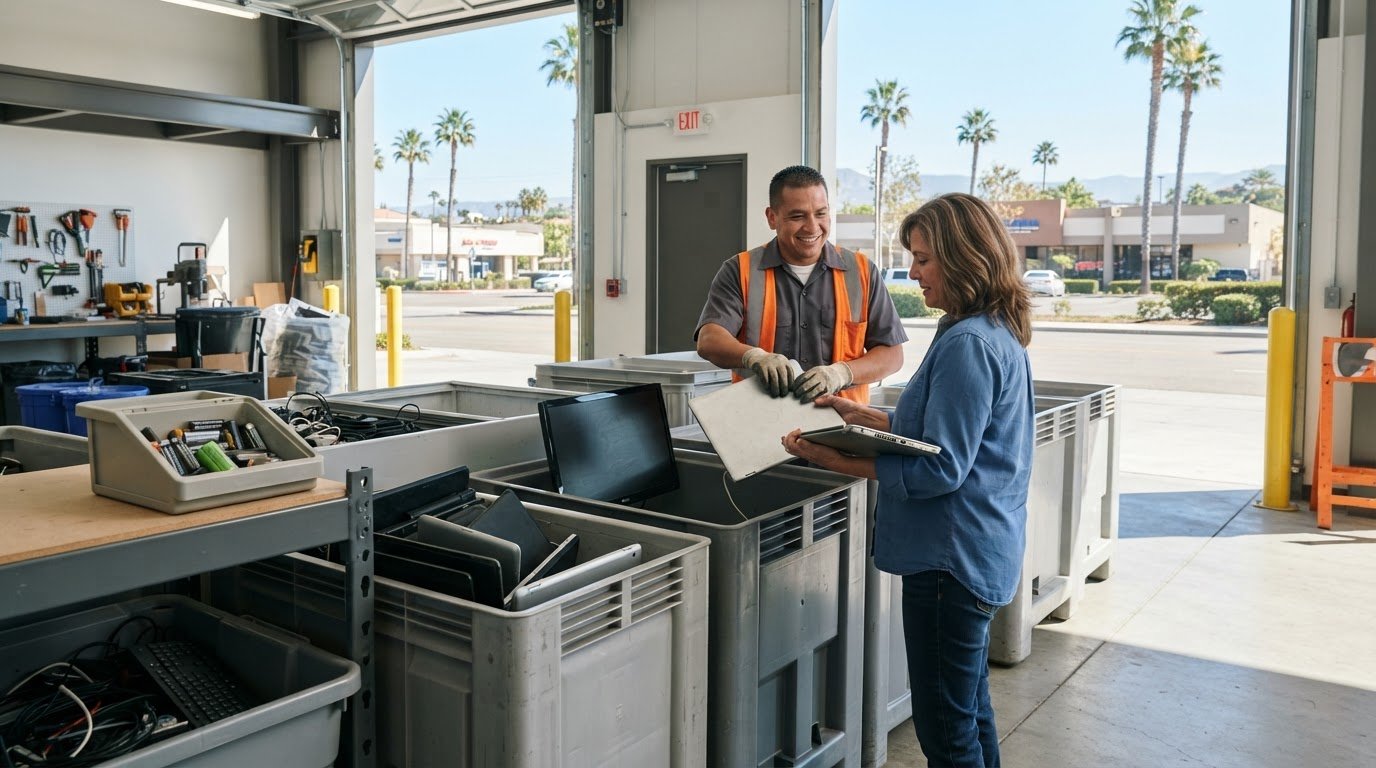
Throwing old electronics in the trash is not a safe or legal disposal route in Orange. California regulations prohibit putting e-waste in regular trash or municipal landfills, and batteries can pose a fire hazard if handled or discarded incorrectly. Eco-friendly electronics disposal in Orange means keeping devices out of the waste stream and preparing them responsibly, especially when they contain personal or business data.
Choosing where to drop off an unwanted phone or computer is only part of the process. Protecting the information stored on it matters just as much. This guide explains how to prepare electronics for recycling, handle batteries, and choose local drop-off options. It also covers secure data destruction for households and businesses clearing out equipment.
Key Takeaways
- Protect personal information before recycling by backing up important files, removing storage cards and drives, and resetting devices.
- Separate removable batteries from electronics and handle them carefully to reduce fire risk.
- Choose an appropriate local drop-off route based on the device type and whether it contains a battery.
- For unwanted electronics or devices that contain sensitive data, OC Recycling offers electronics recycling and certified product destruction.
Where to do electronic recycling near me in Orange?
For eco-friendly electronics disposal in Orange, use a designated recycling drop-off instead of regular trash. Prepare devices and batteries separately, then choose reuse or material recovery.
Preparing Electronics for Recycling
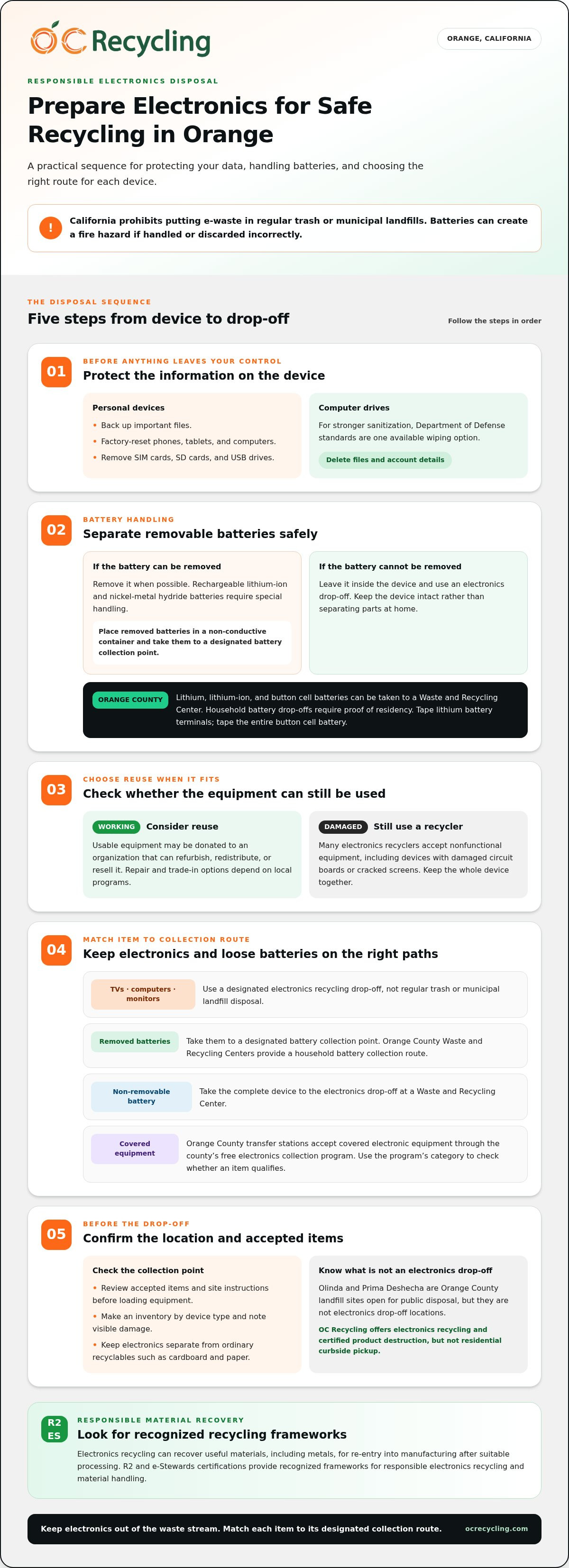
Before drop-off, remove rechargeable batteries when possible, since lithium-ion and nickel-metal hydride batteries require special handling. Place removed batteries in a non-conductive container and take them to a designated battery collection point. If a battery cannot be removed, leave it inside the device and use an electronics drop-off. Do not put e-waste in regular trash or municipal landfills in California.
Removing Personal Information
Before a device leaves your control, delete personal files and account details. Back up important files, then factory-reset phones, tablets, and computers. Remove SIM cards, SD cards, and USB drives before recycling or resale. For computer drives that need stronger sanitization, Department of Defense standards are one available wiping option. These steps help protect private information on devices you no longer use.
Eco-Friendly Recycling and Material Recovery
Electronics recycling recovers useful materials from discarded devices instead of sending them to landfill. Phones, computers, and other electronics contain metals that can re-enter manufacturing after suitable processing. For added process oversight, look for recyclers certified to R2 or e-Stewards standards. These certifications provide a recognized framework for responsible electronics recycling and material handling. Separate batteries from devices when possible so each stream reaches appropriate collection.
Local Disposal and Reuse Options
A drop-off is a designated location where residents bring electronics for collection. Because California prohibits e-waste in regular trash and municipal landfills, TVs, computers, and monitors should go through electronics recycling. Removed batteries may need a separate drop-off at a designated collection point. Orange residents can use local drop-off options; OC Recycling offers electronics recycling, but not residential curbside pickup.
Working electronics may be suitable for reuse. Donate usable equipment to an organization that can refurbish, redistribute, or resell it. Repair and trade-in options depend on local programs, so prioritize reuse when a device remains useful before choosing recycling.
Electronics disposal location
An electronics disposal location is a designated place that collects electronic waste for appropriate handling. In Orange County, residents can take lithium, lithium-ion, and button cell batteries to a Waste and Recycling Center. Proof of residency is required for these household battery drop-offs.
Use marked collection receptacles for lithium batteries, and tape their terminals before transport. Tape the entire button cell battery. These steps help reduce fire hazards during collection. If a device’s battery cannot be removed, take the whole device to the electronics drop-off at a Waste and Recycling Center. Keep the device intact rather than separating plastics or other parts at home.
For larger electronics, find a dedicated electronics collection point rather than treating a landfill as a recycling center. Olinda and Prima Deshecha are Orange County’s two landfill sites open for public disposal, but they are not electronics drop-off locations. Check the accepted items and instructions for the specific collection point before loading laptops, monitors, or other equipment. This helps match your items to a site equipped to handle them.
Smartphones, laptops, and screens can contain recoverable metals and plastics, but the right disposal route depends on the collection program. Separate loose batteries from devices when possible, and leave non-removable batteries inside their devices. Orange County’s Waste and Recycling Centers provide a designated route for household battery collection and devices with non-removable batteries.
For electronics recycling in Orange, use a dedicated recycler rather than sending devices to landfill disposal. A suitable collection route supports material recovery and environmental sustainability by keeping electronics within recycling channels. If you’re planning a drop-off, electronics recycling services offer a local option for unwanted devices.
What electronics are accepted at Orange recycling centers or collection events?
Accepted electronics are devices a recycling program takes for collection and processing. Many electronics recyclers accept nonfunctional equipment, including devices with damaged circuit boards or cracked screens. A broken display or failed circuit board does not mean an item belongs in household trash. Keep the whole device together and use a designated electronics recycling route.
Covered electronic equipment is a category handled through specific collection programs. Orange County transfer stations accept covered electronic equipment through the county’s free electronics collection program. Use the program’s covered-equipment category to determine whether an item belongs in that drop-off, rather than assuming every household appliance or accessory qualifies. Keep electronics separate from ordinary recyclables such as cardboard and paper.
Condition and category are separate considerations. A laptop with a cracked screen may still be accepted by a recycler, while a working device may be suitable for reuse. Group similar devices together and identify visibly damaged items. This helps distinguish complete electronics from loose parts, such as a removed circuit board, during intake.
Before taking equipment to an Orange collection event, make a simple inventory: list each device type and note obvious damage. For example, list a computer with a broken screen separately from an intact monitor. Use the program’s covered-equipment category to guide sorting, and keep removable batteries apart. Do not assume a household event accepts every electronic accessory or loose component.
For unusable electronics, use an electronics recycling channel rather than putting them in regular trash. Many recyclers accept nonworking devices, so cracked screens and damaged circuit boards can still go for material recovery. Sorting items by device type and condition makes drop-off clearer and helps collection staff handle them appropriately.
Are there fees for electronics disposal in Orange?
A recycling fee is a charge for collecting or processing discarded electronics. Orange County’s free electronics collection program accepts covered electronic equipment, and the county does not charge businesses, municipalities, or schools for electronics recycling. For household drop-offs, use the program’s covered-equipment category to identify which devices fit the collection route. Keep item types clear when planning a drop-off.
Fees can vary between a county collection program and a separately operated recycling service. A charge may depend on device category, screen size, quantity, condition, and handling requirements. For example, a large display may require different processing from a small phone. The collection method matters too, since drop-off and arranged pickup involve different logistics.
For a paid recycling service, the price depends on the items and quantity. Relevant factors include device types, dimensions, and handling requirements. An itemized list of laptops, monitors, or phones gives a clearer picture of the recycling load than a general estimate.
When comparing disposal routes, distinguish county-program drop-off from a paid service. Orange County’s free collection program applies to covered electronic equipment, while other routes may have their own fees. Businesses, schools, and municipalities can use the county program without a recycling charge. Households can sort devices by type and identify which fit the covered-equipment category.
Before arranging disposal, make an itemized inventory with each device type, approximate dimensions, and quantity. Note whether equipment is intact or damaged, since these details help describe what needs handling. This preparation makes it easier to distinguish the county collection route from a service that may charge based on material and quantity.
OC Recycling: CRV Redemption
OC Recycling also offers electronics recycling for unwanted devices and certified product destruction for items requiring secure disposal. If electronics contain sensitive information, data destruction provides a focused next step alongside recycling. These services suit households and commercial accounts clearing out equipment while keeping responsible material handling in view.
CRV Redemption is a separate option for eligible beverage containers, while Scrap Metal Purchasing covers recyclable scrap metal. For old electronics, choose a service that matches the item and its data needs. Contact OC Recycling to discuss electronics recycling or certified product destruction.
Make your next electronics clear-out count
Responsible disposal is a practical step for your next home or workplace clean-out. Set aside equipment you no longer use, keep devices intended for recycling together, and consider whether working items can be reused first. This makes eco-friendly electronics disposal in Orange part of a more thoughtful approach to unwanted materials.
OC Recycling offers Electronics Recycling, along with CRV Redemption and Scrap Metal Purchasing for other recyclable materials. If your next step is arranging electronics disposal, contact OC Recycling about electronics recycling and discuss a suitable route for the devices you’re ready to clear out. A considered decision today helps keep useful materials in circulation and makes your next clean-out easier to manage.
Frequently Asked Questions
What happens if E-waste is not disposed properly in Orange?
Improper disposal can send electronics and their batteries into ordinary waste, creating fire and environmental risks. California prohibits e-waste disposal in regular trash or municipal landfills. A discarded phone or laptop can also retain personal files if it hasn’t been wiped. Keep electronics out of household rubbish, protect stored information, and use a designated recycling route for devices you no longer need.
What is the E-waste Recycling Service in Orange?
An e-waste recycling service collects and processes unwanted electronic devices through an appropriate recycling channel. For eco-friendly electronics disposal in Orange, OC Recycling accepts computers, televisions, monitors, and other devices for electronics recycling. If equipment contains sensitive business information, OC Recycling also offers data destruction and certified product destruction, helping organizations manage unwanted electronics and the information stored on them.
Where can residents dispose of electronics in Orange?
Residents in Orange, California, can bring electronics to OC Recycling’s Orange location at 8642 N Olive Ave, Orange, CA 92865. This is a drop-off option for unwanted devices such as computers and monitors. OC Recycling offers electronics recycling, but not residential curbside pickup. Keep household electronics separate from regular rubbish and bring them to an appropriate electronics recycling location.
Which Orange is meant, and what local e-waste programs serve it?
This guide covers Orange, California, in Orange County. OC Recycling offers electronics recycling in Orange, with nearby local coverage including Santa Ana, Anaheim, Costa Mesa, Huntington Beach, Irvine, Garden Grove, Westminster, Fountain Valley, and Tustin. Households can bring unwanted devices to a drop-off location, and businesses can use electronics recycling for commercial equipment.
What are the hours, locations, and appointment requirements for Orange e-waste drop-off sites?
OC Recycling’s Orange location is at 8642 N Olive Ave, Orange, CA 92865. Its listed hours are Monday through Friday, 8:00 am to 4:15 pm, closed 11:45 am to 12:30 pm; Saturday, 8:00 am to 3:45 pm; and Sunday, 10:00 am to 3:45 pm. Plan a drop-off within those hours. The location information provides operating hours for electronics drop-off.
How should I prepare electronics for disposal, including wiping personal data?
Back up files you want to keep, then factory-reset phones, tablets, and computers before recycling. Remove SIM cards, SD cards, and USB drives, and handle removable batteries separately. For a computer drive needing a stronger wipe, Department of Defense standards are one available option. For business devices containing sensitive information, consider data destruction rather than relying only on a factory reset.
