
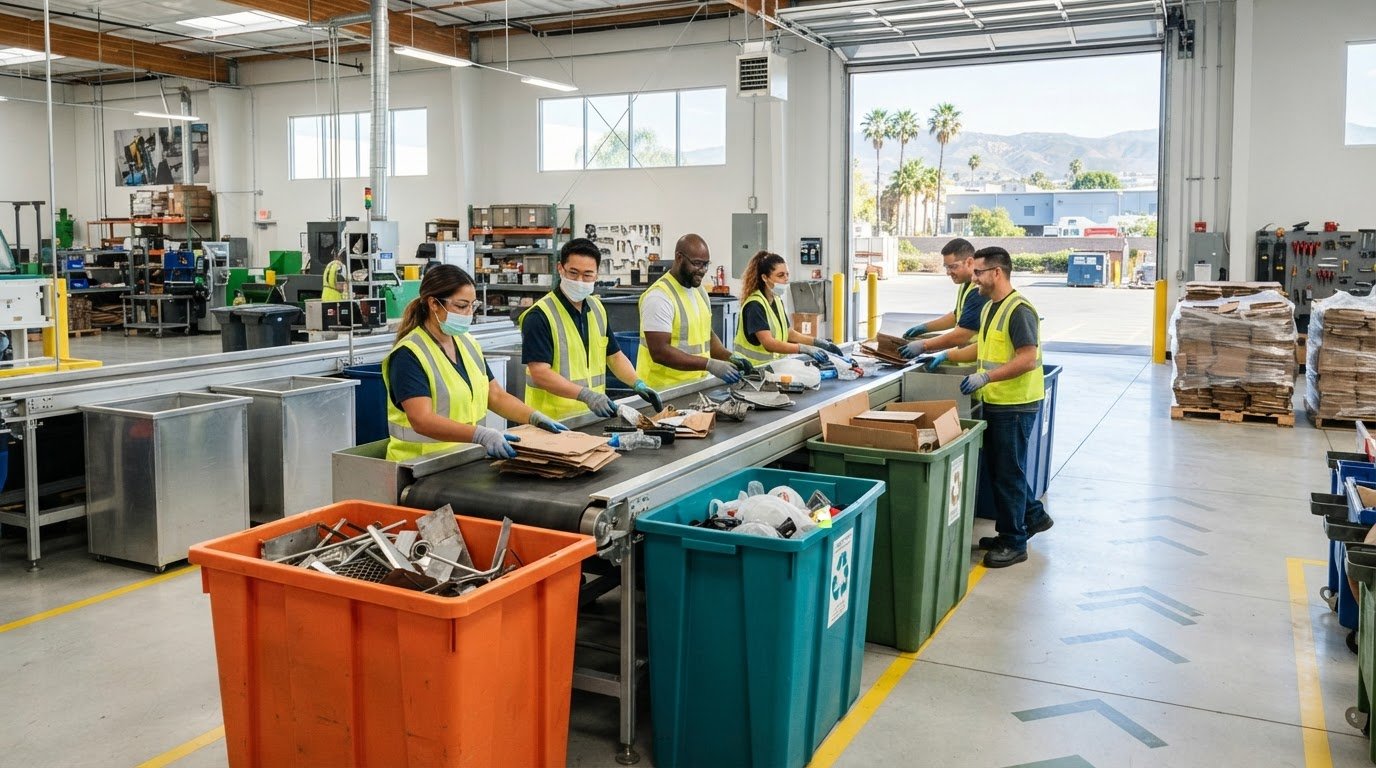
A recycling program for a manufacturing facility succeeds or stalls at the workstations, not just at the loading dock. Employee engagement makes the difference: train teams to identify materials, sort them correctly, and use collection equipment safely. Give employees a way to share ideas, and keep them informed as the program evolves.
That approach recognizes a practical truth: even a well-designed waste plan depends on the people who handle materials every day. This article explains how to build participation into routine operations and how a waste assessment, clear targets, and attention to material quality can turn recycling goals into workable procedures.
You’ll also learn how to consider compliance, choose recycling partners that fit your facility’s materials, and track performance. An illustrative manufacturing case study ties the steps together, showing how to shape a program around real waste streams, production needs, and employee feedback.
Key Takeaways
- Start with a waste assessment that identifies where materials arise, what can be recovered, and where contamination enters the stream.
- Make sorting part of daily work through practical training, clear bin labels, and employee feedback.
- Build compliance and material-quality checks into handling procedures so recyclable streams stay clean and traceable.
- Choose recycling partners whose material capabilities and handling approach fit your facility’s needs.
- Use a facility case study to shape measurable targets and decide which performance indicators to track.
1. How Can Employee Engagement Boost Recycling Efforts?
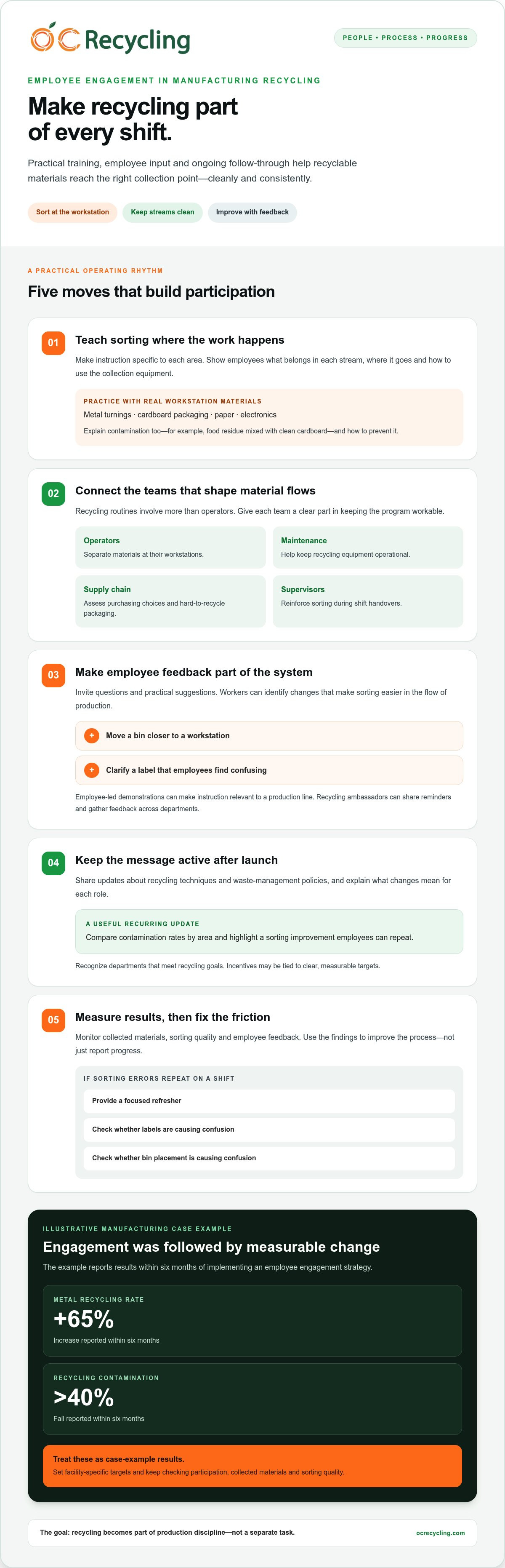
Employees decide whether recyclable material reaches the right collection point or becomes contaminated. In a recycling program for a manufacturing facility, engagement must be part of everyday operations. Teach each team what belongs in each stream, where materials go, and how sorting supports waste reduction. Clear routines make sustainable practices easier to follow during busy production shifts.
Make training specific to each work area. Show operators how to separate metal turnings, cardboard packaging, paper, and electronics from general waste. Demonstrate how to use each collection bin or piece of recycling equipment, then let employees practice with materials from their own stations. Explain what contamination looks like, such as food residue mixed with clean cardboard, and how to prevent it.
Give employees a voice in the program. Invite questions during training and ask workers to suggest practical changes, such as moving a bin closer to a workstation or clarifying an unclear label. Employee-led demonstrations can make instruction relevant to a specific production line. Appoint recycling ambassadors in different departments to share reminders, gather feedback, and sustain attention between formal training sessions.
Keep the message active after launch. Share updates about recycling techniques and waste-management policies, then explain how changes affect each role. Recognize departments that meet recycling goals, and consider incentives tied to clear, measurable targets. For example, a monthly team update can compare contamination rates by area and highlight a sorting improvement employees can repeat.
Measure whether engagement changes results. In a manufacturing facility example, a plant increased its metal recycling rate by 65% within six months of implementing an employee engagement strategy. The same example reports that recycling contamination fell by more than 40% within six months. Treat such results as a case example, then set facility-specific targets and monitor collected materials, sorting quality, and employee feedback.
Use those findings to improve the process, not just report progress. If one shift records repeated sorting errors, provide a focused refresher and check whether labels or bin placement are causing confusion. Regular monitoring and ongoing education help maintain participation and support compliance efforts. When employees see how their actions affect collection quality and costs, recycling becomes part of production discipline rather than a separate task.
2. What Are the Benefits of Implementing an Industrial Waste Recycling Plan?
Start by appointing a program lead, securing management support, and completing a waste audit before introducing new collection routines. Use the audit to map waste from raw-material handling through production and finished-product packaging, then set measurable goals for the streams the facility can recover.
A factory waste audit works best when it traces materials to their source. Walk production areas, shipping stations, offices, and maintenance spaces. Record material types, approximate volumes, current disposal routes, and contamination risks. Repeat observations on different days to capture shifts in production and avoid building the plan around an unusual day.
Involve employees from relevant departments in the assessment. Operators can point out where scrap accumulates, maintenance staff can identify handling constraints, and supply chain teams can flag packaging choices. Map each stream from where it is generated to its collection area. This flow map helps locate mixed materials, unnecessary handling, and opportunities to reuse materials internally.
Which manufacturing waste materials can be recycled? A facility audit may identify paper, cardboard, plastics, metals, and electronics as recoverable streams. Whether a material can be recycled depends on its condition, contamination, and the processing options available for it.
Use the audit to distinguish clean, separated recyclables from mixed or contaminated waste. For example, separate clean cardboard from food residue and keep metal scrap apart from incompatible materials. Clean, well-separated materials can improve value and reduce downstream handling. A recycling partner can help identify viable end markets and practical packaging or storage methods for collected streams.
How can a facility measure recycling rates and set goals? Track the quantity generated and recycled for each material stream, then compare diversion rates over consistent reporting periods. Set targets for identified materials, such as reducing landfill-bound cardboard, and review results alongside contamination, handling, and production needs.
A waste plan can also reveal where recycling supports resource efficiency. Manufacturers may reuse suitable scrap as production input, reducing the need for new raw materials. The Environmental Protection Agency estimates that 80%-90% of all solid waste produced is recyclable. In the United States, recycling one ton of material generates $65.23 in wages, according to the U.S. Environmental Protection Agency.
Use audit findings to shape collection arrangements with a recycling company. Share the material types, volumes, contamination concerns, and pickup or storage constraints identified in the facility map. A partner can help match streams with end markets, while regular reviews show whether collection practices support waste reduction without disrupting production.
For a facility assessing a distinct electronics stream, electronics recycling support can be a practical next step alongside its broader waste plan.
3. Regulatory compliance and material quality requirements
In the United States, the Resource Conservation and Recovery Act (RCRA) governs waste management practices and focuses on protecting human health and the environment. State and local environmental regulations or guidelines may also apply to a facility’s waste streams and disposal practices.
For hazardous and universal waste, first identify and segregate each stream from ordinary recyclables. Keep containers labeled and follow applicable rules for handling, storage, and disposal. Requirements depend on the material’s classification and jurisdiction.
Start a compliance review by listing each waste stream, where it is generated, and its current route. Then compare those practices with environmental laws and guidelines that apply at the facility’s location. For example, a plant sending several types of production scrap into one dumpster should assess whether any materials need separate handling before collection.
Document the review consistently. Record material descriptions, where they arise, how they are stored, and their destination or processing route. Keep relevant shipping and service records with each stream. These steps make it easier to trace materials through operations and identify gaps when procedures change.
Material quality matters alongside compliance. Separate clean cardboard from wet or food-contaminated material, and keep metals apart from incompatible waste. Place labeled containers where materials are generated, with signs that identify accepted materials and common exclusions. Maintain buffer zones between incompatible recyclable materials to reduce mixing during collection and storage.
Set handling procedures that protect recyclable value and environmental safeguards. Train employees to report damaged containers, spills, or unexpected contents through established facility procedures. For example, if a sealed container appears in a metal-scrap area, staff should keep it out of routine sorting and follow the facility’s procedures. Clear escalation steps help prevent contamination from spreading through a collection stream.
Review procedures when operations or regulations change. A waste audit can reveal whether existing disposal methods remain compliant and cost-effective, while a stream-by-stream review can uncover changes in material composition. Tie the assessment to actual production processes, such as a new coating or packaging input that changes the condition of scrap.
Good records also support practical resource decisions. Compare the materials collected with the amounts sent for recycling or disposal, then investigate unexplained differences. Clean, separated materials can reduce downstream handling and protect potential savings, provided the handling route meets applicable requirements. A documented process connects environmental responsibilities with consistent day-to-day operations.
4. Partnering with industrial recycling companies
A recycling partner connects a facility’s separated materials with collection, processing, and end markets. Start with the waste streams mapped in the facility audit, such as ferrous metal, cardboard, paper, or electronics. Match each stream to a recycler that handles the material and can explain its requirements for condition, packaging, and storage.
End markets affect what becomes valuable after collection. Clean, separated metals may follow a different processing route from mixed paper or electronic equipment. A partner can help identify viable markets and recommend packaging or storage that protects material quality. For example, keeping cardboard dry and metal scrap separate can reduce contamination during handling.
Compare operational fit, not just the material list. Consider collection frequency, loading access, staging space, equipment needs, and how pickups fit production schedules. If floor space is limited, discuss mobile or stackable collection systems. If a stream needs special preparation, build that task into the workflow before expanding the program across the facility.
How can a facility find industrial recycling companies nearby? Search using the facility’s city or region alongside the specific materials it generates, such as metal scrap or cardboard. Compare local service coverage, material capabilities, and collection arrangements with the waste audit and site logistics.
Clear coordination helps employees maintain consistent recycling practices. Share accepted-material instructions, container requirements, and pickup procedures with the teams handling each stream. Assign a facility contact to track service issues, contamination feedback, and changes in material volume. For example, if packaging changes increase mixed materials, the contact can coordinate an updated sorting process.
Before establishing a long-term arrangement, define how the partnership will be reviewed. Track quantities collected by stream, rejected or contaminated loads, and whether pickups fit the production schedule. Use those records to identify whether reducing handling steps or improving storage could strengthen recovery. Regular reviews also help catch changes in supply, output, or material quality that affect collection.
Some recycling companies offer equipment rental, servicing, or volume-based pricing, which may help offset setup costs. These arrangements vary, so match equipment and service needs to the facility’s material volume, site layout, and handling capacity. Compare the full operating process, including storage, loading, and employee access.
A strong partnership brings practical expertise to the recycling plan, from identifying end markets to refining packaging and storage. Long-term collaboration can support better terms, improved recycling rates, and specialized waste-management knowledge. The facility still needs to monitor its own material quality and operations, using collection records and employee feedback to guide adjustments.
5. Manufacturing facility recycling case study
Consider a manufacturer whose waste streams include clean packaging, metal scrap, electronics, and production residues. Cutting oil, coated materials, and trim scrap can complicate collection when materials are mixed, contaminated, or embedded in production processes. First map where each stream arises, then separate recoverable materials from waste that requires different handling.
An illustrative workplace waste assessment assigns 15% of garbage to white paper, 10% to plastic bottles, and 5% to computer equipment. These figures show how an audit can reveal recoverable materials beyond the main production line. They are an example, not a measured result for every factory. A facility should use its own observations to identify material types, volumes, and contamination points.
Next, place clearly labeled bins near the workstations where materials are generated. Use color coding, mobile carts, or chutes to make sorting convenient across shifts. A larger plant might use centralized recycling stations to sort and store collected streams before pickup. Where floor space is limited, mobile or stackable collection systems can support the same waste-management effort.
Production workflows can improve material quality before collection. For example, a manufacturer may shred plastic trim as it is generated, reducing handling and contamination. Clean metal chips or uncontaminated plastic trim may also be suitable for internal reuse in production. Return trimmings and avoidable production overruns to the process whenever possible instead of disposing of usable material.
Set a measurable target that reflects the audit. One example is reducing landfill-bound waste by 50% within the first year. Track the quantity of each stream collected, waste sent to landfill, contamination rates, and revenue from recovered materials. Compare results consistently, then adjust collection locations or employee instructions when the data identifies recurring problems.
The case study’s central lesson is to build initiatives around actual material flows, not a generic bin plan. A facility with clean cardboard may need different storage practices from one handling oily scrap or electronics. Pilot collection with selected streams before expanding across production. This gives teams a chance to identify space, handling, and quality issues without disrupting broader operations.
Review the program continually. If contamination rises, examine bin placement, labels, and handling steps; if a stream’s volume changes, reassess storage and pickup arrangements. Use employee observations alongside tonnage and disposal records to find practical improvements. To take the next step with recoverable facility materials, explore recycling options for your materials.
An industrial waste recycling plan systematically collects, sorts, and processes materials from industrial operations for reuse or repurposing instead of disposal. In a manufacturing facility, collection can follow identified material streams and keep sorting convenient where waste arises. Place labeled bins for different materials near their points of generation; clearly labeled bins throughout the facility can also help employees sort recyclables at the source.
Manufacturing facilities can set recycling targets around reducing specified waste types or recycling defined amounts of identified materials. To support consistent sorting, place labeled bins near workstations where waste is generated and use color coding, chutes, or mobile carts. These choices give employees a clear way to separate materials at the source and make recycling part of everyday operations.
OC Recycling: CRV Redemption
OC Recycling is a practical next step when your facility’s audit identifies recoverable streams that need a route beyond internal collection. OC Recycling offers CRV Redemption for eligible CRV containers, along with Scrap Metal Purchasing and Electronics Recycling for relevant facility materials. When products require destruction rather than reuse or recycling, Certified Product Destruction is also available. Match the service to the material identified in your waste plan, and keep separate streams organized before arranging the next step. This connects a defined material need with an appropriate service while keeping your facility’s sorting process clear. Contact OC Recycling to discuss your material needs.
Make Your Next Recycling Decision Count
A recycling program for a manufacturing facility can evolve as production needs and material streams change. Treat each improvement as part of operational planning: identify the next material opportunity, assign responsibility for moving it forward, and make handling routines clear to everyone involved. This steady approach keeps sustainability practical rather than turning it into a one-time initiative.
For material streams that need a recycling route, OC Recycling offers Scrap Metal Purchasing and Electronics Recycling, as well as CRV Redemption. Choose the service that fits the material your facility is ready to manage, then take the next step at a pace that works for your operations.
Contact OC Recycling to discuss your facility. A clearer path for your recoverable materials can begin with one focused conversation.
Frequently Asked Questions
How Can Employee Engagement Boost Recycling Efforts?
Employee engagement improves sorting consistency when workers understand how their actions affect material quality. Pair a brief demonstration with a teach-back: ask an operator to identify the correct container for a sample item and explain why. Add the procedure to onboarding for new employees, then use shift huddles to clarify changes. A simple feedback method, such as a shared log near the collection area, can reveal confusing instructions.
What Are the Benefits of Implementing an Industrial Waste Recycling Plan?
An industrial recycling plan can reduce landfill-bound material, recover useful resources, and make waste flows easier to manage. It can also identify production materials suitable for reuse, helping reduce demand for new inputs. For manufacturers in Santa Ana, Anaheim, Costa Mesa, Huntington Beach, Orange, Irvine, Garden Grove, Westminster, Fountain Valley, and Tustin, site layout and local collection logistics can shape which benefits are most practical.
What Are the Costs and Savings of a Manufacturing Recycling Program?
Program costs depend on equipment, labor, storage space, collection arrangements, and the preparation each material requires. Potential savings may come from reusing suitable materials, reducing disposal needs, or slowing how quickly general-waste containers fill. Track expenses and recovered-material revenue separately by stream. This helps reveal whether a costly step, such as extra sorting or handling, is reducing the value of an otherwise recyclable material.
What Equipment Is Needed for Manufacturing Waste Recycling?
Equipment needs depend on the materials, available floor space, and how waste moves through production. A facility may use labeled bins or mobile carts for collection, then balers or compactors to reduce material volume. Shredders can support specific streams, such as plastic trim generated near a production line. Start with equipment suited to the pilot area and its material flow rather than installing machinery before confirming the workflow.
