
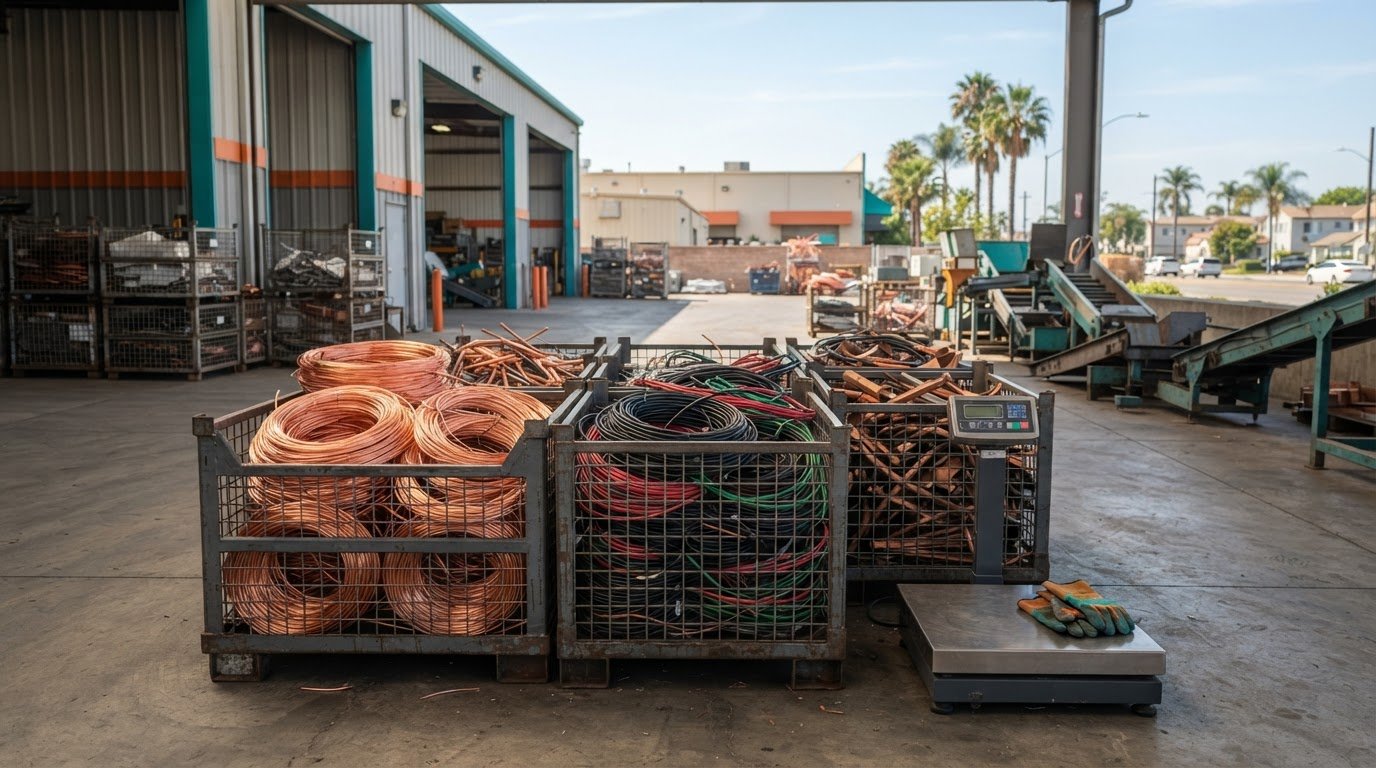
A confident copper-wire sale starts before you reach the scale. If you plan to sell scrap copper wire Costa Mesa, sorting the material and understanding how it will be evaluated can help you prepare. You may be wondering whether insulated and stripped wire are treated alike, how mixed materials affect an evaluation, and how to organize your load before taking it to a recycler.
This guide explains how to identify and separate common copper-wire categories, prepare them safely, and understand the factors that recyclers consider when evaluating a load. It also covers practical points to keep in mind when planning a copper sale in California.
OC Recycling serves Costa Mesa and other Orange County communities, purchasing scrap metal and processing it for industrial reuse. With more than 15 years of experience in Orange County, the company offers a local option for recycling scrap metal. The steps below can help you organize your wire and arrive ready to present it for evaluation.
Key Takeaways
- Before you sell scrap copper wire Costa Mesa, separate insulated, stripped, and mixed wire so each group is easier to evaluate.
- Wire category, condition, weight, and changing commodity-market conditions can affect the evaluation.
- Keep sorted wire dry, organized, and secure to make transport easier.
- Prepare your load by separating unlike materials and keeping loose pieces contained.
- OC Recycling purchases and processes scrap metal, serving Costa Mesa and communities across Orange County.
Selling Scrap Copper Wire in Costa Mesa: What to Expect
If you have unwanted copper wire, the goal is straightforward: bring it in for evaluation and recycling, and receive a payout based on the material. For anyone looking to sell scrap copper wire Costa Mesa, it helps to know that recyclers assess the wire’s type and condition. Insulated wire, stripped conductor, and wire mixed with other materials may be categorized differently, so a single unsorted bundle can be harder to assess clearly.
Identify, separate, and prepare your wire before the visit. This makes it easier to describe what you’re bringing, keeps unlike materials apart, and gives the recycler a clearer view of each group.
A scrap-metal purchase is different from curbside recycling or a public charging service. You bring metal to be evaluated for purchase and recycling; it isn’t household pickup or a place to charge an electric vehicle. Copper recycling returns material to productive use, and the Copper recycling overview describes its environmental and economic importance.
What happens when you bring copper wire to a recycler?
In a typical scrap-metal sale, you present the material for inspection. The recycler examines what the wire is made of and its condition, then categorizes it based on the material observed. The load is weighed as part of the evaluation, and its category and weight help determine the assessment. Your labels can help keep a load organized, but the recycler’s inspection determines its final classification.
For example, a container of visibly insulated wire is easier to identify than a bin combining it with stripped copper and unrelated metal. Keep those groups separate, then let the recycler make the final classification. OC Recycling serves Costa Mesa and purchases and processes scrap metals for industrial reuse, giving area sellers a local route for recycling metal rather than treating wire as ordinary household waste.
Why Costa Mesa sellers should prepare before a visit
Sorting doesn’t change the wire’s composition, but it makes the material easier to inspect and reduces confusion about what is in each container. Separate wire by its visible condition and keep other metal or nonmetal items apart. Avoid bundling unlike materials together just to make one large load. A little organization makes the handoff more straightforward and gives the recycler a clearer view of what you’ve brought.
- Group similar wire together, keeping insulated, stripped, and mixed material separate.
- Use sturdy containers that keep loose ends contained and the wire secure during transport.
- Keep the load dry and organized so you can present each group without unpacking a tangled pile.
For a broader explanation of how market conditions and material characteristics relate to scrap evaluation, see this scrap copper prices guide. It provides context, not a quote for a specific Costa Mesa load. The wire’s category, condition, and measured weight all matter, so preparation is a useful first step toward a clear evaluation.
Copper Wire Types: Separate Insulated, Stripped, and Mixed Material
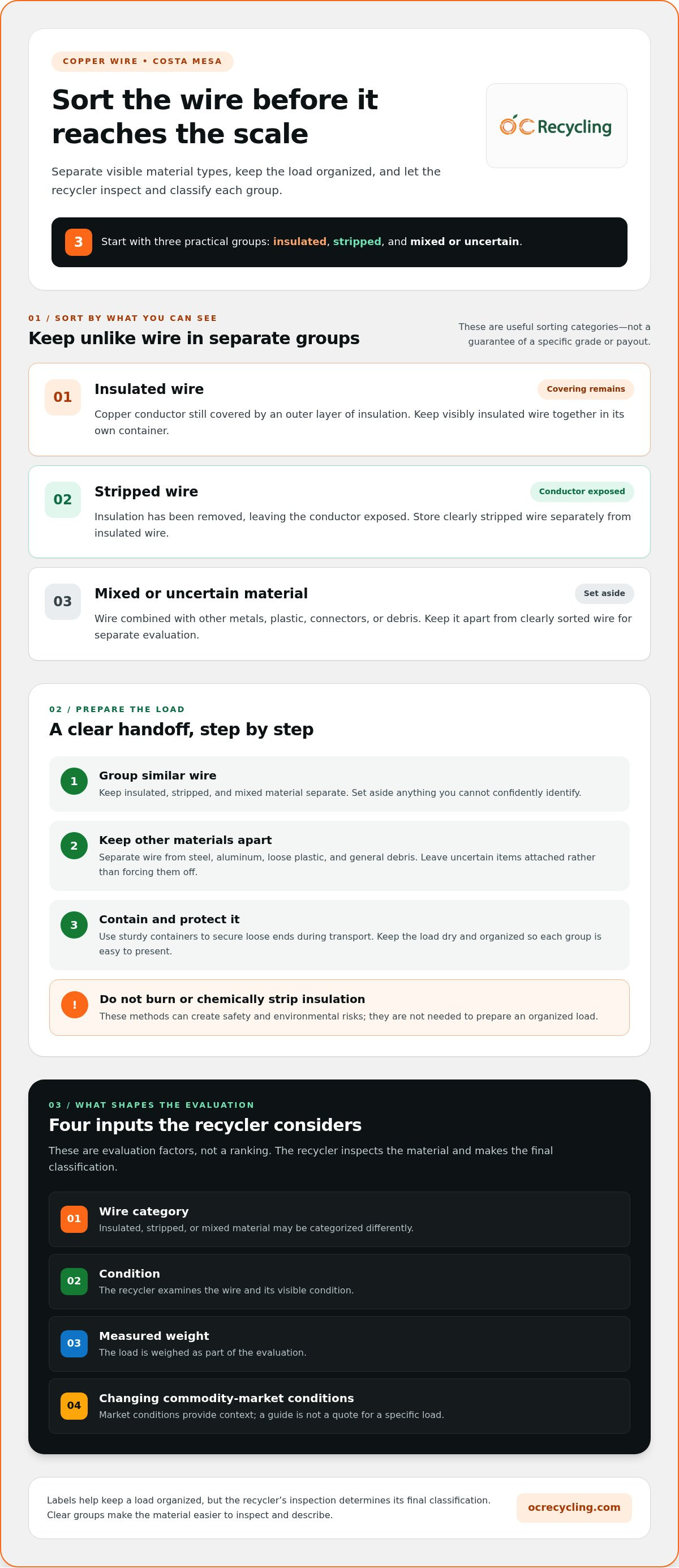
Start sorting with what you can see. Insulated copper wire has a copper conductor covered by an outer layer of insulation. Stripped wire has had that insulation removed, leaving the conductor exposed. Mixed material is less uniform: a bundle may contain copper wire alongside other metals, plastic, connectors, or general debris.
Insulation and overall material condition can affect how a recycler categorizes wire, so keep clearly different materials separate for evaluation. This distinction helps you describe your load accurately without assuming that a particular appearance guarantees a specific grade or payout. The recycler makes the final classification after examining the material.
How to sort insulated and stripped copper wire
Look over the wire without cutting, burning, or using chemicals to remove its covering. Place wire that visibly retains insulation in one container and clearly stripped wire in another. If a bundle contains both, separate the portions you can readily distinguish and set aside anything uncertain. Visible appearance is a useful starting point, but it doesn’t establish the recycler’s final grade.
Insulation can vary in color, thickness, and condition, while exposed wire may show signs of wear or residue. You don’t need to identify a technical grade before sorting. Instead, make practical groups based on whether insulation remains and whether other materials are attached. Clear separation gives the recycler an organized sample to inspect and helps you explain what each container holds.
What to do with mixed or attached materials
Keep copper wire apart from steel, aluminum, loose plastic, and general debris. For instance, if a box contains copper wire with steel brackets or scraps of plastic casing, don’t combine everything into one indistinguishable bundle. Put uncertain or mixed material in its own container so it can be presented separately for evaluation.
Avoid burning insulation or using hazardous stripping methods. These approaches can create safety and environmental risks, and they aren’t necessary to prepare an organized load. If you can’t tell whether an item is part of the wire or a separate material, leave it attached and group it with the uncertain items rather than forcing it off.
- Insulated: The copper conductor remains covered by an outer insulating layer.
- Stripped: The insulation has been removed, leaving the conductor exposed.
- Mixed: The wire includes or is combined with other materials, such as metal fittings, plastic, or debris.
These simple categories give you a useful way to organize wire before you sell scrap copper wire Costa Mesa. They’re preparation labels, not a promise of how a recycler will grade or purchase a load. For a local next step, explore scrap-metal purchasing with OC Recycling, which serves Costa Mesa and processes scrap metals for industrial reuse.
What Affects Scrap Copper Wire Payouts in Costa Mesa?
There isn’t one payout that applies to every bundle of copper wire. A recycler evaluates the material presented, and its category, condition, and measured weight can all factor into the assessment. Commodity-market conditions change over time, so an older price example can’t guarantee what a load will be worth on the day it’s evaluated.
The comparison below is a general guide to how common wire descriptions differ. It isn’t a price list or a promise that a particular category will receive a specific rate. The recycler determines the final classification after inspecting the material.
| General category | What it describes | What may affect evaluation |
|---|---|---|
| Insulated wire | Copper conductor with insulation still attached | Wire condition and the amount of non-copper covering |
| Stripped wire | Copper conductor with insulation removed | Condition, cleanliness, and the recycler’s material classification |
| Mixed material | Wire combined with other materials or debris | How much non-copper material is present and how clearly it can be separated |
Why condition and sorting can change an evaluation
Separating unlike materials gives the recycler a clearer view of what is in each group. A bundle of insulated wire mixed with metal fittings, plastic, or debris is less straightforward to assess than a container of similar wire presented on its own. Attached non-copper material or contamination may affect how the load is categorized, so keep uncertain items separate rather than describing the whole bundle as one type.
Sorting is useful preparation, not a guaranteed way to increase the payout. Removing insulation doesn’t assure a fixed premium, and stripping methods can create safety risks. Focus on organizing the material and presenting its condition accurately; the recycler’s inspection determines its category.
Why copper prices change over time
Scrap-metal values respond to changing commodity-market conditions, so a rate quoted or published at one point may not apply to a later transaction. Even a recent example is context, not a guaranteed offer for your wire. The material’s category and condition, along with its weight, remain relevant to the evaluation.
For broader background on factors that can influence scrap copper pricing, the scrap copper pricing guide offers useful context. Use pricing information as a reference rather than a promise of a Costa Mesa payout. If you plan to sell scrap copper wire Costa Mesa, organized material and realistic expectations make it easier to understand how the recycler arrives at an evaluation.
Prepare Scrap Copper Wire for a Costa Mesa Recycling Visit
A little planning can make a recycling visit easier to manage. Before you sell scrap copper wire Costa Mesa, organize the load so it’s protected in transit and straightforward to present. You don’t need to force every piece into a technical grade. Clear, practical separation is more useful than guessing how a recycler will classify the wire.
A simple sorting and transport checklist
Group similar wire and keep unrelated scrap apart. Choose containers that can hold the material securely, especially if you’re transporting loose ends or short pieces. Keep the load dry and arrange it so each group remains distinct when you arrive.
- Separate insulated wire, visibly stripped wire, and uncertain or mixed material into distinct containers.
- Keep other scrap metals, such as steel or aluminum, apart from copper wire so each group is easier to present.
- Contain loose pieces in sturdy bins or boxes that won’t spill during loading or transport.
- Keep the wire dry, organized, and secure, then plan your Costa Mesa trip around the amount and arrangement of your load.
- Review current California scrap-metal transaction requirements through official state sources before your visit.
Don’t burn insulation or use hazardous stripping equipment to prepare wire. If a piece is difficult to sort safely, keep it intact and place it with the uncertain material. The recycler can evaluate what you bring; your task is to keep the load orderly and describe it accurately.
Plan the local trip without relying on stale details
OC Recycling serves Costa Mesa and purchases scrap metals for processing and industrial reuse. Use the company’s website to plan your visit and find information about its scrap-metal services. This keeps your plans tied to OC Recycling rather than to an old directory listing or assumptions about a different recycling center.
Transaction requirements can change, and rules described for another state or recycling center may not apply in California. Consult current official California guidance for the requirements relevant to your sale. Don’t treat an online post or another facility’s identification policy as a definitive statement of what applies to your transaction.
Before loading, check that containers are stable and that different material groups will stay separate during transport. An organized load makes it easier to present the wire for evaluation without sorting through a tangled mix at the destination. Keep your plan simple: prepare the material, secure it, and bring it in for evaluation.
For a local scrap-metal recycling option, bring your scrap-metal load to OC Recycling, serving Costa Mesa and surrounding Orange County communities.
Sell Scrap Copper Wire with OC Recycling in Costa Mesa
For Costa Mesa residents and businesses with scrap metal to recycle, OC Recycling provides a local option backed by more than 15 years of experience in Orange County. The company purchases scrap metals and processes them for industrial reuse, giving prepared material a route back into productive use. If you’re deciding where to sell scrap copper wire Costa Mesa, OC Recycling’s service in the area gives you a local place to bring your load for evaluation.
OC Recycling serves Costa Mesa and other Orange County communities. Organize your wire before the visit, and let the recycler evaluate its category, condition, and weight. These material characteristics inform the assessment, so a clear description and well-sorted load are more useful than relying on a guessed rate.
Why local scrap-metal recycling is a practical option
Separating scrap before it enters the recycling process helps make different materials easier to assess and handle. Scrap metals that are purchased and processed can be prepared for industrial reuse, giving reusable material a route back into productive use instead of disposal. Sorting your wire and keeping unrelated items apart supports a clear handoff and helps you present what you have without assuming all wire or mixed scrap will be categorized alike.
OC Recycling serves Costa Mesa and other Orange County communities, including Santa Ana, Anaheim, Huntington Beach, Orange, Irvine, Garden Grove, Westminster, Fountain Valley, and Tustin. That regional service is useful when you want to recycle scrap metal with a company serving the area and processing material for industrial reuse.
Take the next step with OC Recycling
Before setting out, group similar wire, keep mixed material distinct, and secure the containers so the load stays organized in transit. Bring an accurate description of what you’ve sorted, but leave the final categorization to the recycler’s evaluation. This preparation makes it easier to present your materials clearly while keeping expectations grounded in the actual condition of the load.
OC Recycling purchases scrap metal for processing and reuse. Explore the company’s scrap-metal services and plan your visit with your sorted materials ready for evaluation.
Explore OC Recycling’s scrap-metal services and take the next step toward recycling your prepared copper wire.
Make Your Next Recycling Step Count
A well-planned sale starts with realistic expectations, not a guessed price. Once your wire is sorted and ready, bring it in with a clear picture of what you have and let the recycler evaluate the material. That approach helps keep the process straightforward while giving reusable copper a path back into circulation.
If you’re ready to sell scrap copper wire Costa Mesa, OC Recycling purchases scrap metal and serves Costa Mesa and nearby Orange County communities. Explore its scrap-metal services to plan your next step.
Explore OC Recycling’s scrap-metal services and move forward with confidence.
Frequently Asked Questions
Where can I sell scrap copper wire in Costa Mesa?
OC Recycling purchases scrap metal and serves Costa Mesa, providing a local option for sellers with prepared material. Organize the wire before bringing it in so insulated, stripped, and mixed materials are easy to distinguish. OC Recycling also serves Santa Ana, Anaheim, Huntington Beach, Orange, Irvine, Garden Grove, Westminster, Fountain Valley, and Tustin.
How much is scrap copper wire worth in Costa Mesa?
There’s no single amount that applies to every load. The evaluation may depend on the wire’s category, condition, weight, and current scrap-metal market. For example, insulated wire may be categorized differently from stripped wire, while mixed material can require its own assessment. Treat older prices as historical context, not a guaranteed payout.
Do I need to remove insulation from copper wire before recycling it?
No, don’t assume you need to strip the wire before bringing it for evaluation. Insulated and stripped wire are different material categories, and the recycler assesses the material presented. Never burn insulation, which can create harmful fumes and safety risks. Keep insulated wire separate from visibly stripped pieces.
Can I sell insulated copper wire, or does it need to be stripped?
Insulated copper wire is a recognized scrap category, but that fact alone doesn’t guarantee a particular payout. The outer covering affects how the wire is categorized, and damaged or mixed material may be assessed differently. Keep the wire in its existing condition and organize it clearly for evaluation instead of assuming you must strip it first.
Should I separate copper wire from other scrap metal?
Yes. Separate copper wire from steel, aluminum, plastic, and general debris so the different materials are easier to present as distinct groups. For instance, keep metal fittings or loose plastic out of a container of copper wire when practical. Use secure containers to prevent loose pieces from shifting during transport. Sorting is a useful preparation step, not a promise of a higher payout.
Do I need photo identification to sell scrap copper wire in California?
Identification requirements can depend on current California law and the transaction, so don’t rely on a rule quoted for an out-of-state yard or assume one document is sufficient. Before your sale, review current guidance from California’s official sources for the requirements that apply. This avoids treating an older article or another facility’s procedures as a definitive statement of California requirements.
