
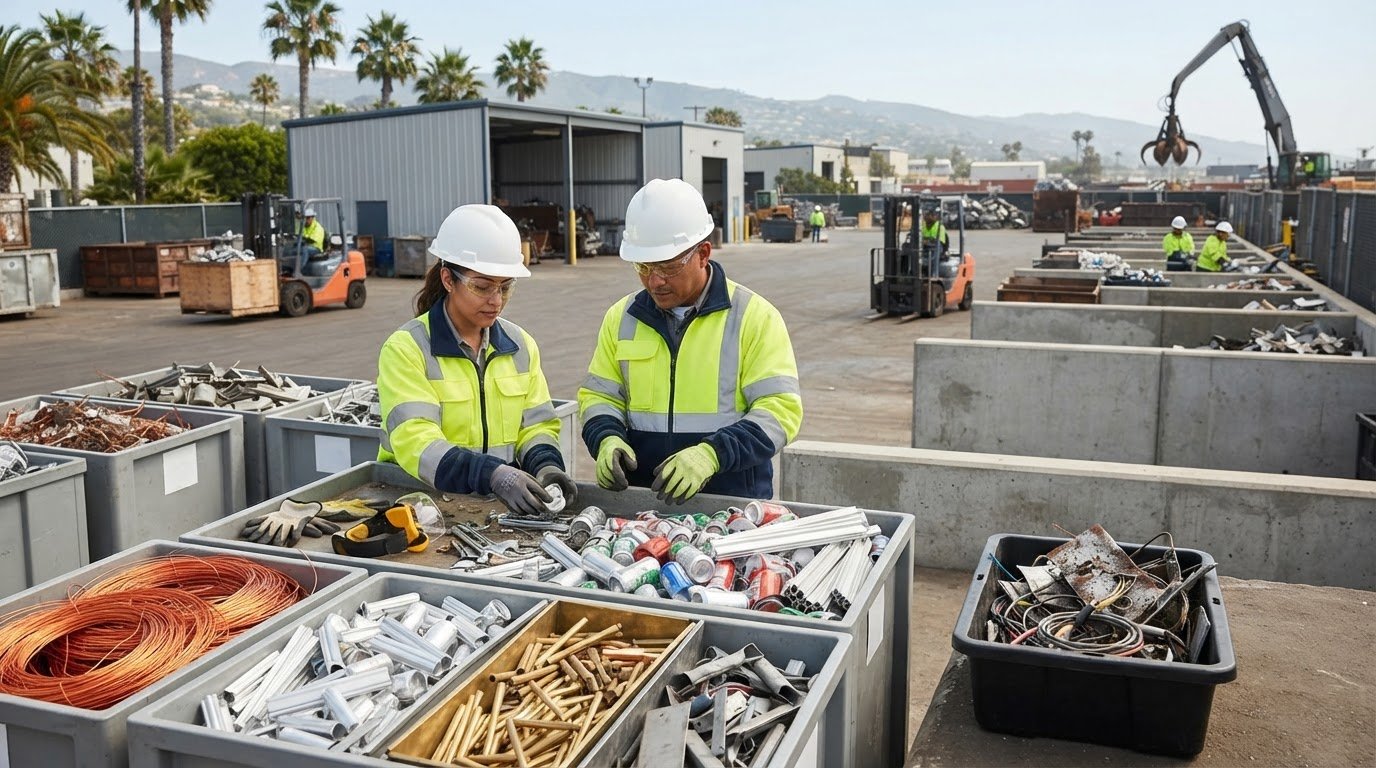
The most common scrap metal recycling mistakes often begin with a good intention: stripping or dismantling everything before sorting it. But aggressive preparation can create sharp hazards, while mixed metals and attached nonmetal materials can make a load harder to assess.
It’s reasonable to want clean, well-sorted scrap and to avoid anything that could affect its acceptance or value. A safer approach is to sort what you can identify, remove loose nonmetal attachments only when it’s safe, and keep questionable or potentially hazardous items out of your regular metal load.
This guide explains how to separate ferrous and non-ferrous metals, keep different metal types apart, and prepare scrap without taking unnecessary risks. You’ll also learn what to consider before bringing a household cleanout or commercial metal load to a recycler. OC Recycling purchases scrap metal at four Orange County locations, giving residents and businesses a local drop-off option once their materials are ready.
Key Takeaways
- Learn how to spot ferrous and non-ferrous metals and keep uncertain or mixed items from complicating a load.
- Common scrap metal recycling mistakes often come from assuming extra stripping always improves preparation; prioritize safe, practical sorting instead.
- Use a simple inspection and separation routine to prepare scrap while avoiding casual handling of sharp, heavy, pressurized, or unknown items.
- Understand why burning insulation or coatings is unsafe and can create harmful fumes.
- Prepare for a local drop-off by identifying your materials honestly and organizing them for OC Recycling’s scrap metal purchasing service.
Common scrap metal recycling mistakes start before you reach the recycler
A few careful habits can prevent many avoidable problems before scrap leaves your home, job site, or business. You don’t need to identify every alloy or take apart every item. Start by separating materials you recognize, keeping uncertain pieces aside, and avoiding handling that could put you at risk.
Scrap-metal recycling mistakes are preparation or identification errors that make a load harder to handle, sort, assess, or process. Mixing different metals, leaving bulky nonmetal attachments in place, or labeling an unknown piece as a specific grade can add confusion. Sort by what you can identify, and be clear when you’re unsure about a piece.
Material identification matters because scrap is sorted and prepared for reuse. The broader metal recycling process shows why keeping different materials distinct is a useful first step. A clear separation makes it easier to see what’s in a load, without requiring you to identify every alloy or dismantle every item.
Clean, safely sorted scrap is easier to assess and process because materials are less likely to be hidden, mixed, or confused with unrelated items. That doesn’t mean stripping everything down. Keep clearly different materials apart and avoid claiming more certainty than you have.
Why metal-looking items are not all the same
An item can contain metal and still include plastic, insulation, coatings, rubber, or wood. Appliances may combine metal panels with wiring and plastic parts; wire may have insulation around a metal core; construction offcuts may include fasteners or attached building materials. When these are piled together, it can be harder to see what each piece is and how it should be sorted. Separate what’s easy and safe to separate, but don’t force, cut, or dismantle an item just to make it look cleaner.
Mistake one: treating the first guess as a confirmed material grade
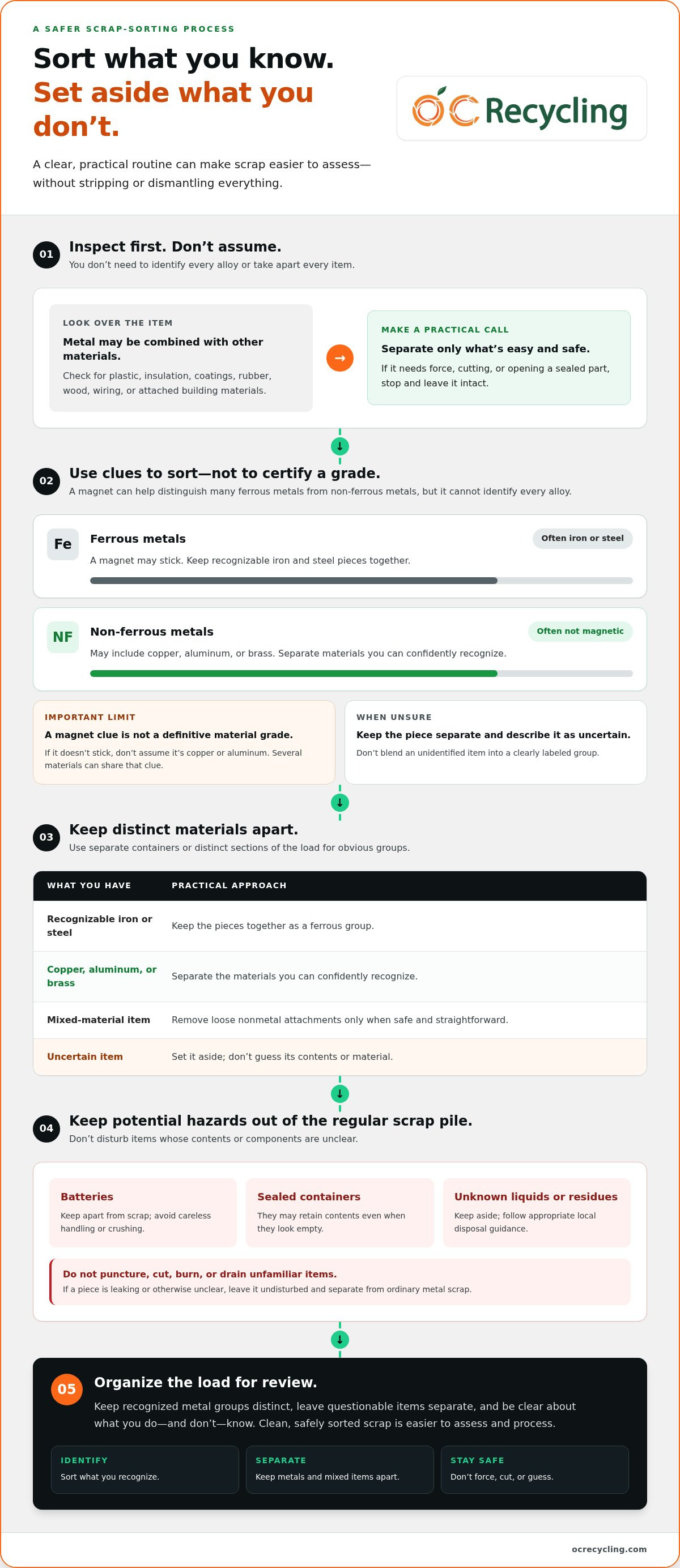
Color, weight, and a basic magnet check offer clues, not a definitive grade. A magnet can help distinguish many ferrous metals, such as common iron and steel items, from non-ferrous metals that generally aren’t magnetic. It cannot identify every alloy or determine a specific scrap grade. Keep pieces you can’t confidently identify in a separate group, and describe them as uncertain rather than blending them into a clearly labeled pile.
This simple honesty makes the load easier to review and helps prevent one uncertain piece from being mistaken for the material around it. If a magnet doesn’t stick, don’t assume you’ve identified copper or aluminum; several materials can share that clue. Sort by what you know, set aside what you don’t, and leave final material assessment to the recycling process.
Scrap metal sorting mistakes that create mixed or contaminated loads
Once you’ve separated pieces you can identify, keep the main material groups apart instead of combining everything that looks metallic. Mixing steel, copper, aluminum, and brass can make a load harder to assess because each material needs to be recognized and sorted appropriately. Separate obvious groups into different containers or distinct sections of your load.
| Group | Useful clues | Practical approach |
|---|---|---|
| Ferrous | Often contains iron or steel; a magnet may stick. | Keep recognizable iron and steel pieces together. |
| Non-ferrous | Often does not attract a magnet; may include copper, aluminum, or brass. | Separate materials you can confidently recognize. |
| Mixed items | Metal combined with plastic, insulation, rubber, or wood. | Separate loose attachments only when safe and straightforward. |
| Uncertain items | Material or contents are unclear, or the item has unusual components. | Keep aside and describe it honestly rather than guessing. |
These clues help organize a load, not certify a metal grade. For broader industry information, the Institute of Scrap Recycling Industries (ISRI) provides resources about the recycling industry. For your own scrap, use the preparation routine below and keep unclear items separate so they can be assessed as they are.
Mistake two: mixing metals and attached materials without separating them
A bucket of steel brackets, copper wire, aluminum trim, and brass fittings may seem convenient, but the mixture obscures what’s in the load. Separate obvious groups into sturdy containers or distinct sections when you can do so safely. Attached plastic, insulation, coatings, or wood can also conceal metal and complicate sorting. Attached non-metal materials can make scrap harder to identify, separate, and assess.
Don’t dismantle unfamiliar equipment just to recover a small amount of metal. Appliances and commercial equipment may contain multiple materials, sharp edges, or components you can’t readily identify. If separation requires force, cutting, or opening a sealed part, stop and leave the item intact.
Mistake three: overlooking batteries, liquids, and hazardous residues
Batteries, sealed containers, and items with unknown liquids or chemical residues don’t belong in an ordinary scrap pile. A container can retain contents even when it looks empty, and a battery can be damaged if it’s crushed or handled carelessly. Keep these materials apart from scrap because they may need separate handling.
Don’t puncture, cut, burn, or drain unfamiliar items to make them easier to sort. Set them aside without disturbing them, then follow appropriate local disposal guidance for hazardous or uncertain materials. If a piece is leaking, swollen, pressurized, or otherwise unsafe to handle, keep your distance and don’t load it with scrap.
Good sorting is practical, not aggressive: separate what’s clear, isolate what’s uncertain, and avoid risky dismantling. Once your metal is organized, OC Recycling purchases scrap metal from the public and commercial accounts.
Scrap-metal recycling myths that lead to unsafe or disappointing choices
A common belief is that the more you strip, cut, or dismantle, the better prepared your scrap will be. That isn’t always true. Taking apart an item can create sharp edges, expose unknown components, or turn a manageable load into a safety risk. Sorting should make materials clearer, not require you to take chances or perform unnecessary work.
Never burn wire insulation or coatings to expose metal. Burning can release harmful fumes, and it doesn’t make the material safe to handle. A cleaner-looking piece isn’t worth putting yourself or others at risk. These common scrap metal recycling mistakes often come from trying to improve a load without knowing what the item contains or how it should be handled.
Does stripping wire or dismantling equipment always help?
Separating an obvious attachment may make sense if it comes away easily and you can remove it safely. But don’t cut sealed components, energized equipment, heavy machinery, or unfamiliar devices just to recover metal. Their contents and construction may not be apparent, and forcing parts apart can cause injury or damage. If dismantling seems risky or requires specialized tools, don’t attempt it yourself.
For wire, don’t burn or use improvised methods to remove insulation. Keep it intact if safe preparation would require cutting or stripping beyond what you can confidently manage. Avoid assuming that every extra step improves how a material can be assessed.
Can a magnet tell you exactly what metal you have?
A magnet is a useful sorting clue, but it isn’t a universal identification tool. Attraction can help distinguish many iron-containing or steel items from metals that aren’t magnetic, but it won’t identify every alloy or confirm a specific grade. Coatings can also affect appearance, and similar-looking pieces may be made from different materials.
Use the test to guide basic separation, not to make a precise claim about an unknown piece. If you can’t confidently identify a material, keep it apart and say what you observed rather than labeling it as a particular metal. That gives the recycler a clearer basis for assessment without creating false certainty.
Preparation doesn’t guarantee that every item will be accepted or produce a particular payout. The material and its assessment determine how a load is treated. Don’t burn, force, or dismantle scrap to chase a better result. Sort what you can safely identify, keep uncertain items separate, and bring an organized load to OC Recycling for scrap metal purchasing.
A safer scrap-metal preparation checklist before your recycling trip
A short, safety-first routine can make drop-off more straightforward without turning preparation into a dismantling project. These steps help you organize recognizable scrap, protect people handling it, and avoid common scrap metal recycling mistakes before you leave.
Four steps to prepare scrap without overhandling it
- Inspect. Look over items for sharp edges, attached plastic or wood, batteries, liquids, and sealed or unfamiliar components. Don’t reach into equipment or open containers to investigate. If something looks damaged or unsafe, leave it undisturbed.
- Separate. Group metals you can confidently recognize, such as obvious steel pieces or copper offcuts. Keep mixed and uncertain items apart. Only remove loose attachments when they come away easily and safely; don’t cut, pry, or dismantle equipment to recover a small amount of metal.
- Secure. Contain small pieces and stabilize longer or loose material so it can’t shift during transport. Use suitable gloves and eye protection when handling scrap, and get help with heavy items rather than risking a strain or dropped load.
- Organize. Keep different metal groups in separate containers or distinct sections of the load. Make uncertain items easy to distinguish, and describe them accurately when you bring them in.
Safe preparation means making the material easier to handle, not making every piece look bare. If a task involves sharp edges, heavy components, pressurized parts, or equipment that may still be energized, don’t handle it casually. Stop if you can’t manage it safely.
What to do with items you cannot safely identify
Keep unknown items separate from clean scrap. Don’t cut open sealed equipment or handle suspected chemical residues to figure out what’s inside. Note what you know, such as where the item came from or whether it appears damaged, and describe that accurately when you bring it in.
Materials that may contain hazardous residues or unknown contents need a different route from ordinary scrap. Keep them apart and follow local disposal guidance for hazardous or uncertain materials. Don’t puncture, burn, drain, or place them in your scrap container while deciding what to do.
If copper is part of your load, preparation can depend on whether it’s bare, attached to other materials, or still insulated. Avoid stripping or altering it unless the work is safe. For local scrap-metal purchasing, visit OC Recycling’s scrap metal purchasing page.
Avoid common scrap-metal recycling mistakes with a clear local next step
Before you head out, keep the essentials in view: sort materials only as far as you can do safely, describe uncertain items honestly, and keep different metal groups separate. These habits make your load easier to understand without relying on guesses, risky dismantling, or assumptions about what a recycler will accept.
OC Recycling purchases scrap metal from the public and commercial accounts at four Orange County locations. Whether your material comes from a household cleanout or a business’s ongoing operations, the same basic principles apply: keep different materials organized and make unclear or unusual items easy to identify.
What happens when you bring scrap metal to OC Recycling?
OC Recycling provides a local drop-off option for scrap metal from households and commercial accounts. The material is reviewed according to what it is, so don’t assume every metal-looking object is the same or that every load follows the same assessment. Clear sorting helps distinguish materials for review and supports their processing for industrial reuse.
Bring your materials in a stable, manageable load. Keep uncertain items apart from clearly identified scrap and explain what you know about them, such as where they came from or what components are attached. An accurate description helps clarify what you’re bringing without relying on a guess.
When a commercial scrap stream needs a different approach
An occasional household load may be a mix of recognizable offcuts or metal items from a cleanout. A business with recurring or larger volumes may generate a more consistent stream that benefits from a repeatable sorting approach. Keep materials grouped by what your team can identify, and note unusual items rather than placing them into a routine scrap container. This makes the stream clearer to handle without requiring staff to over-dismantle equipment.
OC Recycling supports commercial recycling, including scrap-metal purchasing. Businesses can use the OC Recycling website to discuss their material stream and take a practical local next step. The same careful preparation applies to commercial loads: separate recognizable materials and keep unfamiliar or mixed items distinct.
The goal isn’t a perfect technical classification. It’s a safe, organized load and an honest description of what you’re bringing. Sort what you can recognize, keep questionable items separate, and avoid adding batteries, sealed containers, or unknown residues to ordinary scrap. OC Recycling serves households and businesses in Santa Ana, Anaheim, Costa Mesa, Huntington Beach, Orange, Irvine, Garden Grove, Westminster, Fountain Valley, and Tustin.
Make your next scrap drop-off a confident one
Turn preparation into a simple routine for future cleanouts or work projects. Set aside a place for clearly identified scrap, keep uncertain pieces separate, and note questions as they come up. That small habit can make recycling feel more manageable and help prevent common scrap metal recycling mistakes from becoming part of your next load.
You don’t need to be a metal-grading expert to take a responsible next step. Be honest about what you know and avoid risky dismantling. OC Recycling has served Orange County for more than 15 years and purchases scrap metal from public and commercial customers at four local locations.
Ready to recycle your prepared material? Bring your scrap metal to OC Recycling for local scrap metal purchasing in Orange County.
Frequently Asked Questions
What are the most common scrap metal recycling mistakes?
Common scrap metal recycling mistakes include mixing different metals, misidentifying a piece based on appearance, overlooking attached materials, and adding batteries or containers with unknown contents to ordinary scrap. Another avoidable error is dismantling items without knowing what’s inside. Before loading a vehicle, decide which materials you can identify confidently and keep unusual items separate. A clear, accurate description is more useful than guessing a precise grade.
Can you recycle scrap metal if it has plastic or other materials attached?
Attached materials can affect how an item is handled. A metal appliance with plastic components, for example, differs from a loose steel bracket. Remove only attachments that come away easily and safely. Don’t cut into equipment or force parts apart just to expose metal. Keep mixed items distinct from clean, recognizable scrap so their materials are clear during assessment.
Should you remove insulation from copper wire before recycling it?
Don’t burn insulation from copper wire. Burning can release harmful fumes, and the wire may be safer left intact than stripped through an improvised method. If stripping would require risky cutting or tools you’re not comfortable using, keep the wire as it is and describe it accurately when you bring it in.
How can you tell whether scrap metal is ferrous or non-ferrous?
A magnet offers a useful first clue: many iron-containing metals, including common steel items, attract a magnet, while copper and aluminum generally don’t. The test can’t identify every alloy or confirm a specific grade, however. Paint, plating, and mixed construction can also make appearance misleading. Use the magnet to help organize recognizable pieces, and keep anything uncertain separate rather than relying on a guess.
Can you put batteries or metal containers with unknown contents in scrap metal?
No. Keep batteries and containers with unknown contents out of an ordinary scrap pile, even if their cases look metallic. Don’t puncture, open, drain, or crush them to find out what’s inside. Set them aside without disturbing them and use local disposal guidance for hazardous or uncertain materials. If an item is leaking, swollen, pressurized, or damaged, avoid handling or transporting it with scrap.
Does sorting scrap metal guarantee a higher payout?
No. Sorting helps make materials easier to identify and assess, but it doesn’t guarantee acceptance or a particular payout. The amount offered depends on the material’s assessment and current purchasing practices. Organization can clarify what you’re bringing, but aggressive stripping or labeling an unknown piece as a valuable grade won’t guarantee a better result.
Where can I recycle scrap metal in Orange County?
OC Recycling purchases scrap metal from the public and commercial customers in Orange County. Residents and businesses in Santa Ana, Anaheim, Costa Mesa, Huntington Beach, Orange, Irvine, Garden Grove, Westminster, Fountain Valley, and Tustin can bring scrap for local recycling. Keep different materials organized and separate batteries, sealed containers, and items with unknown residues from ordinary scrap.
