
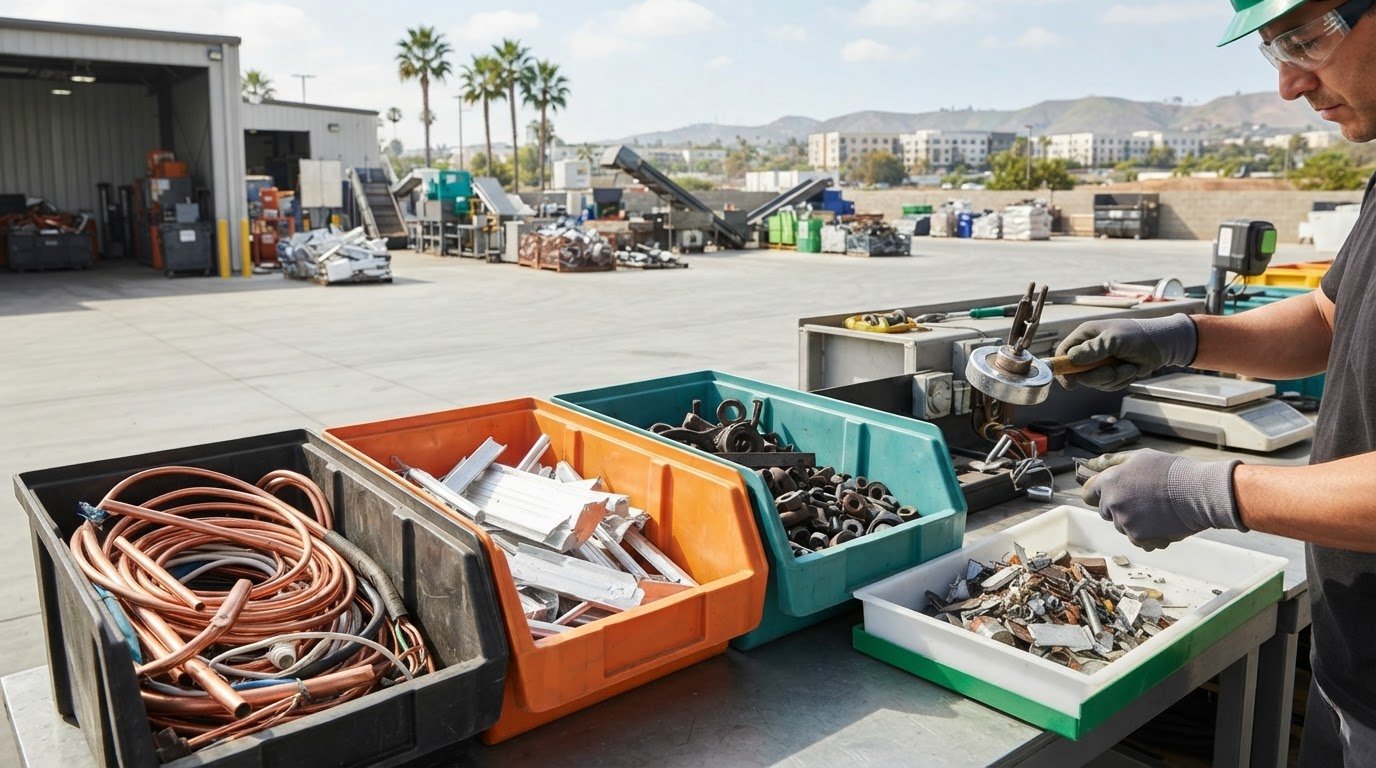
What if a few minutes of sorting could make your scrap load safer and easier to assess? It’s not always obvious whether a piece is steel, aluminum, or a mix of materials, and sharp edges, coatings, or attached parts can make preparation tricky. These tips for sorting scrap metal will help you separate common metals and keep materials organized before recycling.
Start with safety, then identify what you can, and separate metals from anything that could contaminate the load. A magnet is a useful first check for many ferrous metals, such as iron and steel, while copper and aluminum are generally non-ferrous. You’ll also learn how to handle scrap carefully and prepare materials for a recycling visit.
A well-organized load makes it easier to explain what you’re bringing and helps keep useful materials in circulation. OC Recycling purchases scrap metal for public and commercial customers and operates four locations across Orange County. Read on for practical steps to prepare scrap before visiting a local recycling center.
Key Takeaways
- Use these tips for sorting scrap metal to organize a load without guessing at unfamiliar alloys.
- Keep copper, aluminum, steel, and uncertain mixed items in separate groups where practical.
- Inspect for sharp edges and attached materials, and remove only loose contaminants you can handle safely.
- Contain and label sorted materials so your recycling visit is more organized and the material review is more straightforward.
- Prepare your scrap for recycling in Orange County, including at OC Recycling.
Tips for Sorting Scrap Metal Start with Safety and a Simple Plan
Before sorting, check for hazards, identify what you can, separate materials into broad categories, and prepare the load for transport. This order keeps the task manageable and helps prevent unsafe handling or accidental mixing. The goal is to organize materials, not identify every alloy by sight. If a piece is unfamiliar, set it aside rather than guessing. For a foundational overview of what scrap metal is, start with the general meaning of scrap and how it enters recycling.
Look over each item before moving it. Sharp edges, heavy pieces, loose dust, and unknown coatings can all affect how you handle scrap. Don’t cut, grind, or scrape a material just to identify it. If anything appears unsafe, leave it undisturbed and follow applicable local handling guidance.
What should you check before handling scrap metal?
Wear sturdy gloves and eye protection, use stable containers that won’t tip, and lift heavy pieces carefully. Don’t carry a load that blocks your view or feels difficult to control. Stop if an item is leaking, pressurized, unusually dusty, or unidentified. Keep batteries, sealed containers, and suspected hazardous items out of ordinary scrap piles. Set potentially hazardous materials aside and follow applicable local handling guidance.
Set up a simple scrap-sorting area
Choose a level, organized space with room to inspect pieces and move containers safely. Mark separate containers for broad metal categories and uncertain items. Keep walkways clear, and place heavier material low to reduce lifting and tipping risks. Avoid stacking pieces where they could slide or fall. With a clear setup, you can keep questionable items apart while sorting materials you recognize.
Safety first: check for hazards, identify what you can, separate categories, then prepare the load. Follow that order even if you’re sorting only a few items. It helps you avoid handling something risky just to classify it, and gives unfamiliar pieces a safe place outside your sorted groups.
These tips for sorting scrap metal are a practical starting point, not a reason to force a decision. If you can’t identify a piece confidently, keep it separate and label it as uncertain. A neat, cautious sorting area helps you prepare common scrap without mixing it with batteries, sealed containers, or materials that need different handling.
How to Identify Ferrous and Non-Ferrous Scrap Metal
Start by sorting metals into two broad groups. Ferrous metals contain iron; non-ferrous metals don’t. Steel and iron are common ferrous examples, while copper, aluminum, and brass are familiar non-ferrous examples. These categories help organize a load, but a quick check can’t confirm an exact alloy or grade.
A magnet is useful for initial screening: many iron- and steel-based pieces respond to it, while copper and aluminum generally don’t. Treat the result as a clue, not a final identification. A magnetic response doesn’t prove an item is made of one specific metal, and a lack of response doesn’t establish its exact composition. The Recycled Materials Association offers background on the recycling industry and the role of material recovery.
| Category | Common examples | Beginner identification clues |
|---|---|---|
| Ferrous | Steel, iron | May respond to a magnet; rust can be a clue. |
| Non-ferrous | Copper, aluminum, brass | Often won’t respond to a magnet; color may offer a clue but can mislead. |
Which scrap metals are usually ferrous?
Steel and iron appear in items such as some tools, brackets, and structural pieces. Rust or a magnetic response may help you recognize ferrous material, but neither clue is conclusive on its own. Paint, coatings, attached hardware, and mixed construction can hide what a piece is made from. If several materials are joined together, keep the item separate rather than classifying the whole piece based on one visible or magnetic part.
Which scrap metals are usually non-ferrous?
Copper and aluminum are common non-ferrous metals; brass is another familiar example. Their usual colors can help, but don’t rely on appearance alone. Paint, oxidation, plating, dirt, and other surface layers can change how metal looks. If you can’t identify a piece confidently, mark it as uncertain and keep it apart from your identified groups.
These tips for sorting scrap metal can help you make useful broad categories without overclaiming what you know. Once your materials are organized, explore scrap metal recycling with OC Recycling, a local Orange County company that purchases scrap metal.
Scrap Metal Sorting Mistakes That Can Mix or Contaminate a Load
A common sorting shortcut is treating a magnet test as a complete identification. It isn’t. A magnetic response can suggest iron-containing material, but it doesn’t tell you the exact metal, alloy, or grade. Mixing metals or attached materials into one pile can also make the contents harder to assess. Separated materials are easier to review, though sorting alone can’t guarantee a particular payout.
Why is a magnet not enough to identify scrap?
A magnet indicates a response from the item or part it touches, not necessarily the composition of the entire object. A tool with a steel body and a non-magnetic handle, for example, may respond to a magnet even though it contains more than one material. Don’t label a mixed item as all steel based on that clue. If its composition is unclear, set it aside as mixed or uncertain rather than assigning it a confident category.
Other quick judgments can mislead, too. Rust may appear on ferrous metal, but it doesn’t identify a precise grade. A non-magnetic result doesn’t prove that an item is copper or aluminum, either. Use visible features and a magnet only as preliminary clues, then keep questionable pieces separate from materials you can identify with more confidence.
How should you handle mixed or attached materials?
Plastic, wood, insulation, rubber, and other non-metal parts can obscure what a scrap item contains and make a sorted pile less consistent. Separate an attachment only when it’s safe and practical. Don’t dismantle sealed, electrical, pressurized, or potentially hazardous components just to sort them. Keep these items apart and follow applicable local handling guidance.
For example, a metal bracket with a plastic cover may respond to a magnet because of the bracket, while the cover remains attached. Keep it out of a clean, identified metal group if you can’t safely separate the parts. This avoids implying the entire piece is one material.
Ordinary loose dirt isn’t the same as an unknown residue or coating. A little dry surface dust is different from a substance that could be hazardous. Avoid scraping, sanding, or washing unfamiliar coatings to make the metal look cleaner. If you see a leak, unusual dust, or an unidentified substance, stop handling the item and keep it apart.
These tips for sorting scrap metal favor careful separation over guesswork. A consistent load is easier to understand and assess. When an item’s materials or surface condition are uncertain, labeling it as mixed is the safer, clearer choice.
How to Sort and Prepare Scrap Metal Before Recycling
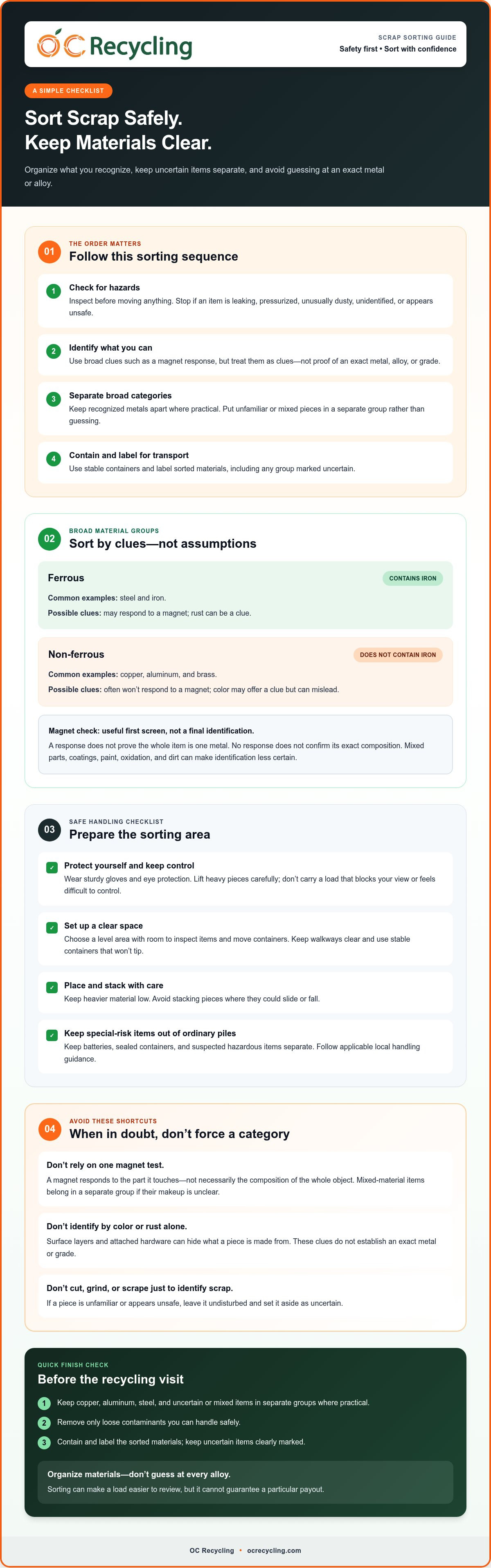
A consistent preparation routine helps keep materials organized and makes each group easier to review. Separate copper, aluminum, and steel when you can identify them with reasonable confidence. Keep uncertain or mixed items apart rather than forcing them into a category. These tips for sorting scrap metal help you present a clear, manageable load, but they don’t guarantee a particular payment outcome.
What is a practical scrap-sorting checklist?
Use this sequence before loading your vehicle or container:
- Inspect: Look over each piece for sharp edges, loose attachments, residues, or other handling concerns.
- Separate: Group identifiable copper, aluminum, and steel separately. Place mixed or uncertain items in their own group.
- Remove loose contaminants: Take off loose, non-metal material only when it’s safe and practical. Don’t dismantle sealed, electrical, pressurized, or potentially hazardous components.
- Contain: Use stable containers or secure bundles that keep each category together during transport.
- Label: Mark groups by material when you’re reasonably sure of the identification. Describe uncertain pieces honestly as mixed or unknown.
Labels don’t need to be technical. A clear note such as “steel” or “mixed metal, uncertain” distinguishes one group from another without overstating what you know. For copper-specific preparation, see the scrap copper recycling and payout guide.
How should you prepare scrap for an Orange County recycling trip?
Arrange the load so each material group can be viewed without shifting or mixing the rest. Keep containers stable, avoid placing heavy pieces where they could slide, and don’t pack materials in a way that makes lifting or unloading unsafe. For a larger load, keep categories accessible so each group is easier to review.
Before departure, review OC Recycling’s location details and drop-off instructions to plan your trip. Bring labeled groups together, keep uncertain pieces distinct, and be ready to explain what you know about each material.
Organized scrap is easier to present and assess. For scrap metal recycling in Orange County, bring your sorted scrap to OC Recycling.
Where to Recycle Sorted Scrap Metal in Orange County
Once your scrap is separated into clear groups, a recycling visit can be more organized. Keeping copper, aluminum, steel, and mixed or uncertain pieces apart helps each category be reviewed without sorting through a combined load. It also lets you describe what you’ve brought accurately, even when you can’t identify every piece.
What should you bring or know before a local drop-off?
Bring your sorted materials in stable, clearly grouped containers or bundles. Be ready to describe items that contain more than one material or that you couldn’t confidently identify. Review OC Recycling’s location details and drop-off instructions before leaving so you can plan your trip.
A little preparation makes it easier to present your load clearly:
- Keep identified material groups separate during transport.
- Label mixed or uncertain items honestly.
- Secure the load so materials won’t shift or spill.
- Review OC Recycling’s location and drop-off information before departure.
This article focuses on sorting and preparation, not price estimates or guarantees about what a particular load may bring. Scrap values and material assessments are separate considerations. If you’re looking for detailed pricing guidance, steel-specific recycling information, or a broader comparison of local metal yards, those topics call for dedicated guides.
How does OC Recycling fit into a sorting plan?
OC Recycling purchases and recycles scrap metal for public and commercial customers in Orange County. The company operates four locations across the county. Organizing materials before your visit helps keep categories distinct and makes it easier to explain what’s in your load.
These tips for sorting scrap metal help you arrive with materials grouped as clearly as you can identify them. OC Recycling serves customers across Orange County, including Santa Ana, Anaheim, Costa Mesa, Huntington Beach, Orange, Irvine, Garden Grove, Westminster, Fountain Valley, and Tustin.
Put Your Scrap-Sorting Plan Into Action
A safer, more organized recycling trip starts with a simple approach: inspect scrap before handling it, separate metals you can identify, and keep mixed or uncertain pieces apart. A magnet can offer a useful clue, but it can’t identify every metal or alloy. Remove attached materials only when it’s safe and practical, then contain and label each group so the load is easier to review.
These tips for sorting scrap metal help you prepare common materials without relying on guesswork or mixing unrelated items. If a piece is unclear, set it aside and describe it honestly rather than assigning it a category you can’t verify.
OC Recycling purchases scrap metal for public and commercial customers and operates four locations across Orange County. With careful preparation and a clear plan, you can bring sorted scrap for recycling with greater confidence and help keep useful materials in circulation.
Frequently Asked Questions
How do you sort scrap metal at home?
Sort scrap metal at home by checking for hazards first, then separating materials you can identify into broad groups. Use a magnet as an initial clue, and keep copper, aluminum, and steel in separate containers where practical. Remove loose, non-metal attachments only if it’s safe to do so. Label mixed or uncertain pieces clearly instead of guessing. These tips for sorting scrap metal help you prepare an organized load for recycling.
Can a magnet identify every type of scrap metal?
No, a magnet can’t identify every type of scrap metal or confirm an item’s exact alloy or grade. It can help screen for iron-containing parts, since many steel and iron items respond to a magnet. But an object may combine magnetic and non-magnetic materials, and a non-magnetic result doesn’t prove that a piece is copper or aluminum. Treat the test as a clue, and set aside items you can’t identify confidently.
What is the difference between ferrous and non-ferrous scrap metal?
Ferrous metals contain iron, while non-ferrous metals don’t. Iron and steel are common ferrous examples; copper, aluminum, and brass are common non-ferrous examples. This distinction is useful for organizing scrap, but appearance alone may not reveal a material’s composition. A magnet can offer a preliminary clue, not a definitive identification. If an item has coatings or attached parts, keep it separate when you’re unsure what the whole piece contains.
Should scrap metal be cleaned before recycling?
Remove loose dirt or non-metal material only when you can do it safely and practically. Don’t scrape, sand, or use chemicals on unknown coatings or residues just to make a piece look clean. If you notice a leak, unusual dust, or an unidentified substance, stop handling the item and keep it out of ordinary scrap piles. Clean separation can make a load easier to review, but avoid risky preparation.
Can you mix different metals in one scrap container?
It’s better to keep identifiable metals in separate containers where practical. Grouping copper, aluminum, and steel individually makes the contents easier to review and reduces confusion about what a pile contains. If you can’t confidently identify a piece, place it in a separate mixed or uncertain group rather than adding it to a known metal category. Keep containers stable and avoid overloading them so handling and transport remain manageable.
What should not go into a regular scrap metal pile?
Keep batteries, sealed containers, pressurized items, and suspected hazardous materials out of ordinary scrap piles. Don’t dismantle electrical or sealed components just to separate their materials. If something is leaking, unusually dusty, or unidentified, leave it undisturbed, keep it separate, and follow applicable local handling guidance. These precautions help prevent uncertain or potentially unsafe items from being mixed with metal you’ve identified for recycling.
Does sorting scrap metal improve what a recycling center can assess?
Yes, separating materials can make a load clearer and easier to review, though it doesn’t guarantee a particular payment or assessment. Label groups when you can identify them reasonably well, and describe mixed or uncertain pieces honestly. OC Recycling purchases and recycles scrap metal for public and commercial customers. The company serves customers in Santa Ana, Anaheim, Costa Mesa, Huntington Beach, Orange, Irvine, Garden Grove, Westminster, Fountain Valley, and Tustin.
