
This comprehensive guide provides the clarity you need to ensure you get the most out of every trip to the yard. We’ll take you behind the scenes of the modern industrial process, moving from the initial sorting at your doorstep to the final global commodity sale. You’ll learn the professional secrets of grading your materials like an expert and discover how to partner with a premier, local Orange County facility that prioritizes transparency and speed. By the end of this article, you’ll have the confidence to turn your metal waste into a streamlined, profitable resource.
Key Takeaways
- Master the simple magnet test to instantly distinguish between ferrous and non-ferrous metals, ensuring you sort your haul for maximum profit.
- Understand the industrial journey of how scrap metal recycling works, from the initial collection at your doorstep to the high-tech sorting that turns waste into raw material.
- Learn the “Clean Metal” rule and professional copper grading secrets that can significantly increase the value of your materials before you reach the scale.
- Identify the hallmarks of a transparent recycling partner, such as visible calibrated scales and efficient commercial bin placement for larger projects.
- Discover how to access professional, same-day cash payouts at modern, community-focused facilities throughout Orange County.
Understanding the Basics: Ferrous vs. Non-Ferrous Metals
The first step in mastering how scrap metal recycling works is learning to identify what you have. Metals are broadly divided into two primary categories: ferrous and non-ferrous. This distinction is the bedrock of the entire industry, affecting how materials are sorted, processed, and ultimately priced. For a comprehensive Scrap metal recycling overview, it’s helpful to recognize that these categories are defined by their iron content and magnetic properties. Ferrous metals are iron-based and highly magnetic, while non-ferrous metals lack significant iron and don’t attract magnets.
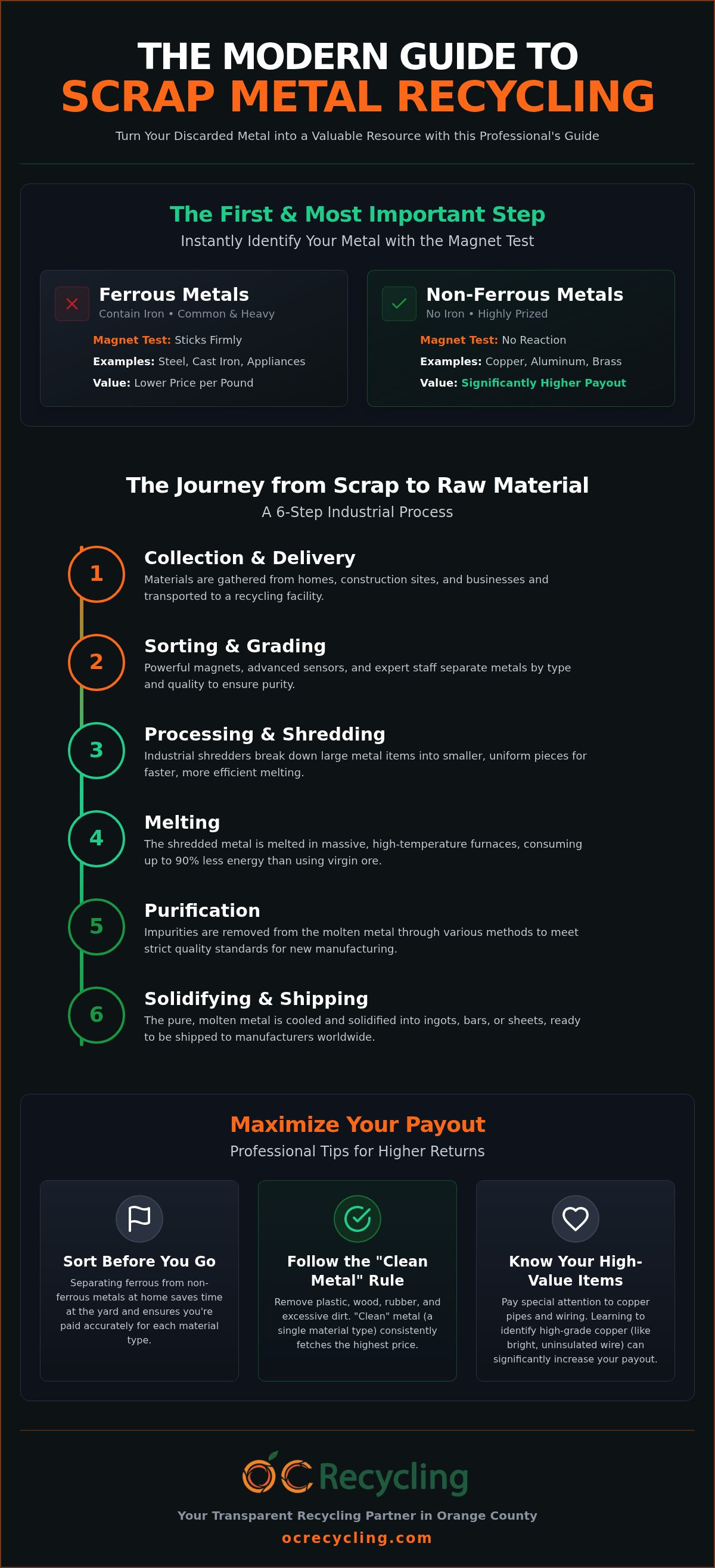
You can identify your materials instantly using the magnet test. It’s simple. If a magnet sticks firmly to the metal, it’s ferrous. If the magnet slides off or doesn’t react at all, you likely have a more valuable non-ferrous item. Common ferrous examples include structural steel, cast iron, and large household appliances. These are plentiful and form the backbone of industrial recycling. In contrast, non-ferrous metals like copper, aluminum, brass, and stainless steel are prized for their unique chemical properties. A non-ferrous metal is a metal that does not contain significant amounts of iron.
Why Metal Type Determines Your Payout
The global market places a higher premium on non-ferrous metals because of their superior conductivity and resistance to corrosion. These materials are essential for high-tech manufacturing and electrical infrastructure. Industrial processors prioritize “clean” loads over “contaminated” ones. A clean load consists of a single metal type without attachments like plastic, wood, or heavy grease. Contaminated loads require more energy to process, which can impact the final value of your haul. Understanding these classifications is essential for anyone wanting to see how scrap metal recycling works at an industrial scale.
The Role of Alloys in Modern Recycling
Modern manufacturing often uses alloys, which are mixtures of different metals designed for specific strengths. Brass is a premier example, combining copper and zinc to create a durable, corrosion-resistant material. Stainless steel is another unique case; while it contains iron, it also features chromium and nickel. Some grades of stainless steel are non-magnetic, meaning they are often categorized and priced closer to non-ferrous metals. Professional grading at a reliable facility ensures these mixed metals are identified correctly. This precision allows for efficient industrial-scale reuse, keeping high-value materials in the production loop rather than the landfill.
The 6-Step Journey: How Scrap Becomes New Raw Material
The journey from a discarded industrial component to a high-purity raw material is a marvel of modern engineering. Understanding how scrap metal recycling works involves following a precise, high-tech industrial loop that transforms waste into wealth. This process begins with collection and delivery, where materials are brought to a professional facility for initial inspection. Once accepted, the sorting phase utilizes a combination of powerful magnets, advanced infrared sensors, and expert manual labor to group metals by their specific chemical composition. The scrap metal recycling process then moves into high-speed processing, where massive industrial shredders break the metal down into small, uniform pieces to prepare them for the furnace.
After shredding, the material undergoes melting and purification in specialized furnaces. Once the metal reaches a liquid state, impurities are skimmed off or chemically neutralized to ensure the final product meets strict industrial standards. The final stage is solidifying, where the purified molten metal is cast into convenient ingots, bars, or sheets. These recycled commodities are then shipped to manufacturers to begin their life cycle again as new products, completing a sustainable and efficient “closed-loop” system.
The Science of Shredding and Melting
Shredding is a critical efficiency step because smaller pieces have a higher surface-area-to-volume ratio, allowing them to melt significantly faster. This mechanical preparation allows the industry to save 90% more energy than mining and refining virgin ores. Modern facilities often utilize Electric Arc Furnaces (EAF) for steel production, which use high-voltage electricity to melt the scrap with extreme precision. During this liquid phase, technicians use oxygen and other refining agents to remove trace impurities, ensuring the recycled metal is virtually indistinguishable from new material. This methodical approach is exactly how scrap metal recycling works to provide a sustainable alternative to traditional mining.
Recovering Metals from Electronics (E-Waste)
Electronics recycling adds a layer of complexity to the standard journey due to the intricate mix of materials found in circuit boards. Recovering precious metals like gold and high-grade copper requires a sophisticated balance of mechanical separation and specialized chemical processing. Because these devices often contain sensitive information, certified data destruction is always the mandatory first step before any physical dismantling occurs. This ensures your privacy is protected while the valuable components are safely harvested. If you are managing a large-scale cleanout, our professional scrap metal purchasing services offer a transparent and secure way to handle both your standard scrap and complex electronics with total peace of mind.
Maximizing Your Scrap Value: Sorting and Preparation
Sorting your materials is the single most effective way to influence your final payout. If you want to master how scrap metal recycling works to your advantage, you must understand that professional yards pay for purity. The “Clean Metal” rule is your primary tool for success. By removing non-metallic attachments like plastic handles, rubber gaskets, or wood blocks, you immediately upgrade your material from a “contaminated” grade to a “clean” grade. This simple step reduces the processing labor required at the facility, and those savings are passed directly to you in the form of a higher rate. The most informed sellers in Southern California treat recycling for money as a strategic process, identifying and preparing their highest-value materials before ever leaving home.
Copper remains the most sought-after commodity in the yard. Professional recyclers look for the distinction between #1 and #2 copper. #1 copper consists of clean, unalloyed, and uncoated piping or wire that is free of solder or paint. #2 copper includes material with light oxidation, solder, or coatings. While both are valuable, separating them before you arrive prevents your entire load from being downgraded to the lower price point. Commercial accounts and high-volume sellers benefit significantly from this level of organization, as it ensures every pound is accounted for at its maximum potential value.
Preparing Copper and Aluminum for Top Dollar
Stripping the insulation from copper wiring is a common tactic for those looking to maximize their return. If you have a large volume of thick-gauge wire, the labor is often worth the increased payout. For thin, “spaghetti” wire, the time investment might not yield a high enough return for casual sellers. For aluminum, the goal is to eliminate any steel or iron components. If a magnet sticks to your aluminum window frame because of a steel screw, it’s classified as “irony” aluminum and pays less. You can learn more about these distinctions by reviewing Scrap Copper Prices in Santa Ana: How to Maximize Your Payout to ensure your preparation matches current market standards.
The Importance of an Audit for Businesses
For businesses in Santa Ana and Anaheim, a professional scrap metal audit is the first step toward industrial efficiency. This process identifies specific waste streams within your operations and determines the best way to capture that value. By utilizing our professional commercial bin placement services, you can set up dedicated on-site collection points for different metal types. This organization doesn’t just simplify logistics; it provides transparent documentation for corporate sustainability reporting. With over 15 years of experience in the Orange County community, we help companies transform their waste piles into organized, profitable resources. It’s a straightforward way to see exactly how scrap metal recycling works to support your bottom line.
Choosing a Recycling Partner in Orange County
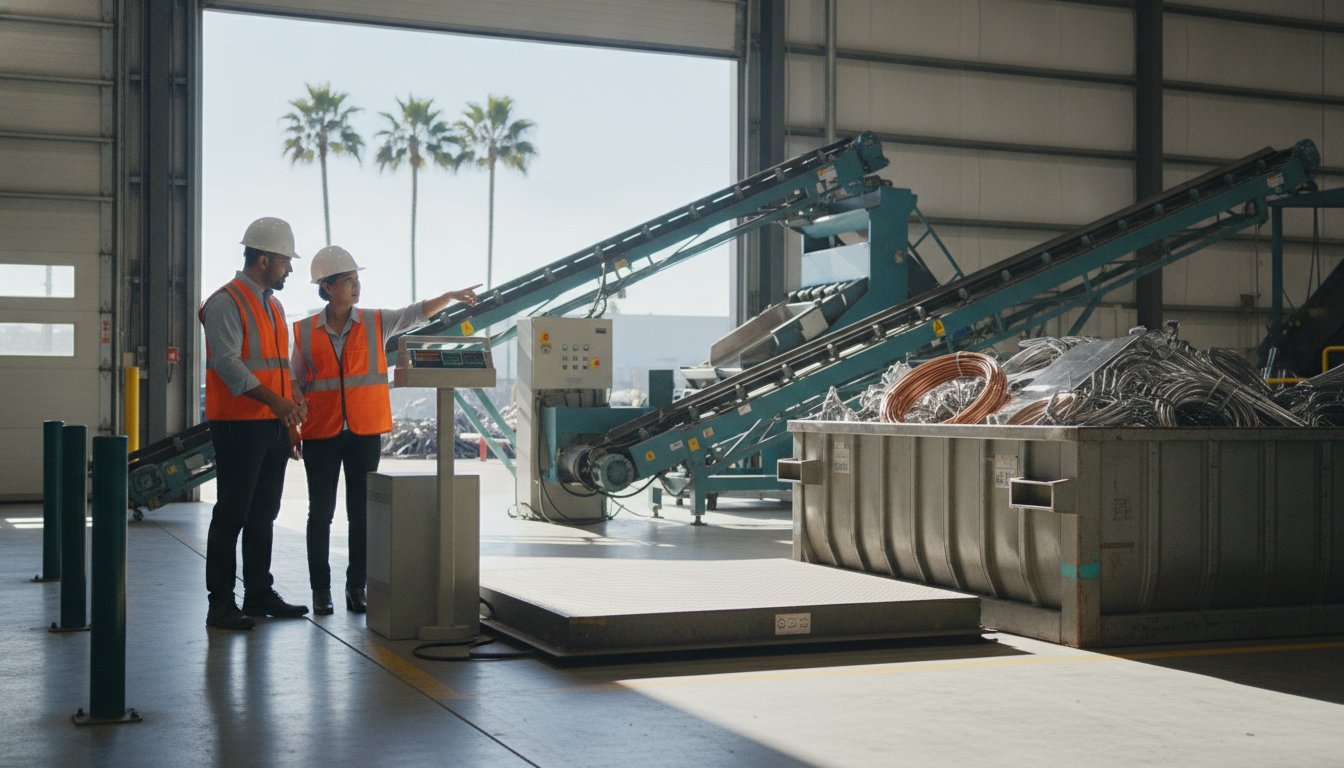
Selecting the right facility is just as important as knowing how scrap metal recycling works for your specific materials. You need a partner that combines industrial precision with a customer-centric approach. Transparency is the hallmark of a premier yard. Look for facilities that feature visible, clearly calibrated scales so you can verify weights in real-time. Professional reliability also means full compliance with local and federal regulations, including EPA standards and state licensing. A modern recycler should act as a one-stop destination, capable of handling CRV redemption, high-value scrap purchasing, and electronics recycling in a single, efficient visit.
Trust is built through consistent, ethical practices and a commitment to the local community. An established partner will provide clear, upfront communication regarding their grading process and current market trends. This level of openness ensures you receive a fair payout without the confusion often found at smaller, less organized operations. Whether you’re a homeowner clearing out a garage or a contractor managing a demolition site, your recycling partner should offer a clean, safe, and professional environment that respects your time and your materials. For a detailed breakdown of current rates and regulations affecting your returns, the 2026 Orange County Recycling Guide for maximizing payouts is an essential resource for both residential and commercial sellers.
Commercial Logistics and Bin Services
Brand protection is a critical priority for many corporate clients. Some scrap materials, such as prototypes, branded equipment, or defective products, require more than just standard processing. They need certified product destruction. This specialized service ensures your proprietary items are rendered unusable and unidentifiable before they enter the recycling stream. Receiving a formal Certificate of Destruction provides the legal compliance and peace of mind necessary for sensitive corporate assets. By choosing a partner that values security as much as sustainability, you protect your intellectual property while contributing to the circular economy. If you’re ready to partner with an established leader, contact us today for professional scrap metal purchasing and logistical support.
OC Recycling: Streamlining the Process for Southern California
For over 15 years, OC Recycling has served as the premier destination for sustainable material management in the Orange County community. We’ve built our reputation on professional reliability and a commitment to providing a clean, modern alternative to traditional, gritty scrap yards. With four convenient locations serving Santa Ana, Costa Mesa, and the surrounding regions, we ensure that high-level recycling services are always within reach. Our facilities are designed for maximum efficiency, allowing both public and commercial clients to experience a transparent, organized environment. Understanding how scrap metal recycling works is much easier when you’re guided by an established leader that prioritizes your time and security.
We believe that professional recycling should be accessible and rewarding. That’s why we offer same-day cash payouts for a wide variety of materials, ensuring you see the immediate value of your efforts. Our facilities adhere to the highest environmental standards and legal compliance, giving you total peace of mind that your materials are being handled ethically. We take great pride in our well-maintained facilities, which reflect our broader mission to modernize the industry through rigorous, clean, and transparent operations.
A One-Stop Shop for CRV and Scrap Metal
Efficiency is at the heart of everything we do. Instead of making multiple trips to different facilities, you can combine your bottle and can redemption with your scrap metal disposal in a single visit. This synergy saves you time and streamlines your logistics, whether you’re managing a household cleanout or a large industrial project. Our friendly, expert staff is always on hand to help you identify and grade your materials, ensuring you understand exactly how your payout is calculated. For those focused on beverage containers, check out our CRV Recycling Centers: Your Premier Guide to Same-Day Cash for more details on maximizing your returns.
Rooted in Orange County
Our commitment to local sustainability extends from Huntington Beach to Garden Grove and everywhere in between. We provide professional, scalable solutions for everything from minor tech upgrades to massive demolition projects. By choosing a local partner with deep roots in the community, you’re supporting a business that values the environmental health of Southern California. We’ve spent over a decade perfecting how scrap metal recycling works for our neighbors, combining institutional stability with a welcoming, helpful approach. If you’re ready to experience the difference that professional expertise makes, visit OC Recycling today for competitive payouts and expert service at any of our four locations.
Ready to Transform Your Scrap into a Sustainable Resource?
Understanding how scrap metal recycling works is more than just a logistical task; it’s an opportunity to contribute to a circular economy while maximizing your personal or commercial revenue. By mastering the magnet test to separate ferrous from non-ferrous metals and applying the “clean metal” rule to your preparation, you ensure that every trip to the yard is as profitable as possible. Choosing a partner that prioritizes transparency and modern industrial standards is the final step in securing a reliable, long-term recycling strategy.
OC Recycling brings over 15 years of expert local service to Southern California, providing a professional and welcoming environment for all your recycling needs. We offer same-day cash for most materials and provide specialized services like certified product and data destruction for our corporate clients. Whether you have a single bag of copper or a fleet of commercial bins, we are here to provide the speed and reliability you deserve. Turn your scrap into cash at OC Recycling today! We look forward to helping you clean up your space and boost your bottom line.
Frequently Asked Questions
Is it better to separate my scrap metal before arriving at the yard?
Yes, separating your materials is the most effective way to ensure a transparent and accurate payout. When you arrive with a pre-sorted load, our expert staff can grade each item individually based on its specific purity and type. Mixed loads are often downgraded to the value of the least expensive metal in the batch. Organizing your haul by metal type helps you understand exactly how scrap metal recycling works to maximize your financial return.
How much can I expect to get paid for my scrap metal?
Payouts are determined by three primary factors: the current global commodity market price, the total weight of your material, and the specific grade of the metal. Non-ferrous metals like copper and aluminum typically command higher rates than ferrous metals like steel. Because market values fluctuate daily, we provide real-time pricing at our facilities. Our visible, calibrated scales ensure you receive a fair and honest payment for every pound you bring in.
Can I recycle household appliances like refrigerators and washers?
You can certainly recycle most major household appliances, as they are excellent sources of ferrous scrap metal. Items like washers, dryers, and dishwashers are primarily composed of steel and iron. We recommend removing any non-metallic components, such as plastic hoses or glass panels, to improve the purity of your load. This professional preparation helps streamline the intake process and ensures your materials are ready for the industrial shredding and melting phases.
What is the difference between CRV and regular scrap metal?
CRV stands for California Refund Value, which is a specific state-mandated deposit paid on beverage containers like aluminum cans and plastic bottles. Regular scrap metal recycling involves purchasing materials based on their weight and current market value as industrial commodities. While we handle both at our four Orange County locations, they follow different regulatory paths. Combining your CRV redemption with your scrap metal disposal is a highly efficient way to manage all your recyclables in one trip.
How do businesses set up a regular scrap metal pickup service?
Businesses can easily establish a streamlined recycling workflow through our professional commercial bin placement services. We provide various roll-off bin sizes tailored to your specific site requirements in cities like Anaheim and Santa Ana. Once your bin is full, we offer efficient same-day hauling to ensure your operations remain uninterrupted. This methodical approach allows your company to track waste streams and fulfill corporate sustainability reporting requirements with complete confidence and ease.
What items are NOT accepted at scrap metal recycling centers?
We provide certified data destruction services specifically designed for old office computers and electronic equipment. Simply dropping off a hard drive isn’t enough to protect sensitive corporate information. Our process ensures that all data is physically destroyed and unrecoverable before the remaining components enter the recycling stream. This service provides total peace of mind for businesses upgrading their tech infrastructure, combining high-level security with our established commitment to environmentally responsible e-waste management.
How does recycling scrap metal benefit the environment in Orange County?
Recycling scrap metal significantly reduces the need for destructive mining and saves up to 90% of the energy required to produce new materials from virgin ore. In Orange County, this process diverts thousands of tons of waste from local landfills each year, supporting regional sustainability goals. By understanding how scrap metal recycling works, you participate in a “closed-loop” system that protects our local environment while providing the raw materials necessary for modern infrastructure and manufacturing.
