
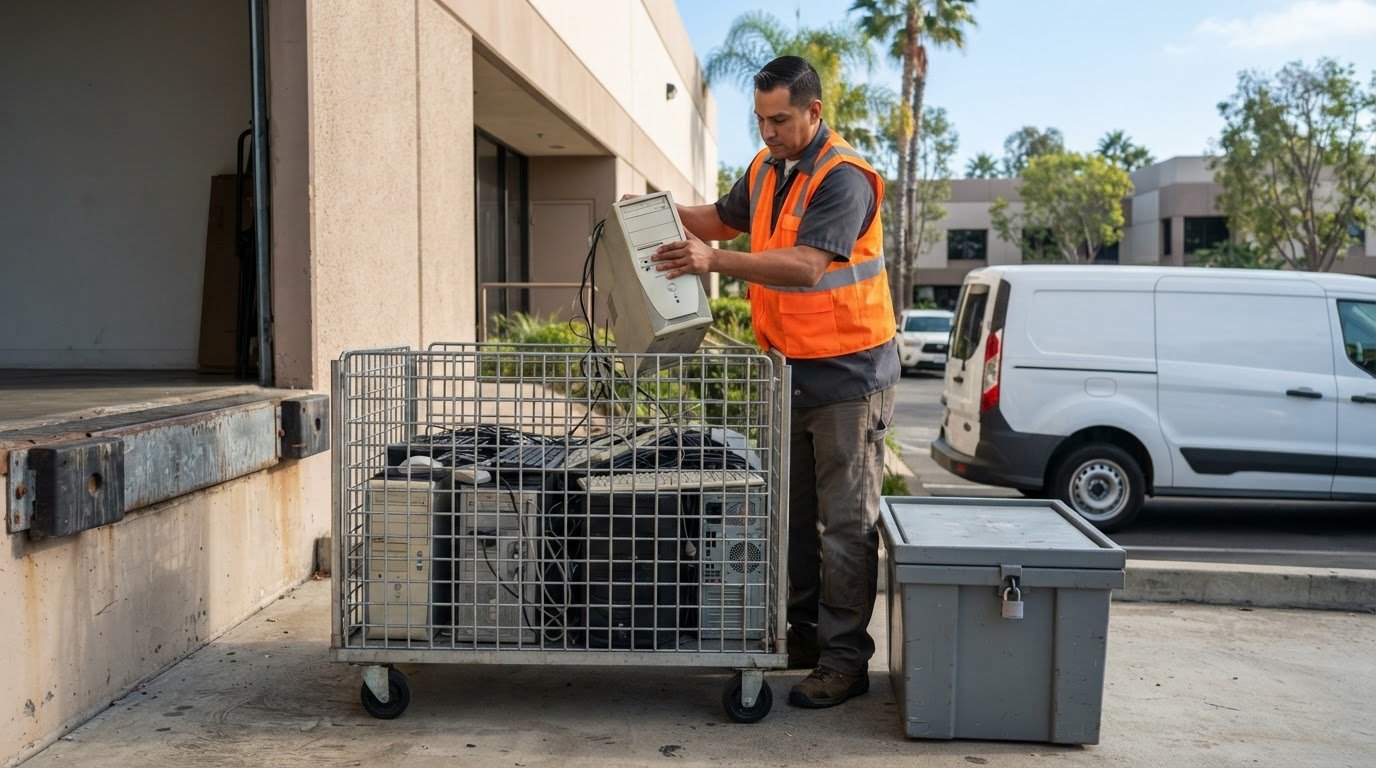
Retiring IT equipment responsibly means managing both the hardware and the data it may contain. For Irvine businesses, responsible IT recycling can send computers, monitors, and other electronics to a professional recycling process, while data-bearing devices receive appropriate data destruction. Clear records matter, too: recycling and destruction certificates can document what happened after equipment left your workplace.
A pickup and a general promise may not be enough. You need to know which items are being recycled, how data-bearing equipment is handled, and what documentation supports the process. Certificates are most useful when they clearly describe the service performed, giving your business a practical record to retain.
This guide explains which IT equipment can be recycled, how recycling and data destruction work together, and what to look for in the documentation. You’ll also learn how OC Recycling’s Electronics Recycling and Data Destruction services can support an organized equipment retirement process for Irvine businesses.
Key Takeaways
- Understand the recycling requirements that affect Irvine businesses and how recycling fits into broader waste practices.
- Learn what recycling and data destruction certificates can document when retiring business IT equipment.
- Identify professional options for recycling computers and other electronics in Irvine, including the county’s household hazardous waste collection centers.
- Find out how Irvine’s bulky-item collections and no-charge household hazardous waste centers may help residents manage unwanted electronics.
Business recycling service requirements
California rules cover business recycling and organic waste, while Irvine’s collection options depend on account type. For IT equipment, plan a documented handoff that keeps electronics and data-bearing devices accounted for.
Applicable California Recycling Rules
California businesses follow recycling requirements, but these rules don’t set a single IT-equipment pickup process. AB 341 has required businesses, public entities, and multifamily units to implement a recycling plan since July 1, 2012. Beginning January 1, 2022, SB 1383 requires California businesses to separate organic waste from trash and participate in an organics collection program. Businesses may need to arrange organic waste recycling services depending on the amount of organic waste they generate.
Irvine Recycling and Collection Options
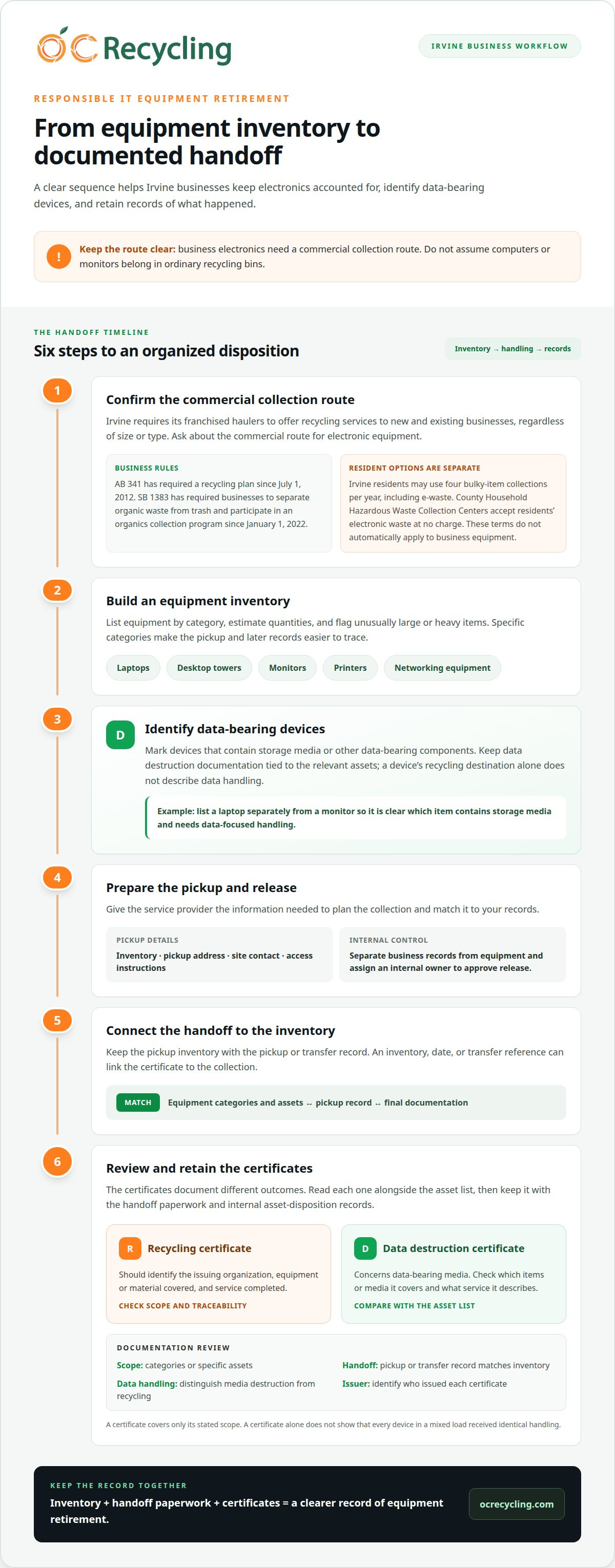
Irvine requires its franchised haulers to offer recycling services to all new and existing businesses, regardless of size or type. Ask about the commercial route for electronics rather than assuming regular recycling bins accept computers or monitors. The city’s resident programs are separate: Irvine residents may use four bulky-item collections per year, including e-waste, and Orange County Household Hazardous Waste Collection Centers accept electronic waste at no charge. Don’t apply resident collection terms to business equipment.
Preparing Equipment for Professional Pickup
For a professional pickup, give the service provider an equipment inventory, pickup address, site contact, and access instructions. List categories such as laptops, desktop towers, monitors, printers, and networking equipment, estimate quantities, and flag unusually large or heavy items. Note which devices contain storage media or other data-bearing components. Grouping equipment by type and identifying items that need data destruction helps plan handling and document the handoff.
Business IT Disposition Assistance
Business IT asset disposition covers the organized retirement of equipment, from inventory through transfer for recycling or destruction. A useful plan separates business records from equipment, identifies devices containing data, and assigns an internal owner to approve the release. Keep the pickup inventory and handoff records with your disposal documentation. For example, listing a laptop separately from a monitor clarifies which item contains storage media and needs data-focused handling.
Recycling certificates and data destruction certificates
When comparing local IT recycling providers, review their records, pickup documentation, and descriptions of data security together. A recycling certificate and a data destruction certificate document different outcomes.
A recycling certificate should identify the organization issuing it, the equipment or material covered, and the service completed. An inventory, date, or transfer reference can connect the certificate to a pickup. For example, a business retiring laptops and monitors benefits from records that distinguish those categories instead of labeling everything “electronics.” Certificate formats vary, so clarity and traceability matter more than a polished title.
A data destruction certificate concerns data-bearing media, not simply the device’s recycling destination. Read it alongside the asset list to see which items or media it covers and what service it describes. A certificate alone does not show that every device in a mixed load received identical handling. Keep the record with internal asset-disposition files to support later audits and equipment-retirement reviews.
To assess documentation and pickup arrangements, review the details that connect the equipment to its final handling:
- Scope: Check whether the record identifies equipment categories or specific assets.
- Handoff: Look for a pickup or transfer record that matches the inventory.
- Data handling: Distinguish media destruction documentation from general recycling records.
- Issuer: Note which organization issued each certificate and what service it records.
When comparing local services, these details help distinguish a documented process from a general assurance. Pickup convenience matters, but it should not replace clear records of what was collected and how data-bearing equipment was handled. A certificate covers only its stated scope, so retain the inventory and related handoff paperwork together.
For a business equipment retirement plan involving electronics recycling and data destruction, keep the asset list and documentation requirements aligned from pickup through final records.
Where can I responsibly recycle IT equipment in Irvine, California?
Irvine businesses can arrange commercial recycling through business waste-service channels. For responsible IT recycling in Irvine, distinguish commercial equipment from household electronics before choosing a collection route. Computers, monitors, printers, and network devices need a clear destination and documented handoff.
Irvine requires franchised haulers to offer recycling services to new and existing businesses, regardless of size or type. Ask about the commercial route for electronic equipment rather than assuming office electronics belong in ordinary recycling bins. For a business retiring a group of laptops, professional collection can keep the equipment together and its transfer organized.
Orange County Household Hazardous Waste Collection Centers accept electronic waste at no charge for Irvine residents. The center referenced for Irvine residents is located at 6411 Oak Canyon. This is a household option, not an automatic destination for a company’s equipment. A business should distinguish its commercial assets from personal household waste when planning disposal.
Before choosing a route, organize the equipment details and identify the service needed:
- Equipment: List computers, monitors, printers, and network devices separately.
- Business or household: Identify whether the equipment belongs to a company or resident.
- Data-bearing devices: Flag computers and storage media that need data-focused handling.
- Collection plan: Provide the pickup location, access details, and inventory to the service provider.
These steps help match the load to an appropriate commercial collection or household center. A company laptop, for example, should not be treated as a resident’s personal item just because both are electronic waste. Keep the inventory and handoff information with the business’s equipment-disposition records. This makes the destination and transfer clearer for each device.
Does Irvine offer free electronics recycling or collection events?
Irvine residents can use four bulky-item collections per year, and eligible bulky items include e-waste. Orange County Household Hazardous Waste Collection Centers also accept electronic, universal, and household hazardous waste from Irvine residents at no charge. These resident options are separate from business equipment recycling, so companies should plan a commercial route for workplace devices.
The four yearly collections provide a household option for items such as an unwanted television or computer. They are not a business pickup program. A company retiring office laptops should not treat its equipment as a resident’s bulky-item load. Separate household electronics from company-owned equipment before deciding how to handle each group.
For residents, the Orange County centers provide another no-charge route for electronic waste. The center referenced for Irvine residents is at 6411 Oak Canyon. Household hazardous waste is also accepted there, but electronics and hazardous materials are different categories. Keep them identified separately when organizing a load, especially if batteries or other materials accompany old devices.
These distinctions help determine which route fits each item:
- Resident’s bulky item: Include eligible e-waste within one of the four annual collections.
- Resident’s electronics: Use an Orange County Household Hazardous Waste Collection Center for no-charge disposal.
- Business equipment: Arrange a commercial recycling route for company-owned computers and other IT assets.
- Mixed loads: Separate business devices, household electronics, and hazardous materials before collection.
Irvine’s resident programs answer the free-collection question, but they don’t replace a business disposition plan. A household television and an office desktop may both be e-waste, yet ownership determines the appropriate collection channel. Keep the business equipment inventory and pickup records together for a clear handoff.
For workplace devices, plan a business equipment handoff that keeps company assets distinct from household collections.
OC Recycling
OC Recycling helps Irvine businesses manage retired electronics and related materials through professional recycling and destruction services. If your workplace is clearing out computers, monitors, or other IT equipment, OC Recycling’s Electronics Recycling service can support an organized retirement process. Data Destruction and Certified Product Destruction address equipment or products requiring destruction, while Scrap Metal Purchasing and CRV Redemption cover other eligible materials.
For a business disposition project, prepare an inventory that identifies equipment categories and data-bearing devices. This gives the handoff a clear starting point and helps match materials with the appropriate service. Keep recycling and destruction documentation with your business records.
Contact OC Recycling to discuss your business’s equipment recycling needs.
Make your next equipment transition a planned one
Retiring workplace technology is an opportunity to establish a repeatable process, not just clear out a storage room. For responsible IT recycling in Irvine, decide who owns the equipment inventory, how data-bearing devices will be handled, and where records will be kept. A consistent approach can make future equipment changes easier to organize.
OC Recycling offers Electronics Recycling, along with CRV Redemption and Scrap Metal Purchasing for other eligible materials. Keep the scope clear: identify the equipment your business is retiring and the support it needs, then align the handoff with your internal recordkeeping. A thoughtful plan helps your team move forward without treating every item as the same kind of material.
Start the next step at a pace that works for your business. Contact OC Recycling to discuss your equipment recycling needs and plan a practical way forward.
Frequently Asked Questions
What Can I Recycle?
Businesses can recycle many retired electronic devices, including computers, monitors, and other electronics. Servers, networking equipment, and printers are also common IT assets to include in an inventory. Separate electronics from scrap metal, cardboard, and paper so each material can enter the appropriate recycling stream. For example, list monitors separately from computers because they are different equipment categories.
Which Irvine e-waste recycling centers accept computers, servers, monitors, and networking equipment?
For business-owned equipment, use a commercial recycling route rather than assuming a household collection center accepts a business load. Irvine residents may take electronic waste to Orange County Household Hazardous Waste Collection Centers; the center referenced for Irvine is at 6411 Oak Canyon. For a business load containing servers or networking equipment, provide an inventory to a professional recycler to plan the appropriate handoff.
How do professional IT recyclers securely erase or destroy data before recycling computers and storage devices?
Professional recyclers can use data destruction services to address information stored on computers and storage media. OC Recycling offers Data Destruction, including secure wiping and shredding of electronic data. Identify which assets contain data, then keep their inventory connected to the destruction record. For example, distinguish a computer with a storage drive from a monitor, which generally doesn’t store business files.
Do Irvine IT recyclers provide certificates of recycling and data destruction?
Documentation depends on the service performed. OC Recycling provides certificates of destruction and documentation that supports traceability. A destruction certificate records a destruction service, while recycling documentation relates to equipment recycling. Keep each record with the corresponding asset inventory so your business can connect the document to the equipment it covers. This distinction helps prevent treating a recycling record as proof of data destruction.
What electronics are excluded from Irvine-area recycling programs, and what are the disposal risks?
Acceptance varies by collection route, so don’t assume every electronic item fits a resident or business program. Irvine businesses should keep hazardous waste out of trash containers. Some hazardous waste can be recycled when handled properly, while other types require a special facility. Improper handling of data-bearing devices can also expose stored business information. Separate unusual or hazardous materials from ordinary electronics during inventory.
