
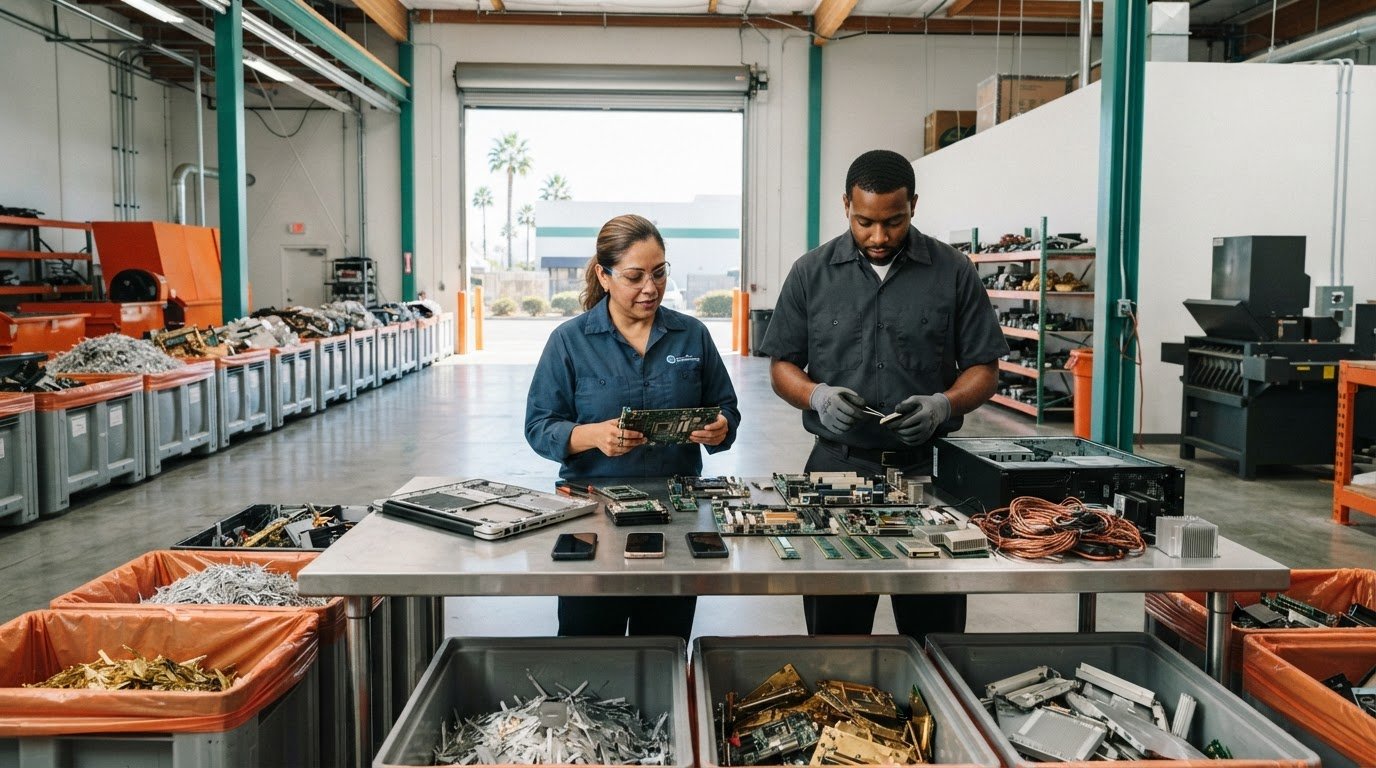
That obsolete, cracked laptop collecting dust in your closet is often worth far more in raw commodity value than the meager store credit a big-box retailer offers. If you want to know what electronics can be recycled for money, the secret lies beneath the plastic casing. You probably already know that tossing old tech into the trash is wasteful, but figuring out which items actually pay versus which cost money to haul away can feel confusing.
Between the frustration of low-ball trade-in programs and valid anxiety over personal data security, parting with old hardware shouldn’t be a headache. In this guide, you’ll discover exactly which devices, circuit boards, and internal components yield genuine scrap cash payouts, along with how to prepare them for processing. We will walk through how to identify high-yield scrap hiding in your home or office, protect your private information, and secure fast cash from a licensed recycling center.
Key Takeaways
- Learn what electronics can be recycled for money based on underlying precious and non-ferrous metal content rather than working condition.
- Discover why enterprise servers, desktop towers, and laptops yield the highest scrap payouts compared to standard consumer gadgets.
- Identify which internal components, including CPUs, RAM, and high-grade printed circuit boards, command separate premium evaluations.
- Master a simple preparation and data destruction protocol that protects sensitive personal information while elevating scrap payout tiers.
- Find out how partnering directly with a certified local recycling facility provides same-day cash payouts that beat retail store trade-in programs.
Understanding E-Waste Value: What Electronics Can Be Recycled for Money?
Big-box retailers often lead consumers to believe that only pristine, late-model gadgets hold any value, trading them for restricted store credit. In reality, figuring out what electronics can be recycled for money comes down to raw industrial metallurgy. Professional recyclers evaluate hardware based on intrinsic commodity recovery rather than working condition or cosmetic perfection.
Even totally defunct equipment contains recoverable global resources. As detailed in the broader study of electronic waste, modern tech relies on a dense matrix of base, precious, and rare earth elements. Global market fluctuations in commodities like copper, gold, and aluminum dictate real scrap values. When refinery demand spikes, even burnt-out motherboards, damaged servers, and tangled wiring harnesses translate into immediate cash payouts at a dedicated recycling facility.
What Gives Electronic Devices Real Scrap and Resale Value?
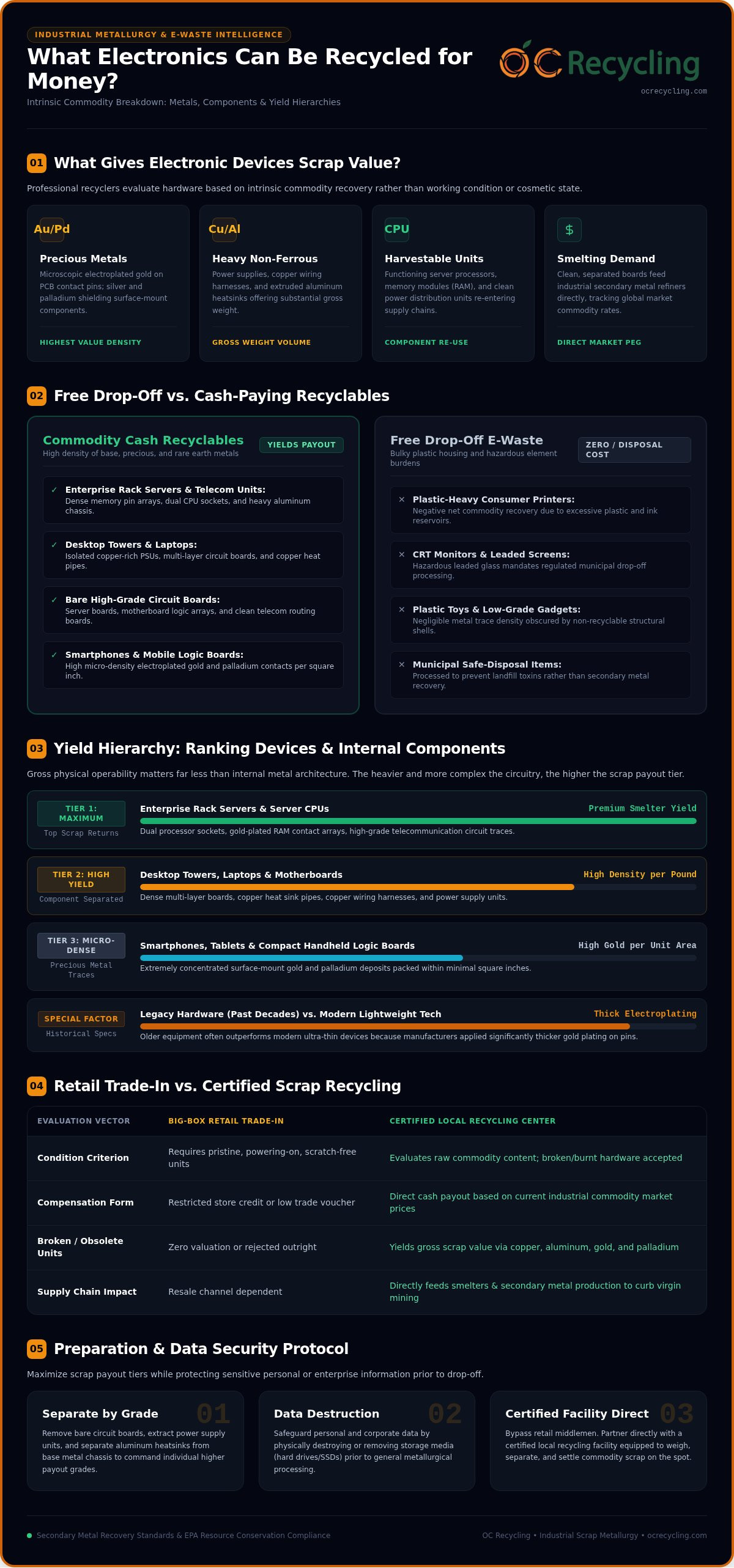
Scrap pricing hinges on the density of extractable metals packed into each unit:
- Precious metals: Microscopic electroplated gold covers printed circuit board contact pins, while silver and palladium shield high-performance surface-mount components.
- Heavy non-ferrous metals: Power supplies, copper wiring harnesses, and extruded aluminum heatsinks offer substantial gross weight that scrap yards purchase readily.
- Harvestable hardware: Functioning server processors, memory sticks, and power modules can often be tested and reintroduced into industrial supply chains.
- Smelting demand: Smelters constantly purchase clean, separated boards to feed secondary metal production, keeping commodity cash values buoyant.
The Difference Between Free Drop-Off E-Waste and Cash Recyclables
Not every gadget qualifies for a payout. Understanding what electronics can be recycled for money requires distinguishing between commodity-grade scrap and items that simply require safe disposal.
Consumer gear like plastic-heavy printers, broken toys, or CRT monitors carry negative net recovery values due to toxic elements like leaded glass or bulky plastic housings. Certified facilities process these as municipal drop-offs to prevent illegal landfill disposal. In contrast, commercial computing units, network switches, telecommunications equipment, and bare circuit boards minimize non-recyclable bulk. Certified processors separate hazardous components to keep streams clean, while passing scrap cash payouts along to businesses and residents bringing in high-density commodity tech.
High-Value Devices: Which Electronics Pay the Most Cash?
Retail trade-in programs focus almost exclusively on whether a gadget powers on or has a scratch-free screen. When determining what electronics can be recycled for money at a scrap processing level, physical operability takes a back seat to gross metal density. Enterprise hardware, computing infrastructure, and industrial communication equipment consistently yield the highest returns because they house substantial concentrations of base and precious metals.
Discarded commercial tech represents an exceptional reservoir of secondary commodities. According to the U.S. Environmental Protection Agency, recycling consumer and enterprise devices recovers critical valuable resources and materials including gold, copper, and palladium that would otherwise require destructive virgin mining. The heavier and more complex the internal architecture, the higher the payout tier.
Computers, Laptops, and Enterprise Servers
Computing architecture remains the undisputed leader in commodity scrap yield:
- Desktop PC towers: Contain isolated power supply units rich in copper wiring, thick aluminum heatsinks, and multi-layer motherboards.
- Laptops: Pack dense mainboards and copper heat pipes into a compact form factor, delivering solid returns per pound.
- Enterprise rack servers: The gold standard for electronic recycling. Dual CPU sockets, dense banks of memory pins, and industrial-grade aluminum enclosures yield unmatched recovery values.
- Legacy hardware: Older machines from past decades often outperform lightweight modern devices because manufacturers used significantly thicker gold plating on pins and contacts.
Smartphones, Tablets, and Personal Mobile Hardware
Handheld mobile devices contain exceptional micro-densities of precious metals. Logic boards inside smartphones pack concentrated deposits of electroplated gold and palladium traces into just a few square inches. While intact phones might qualify for retail buybacks, shattered or dead hardware still yields scrap value at the scale. Safely removing swollen or punctured lithium batteries before dropping off mobile hardware protects processing staff and keeps payout assessments fast and efficient.
Telecom Equipment, Modems, and Networking Switches
Enterprise telecom hardware blows standard consumer tech out of the water. Heavy-duty network switches, server racks, and industrial modems contain high-grade, multi-layer circuit boards engineered with heavy gold plating to prevent data corruption. Paired with robust aluminum or steel chassis and copper-wound internal transformers, commercial communication hardware commands some of the strongest commercial returns in the recycling yard. If your business is upgrading IT infrastructure or clearing outdated office closets, connecting with OC Recycling allows you to convert decommissioned telecom systems into clean working capital.
Internal Components: Where the Hidden Metal Value Lives
Dismantling tech gear unlocks margins that complete units cannot touch. If you want to know what electronics can be recycled for money at peak scrap rates, look straight at internal component harvesting. Professional scrap facilities evaluate discrete components under strict commodity tiers, pricing individual boards and chips far above mixed e-waste rates.
The scale of recovered commodities inside micro-architecture is massive. According to official EPA statistics on precious metals in e-waste, recycling one million mobile devices recovers approximately 35,000 pounds of copper, 772 pounds of silver, 75 pounds of gold, and 33 pounds of palladium. Knowing where these metals concentrate gives you serious leverage at the scale.
Printed Circuit Boards (PCBs) and Motherboards
Scrap buyers categorize circuit boards by component density and surface metal finish:
- High-grade boards: Clean computer motherboards, server mainboards, and laptop planar boards featuring dense gold-plated pins and minimal steel attachments.
- Mid-grade peripheral cards: PCI cards, graphics processors, and networking adapters featuring gold connector fingers along their insertion edges.
- Low-grade power boards: Found inside television chassis and desktop power supply housings. These brown or dark green single-layer boards carry heavy copper coils but minimal precious metals.
Processors (CPUs), RAM, and Gold-Plated Connectors
CPUs represent the highest concentration of gold in standard hardware. Older ceramic pin-grid array processors feature thick gold bonding wires and external gold-plated pins, yielding significantly higher commodity recovery than modern plastic flip-chip packages. Memory modules (RAM) similarly command top pricing due to thick gold contact fingers and clean silicon dies. Snipping off gold-plated terminal pins and backplane connectors before selling turns otherwise bulk scrap into premium lots.
Copper Wire, Power Cables, and Transformers
Secondary non-ferrous metals round out high-value component recovery. Computer power supply units yield substantial copper wound around ferrite transformer cores, accompanied by dense harnesses of insulated wiring. While stripping fine internal wire by hand rarely justifies the labor, collecting clean computer AC power cords, insulated communication jumpers, and ribbon cables into dedicated bins secures reliable scrap cash payouts alongside high-grade electronic boards.
Preparing Your Electronics to Maximize Cash and Protect Your Data
Dumping an unsorted bin of electronics onto a scrap scale costs you money. Scrap yards grade mixed containers at the lowest-value item in the pile, penalizing sellers who skip basic preparation. Maximizing your return on what electronics can be recycled for money requires methodical sorting, de-manufacturing, and strict security protocols before you reach the intake scales.
A simple four-step protocol elevates your material from bulk junk to premium scrap grades. First, inspect and separate complete units from raw components. Second, harvest high-grade printed circuit boards and processors cleanly. Third, bundle segregated copper wiring and aluminum heatsinks into clean lots. Finally, physically isolate all magnetic hard drives and solid-state storage media to safeguard private personal or corporate records.
Sorting, De-Manufacturing, and Component Separation
A few minutes with an electric screwdriver significantly increases your total payout:
- Strip exterior steel and plastic: Remove bare sheet metal casings and plastic bezels, tossing steel into ferrous scrap bins to reveal high-value internals.
- Protect board integrity: Extract circuit boards without cracking the fiberglass or shearing off surface-mount components, preserving their full precious metal classification.
- Segregate wiring and motors: Snip copper power cords and gather low-voltage harness wires cleanly. Review our detailed reference on Scrap Copper Prices in Santa Ana to ensure your copper components achieve top tier evaluations.
Safeguarding Sensitive Information Before You Hand Devices Over
Software resets rarely protect sensitive information on dead, damaged, or unpowered storage devices. Identity theft risks surge when functioning mechanical hard drives leave your hands intact. Physical destruction remains the only bulletproof defense against data recovery. For corporate IT managers handling decommissioned workstations, leveraging professional services like Certified Product Destruction Anaheim ensures strict chain-of-custody tracking, total drive shredding, and complete regulatory compliance for all corporate digital assets.
Navigating California E-Waste Regulations and Compliance
California enforces stringent e-waste mandates under CalRecycle to protect local watersheds from toxic heavy metals. Covered electronic waste containing hazardous components, such as compromised lithium batteries or mercury backlights, requires processing through state-certified recyclers. Certified operations guarantee that while you collect immediate cash for valuable non-ferrous metals and circuit boards, all non-recoverable materials are handled in full environmental compliance. When you’re ready to clear out surplus office equipment or scrap components, schedule an electronics drop-off at OC Recycling to receive fast, transparent compensation under certified California standards.
Get Cash for Electronics in Orange County with OC Recycling
Holding onto piles of obsolete tech ties up valuable square footage in your home, warehouse, or server room. When you need to turn old hardware into liquidity, working with an established local commodity processor beats waiting on retail trade-in mailers. OC Recycling serves as Santa Ana’s premier recycling hub, backed by over 15 years serving Orange County communities with dependable, certified scrap processing.
Transforming outdated components into revenue should be straightforward and rapid. Whether you have two desktop towers or five pallets of enterprise circuit boards, knowing what electronics can be recycled for money gives you an immediate financial advantage. Our dedicated Santa Ana facility handles electronics recycling, scrap metal purchasing, and certified data destruction under one roof, providing transparent returns for both residential scrappers and commercial organizations.
Transparent Weighing and Direct Cash Payouts in Santa Ana
Eliminate the guesswork of digital gift cards by opting for immediate cash redemption. Our drive-in facility makes offloading tech scrap fast, safe, and convenient:
- State-certified industrial scales: Every lot is weighed accurately in front of you, ensuring you receive precise compensation based on genuine commodity tiers.
- Immediate same-day cash: Walk away with cash redemption in hand for all eligible scrap commodities the moment your drop-off is sorted.
- Central Orange County access: Located centrally in Santa Ana, our clean facility easily serves neighbors across Anaheim, Costa Mesa, Irvine, and Huntington Beach.
- Multi-material convenience: Consolidate your trip by redeeming beverage containers alongside hardware using our certified CRV Recycling Centers.
Commercial Logistics, Bin Placement, and Data Destruction Services
Corporate tech cleanouts require institutional security and streamlined logistics. For large-scale office transitions, data center upgrades, or manufacturing operations, OC Recycling provides commercial bin placement directly at your facility. Fill the bins on your schedule, and our team manages the pickup and processing. Every hard drive, solid-state card, and proprietary component undergoes certified data destruction and product destruction, providing serialized certificates to verify enterprise compliance. If you want to know what electronics can be recycled for money from your corporate inventory, contact our Santa Ana team today to liquidate your commercial tech assets safely.
Maximize Your E-Waste Payouts Today
Transforming outdated hardware into real revenue starts with seeing beyond plastic casings. When you evaluate what electronics can be recycled for money, the real payoff lies in heavy server racks, dense printed circuit boards, and clean copper wiring. Sorting your components beforehand and physically destroying sensitive data drives guarantees you capture peak scrap value while protecting your security.
Skip the restrictive retail gift cards and deal directly with certified commodity buyers. Backed by over 15 years serving Orange County communities, our full-service Santa Ana facility provides state-certified scales for transparent weights, commercial bin placement logistics, and serialized data destruction. Whether clearing out office storage or liquidating personal hardware, you can turn your electronics into same-day cash with OC Recycling. Gather your scrap today and watch your unused tech turn into immediate profit.
Frequently Asked Questions
Can I get cash for non-working, broken electronics?
Yes, you can receive cash for non-working or physically damaged electronics at a scrap processor. Commodity recyclers do not test for operational functionality. Instead, payouts depend on the weight and purity of underlying copper, aluminum, and precious metal components inside the hardware. Even dead desktop computers or burnt-out power supplies retain intrinsic scrap metal value.
Which electronics pay the most money at scrap yards?
Enterprise server racks, commercial networking gear, and desktop computer towers generate the highest cash payouts. These systems contain multi-layer circuit boards, dense CPU chips, and copper heat assemblies with high precious metal concentrations. In contrast, plastic-heavy consumer gadgets yield lower scrap rates per pound due to their minimal recoverable metal volume.
Why do scrap yards buy old computer motherboards and circuit boards?
Scrap yards purchase circuit boards because global smelters recover fine quantities of gold, silver, palladium, and copper from them. When figuring out what electronics can be recycled for money, circuit boards rank near the top. High-grade motherboards feature gold-plated contact pins and copper traces that refineries melt down and reintroduce into industrial manufacturing pipelines.
Do recycling centers buy old TVs and computer monitors for cash?
Most recycling centers do not pay cash for older cathode-ray tube (CRT) televisions or flat-screen monitors. These display units consist primarily of leaded glass, heavy plastics, and minimal precious metal content, making them costly to process safely. Rather than purchasing them for cash, certified facilities handle monitors as covered electronic drop-offs to ensure compliant, non-hazardous disposal.
How do I ensure my private data is safe before recycling a computer?
Physical drive destruction is the only foolproof method to guarantee your digital identity remains safe. Software formatting often leaves recoverable data fragments on non-functional hard drives. Removing internal storage drives and utilizing certified mechanical shredding services guarantees physical destruction, providing corporate or residential clients with absolute security and documented chain-of-custody compliance.
What is the difference between retail trade-ins and selling to a scrap yard?
Retail trade-in programs evaluate modern gadgets for resale, demanding working units and offering restricted store vouchers in return. Scrap facilities evaluate what electronics can be recycled for money based strictly on raw industrial material weight. You receive same-day cash payments for broken, obsolete, or completely stripped commercial and residential hardware without store restrictions.
Does OC Recycling provide commercial electronic waste pickups in Orange County?
Yes, OC Recycling provides commercial bin placement and logistics support for businesses across Orange County, including Santa Ana, Anaheim, and Irvine. We deliver dedicated bins to your commercial facility for tech cleanouts or corporate IT upgrades. Once filled, our logistics team handles pickup, sorting, and certified data destruction, while residential clients utilize our drive-in Santa Ana center.
