

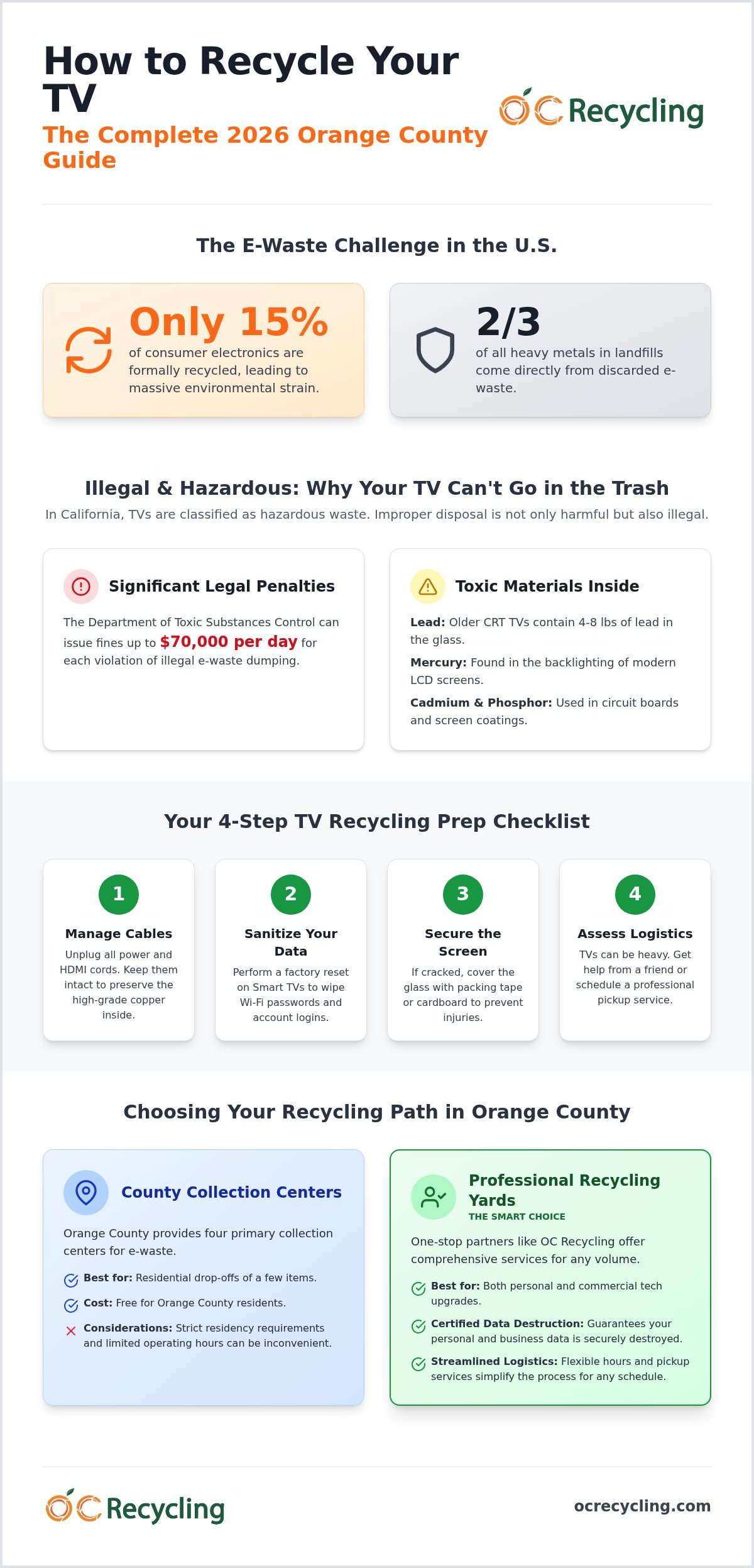
Only about 15 percent of consumer electronics are formally recycled in the United States, yet e-waste accounts for nearly two-thirds of all heavy metals found in our landfills. If you are wondering how to recycle a tv in Orange County, you likely already know that hauling a heavy, bulky screen to the curb isn’t just physically demanding; it’s also illegal under California law. Between navigating confusing government facility hours and fearing steep fines for improper disposal, getting rid of outdated tech often feels like a major hurdle.
We believe that disposing of electronics should be a transparent and professional process. This 2026 guide provides the most efficient and legal methods to clear out your old screens while protecting the local environment. You’ll learn about the latest SB 1215 regulations regarding battery-embedded waste and discover the most convenient collection centers near you. From residential drop-offs to professional solutions for corporate tech upgrades, we have mapped out everything you need to know for a quick, secure, and compliant recycling experience. We will cover the specific hours for county facilities, current retail recycling fees, and the best ways to ensure your data remains protected during the process.
Key Takeaways
- Understand the latest California e-waste regulations and learn exactly how to recycle a tv in Orange County to avoid environmental hazards and potential legal fines.
- Follow a professional four-step preparation checklist to secure your personal data and manage recyclable components like copper cables before disposal.
- Identify the four primary county collection centers and their specific 2026 residency requirements for free residential electronic drop-offs.
- Evaluate the differences between government collection sites and professional recycling yards to choose the most efficient option for your specific volume and schedule.
- Discover the benefits of a one-stop recycling partner that offers certified data destruction and streamlined logistics for both personal and commercial tech upgrades.
Why You Can’t Trash Your TV in Orange County
Tossing an old television into your weekly trash bin might seem like the easiest way to clear space, but it’s a decision that carries significant legal and environmental weight. In California, televisions are strictly classified as hazardous waste. Because of this, understanding What is Electronic Waste? is the first step for any responsible homeowner or business manager. Illegal dumping in Orange County isn’t just a nuisance; it’s a serious violation. The Department of Toxic Substances Control has the authority to issue penalties reaching up to $70,000 per day for each violation. These regulations exist because electronics contain complex materials that require specialized, professional handling to prevent soil and groundwater contamination.
The California Electronic Waste Recycling Act
Since the passage of the landmark 2003 legislation, the process of how to recycle a tv in Orange County has become a highly regulated and funded system. When you purchased your television, you likely noticed a small recycling fee added to the total. This state-mandated fee directly supports the infrastructure required to collect and process these devices safely. Under these standards, a “covered electronic device” (CED) is any video display product with a screen larger than four inches that the state identifies as hazardous. By following these established protocols, you ensure your old tech is managed through a system designed for maximum recovery and minimal risk.
Toxins Found in Common Television Sets
The primary reason for these strict laws is the sheer volume of toxins packed into every unit. Older Cathode Ray Tube (CRT) sets are particularly dangerous, often containing between four and eight pounds of lead within the glass. This lead serves as a shield against radiation, but it becomes a toxic liability if the glass breaks in a landfill. Modern LCD and LED screens aren’t exempt from concern either. These units often contain mercury in the backlighting and cadmium in the circuit boards. Additionally, the phosphor coatings found inside many screens pose significant environmental risks if released. These materials must be handled by certified professionals who can dismantle the units in a controlled environment, ensuring that heavy metals are recovered rather than leaked into our local ecosystems.
How to Prepare Your TV for Recycling: A 4-Step Checklist
Before you load your vehicle and head to a facility, knowing how to recycle a tv in Orange County requires a small amount of intentional preparation. Modern displays and vintage consoles both require specific handling to ensure they’re processed safely and efficiently. By following a structured checklist, you can protect your personal information and prevent physical injury during the transport process.
Properly preparing your device ensures that valuable materials are recovered and hazardous components are contained. Follow these four essential steps:
- Step 1: Manage Cables and Accessories. Unplug all power cords and HDMI cables. Resist the urge to cut the wires; recycling facilities prefer intact cables because they contain high-grade copper that is easier to harvest when the insulation is undamaged.
- Step 2: Sanitize Your Data. Smart TVs store significant amounts of personal data. Perform a factory reset to wipe your Wi-Fi passwords and streaming account credentials before the unit leaves your home.
- Step 3: Secure the Screen. If your TV has a cracked or shattered screen, cover the glass with a layer of clear packing tape or a piece of cardboard. This prevents small, sharp shards from falling out in your vehicle or injuring workers.
- Step 4: Assess the Logistics. Determine if you can safely move the item alone. If the unit is too heavy for a single person, plan to bring a helper or contact a professional service for a pickup at your location.
Data Security for Modern Smart TVs
Smart TVs are essentially large computers mounted on your wall. They store cached login data for Netflix, Hulu, and YouTube, which can be vulnerable if the device isn’t wiped. You can usually find the “Factory Reset” or “Initial Setup” option under the “System” or “Support” tab in your TV’s settings menu. For businesses or organizations disposing of multiple displays, utilizing certified data destruction is the most reliable way to ensure brand liability and data privacy are fully protected.
Handling Heavy CRT (Tube) TVs Safely
Older “tube” televisions are notoriously difficult to move because they are extremely front-heavy. The thick lead-glass screen accounts for the majority of the weight, making these units prone to tipping forward unexpectedly. When learning how to recycle a tv in Orange County, physical safety is paramount. Always lift with your legs and keep the unit close to your body. If you notice a hissing sound, the vacuum seal in the tube may be compromised; handle it with extreme care and avoid further impact. For a seamless experience, you can drop off your prepared electronics at Orange County Household Hazardous Waste Collection Centers or choose a professional yard like OC Recycling for faster, high-volume service.
Where to Recycle a TV in Orange County: Top Local Options
Orange County provides a robust infrastructure for electronics disposal, ensuring that residents and business owners have accessible pathways to stay compliant. When you are looking for how to recycle a tv in Orange County, your primary options range from free government drop-off sites to specialized professional facilities. These systems operate under the guidelines of California’s Covered Electronic Waste (CEW) Recycling Program, which mandates that hazardous components be diverted from our local landfills. Choosing the right location depends on your residency status and the volume of equipment you need to move.
Orange County HHW Collection Centers
For individual residents, the county operates four Household Hazardous Waste (HHW) Collection Centers. These locations are specifically designed to accept residential e-waste at no cost. You can find these facilities at:
- Anaheim: 1071 N. Blue Gum Street
- Huntington Beach: 17121 Nichols Lane
- Irvine: 6411 Oak Canyon
- San Juan Capistrano: 32250 Avenida La Pata
These centers are open Tuesday through Saturday, from 9 a.m. to 3 p.m. Always check the weather forecast before you head out, as these facilities close during rainy conditions to prevent hazardous runoff. Additionally, residents must provide proof of residency, such as a driver’s license or utility bill. There is a strict limit of five items per visit to manage daily volume and ensure all community members have access to the service.
Professional Recycling Centers for Businesses
While the HHW centers are a fantastic resource for households, they do not accept waste from businesses, non-profits, or government agencies. Commercial entities require a more robust solution that includes proper documentation for environmental compliance. Choosing a professional partner like OC Recycling provides a streamlined alternative to government queues. Our facilities handle high-volume tech upgrades with the precision and speed that modern businesses demand.
Whether you need electronics recycling in Costa Mesa or are managing a large-scale cleanout in Santa Ana, professional yards offer specialized logistics. This includes commercial bin placement for long-term projects and certified destruction reports for sensitive equipment. Retailers like Best Buy also offer recycling, though they currently charge a $29.99 fee and limit intake to flat-panels under 50 inches or CRTs under 32 inches. For most, a professional recycling yard remains the most efficient way to handle large or multiple units without the restrictions found at retail counters or public sites.
Residential vs. Commercial TV Recycling: Which Is Right for You?
Choosing the right path for your e-waste depends largely on the scale of your project. While residents often look for the simplest way to clear a single screen, business managers face complex logistical challenges and strict liability requirements. Understanding how to recycle a tv in Orange County involves weighing the convenience of a quick professional drop-off against the potentially long wait times at public facilities. The decision often comes down to whether you have a single item in your trunk or a full truckload from an office cleanout. For residents managing an estate cleanout, knowing how to recycle a tv in Orange County through a professional yard can save hours of labor and multiple trips to smaller collection centers.
The ‘Wait Time’ Factor
Saturday mornings at county hazardous waste sites are notoriously busy. It’s a common frustration for local residents to wait in line for over an hour just to reach the drop-off point. If you don’t want to spend your weekend in a queue, a professional recycling yard offers a much faster, methodical experience. These facilities are designed for high-efficiency throughput; they allow you to get in and out in minutes. Additionally, a professional yard allows you to capitalize on your trip. While you are there, check the current Scrap Metal Prices in Orange County. Bringing in old copper wiring or aluminum siding alongside your electronics can turn a chore into a profitable visit. This approach is ideal for homeowners who are managing a larger home renovation or estate clearing.
Logistics for Corporate Tech Upgrades
Corporate tech refreshes require a level of organization that public sites simply cannot accommodate. When an office upgrades 50 or more monitors, the logistics become a major hurdle. For these large-scale projects, we provide commercial bin placement to keep your workspace clean and organized during the transition. This professional logistics support ensures that your e-waste is managed from the moment it leaves the desk. Most importantly, businesses receive a formal Certificate of Destruction. This document is vital for legal compliance. It proves that your old hardware was handled according to California environmental standards and that all sensitive data-bearing components were destroyed. For the most efficient and secure experience, partner with OC Recycling for your next commercial electronics project.
Why OC Recycling is the Smart Choice for Your E-Waste
For over 15 years, OC Recycling has served as the premier destination for sustainable material management throughout the region. While this guide has detailed several methods for how to recycle a tv in Orange County, we believe your time and effort deserve a more professional, streamlined experience. We take a traditionally messy industry and apply rigorous, clean, and modern standards to every process. This commitment to excellence ensures that your old electronics aren’t just discarded but are processed with the highest level of environmental responsibility. Our facility operates in full compliance with California’s strict recycling laws, providing you with the peace of mind that your tech is handled ethically and safely.
Comprehensive Recycling Solutions
Our approach goes beyond simple disposal. We have built a one-stop shop that serves the diverse needs of the Orange County community. While public collection centers often have rigid limits and long queues, our Santa Ana facility is designed for high-volume efficiency. You can maximize your trip by bringing in a wide variety of materials at once. For example, you can turn your recycling effort into a payout by bringing CRV materials like aluminum cans, glass, and plastic bottles during the same visit.
We also specialize in scrap metal purchasing, including both ferrous and non-ferrous metals. If you’ve recently completed a home renovation or a garage cleanout, you can recycle your television while also selling copper piping, brass fixtures, or stainless steel appliances. This multi-material capability makes us the most efficient option for anyone looking for how to recycle a tv in Orange County while clearing out other household or job-site waste. Our central location allows us to serve the entire county with the speed and professional logistics that residents and business owners expect.
The OC Recycling Experience
When you arrive at our facility, you’ll immediately notice the difference that professional pride makes. We’ve moved away from the gritty feel of traditional scrap yards to provide a polished, transparent environment. Our friendly, expert-led staff is always on-site to greet you and assist with the heavy lifting. If you have a bulky CRT television or a large-screen LED, we’ll help you unload it safely from your vehicle. We respect your schedule, which is why our intake process is methodical and fast-paced. You won’t find the hours-long Saturday morning wait times common at government-run sites here. Instead, you’ll find a reliable partner dedicated to providing immediate results. Visit us today in Santa Ana to experience a cleaner, safer, and more rewarding way to recycle your electronics and scrap metal.
Ready for a Cleaner, Safer Orange County?
Navigating the legal and environmental requirements of electronics disposal is essential for every responsible resident and business owner. You now have the tools to prepare your devices securely and understand the best locations for drop-off. Whether you are managing a single screen or a massive corporate tech upgrade, knowing how to recycle a tv in Orange County ensures you avoid steep fines while protecting our local groundwater from hazardous toxins. By prioritizing data security and professional handling, you turn a complex chore into a smooth, compliant process.
If you value your time and want to skip the long Saturday queues at government facilities, we are here to help. Our team provides same-day service and full environmental compliance across our four convenient local locations. We take the guesswork out of e-waste and scrap management so you can focus on what matters most. Contact OC Recycling for professional electronics disposal today and experience the most efficient recycling solution in the region. Let’s work together to keep our community modern, sustainable, and clutter-free.
Frequently Asked Questions
Is it free to recycle a TV in Orange County?
Yes, Orange County residents can recycle televisions for free at the four county-operated Household Hazardous Waste Collection Centers. These public facilities are funded by state-mandated fees paid at the time of purchase. However, businesses and commercial accounts are excluded from these free residential programs. For those who want to skip the lines or have high volumes, a professional facility like OC Recycling provides a faster alternative for electronics recycling across our four local locations.
Can I put an old TV in my blue recycling bin?
No, you cannot place any television or monitor in your curbside blue recycling bin. In California, televisions are strictly classified as hazardous waste because they contain lead, mercury, and cadmium. Placing these items in standard trash or recycling bins is illegal and can result in significant environmental fines. Instead, you must bring these items to a certified drop-off point to ensure they are processed according to state environmental standards.
Where can I take a TV that still works but I don’t want?
If your television is in good working condition, consider donating it to local charitable organizations like Goodwill or the Salvation Army. Many non-profits in Santa Ana and Costa Mesa accept functional electronics to support their community programs. You can also use online marketplaces to sell or give away working sets. If the unit is outdated or has display issues, recycling is the only legal and safe option for disposal in Orange County.
What happens to a TV after it is recycled?
Once a television enters a certified recycling facility, it is carefully dismantled to recover valuable raw materials. Workers separate the plastic housing, copper wiring, and circuit boards for industrial reuse. Hazardous components, such as lead-filled glass from older CRT tubes or mercury backlighting from modern screens, are isolated and sent to specialized refineries for safe containment. This process prevents heavy metals from leaching into the soil while returning useful commodities to the manufacturing stream.
Do I need to show an ID to recycle electronics in OC?
Yes, you generally need to show a valid ID or proof of residency to use the free county HHW centers. These facilities are strictly for residents of Orange County cities like Anaheim, Irvine, and Huntington Beach. If you are a business owner or a resident from outside the county, you’ll need to utilize a professional recycling yard. Facilities like ours prioritize speed and compliance, offering a straightforward intake process for both personal and commercial tech upgrades.
Does Best Buy or Staples take old TVs in Orange County?
Best Buy currently accepts most televisions for recycling, though they often charge a $29.99 fee per unit and have strict size limits for CRT and flat-panel sets. Staples typically accepts smaller electronics like printers and computers but does not take televisions at most locations. Because retail policies and fees change frequently, many residents find that a dedicated recycling facility or a county HHW center is a more reliable and cost-effective choice for larger screens.
What is the difference between E-waste and Universal Waste?
Universal waste is a broad regulatory category that includes common hazardous items like batteries, lamps, and mercury-containing equipment. E-waste is a specific subset of universal waste that refers to electronic devices with a circuit board or a power cord. In California, televisions are considered “covered electronic waste” because of their hazardous components. Understanding this distinction helps you navigate local regulations when you are learning how to recycle a tv in Orange County.
Can I recycle a TV with a cracked screen?
Yes, you can recycle a television with a cracked screen, but it requires extra safety precautions. Cracked screens can release sharp glass shards or hazardous dust, especially in older CRT models. Before transporting the unit, cover the damaged area with clear packing tape or a piece of cardboard to secure it. Most professional facilities and county centers will accept these units as long as they are handled safely to protect the staff during the unloading process.
