
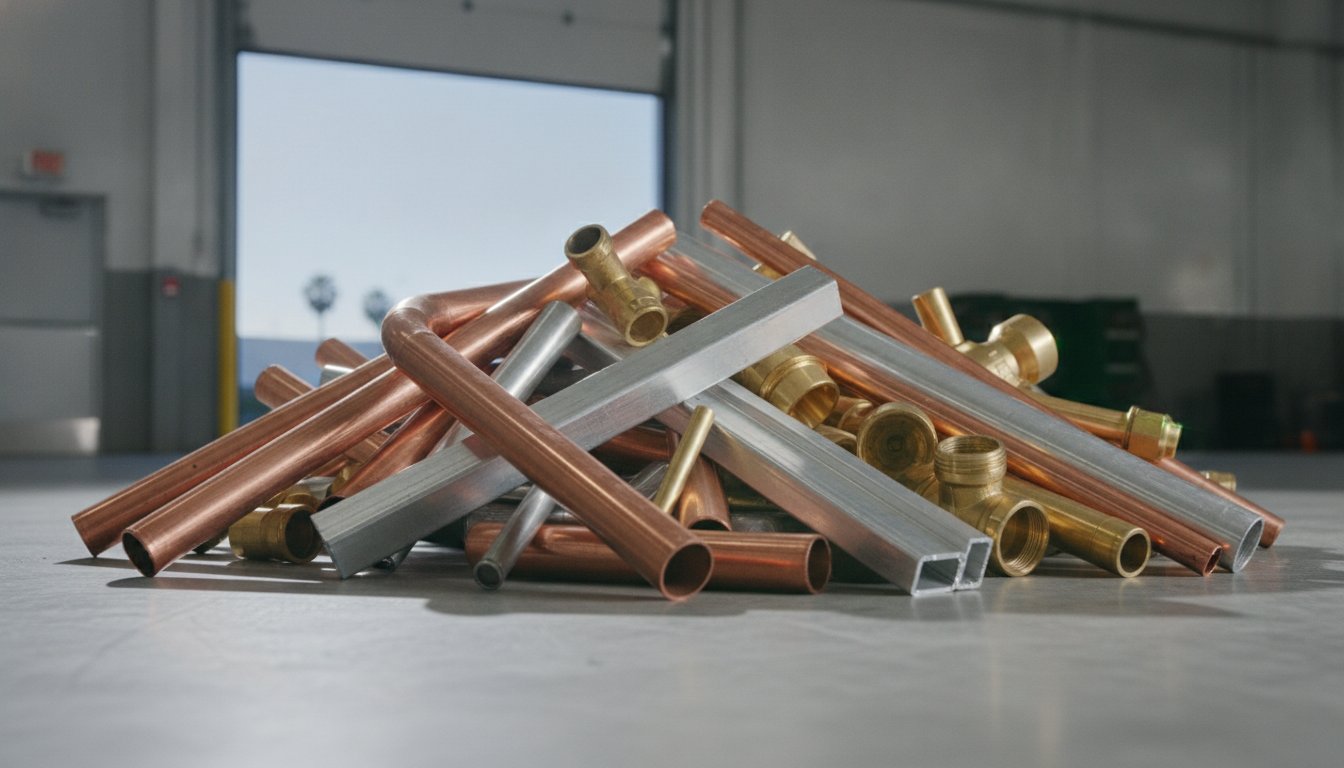
Your garage or job site is likely hiding a “secret currency” that most people toss into the trash without a second thought. It’s incredibly frustrating to spend your afternoon hauling a heavy load of scrap to a recycling center only to walk away with a few spare cents because you couldn’t tell the difference between common iron and high-value non ferrous metals. You deserve to be compensated fairly for your effort, and that starts with knowing exactly what you’re holding before you arrive at the scale.
This guide will teach you how to master the identification of these materials so you can stop leaving money on the table. We’ll show you how to use a simple magnet test to separate the “big earners” from the “bulk scrap” and maximize your recycling payouts right here in Orange County. We’ll walk through the most profitable metal categories and provide the professional tips you need to walk into any local facility with total confidence. By the time you’re finished, you’ll know exactly how to turn that cluttered pile of metal into same-day cash through efficient and transparent recycling practices.
Key Takeaways
- Master the simple magnet test to instantly separate low-value iron from high-value non ferrous metals.
- Identify the “gold standards” of the recycling world, including copper piping and aluminum siding, to prioritize your collection efforts.
- Learn how proper cleaning and sorting techniques can help you secure the highest possible grade and payout for your materials.
- Understand why non-ferrous commodities maintain their value through infinite recyclability and higher market scarcity compared to steel.
- Leverage the convenience of four local Orange County facilities to turn your sorted scrap into same-day cash.
What Are Non-Ferrous Metals? A Recycler’s Definition
To the untrained eye, a pile of scrap might just look like a mountain of discarded junk. To a professional recycler, it’s a collection of distinct chemical properties and fluctuating market values. The term non ferrous metals refers to any metal or alloy that does not contain a significant amount of iron. While iron is the literal backbone of the industrial world, its absence in non-ferrous materials is exactly what makes them so valuable and sought after in the recycling market.
The primary characteristic that sets these materials apart is their incredible resistance to corrosion and rust. Unlike a piece of common steel that will eventually crumble into orange flakes when exposed to moisture, non-ferrous materials maintain their structural integrity for decades. This durability makes them essential for high-performance applications where reliability is non-negotiable. Common examples you likely encounter every day include copper, aluminum, lead, zinc, and tin. The most important thing to remember is that these metals are non-magnetic. This single physical trait is the first and most critical step in identification, allowing you to quickly separate the “treasure” from the “trash” before you ever leave your home or job site.
The Difference Between Ferrous and Non-Ferrous
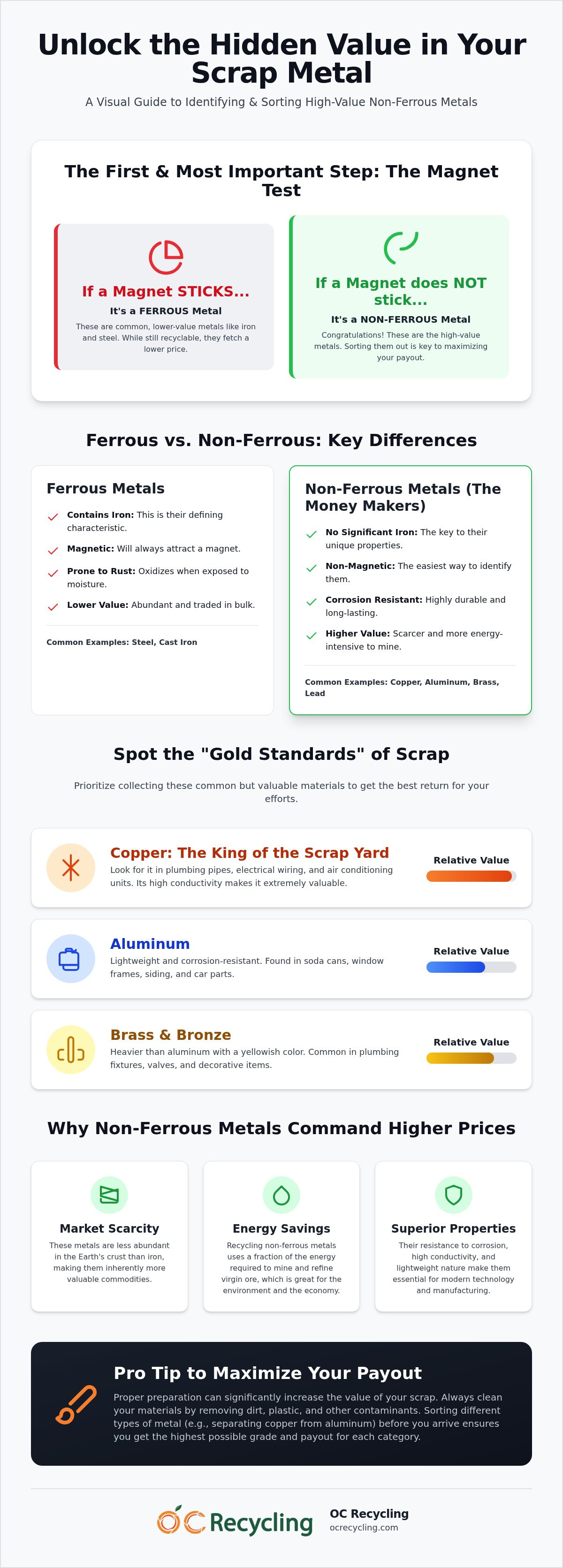
The distinction between these two categories is the foundation of the entire recycling industry. Ferrous metals, such as steel and cast iron, contain iron and are highly magnetic. They are heavy, plentiful, and unfortunately, prone to rapid oxidation. While we certainly purchase ferrous materials, they are typically recycled in massive quantities because their individual value is lower.
Non-ferrous materials are prized for their superior conductivity and lightweight properties. This distinction matters deeply for your wallet. Because these materials are scarcer and require significantly more energy to mine than iron, they command a much higher price at the scale. From an environmental standpoint, recycling non ferrous metals is a massive win; it takes a fraction of the energy to melt down existing copper or aluminum compared to extracting and refining raw ore from the earth.
Industrial Uses of Non-Ferrous Materials
You’ll find these high-value materials in almost every piece of modern technology. Copper is the lifeblood of electrical wiring and telecommunications due to its unmatched conductivity. Aluminum has become the gold standard for aerospace engineering and automotive manufacturing because it provides immense strength without the heavy weight of traditional steel.
Other vital industrial applications include:
- Plumbing and Construction: Brass and copper are staples for pipes and fixtures due to their resistance to water damage.
- Manufacturing: Zinc is frequently used to galvanize other metals, while tin is essential for soldering and food-safe packaging.
- Energy Storage: Lead remains a critical component in the production of vehicle batteries.
The Most Common Non-Ferrous Metals Found in Scrap
Identifying the most profitable materials in your haul is the key to a successful trip to the yard. While there are dozens of alloys in use today, the bulk of your payout will likely come from a small group of high-performance non ferrous metals. These materials are found everywhere, from the wiring behind your walls to the fixtures in your bathroom. Aluminum is perhaps the most ubiquitous, found in everything from soda cans to residential siding. Brass and bronze offer a heavier, yellowish alternative often found in plumbing valves or decorative ornaments. Stainless steel is a unique hybrid case; while it contains some iron, many high-grade versions are treated as non-ferrous because they are non-magnetic and highly resistant to corrosion. Lead and zinc round out the list, typically appearing as dense wheel weights or intricate die-cast parts.
Copper: The King of the Scrap Yard
Copper is widely considered the “gold standard” for any serious recycler. Its value is driven by its essential role in electrical systems and the global shift toward green energy technologies like electric vehicles. When you bring copper to the scale, the grade determines your payout. #1 copper consists of clean, unalloyed, and uncoated bus bars or wire. In contrast, #2 copper might have some oxidation, paint, or solder present. You’ll find these valuable non ferrous metals in old plumbing pipes, air conditioning units, and electrical panels. It’s the most consistent earner in any scrap pile, so it’s always worth the time to pull it aside.
Aluminum and Brass: Household Staples
To get the best price, you must remove “attachments.” This means stripping plastic insulation from copper wire or removing steel screws from aluminum frames. If you have a large collection of mixed materials, you can check current scrap metal purchasing options to see how to best prepare your load for the scale. Lead and zinc are also valuable but require careful handling due to their density and specific industrial uses in batteries and die-casting. By focusing on these common materials, you ensure your time spent sorting translates directly into a higher payout.
Why Non-Ferrous Metals Are More Valuable Than Steel
If you’ve ever compared the price of a ton of steel to a pound of copper, the difference is staggering. The primary reason for this price gap is the simple law of supply and demand. Iron is incredibly plentiful, making up a massive portion of the Earth’s crust. In contrast, non ferrous metals like copper, nickel, and tin are far scarcer, which naturally drives their market value higher. Because these materials are harder to find and more expensive to extract from the earth, manufacturers are willing to pay a premium for recycled feedstocks to keep their production costs manageable.
One of the most impressive benefits of these materials is their infinite recyclability. Unlike plastic or paper, which degrade each time they’re processed, non-ferrous materials don’t lose their chemical properties or structural integrity during the melting process. Recycling aluminum is a standout example of efficiency; it saves roughly 95% of the energy required to produce new metal from raw bauxite ore. This massive energy saving, combined with high global demand for electronics and infrastructure, ensures that the daily price of these commodities remains strong and competitive on international markets.
Resistance to Corrosion and Oxidation
Non-ferrous materials are uniquely equipped with a natural defense mechanism against the elements. When exposed to air, metals like aluminum and copper form a microscopic protective oxide layer that prevents further decay. This property makes them essential for outdoor construction, high-performance automotive parts, and marine applications where salt water would quickly destroy common steel. For you as a recycler, this means your scrap is more likely to stay “clean” and free of the heavy rust that can devalue ferrous loads. Bringing in clean, unoxidized material is the fastest way to secure the highest possible scrap payouts at the scale.
Conductivity and Malleability
The electronics and technology sectors are completely dependent on the superior conductivity of non ferrous metals. Copper’s ability to move electricity with minimal resistance is unmatched by almost any other common material. Because these metals are also highly malleable, they can be drawn into incredibly thin wires or pressed into intricate components without snapping. High-tech manufacturers in Southern California constantly seek high-grade recycled copper and gold-bearing components to fuel their production lines. if you have old computers, servers, or tablets, you can utilize our specialized electronics recycling Costa Mesa services to ensure these precious materials are recovered safely and securely while you get paid for the value they contain.
How to Sort Your Scrap: The Magnet Test and Pro Tips
Sorting your materials before you arrive at the yard is the single most effective way to ensure you get the premier price you deserve. Most people make the mistake of bringing in a mixed load, which often results in the entire pile being bought at the lowest common denominator price. By following a methodical sorting process, you transform yourself from a casual recycler into a savvy partner who understands the market value of your haul. This preparation allows our team to process your materials with maximum efficiency, getting you back to your day with cash in hand faster.
The foundation of any successful sorting routine involves four simple steps:
- Step 1: The Magnet Test. This is your most powerful tool. If the magnet sticks to the metal you’re holding, it’s ferrous. If the magnet does not stick, you’ve found non ferrous metals, which are the high-value materials you want to prioritize.
- Step 2: Clean Your Metals. Strip away any non-metal attachments like plastic handles, wooden bases, or heavy rubber insulation. Even a few steel screws left in an aluminum frame can downgrade your payout from “clean” to “dirty” pricing.
- Step 3: Categorize by Color. Group your materials by their visual traits. Copper is typically red or orange; brass has a distinct yellow hue; and aluminum will almost always appear silver or white.
- Step 4: Separate Redemption Items. Keep your soda cans and glass bottles separate from your industrial scrap. You should visit a certified CRV recycling center Santa Ana to maximize your returns on consumer packaging before weighing your bulk metals.
Using the File Test for Identification
Sometimes a visual inspection isn’t enough to tell what’s beneath the surface. Many manufacturers plate cheaper steel with a thin layer of copper or brass to make it look more expensive. To find the truth, use a metal file to scratch a small, inconspicuous area. If the color remains the same deep inside the scratch, you’re looking at a solid alloy. If a silver color appears beneath a golden exterior, you’re likely holding plated steel. Always wear heavy-duty gloves and eye protection when handling sharp edges or using tools on scrap to ensure your safety throughout the process.
Maximizing Your Payout Before You Arrive
The labor you put in at home translates directly into more cash in your pocket. Stripping the insulation from copper wire is a prime example; while it takes time, the price difference between “insulated” and “bare bright” copper is often significant enough to justify the effort for high-gauge wiring. Additionally, you should always store your non ferrous metals in a dry, secure area. Moisture can cause tarnishing that might affect the grade, and because these materials are so valuable, they can unfortunately be targets for theft. If you’re ready to turn your sorted haul into immediate payment, you can explore our full range of scrap metal purchasing services today.
Maximize Your Scrap Value with OC Recycling
Securing the highest possible return for your hard work requires more than just basic sorting; it requires a partnership with a trusted local leader who understands the complexities of the global commodities market. For over 15 years, OC Recycling has served as the premier destination for residents and businesses looking to liquidate their non ferrous metals with total peace of mind. We take immense professional pride in maintaining a transparent, modern facility where every transaction is handled with the same rigorous standards. Whether you’re bringing in a single bag of copper piping or managing a fleet of industrial scrap bins, our process is designed to be fast, methodical, and focused on delivering immediate results through our signature same-day cash payouts.
Our expert staff acts as your professional guide, helping you identify and grade your materials with precision. We don’t just weigh your load; we ensure you understand the specific characteristics that drive the value of your haul. This expert-led approach eliminates the confusion often associated with scrap yards and provides you with the confidence that you’re receiving the most competitive daily rates available in the region. With four convenient locations across Santa Ana, Anaheim, and Costa Mesa, we’ve established ourselves as the most accessible and reliable choice for the Orange County community.
Commercial and Industrial Solutions
Visit Us Today in Orange County
If you’re a resident or business owner in Huntington Beach, Orange, or Irvine, the path to a higher payout is just a short drive away. We encourage you to bring your magnet-tested scrap to any of our four facilities for a professional, transparent quote. Our welcoming team is ready to assist you in separating your materials to ensure every pound of metal is graded correctly. Don’t let your valuable materials sit in a garage or warehouse gathering dust when they could be fueling the sustainable circular economy and putting money back in your pocket today. Turn your non-ferrous metals into cash at OC Recycling and experience the convenience and reliability that comes from working with Orange County’s most established recycling partner.
Start Turning Your Scrap Into Immediate Value Today
Mastering the identification of non ferrous metals is the single most effective way to elevate your recycling experience from a chore to a profitable venture. By utilizing the simple magnet test and taking the time to clean your materials, you’ll ensure that every pound of copper, brass, or aluminum you bring to the scale is graded at its highest possible value. This methodical approach doesn’t just maximize your personal payout; it also supports a sustainable industrial cycle that benefits the entire Orange County community.
With over 15 years of local expertise and four convenient facilities, our team is ready to provide the professional guidance you need to succeed. We take pride in offering a transparent, efficient environment where your time is respected and your efforts are rewarded with same-day cash payouts. Whether you’re a first-time recycler or a commercial partner, we provide the stability and reliability you deserve from a market leader.
Get the Best Cash Rates for Your Non-Ferrous Scrap at OC Recycling and see how easy it is to transform your clutter into a significant financial return. We look forward to seeing you at the scale soon.
Frequently Asked Questions
What is the difference between ferrous and non-ferrous metals?
The fundamental difference lies in the iron content; ferrous metals contain iron, while non ferrous metals do not. Because they lack iron, non-ferrous materials are non-magnetic and highly resistant to rust and corrosion. Ferrous metals, like steel and cast iron, are typically heavier and will eventually oxidize and crumble into orange flakes when exposed to moisture.
Why are non-ferrous metals worth more than ferrous metals?
These materials are worth more because they are significantly scarcer and possess superior industrial properties like high conductivity and malleability. Additionally, recycling these metals requires much less energy than mining and refining raw ore from the earth. This combination of high global demand and energy efficiency keeps their market value consistently high compared to plentiful iron-based scrap.
Is stainless steel considered a non-ferrous metal?
No, stainless steel is technically a ferrous metal because it contains a significant amount of iron. However, the industry often treats high-grade stainless steel similarly to non-ferrous materials because it’s frequently non-magnetic and highly resistant to corrosion. Because it doesn’t rust and has a high market value, it’s a prized material that commands a better price than common carbon steel.
How can I tell if a metal is non-ferrous at home?
The most reliable method is the magnet test; if a magnet does not stick to your material, it’s likely a non-ferrous metal. You can also use a metal file to scratch the surface to see the true color beneath any paint or plating. If a silver color appears beneath a golden exterior, you’re likely holding plated steel rather than solid brass or copper.
What is the most valuable non-ferrous metal to recycle?
Copper is widely considered the most valuable common metal found in typical scrap loads due to its essential role in electrical systems. Its high demand in the technology and construction sectors ensures it consistently commands the highest price per pound. Grade #1 copper, which consists of clean and unalloyed bus bars or wire, represents the highest payout for most residential and commercial recyclers.
Do you pay cash for non-ferrous metals on the same day?
Yes, we provide same-day cash payouts for the majority of non-ferrous materials brought to our facilities. Our streamlined weighing and grading process is designed to get you paid immediately so you can complete your transaction and move on with your day. We prioritize transparency and speed for every guest who visits us, ensuring a professional and efficient experience at the scale.
Can I recycle aluminum cans as non-ferrous scrap?
Aluminum cans are a non-ferrous material, but they are typically handled through California Redemption Value (CRV) programs rather than bulk scrap scales. To get the best return, you should keep your beverage containers separate from industrial aluminum scrap like window frames or siding. This ensures you receive the correct redemption rate for your consumer packaging while getting the best commodity price for your bulk metal.
Where can I find a scrap yard for non-ferrous metals in Anaheim or Santa Ana?
You can find OC Recycling locations conveniently located throughout Orange County, including facilities that specifically serve Santa Ana and Anaheim. Each of our sites is equipped with modern scales and expert staff to help you identify and recycle non ferrous metals for the best possible price. We provide a clean, professional environment designed to handle both small personal loads and large-scale commercial requirements.
